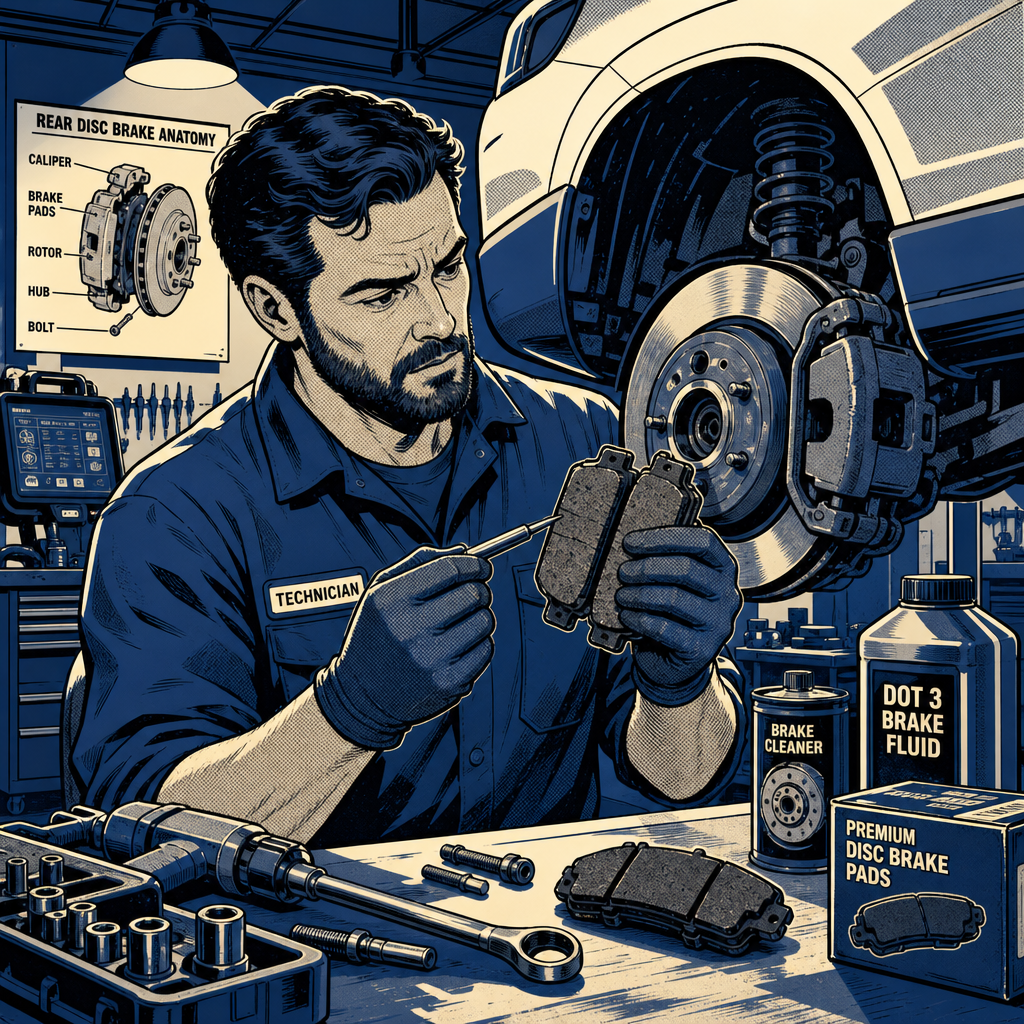
For decades, technicians operated under a simple assumption: front brake pads wear faster than rear pads because they handle the majority of braking force. That rule no longer holds true for many modern vehicles. Electronic parking brakes, adaptive cruise control, and advanced stability systems have fundamentally changed brake wear patterns. Today, it’s increasingly common to see rear pads worn to replacement thickness while fronts still have 50-70% material remaining. Understanding why this happens—and how to accurately assess pad condition—is essential for providing honest service recommendations and avoiding unnecessary work.
How Electronic Systems Change Brake Wear Patterns
Modern vehicles employ rear brakes far more aggressively than older mechanical systems. Electronic parking brakes (EPB) are a primary culprit. Unlike traditional cable-actuated parking brakes that use dedicated drum shoes or small pads, EPB systems clamp the main rear brake calipers electrically. Every time the driver parks, the rear pads engage with significant force. On vehicles parked multiple times daily, this adds thousands of additional brake applications annually—all concentrated on the rear axle.
Adaptive cruise control and collision avoidance systems also contribute to accelerated rear wear. These systems modulate braking automatically, often applying rear brakes independently to maintain following distance or prepare for potential impacts. The frequency and intensity of these applications add up quickly, particularly on highway-driven vehicles where adaptive cruise sees heavy use.
Vehicle dynamics and stability control represent another significant factor. Anti-dive algorithms intentionally bias braking force toward the rear to reduce front-end dive during deceleration, improving ride quality and handling feel. Volkswagen, Audi, and several other manufacturers have used this approach for years. Early 2000s Jettas became notorious for burning through rear pads while fronts remained serviceable. The modulating valve applies stronger pressure to rear brakes during normal stops, fundamentally reversing traditional wear patterns.
Torque vectoring systems on performance and all-wheel-drive vehicles use individual wheel braking to enhance cornering and traction. While sport differentials don’t constantly brake wheels during straight-line highway driving, any vehicle equipped with advanced stability control will apply brakes selectively during routine driving maneuvers—and these systems often favor rear brake application for stability reasons.
Manufacturer-Specific Wear Characteristics
Certain brands exhibit pronounced rear brake wear due to their specific system designs. Subaru vehicles, particularly those equipped with EyeSight driver assistance, show dramatically accelerated rear pad consumption. The EyeSight system uses rear brakes preferentially for automated braking events, collision mitigation, and adaptive cruise control functions. Technicians report seeing rear pads completely worn while fronts retain 60-80% material on Subarus with as little as 30,000-40,000 miles.
Volkswagen and Audi vehicles from the B8 platform forward commonly require 1.5 to 2 complete rear brake services before front pads need replacement. The issue appears especially prevalent on Q3 models from 2019 onward and, to a lesser extent, A3 vehicles. The underlying cause remains the same: aggressive stability control calibration and anti-dive algorithms that bias braking rearward.
Hyundai and Kia vehicles also demonstrate faster rear wear, though less dramatically than Subaru or VW products. Technicians report Santa Fe models needing rear service at 60,000 km while fronts remain in excellent condition. Ford products show similar patterns, with rear replacements often occurring 20,000-30,000 miles after fronts on many models.
An additional complication with modern vehicles: rear brake pads are often physically smaller than older designs. Where traditional rear pads measured 8-12mm when new, many current applications measure only 6mm new. This means pads reach replacement thickness much faster in absolute terms, even if wear rates were identical to older vehicles. Some manufacturers’ inspection guidelines flag 6mm pads as “yellow” (monitor closely) because replacement pads measure only 6mm out of the box.

Accurate Brake Pad Measurement Techniques
Visual inspection through wheel spokes has become increasingly unreliable on modern vehicles. Caliper designs often obscure large portions of the brake pad, making thickness assessment difficult without removal. Subaru front calipers are particularly problematic in this regard—the caliper body visually blocks enough of the pad that inexperienced technicians frequently misidentify serviceable pads as worn.
Traditional fan-style brake gauges don’t physically fit between calipers and rotors on many current designs. The clearances are too tight for conventional measurement tools, forcing technicians to estimate thickness visually or remove wheels for accurate assessment. This creates situations where pads appear thinner than actual condition, leading to premature replacement recommendations.
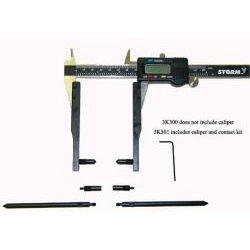
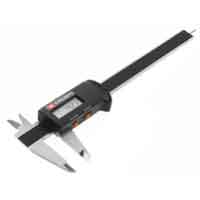
For accurate measurement without wheel removal, invest in slim-profile digital brake pad gauges specifically designed for modern tight-clearance applications. These tools slide between caliper and rotor where traditional gauges cannot, providing precise thickness readings. They’re inexpensive (typically $15-30) and eliminate guesswork on difficult-to-access pads.
When visual tools won’t work, wheel removal and caliper inspection remain the gold standard. Always measure both inner and outer pads—uneven wear indicates caliper problems requiring attention beyond simple pad replacement. Inner pads worn significantly more than outer pads signal seized caliper pins, missing return springs, or contaminated slide mechanisms.
Check both front and rear axles before quoting brake work, regardless of which axle prompted the inspection. The reversed wear pattern on modern vehicles means you cannot assume fronts need service first. Many technicians now check rears first on vehicles with electronic parking brakes, adaptive cruise, or known rear-wear tendencies.
Caliper Slide Pin Service Essentials
Accelerated rear brake wear makes proper caliper maintenance more critical than ever. Seized or sticky slide pins cause uneven pad wear, reduced braking performance, and premature component failure. When replacing rear pads on high-wear vehicles, thorough caliper service isn’t optional—it’s essential for ensuring the new pads wear evenly and last their full service life.
Remove slide pins completely and inspect them carefully. Look for dried, crusty grease—a clear indicator the pins haven’t been serviced properly during previous brake jobs. Hardened grease prevents smooth caliper movement, causing the caliper-side pad to wear faster than the bracket-side pad. If you see one pad nearly metal-to-metal while the other has substantial material remaining, seized pins are the likely cause.
Clean slide pin bores thoroughly using brake cleaner and appropriate brushes. These bores must be completely free of old grease, corrosion, and debris. Any contamination prevents smooth pin movement and leads to uneven wear. After cleaning, inspect the bores for corrosion, scoring, or damage. Severely corroded bores require caliper replacement—no amount of cleaning will restore proper function.
Polish slide pins using fine sandpaper or Scotch-Brite pads until completely smooth. Check dust boots carefully for tears, cracks, or deterioration. Damaged boots allow moisture and contamination into the slide mechanism, causing rapid deterioration. Replace any questionable boots rather than risk comeback work in 6-12 months.
Use only proper silicone-based caliper grease on reassembly. Never use standard chassis grease, anti-seize, or petroleum-based lubricants on brake components. These products degrade rubber components and don’t provide the temperature stability required for caliper operation. Apply grease liberally to pins and bores—proper lubrication is critical for long-term caliper function.
Verify all caliper hardware is present and functional. Missing return springs or anti-rattle clips cause noise, uneven wear, and reduced braking performance. Replace any missing or damaged hardware during pad replacement.
Brake Inspection Checklist for Modern Vehicles
- Check rear brake pads first on vehicles with electronic parking brakes or adaptive cruise control
- Measure both inner and outer pad thickness on each caliper—uneven wear indicates mechanical problems
- Use slim-profile digital gauges on tight-clearance modern calipers
- Remove wheels for definitive measurement when visual assessment is questionable
- Verify caliper slide pins move freely with no binding or resistance
- Inspect dust boots for tears, cracks, or deterioration
- Check for all caliper hardware including return springs and anti-rattle clips
- Measure rotor thickness and check for scoring, cracking, or heat damage
- Test electronic parking brake operation after rear brake service
- Document actual pad measurements in customer records to track wear rates
Understanding New Pad Thickness Standards
Knowing new pad thickness specifications prevents unnecessary replacements and helps you educate customers about actual brake condition. Many modern vehicles use thinner pads than older designs, which can cause confusion during inspection and service.
Traditional brake pads measured 10-12mm when new, making the industry-standard replacement threshold of 3-4mm relatively straightforward. Many current applications measure only 6-8mm new. On these vehicles, pads measuring 5mm may still have 40-50% life remaining, not the 20-30% that measurement would indicate on older, thicker pads.
Manufacturer inspection guidelines increasingly use pad-specific thresholds rather than universal measurements. A 6mm pad might be flagged for monitoring at 4mm (yellow status) while a 10mm pad receives the same flag at 5mm. Always reference manufacturer specifications for the specific vehicle rather than applying universal thickness rules.
This creates a potential pitfall: installing new pads measuring 6mm on a vehicle where you removed “worn” pads at 5mm. Customers understandably question service necessity when new pads measure only 1mm thicker than supposedly worn originals. Documenting manufacturer specifications and explaining pad-specific thresholds helps avoid these awkward conversations.
Some technicians photograph new pads next to removed pads when thickness is questionable, providing visual documentation of actual condition versus new parts. This practice protects both the shop and customer, creating clear records of service necessity.
When to Replace Brake Pads
Conservative replacement thresholds make sense given modern brake wear patterns and electronic system demands. Most manufacturers and experienced technicians recommend replacement at 3-4mm remaining thickness, well before the wear indicators contact rotors.
Wear indicators (the metal tabs that create squealing when pads get thin) serve as absolute minimum thickness warnings, not ideal replacement points. By the time indicators contact the rotor, pad material is critically thin—often 2mm or less. Waiting until you hear squealing risks rotor damage and leaves minimal safety margin.
Consider replacing pads earlier on vehicles with electronic parking brakes or aggressive rear brake usage. These systems demand consistent pad thickness for proper operation. EPB systems measure actuator motor current to determine parking brake engagement—worn pads require more motor travel and can cause fault codes or parking brake malfunctions.
Uneven wear between inner and outer pads indicates caliper problems requiring immediate attention. If one pad measures 2mm while its mate measures 5mm, don’t just replace pads—identify and correct the underlying mechanical issue. Putting new pads on seized calipers wastes parts and guarantees rapid comeback work.
Front-to-rear wear imbalance deserves careful consideration. On vehicles known for rear wear (Subaru, VW/Audi, Hyundai), seeing rears at 3mm with fronts at 7mm is normal and expected. However, extreme imbalances (rears at 2mm, fronts at 9mm) may indicate proportioning valve problems, caliper issues, or other hydraulic concerns requiring diagnosis beyond simple pad replacement.
Frequently Asked Questions
Why do my rear brake pads wear faster than front pads?
Modern electronic systems—particularly electronic parking brakes, adaptive cruise control, and stability control—use rear brakes much more frequently than older vehicles. Electronic parking brakes clamp the main rear calipers every time you park, adding thousands of applications annually. Adaptive cruise and collision avoidance systems also modulate rear brakes automatically during normal driving. Additionally, many manufacturers use anti-dive algorithms that intentionally bias braking force rearward to reduce front-end dive during stops.
How often should rear brake pads be replaced on vehicles with electronic parking brakes?
Replacement intervals vary significantly by manufacturer and driving conditions, but many vehicles with electronic parking brakes need rear pads every 20,000-40,000 miles while fronts last 60,000-80,000 miles. Subaru vehicles with EyeSight, VW/Audi products, and some Hyundai models show particularly aggressive rear wear. Always inspect both axles during routine maintenance rather than assuming fronts wear first.
Can I measure brake pad thickness without removing the wheels?
Accurate measurement without wheel removal is difficult on many modern vehicles due to tight caliper clearances and designs that obscure pad visibility. Traditional fan-style brake gauges often don’t fit between caliper and rotor on current models. Slim-profile digital gauges work better, but wheel removal remains the most reliable method for definitive measurement. Visual estimates through wheel spokes are frequently inaccurate and can lead to incorrect service recommendations.
What causes one brake pad to wear faster than the other on the same caliper?
Uneven wear between inner and outer pads indicates caliper slide pin problems. Seized pins, dried grease, missing return springs, or corroded slide bores prevent the caliper from moving freely, causing the caliper-side pad to wear much faster than the bracket-side pad. This requires thorough caliper service including pin cleaning, bore inspection, dust boot replacement, and proper lubrication with silicone-based caliper grease.
How thick are new brake pads on modern vehicles?
New pad thickness varies by application. Traditional pads measured 10-12mm new, but many current designs measure only 6-8mm new. This smaller thickness means pads reach replacement threshold faster and requires different inspection criteria. Always reference manufacturer specifications for the specific vehicle rather than applying universal thickness standards. A pad measuring 5mm might have substantial life remaining if new pads for that application measure only 6mm.
Should I replace all four brake pads if only the rears are worn?
No. Replace pads based on actual measured thickness, not arbitrary axle-pairing rules. On vehicles with aggressive rear wear, fronts often have 50-70% material remaining when rears need replacement. Replacing serviceable front pads wastes money and parts. However, always replace both pads on the same axle simultaneously to maintain even braking force side-to-side. Never replace just one pad on a single wheel.
Brake System Tools & Equipment
Accurate brake pad measurement and proper caliper service are essential for modern vehicles where rear wear patterns have shifted dramatically. Our Brake System category offers the specialized tools needed for precise diagnostics and reliable repairs.
- Slim-profile digital brake pad gauges for tight-clearance modern calipers
- Caliper service tools including cleaning brushes, grease applicators, and pin removal kits
- Rotor measurement and inspection tools for complete brake diagnostics

The Toolsource Technical Team blends decades of real-world automotive service experience with up-to-date technical research. Our writers collaborate with professional mechanics, shop owners, and diagnostic specialists to deliver practical, workshop-ready guidance you can trust.


Follow us on social media