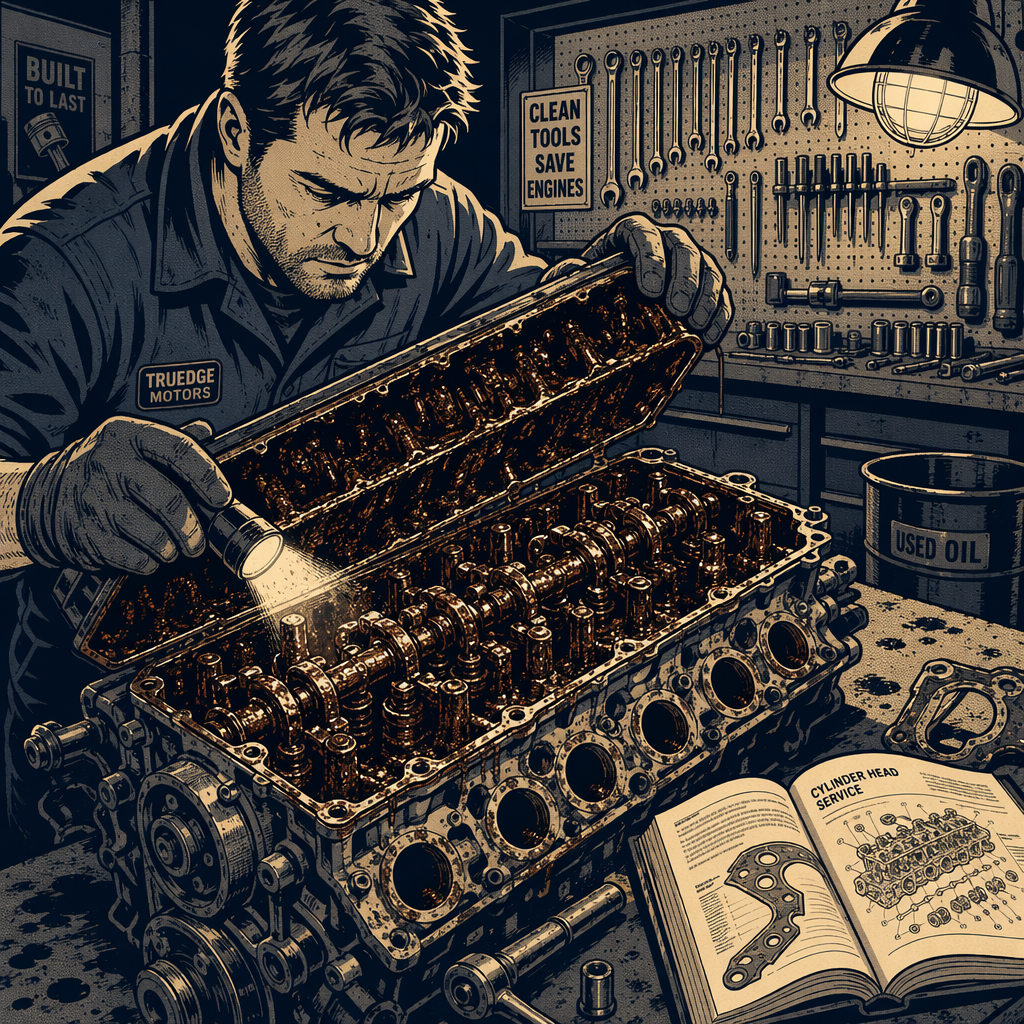
You’ve seen the service records—oil changes every 8,000 to 10,000 miles, documented at reputable shops. Then you pull the valve cover and find dark red varnish coating every surface, sludge caked in the valleys, and moisture buildup that tells a completely different story than the maintenance log. This disconnect between documented service and catastrophic buildup is more common than most vehicle owners realize, and the root causes go far beyond simple neglect. Understanding why engines develop severe sludge despite regular oil changes requires looking at the interplay between oil chemistry, driving patterns, and service intervals that don’t match real-world use.
The Oil Type and Interval Mismatch
The most critical factor in unexpected sludge formation is running conventional oil beyond its designed service life. Modern service interval recommendations—often 7,500 to 10,000 miles—are engineered around full synthetic formulations. When shops default to conventional or semi-synthetic products to meet budget oil change pricing, they create a chemistry problem that manifests as engine damage.
Conventional oil begins breaking down around 5,000 miles under normal conditions. Push that to 10,000 miles and you’re operating with degraded lubricant for half the interval. The thermal breakdown products form varnish deposits that appear as reddish-brown coating on internal components. This isn’t dirt from outside the engine—it’s polymerized oil that has chemically changed structure under heat and pressure.
For engines with 70,000+ miles, the interval should drop to 3,000-3,500 miles on conventional oil, with filter changes every other service if you’re trying to economize. The exception is break-in periods on brand new engines, where 7,000-10,000 mile intervals are acceptable due to tight tolerances and minimal blowby. Once an engine accumulates miles, combustion byproducts entering the crankcase accelerate oil degradation.
When evaluating a sludged engine with documented conventional oil services, calculate the actual interval. Ten thousand miles on basic conventional oil is double the safe interval, regardless of what the service sticker says. The math doesn’t lie—that oil was cooked for 5,000 miles past its useful life.
Short-Trip Driving and Moisture Contamination
The second major contributor to sludge in “maintained” engines is driving pattern. Short trips under 20 minutes prevent oil from reaching full operating temperature long enough to cook out moisture and fuel contamination. This is particularly severe in handicap-accessible vehicles, delivery vans, or any application involving frequent stops under 15 minutes.
When an engine doesn’t reach and maintain operating temperature (typically 30-40 minutes of driving), several destructive processes occur simultaneously. Fuel washing past the rings dilutes the oil. Combustion moisture condenses in the crankcase rather than evaporating. The oil never gets hot enough to boil off water contamination. This creates a mayonnaise-like emulsion that appears as light-colored sludge on valve covers and oil caps.
Combined with extended intervals, short-trip operation creates the perfect environment for sludge. The oil never fully warms, accumulates moisture and fuel, and sits for 8,000-10,000 miles breaking down. By the time it’s changed, significant varnish has already bonded to metal surfaces.
For vehicles in short-trip service, you need to either change oil every three months regardless of mileage, or ensure weekly drives that hold operating temperature for 30-40 minutes minimum. This driving pattern also prematurely kills catalytic converters and EVAP systems, so the sludge is often just the first visible symptom of broader issues. Expect to see compression problems, catalyst codes, and purge valve failures down the road.
Oil Brand Mixing and Additive Incompatibility
Here’s a factor that generates controversy but has significant field evidence behind it: mixing oil brands creates additive package incompatibilities that accelerate sludge formation. Every oil manufacturer uses proprietary additive blends—detergents, dispersants, anti-wear compounds, viscosity modifiers. These packages are tested for stability within their own product line, not against every competitor’s formulation.
During an oil change, a half-quart or more of old oil remains in the engine. If you’re switching between Valvoline, Walmart brand, Pennzoil, and whatever’s on sale, you’re creating a cocktail of additive packages that may interact poorly under certain operating conditions. This has been documented in industrial applications with turbo compressor oils, gear oils, and engine lubricants.
The recommendation from long-term field observation: pick one brand and stick with it for the life of the engine. If you always run Pennzoil products, they remain compatible with the residual Pennzoil in the system. The same applies to any major brand. People obsess over mixing 5W-30 with 5W-20, but ignore the far more significant issue of blending completely different additive chemistries.
High-mileage engines run exclusively on a single brand often show remarkably clean internals at 300,000-400,000 miles. Engines with mixed-brand service histories at much lower mileage frequently show sludge and varnish. This is particularly relevant when evaluating service records showing work at multiple quick-lube chains, each using their house brand. That “regular maintenance” might actually be accelerating deposits.
Verifying Engine History and VIN Matching
When sludge severity doesn’t match documented maintenance, verify you’re looking at the original engine. Check the VIN stamped on the engine block against the vehicle VIN. Engine swaps are more common than service records indicate, particularly after catastrophic failures that insurance or warranty covered.
A vehicle showing a transmission replacement and camshaft replacement by 55,000 miles raises red flags. That maintenance-conscious owner history may have ended when the original engine failed. The current engine could be a salvage yard replacement with unknown service history, while the documented oil changes belong to the engine that’s now in someone else’s vehicle.
Similarly, severe oil starvation from consumption or leaks—where the owner never checked levels between changes—can cause cam damage and sludge simultaneously. The “regular maintenance” becomes oil top-offs that mask a serious consumption problem. The service records show changes on schedule, but don’t reveal the engine ran two quarts low for thousands of miles between services.
Carfax and service records only tell part of the story. Physical inspection of engine internals, VIN verification, and understanding the failure pattern (cam replacement suggesting oil starvation) often reveals the maintenance wasn’t as regular or complete as documented.
Modern Engine Requirements: Full Synthetic Mandatory
For modern engines, particularly Pentastar V6 and similar designs with variable valve timing and tight tolerances, conventional oil is simply inadequate regardless of interval. Factory fill on these engines is full synthetic—Pennzoil Platinum in FCA applications—and that’s what should go back in.
Techs who’ve opened 200,000+ mile Pentastar engines maintained on full synthetic report internals that look new. Engines run on conventional oil or budget semi-synthetic show varnish and deposits at a fraction of that mileage. The cost difference over the life of the engine is negligible compared to the repair costs of sludge-related failures.
The dark red varnish visible on valve trains is the signature of mineral oil thermal breakdown. Full synthetic doesn’t create this deposit pattern even at extended intervals. If you’re seeing that characteristic red-brown coating, you’re looking at an engine that ran on cheap conventional oil, regardless of what the service records claim.
For any engine manufactured in the last decade, full synthetic should be considered mandatory, not optional. The engineering assumes synthetic oil properties. Running conventional is operating outside design parameters, even if you shorten the interval.
Practical Prevention Checklist
- Use full synthetic oil exclusively in modern engines (2010+)
- Set interval at 5,000 miles maximum for conventional oil, 3,000-3,500 for high-mileage engines
- Choose one oil brand and use it consistently—don’t mix brands between services
- For short-trip operation (under 20 minutes), change every three months regardless of mileage
- Schedule weekly 30-40 minute drives to reach full operating temperature and cook out moisture
- Verify filter changes with every service—confirm the old filter is actually replaced
- Check oil level monthly; consumption between changes indicates serious problems
- Match service interval to actual driving conditions, not manufacturer maximum intervals
- On used vehicles, verify engine VIN matches vehicle VIN to confirm original powerplant
- Consider oil analysis every other change on high-value engines to catch problems early
Cleaning Existing Sludge Without Engine Damage
Once you’ve identified sludge in an engine, the cleanup process requires patience. Aggressive flush products can dislodge large chunks that block oil passages, causing worse damage than the sludge itself. The safer approach uses multiple short-interval oil changes with a quality detergent oil.
Start with a full synthetic oil change and run 500-1,000 miles. The fresh detergent package will begin softening deposits. Change oil and filter again. Repeat this process 3-4 times, gradually extending to 2,000-mile intervals as the oil comes out cleaner. This slow approach lets deposits dissolve and suspend in oil that gets drained, rather than breaking loose in chunks.
Some techs use Valvoline Restore & Protect or similar high-detergent formulations specifically for cleanup. The key is frequent monitoring and short intervals until you’re confident the bulk of the sludge is removed. Don’t extend to normal intervals until you see clean oil on several consecutive changes.
For severe cases, pulling the valve cover between changes to physically remove sludge from accessible areas speeds the process. Just don’t disturb deposits in areas where dislodged material could enter oil passages. The goal is gradual dissolution, not mechanical removal of large pieces.
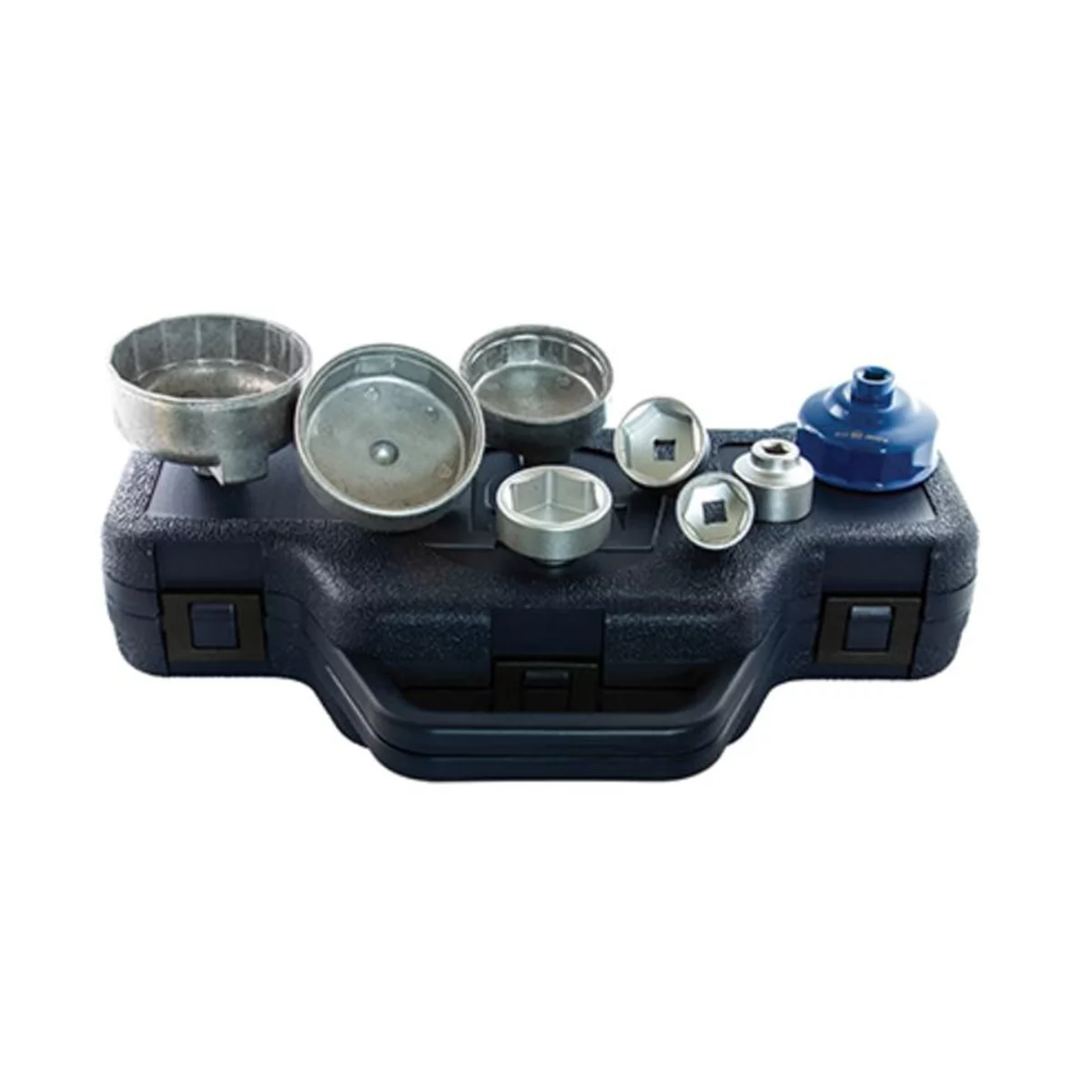
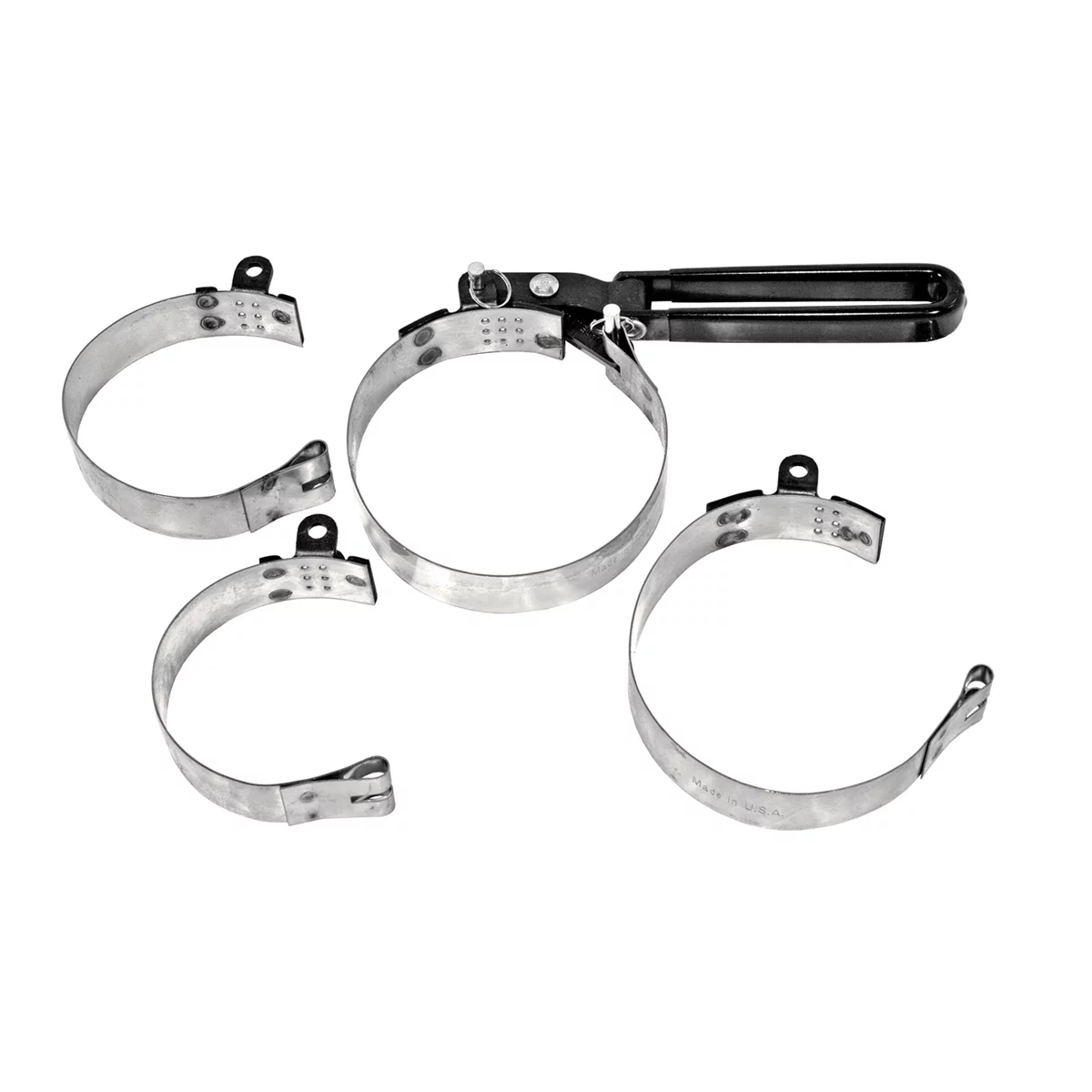
4 Piece Interchangeable Oil Filter Wrench Set
Mfg: K Tool International
Part #: KTI73600
Frequently Asked Questions
Q: Can I mix synthetic and conventional oil in an emergency?
A: Yes, they’re compatible for temporary mixing. However, you dilute the synthetic’s protective properties and should return to full synthetic at the next service. The bigger concern is mixing different brands’ additive packages repeatedly.
Q: Why does the owner’s manual say 10,000-mile oil changes are acceptable?
A: Those intervals assume ideal conditions: highway driving, full synthetic oil, moderate climate, and no towing. Real-world driving rarely meets all those criteria. The manual interval is a maximum under perfect conditions, not a recommendation for all situations.
Q: How can I tell if my engine has sludge without opening it?
A: Check the oil cap for mayonnaise-like buildup or dark varnish. If you can see the underside of the valve cover through the oil fill, look for coating on visible surfaces. Oil that looks like black paint or gel rather than liquid indicates problems. However, definitive diagnosis requires inspection with the valve cover removed.
Q: Will engine flush products damage my engine?
A: Aggressive solvent-based flushes can dislodge chunks that block oil galleries, causing catastrophic failure. For severe sludge, multiple short-interval oil changes with quality detergent oil is safer than chemical flush products. Save flushes for light maintenance, not heavy cleanup.
Q: Does synthetic oil cause leaks in older engines?
A: This is largely a myth from early synthetic formulations. Modern synthetic oil doesn’t cause leaks, but its superior cleaning properties may expose existing leaks by removing sludge that was sealing worn gaskets. If switching reveals leaks, they were already present but hidden.
Q: How does short-trip driving cause sludge if the oil is being changed regularly?
A: Short trips prevent oil from reaching temperature needed to evaporate moisture and fuel contamination. Even with regular changes, the oil spends its entire service life contaminated with water and gasoline, creating sludge. You need longer drives or shorter intervals to compensate for this severe service condition.
Tools for Proper Oil Maintenance
Preventing sludge buildup starts with consistent, correct oil changes using the right equipment. Investing in quality Automotive Oil Change Tools ensures you can perform thorough services that match your engine’s real-world demands.
- Oil drain pans and catch systems for safe fluid disposal
- Filter wrenches and socket sets for reliable filter removal
- Oil level gauges and monitoring equipment for between-service checks

The Toolsource Technical Team blends decades of real-world automotive service experience with up-to-date technical research. Our writers collaborate with professional mechanics, shop owners, and diagnostic specialists to deliver practical, workshop-ready guidance you can trust.


Follow us on social media