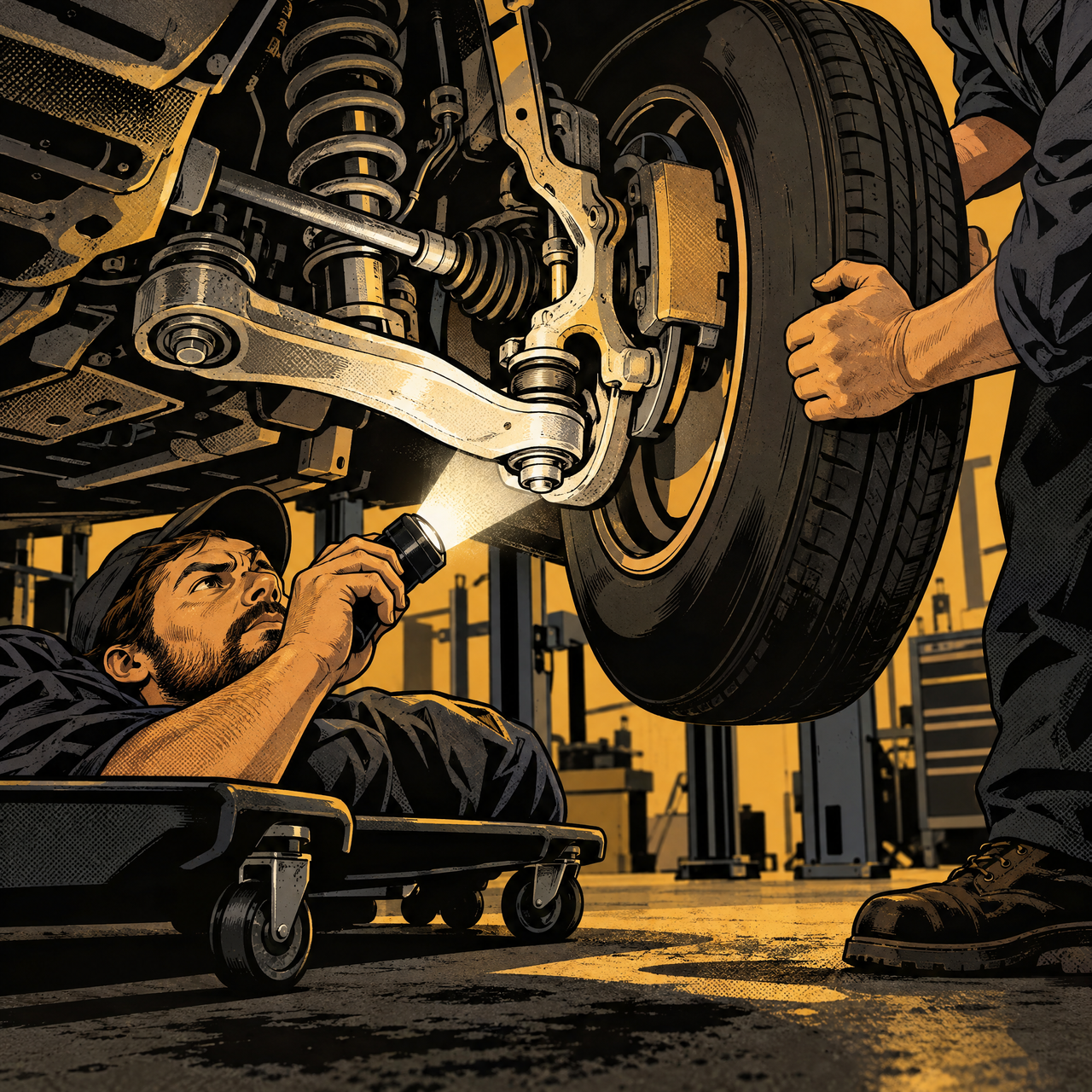
A customer rocks a wheel at 3 and 9 o’clock, feels movement, and before the hood’s even up someone’s already said “wheel bearing.” It’s the most common reflexive diagnosis in the business, and it’s wrong a surprising amount of the time. Play at the wheel can come from a bearing, a ball joint, a control arm bushing, a tie rod end, a toe link, a sway bar end link, or a loose fastener — and each one has a distinct feel, direction, and failure pattern. Guessing from the driver’s seat, or worse, from a video with no view of the suspension, leads to replaced parts that weren’t broken and a problem that’s still there. Here’s a practical method for narrowing it down before you touch a wrench.
Why “It’s the Wheel Bearing” Is Often the Wrong First Guess
Wheel bearing play has a specific signature: it moves in every direction fairly evenly, because the bearing is what holds the entire hub centered in its housing. If you grab the wheel at 12 and 6 and rock it vertically, a bad bearing shows play there too, not just side to side. If the movement all but disappears when you push the wheel one way and reappears pushing the other way — and especially if you can see the brake caliper shifting in sync with the wheel — that’s not a bearing problace, since the caliper is mounted to the knuckle and would stay with the hub rather than move independently.
A diagonal, side-to-side-only feel points somewhere else entirely: a control arm bushing that’s collapsed, a worn ball joint, or (on vehicles with rear toe links) a loose or seized toe link adjuster. The diagnosis also depends heavily on which axle you’re looking at. A vehicle with an independent rear suspension has control arms, bushings, and often a toe link or lateral arm back there — there’s no rear tie rod in the steering sense unless the platform specifically uses a toe-link design, and assuming “tie rod” language from the front axle translates to the rear is a common mistake that sends techs looking in the wrong place.
The Correct Way to Check for Play: Get a Second Set of Eyes Under the Car
Rocking the wheel by hand and watching from the side only tells you that something is loose — not what. The reliable method takes two people and five minutes:
- Lift the corner, support it on a stand, and remove the wheel if you want an unobstructed view (leaving it on works too, but visibility is worse).
- Have one person apply the load — hand pressure at 3 and 9 o’clock for lateral play, 12 and 6 for vertical play, and try pushing/pulling the wheel in and out along the axle too.
- The second person gets underneath with a flashlight and watches the actual joints — ball joint, bushings, toe link, sway bar end link — while the load is applied.
- Note exactly which component moves, how much, and in which direction, before removing anything.
This is the step most people skip, and it’s the only step that actually produces a diagnosis instead of a guess. If you don’t have a second tech on hand, a phone propped on a stand recording the suspension while you rock the wheel from a jack handle works nearly as well.
Product search: query “wheel hub bearing assembly replacement kit” — mid-article after section 2

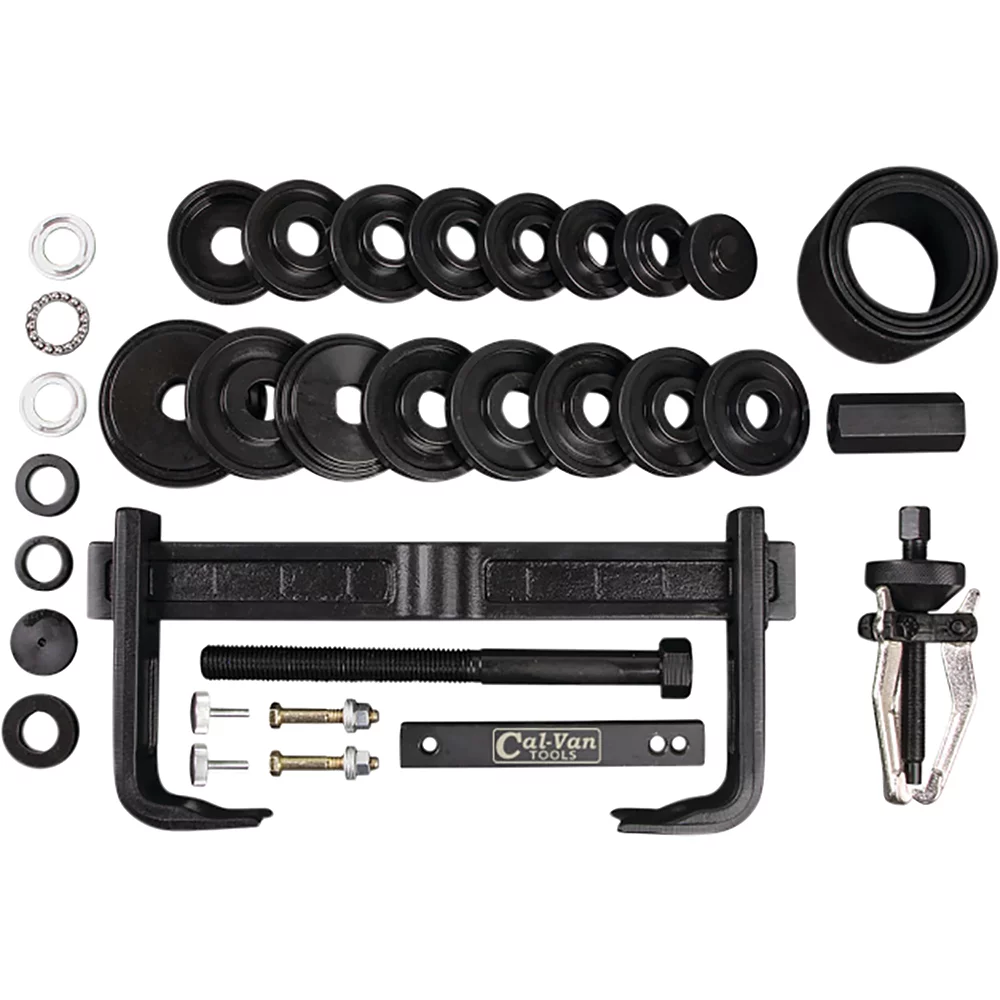
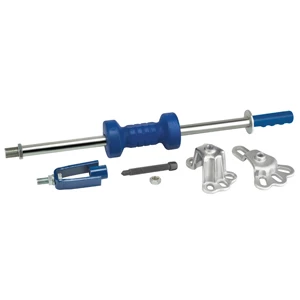
10 lb. Slide Hammer & Puller for Front Wheel Hubs & Rear Axles
Mfg: S & G Tool Aid
Part #: 66370
Reading the Direction and Feel of the Play
Once you’ve got eyes on the joint under load, the direction of movement tells you most of what you need to know:
- Play in all directions, evenly — classic wheel bearing. The whole hub assembly is loose in its housing.
- Vertical play (up/down) concentrated at one point — usually a ball joint or a control arm bushing. Watch where the arm meets the knuckle; if the bushing itself is visibly deformed or the metal sleeve is moving independently of its rubber, that’s your culprit.
- Lateral play (side to side) with the caliper moving along with the wheel — not a bearing. Look at toe links, lateral arms, or sway bar end links, since the caliper staying fixed to the hub rules out a bearing fault.
- Diagonal play — this pattern is reported often with worn control arm bushings or a failing ball joint, because the arm can flex in a plane that isn’t purely vertical or horizontal.
- Clunking on bumps but no felt play at rest — check sway bar end links and bushing mounts; these can be loose enough to clunk under load but tight enough to not show hand-applied play.
A bad wheel bearing will also usually announce itself with a droning or humming noise that changes with road speed and sometimes with cornering load, which is a useful secondary confirmation when the visual inspection is ambiguous.
Common Suspects on Independent Rear Suspensions
On platforms with multi-link or independent rear suspension, there are several wear points that get mistaken for bearing failure:
Control arm bushings — rubber bushings degrade with age and oil/road salt exposure; a torn or separated bushing lets the arm move in a direction it was never designed to, producing exactly the kind of play that feels like “something’s loose” without a clean failure mode.
Ball joints — whether upper, lower, or part of a control arm assembly, a worn ball joint produces vertical or diagonal play localized right at the joint. Grease boot condition and visible movement between the ball and socket under load are the tells.
Toe links / lateral arms — these control toe angle on independent rear axles and can wear at their inner and outer bushings, producing play that looks lateral from outside the wheel.
Sway bar end links and bushings — loose end links cause clunking and minor play, usually easy to isolate because they’re accessible and visibly wobble when pushed by hand.
Lug nut/wheel mounting errors — less common but worth ruling out first: wheels installed with the wrong lug nut orientation (tapered seat facing the wrong way) or under-torqued lugs can mimic suspension play and are a five-minute check with a torque wrench before any parts get ordered.
Should You Replace the Other Bearings or Bushings Too?
Once a failed component is confirmed, there’s a recurring debate over whether to preemptively replace the same part on the other three corners. The practical answer: don’t replace parts that test good. Mileage alone isn’t a failure criterion — a bearing or bushing with no play, no noise, and no visible damage is still serviceable regardless of age. The exception is when another part has to come off anyway for an unrelated job and it’s already showing wear; replacing it then saves a future labor charge. Blanket “replace all four” policies waste customer money and risk introducing new problems (seized hardware, damaged boots) on components that weren’t broken.
Safety Checklist Before Returning the Vehicle to the Road
- Confirm which component moves under load with a second person watching from underneath — don’t diagnose from the driver’s seat or a single-angle video.
- Check for even play (bearing) vs. directional/localized play (bushing, ball joint, link).
- Verify the caliper does or doesn’t move with the hub to rule bearings in or out.
- Inspect bushings, ball joint boots, and end links visually for tearing, separation, or play in the sleeve.
- Torque-check lug nuts and confirm correct seat orientation before assuming a suspension fault.
- Do not release the vehicle to the customer if there is confirmed play anywhere in the steering or suspension — this is a drivability and safety hold, not an upsell.
Product search: query “suspension control arm and ball joint tools” — broader, before FAQ section
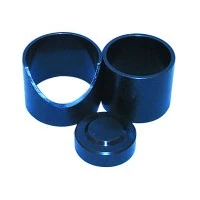
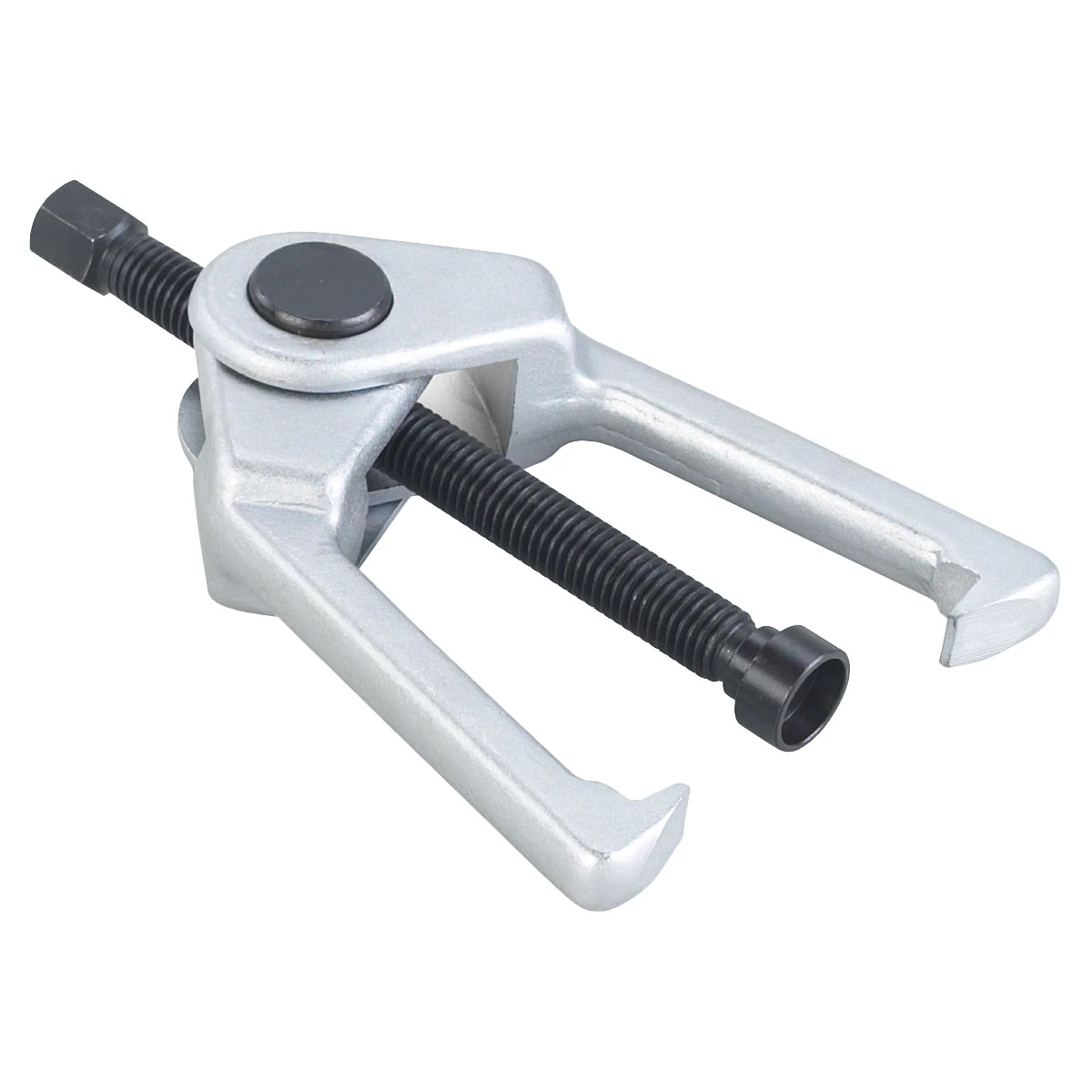
Heavy Duty Tie Rod and Ball Joint Remover
Mfg: OTC Tools and Equipment
Part #: 7503HD
FAQ
How can I tell a bad wheel bearing from a bad ball joint without a lift?
With the wheel off the ground, a bearing produces even play in every direction when the wheel is rocked at 12/6 and 3/9. A ball joint typically shows play concentrated at the joint itself when you watch from underneath while someone applies load — it won’t move evenly all around.
Is it safe to drive with noticeable wheel play?
No. Any confirmed play in a wheel bearing, ball joint, or control arm bushing is a safety issue that can worsen rapidly and lead to loss of control or a wheel separating from the vehicle. Address it before the car goes back on the road.
Does a failing wheel bearing always make noise?
Usually, yes — a droning or humming sound that changes with speed and sometimes with turns is the classic symptom. But a bearing can also show play with minimal noise early in its failure, so don’t rule it out solely on sound.
Can a bad control arm bushing cause a wheel to look like it’s wobbling diagonally?
Yes. Because a torn or collapsed bushing lets the control arm move outside its intended plane, the wheel can exhibit play on a diagonal axis that doesn’t match a pure vertical or lateral failure pattern — this is a frequently reported bushing symptom.
Should I replace wheel bearings in pairs even if only one shows play?
Not automatically. Replace the one that fails inspection; leave the others in service unless they also show play, noise, or visible damage. Age and mileage alone aren’t a replacement criterion.
What’s the fastest way to rule out a bearing versus a suspension component?
Watch the brake caliper while the wheel is rocked. If the caliper moves in sync with the wheel’s play, the fault is in the hub/bearing. If the caliper stays still while the wheel/knuckle shifts independently, the problem is in a control arm, bushing, ball joint, or link — not the bearing.
Tools for Suspension Diagnosis & Repair
Having the right tools speeds diagnosis and reduces damage risk when servicing suspension components. Tire Tools, Wheels & Suspension covers bearing pullers, hub sockets, ball joint presses, and bushing service tools matched to your suspension design.
- Bearing pullers and axle extraction sockets for safe hub removal.
- Ball joint and bushing service tools for common suspension types.
- Torque wrenches and wheel service accessories for accurate reassembly.

The Toolsource Technical Team blends decades of real-world automotive service experience with up-to-date technical research. Our writers collaborate with professional mechanics, shop owners, and diagnostic specialists to deliver practical, workshop-ready guidance you can trust.


Follow us on social media