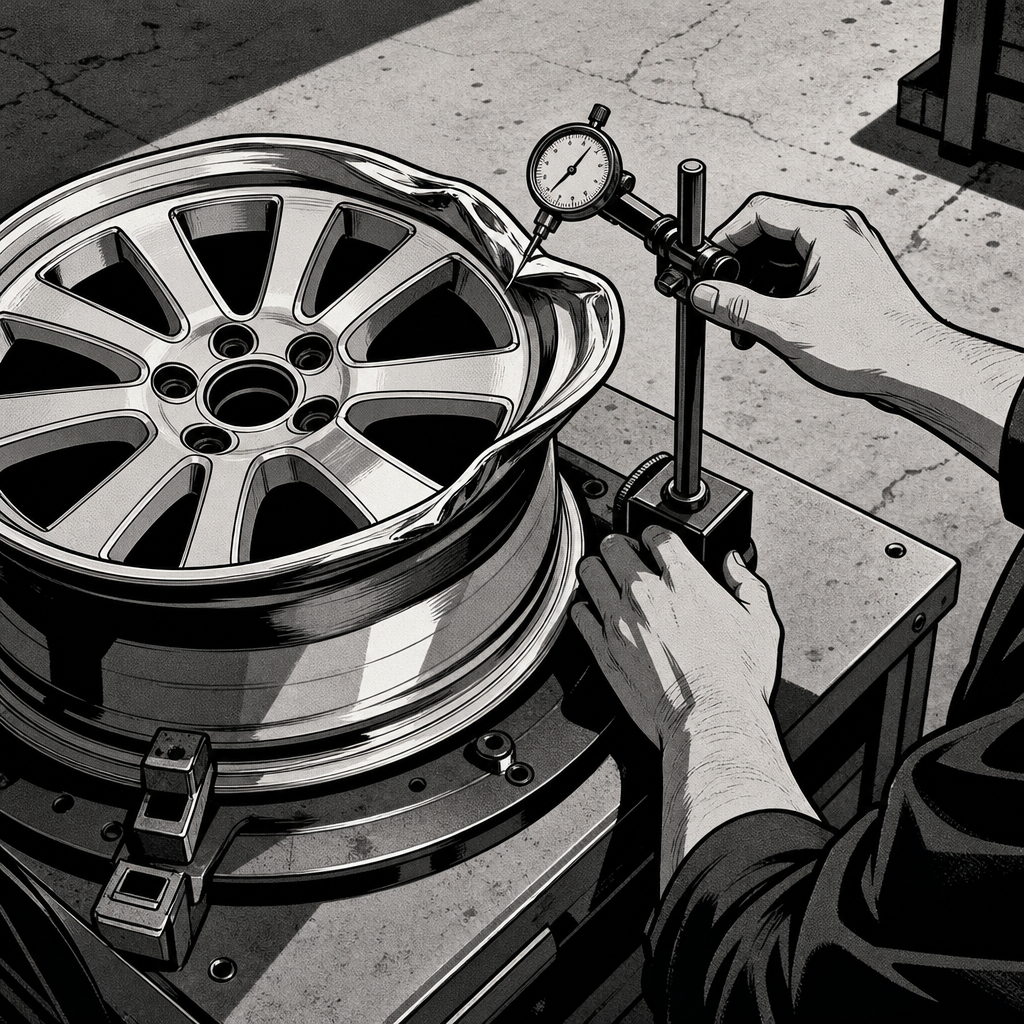
A curb strike or deep pothole hit can bend a lip, crack a spoke, or knock a wheel out of round in a fraction of a second, and the customer standing at the counter wants one answer: fix it or replace it? The honest answer depends on material, damage location, and how much risk the shop is willing to sign off on. This guide breaks down how to inspect the damage, when repair is a legitimate option, when it isn’t, and how to source a replacement without guessing.
Start With a Proper Inspection, Not a Guess
Damage that looks minor from across the bay can hide a crack, and damage that looks catastrophic can sometimes be cosmetic. Before quoting anything, pull the tire off the wheel. You cannot fully evaluate a wheel with the tire still mounted — the bead area and inner barrel are exactly where hairline cracks and bead-seat damage hide.
- Clean the wheel and inspect the bead seat, the lip, and the barrel under good light; a dye-penetrant check or a flashlight raked at a low angle will reveal hairline cracks that are invisible under normal shop lighting.
- Check for air loss around the bead — a wheel that won’t hold a seal even with a new tire is telling you the bead surface is compromised.
- Spin the wheel on a balancer or runout gauge. Lateral and radial runout numbers quantify how far out of round the wheel actually is, which matters more than how bad it looks visually.
- Look at the whole corner, not just the wheel. A bend severe enough to crack a rim often means a bent control arm, tie rod, or strut — inspect suspension geometry before you sign off on “just replace the wheel.”
If you find any crack — even a small one — that wheel is done. Cracks propagate under cyclic load, and a rim that cracks further at highway speed is a blowout, not a slow leak.
Material Changes Everything: Steel vs. Aluminum Alloy
The repair-or-replace calculus is almost entirely dictated by what the wheel is made of.
Steel wheels are ductile. A bent steel rim can often be knocked back into round with controlled force because the metal deforms rather than fractures. This is one of the few cases where “hammer it out” is a legitimate, decades-old shop practice — but it still needs to be done by someone who knows how much force a given steel alloy can take before it work-hardens and cracks anyway.
Aluminum alloy wheels behave completely differently. Alloy is harder and far less forgiving — it tends to crack rather than bend cleanly, and the cast structure that gives the wheel strength is also what makes it brittle under impact. Trying to cold-hammer an alloy wheel back into shape doesn’t just risk failure, it actively weakens the metal at the bend, even if no crack is visible yet. That weakened section is now a future failure point under normal driving loads. Any alloy wheel with visible bending, let alone a crack, should go to a specialist, not a hammer and a bench vise.
Run a product search here: wheel runout and bead seat inspection gauge


When Repair Is a Legitimate Option
Alloy wheel repair is a real, established trade — not a shortcut. Reputable repair shops use heat, controlled hydraulic straightening, CNC machining, and TIG welding to correct bends, re-true out-of-round wheels, and fill minor pitting or cosmetic damage. For a straightforward bent lip with no cracking, expect a typical cost in the neighborhood of $150–$200 per wheel and about an hour of shop time, though pricing varies by region and wheel size.
Repair is worth considering when:
- There is no crack anywhere on the wheel — confirmed by careful inspection, not a quick glance.
- The bend is on the outer lip or cosmetic face, not on a structural area like a spoke root or the inner barrel near the bead seat.
- The wheel still holds a bead and air without a tube or sealant workaround.
- The vehicle is a daily driver where ride quality and long-term reliability matter more than saving fifty dollars over a comparable used wheel.
A legitimate repair shop will refuse to touch a cracked wheel, and that refusal is a feature, not a sales objection. If a shop says yes to repairing a wheel with a visible crack, that’s a red flag, not a bargain.
When It’s Time to Walk Away From a Repair
Some damage simply isn’t a repair candidate, and recommending a repair anyway puts the customer — and the shop’s liability — at risk.
- Any crack. Cracked alloy wheels fail. There is no safe threshold of “small enough” crack on a load-bearing wheel.
- Structural bends near the hub or spokes. Damage near the mounting face or spoke roots affects load paths the wheel was engineered around; cosmetic-lip repair techniques don’t address this.
- Sharp, knife-edge deformation. Damage with a sharp crease rather than a smooth roll usually indicates the metal has already exceeded its elastic limit and is at or near fracture.
- Wheels that won’t hold a bead after a fresh tire. If a new tire still won’t seal, the bead seat itself is damaged beyond a simple fix, and workarounds like inner tubes or excessive sealant are not appropriate for a modern tubeless highway wheel.
In these cases, run the numbers: a quality used wheel from a salvage yard is frequently cheaper than a certified repair, and it carries none of the residual risk of a wheel that’s already been stressed past its design limit.
Sourcing a Replacement the Right Way
If replacement is the call, match it correctly rather than grabbing the first wheel that bolts on.
- Bolt pattern, offset, and center bore must match factory spec exactly — an incorrect offset changes scrub radius and can affect handling and bearing wear.
- TPMS compatibility — confirm whether the sensor transfers to the new wheel or needs to be re-programmed/replaced.
- Matching sets — if one wheel is damaged on an AWD vehicle, check the manufacturer’s tolerance for mismatched wheel diameters across axles; some drivetrains are far less forgiving than others.
- Salvage yards and used-wheel dealers are usually the most cost-effective route for OEM-matching wheels, but always have the used wheel inspected (same process as above) before it goes back into service — a used wheel can carry its own hidden damage history.
- New aftermarket makes sense when a matching used wheel isn’t available or when upgrading the full set to avoid a mismatch down the line.
Don’t skip a post-replacement alignment check. A wheel damaged hard enough to bend or crack almost always came from an impact that can also tweak toe and camber, and an alignment check closes the loop on the whole repair.
Quick Decision Checklist
- Tire off, wheel cleaned and inspected under good light
- Checked for cracks at bead seat, barrel, and spoke roots
- Confirmed material: steel (more repairable) vs. alloy (less forgiving)
- Measured runout on a balancer or dedicated gauge
- Inspected suspension and steering components on that corner
- If repairing: confirmed no cracks and used a reputable alloy wheel repair specialist
- If replacing: matched bolt pattern, offset, center bore, and TPMS compatibility
- Scheduled an alignment check after the repair or swap
Run a product search here: automotive wheel and tire shop tools

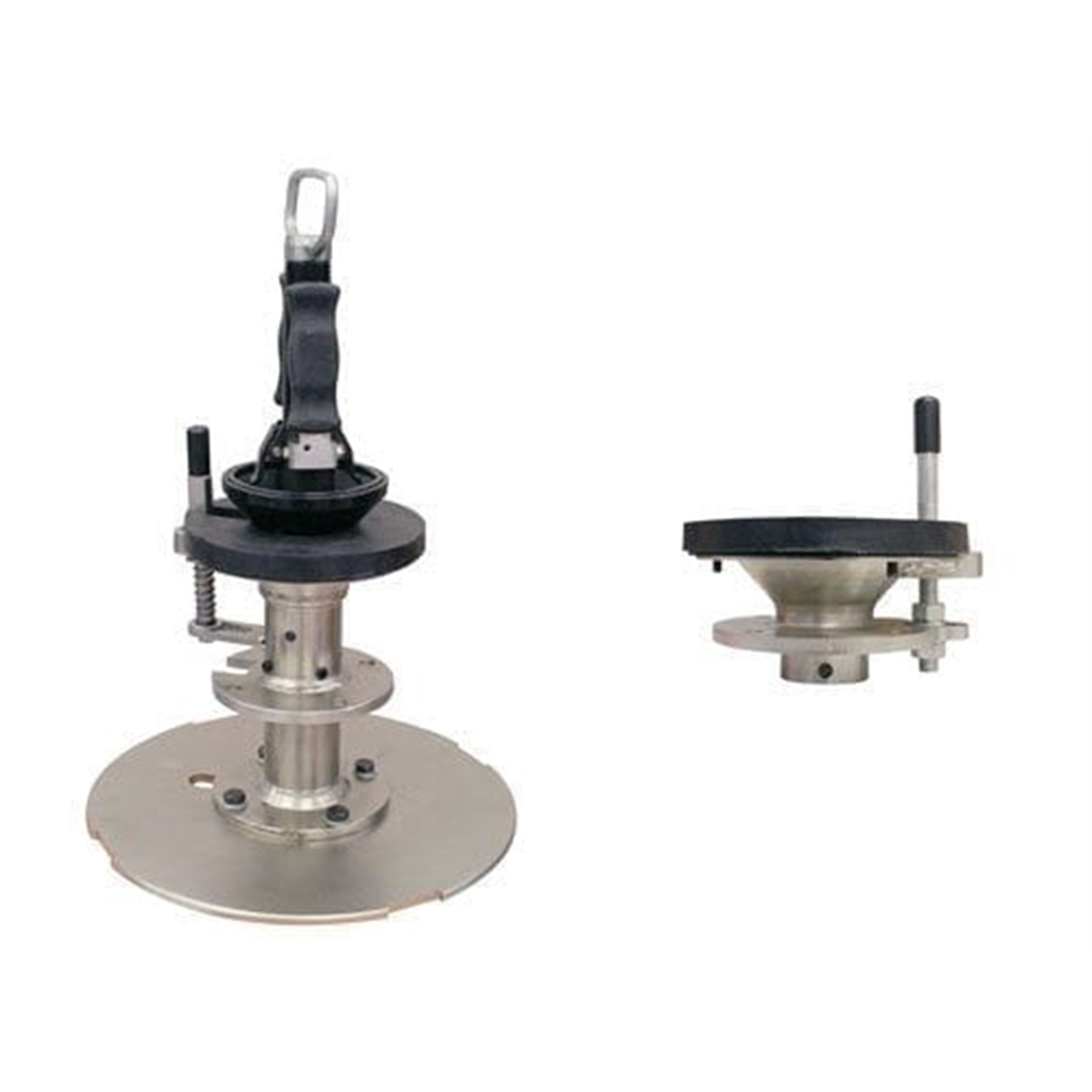
Equipment Tire Changer Center-Post Adapter Kit
Mfg: Atlas Automotive
Part #: ATTC-CPALPA

Atlas Automotive Equipment Platinum PTC400 Center Post Tire Chan
Mfg: Atlas Automotive
Part #: AP-PTC400
FAQs
Can a bent aluminum wheel be hammered back into shape like a steel one?
No. Alloy is brittle compared to steel; cold-hammering it doesn’t restore the metal’s original strength and often weakens or cracks it, even when no crack is visible immediately after.
How much does professional wheel straightening typically cost?
A common range for a non-cracked bent wheel repaired by a specialist shop is roughly $150–$200 per wheel, often comparable to the cost of a good used replacement — which is why both options are worth pricing out before deciding.
Is it ever safe to put a tube in a modern tubeless wheel to get it to hold air?
This is a workaround, not a repair, and it doesn’t address the underlying bend or potential cracking. It should not be treated as a permanent fix on a wheel used at highway speeds.
Will a bent wheel cause a vibration even if it still holds air?
Yes. A wheel that’s out of round will typically produce a shimmy or vibration that scales with speed, even if the bead seal is intact and the tire holds pressure fine.
Should I check anything else besides the wheel after a hard impact?
Always inspect the suspension and steering components on that corner — control arms, tie rods, and struts absorb impact energy too, and a bent wheel is often a sign of a harder hit than it first appears.
Is a cracked wheel ever safe to keep running “just for now”?
No. Cracks propagate under normal driving loads and can lead to sudden air loss or wheel failure at speed. A cracked wheel should be taken out of service immediately.
Recommended Tools for Wheel Assessment
Proper wheel inspection and service require specialized tools and equipment. Find everything you need in our tire tools, wheels, and suspension equipment selection.
- Runout gauges and bead seat inspection equipment for damage assessment
- Tire removal tools and mounting systems
- Jacks and jack stands for safe vehicle lifting during inspection and service

The Toolsource Technical Team blends decades of real-world automotive service experience with up-to-date technical research. Our writers collaborate with professional mechanics, shop owners, and diagnostic specialists to deliver practical, workshop-ready guidance you can trust.


Follow us on social media