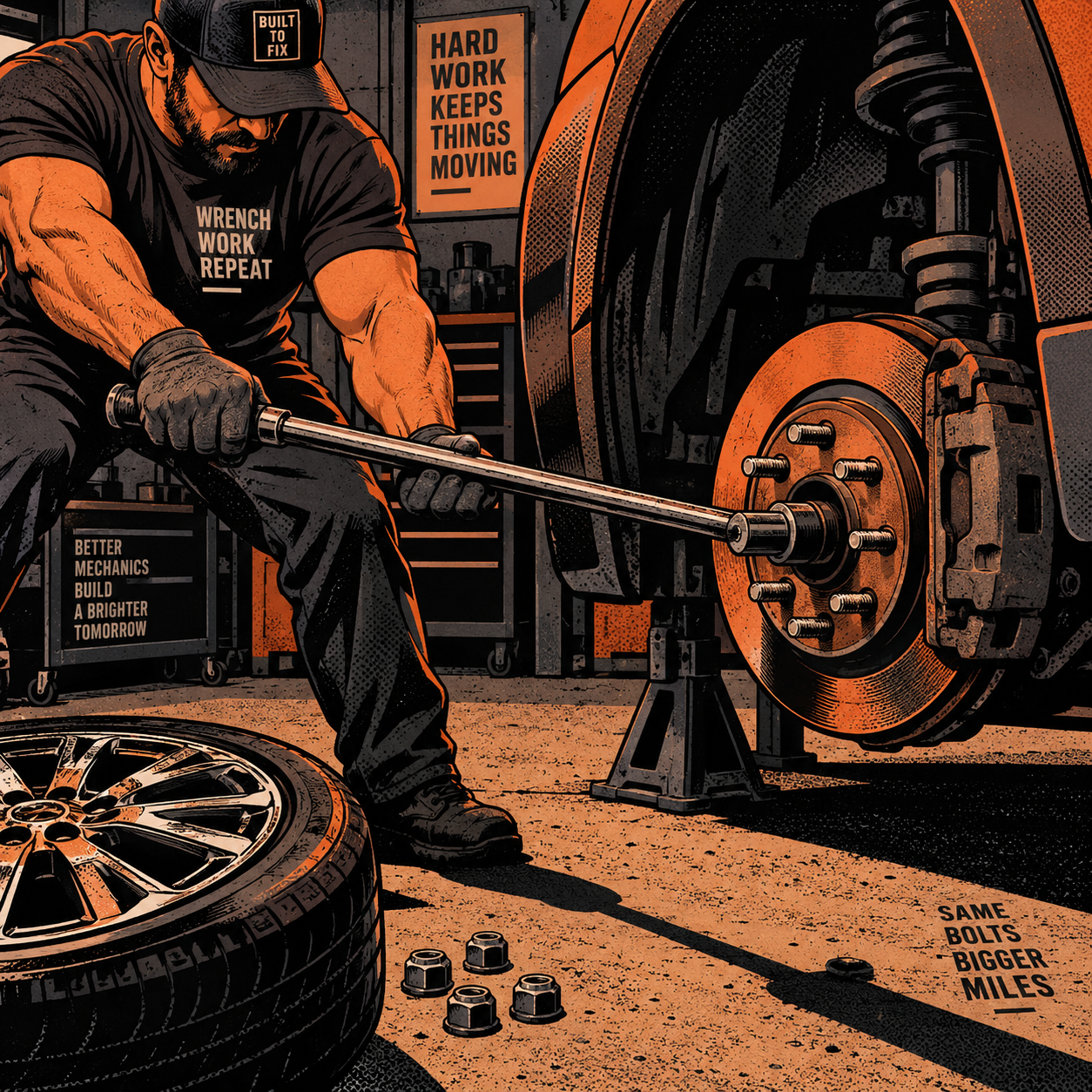
Every tech has seen it: a customer’s lug nuts are torqued so far past spec that a 24-inch breaker bar won’t move them, a half-inch extension snaps, or a torque wrench clicks at 130 ft-lbs and the fastener doesn’t so much as creak. This isn’t bad luck — it’s almost always the result of an impact gun left on full power with no torque limiter, no torque stick, and no verification step. Understanding why it happens, how to diagnose it without guessing, and how to get the wheel off without breaking more tools or hardware is a core skill for anyone who touches wheels for a living.
Why Lug Nuts End Up Over-Torqued in the First Place
Most over-torque incidents trace back to one habit: “ugga-dugga” gunning lugs on with a 1/2″ or 3/4″ impact set to maximum output, with no torque stick or clutch setting dialed in. A 3/4″ impact rated around 2,500 in-lbs (roughly 210 ft-lbs) can blow well past a 100-130 ft-lb spec in under a second if the trigger is held too long. Add a tech who never backs off the trigger once the nut seats, and you get lugs torqued to 300-500+ ft-lbs — enough to strip threads, stretch studs, or make the fastener gall itself onto the stud permanently.
Cross-threading compounds the problem. If a lug nut goes on crooked and gets gunned anyway, it can seize at an angle, requiring even more force to remove later and sometimes rounding the lug in the process. Shops with a real torque protocol — hand-start every nut, snug with the gun on a low clutch setting, finish with a calibrated torque wrench or torque stick, then stamp or initial the job — rarely produce this problem. Shops without one produce it constantly.
Breakaway Torque Doesn’t Tell You the Installed Torque
A common mistake when diagnosing an over-torque complaint is assuming the torque needed to break a lug loose equals what it was torqued to. It doesn’t. Static friction and thread/seat galling mean breakaway torque is routinely 50% or more higher than the original installed torque, even on a correctly torqued fastener. So a lug that was properly set at 100 ft-lbs might reasonably need 150 ft-lbs to crack loose — that alone isn’t proof of a problem.
What is diagnostic: needing a cheater pipe on a breaker bar, bouncing your body weight to break it free, snapping a 3/8″ or 1/2″ drive extension, or rounding a six-point socket. Those outcomes point to torque well north of 300 ft-lbs — three or more times a typical passenger car spec — and that’s outside the range breakaway friction alone can explain. If you’re in a shop evaluating a comeback complaint, this distinction matters: don’t tell a customer “that’s normal breakaway torque” when the removal method itself (snapped tools, rounded fasteners) already rules that out.
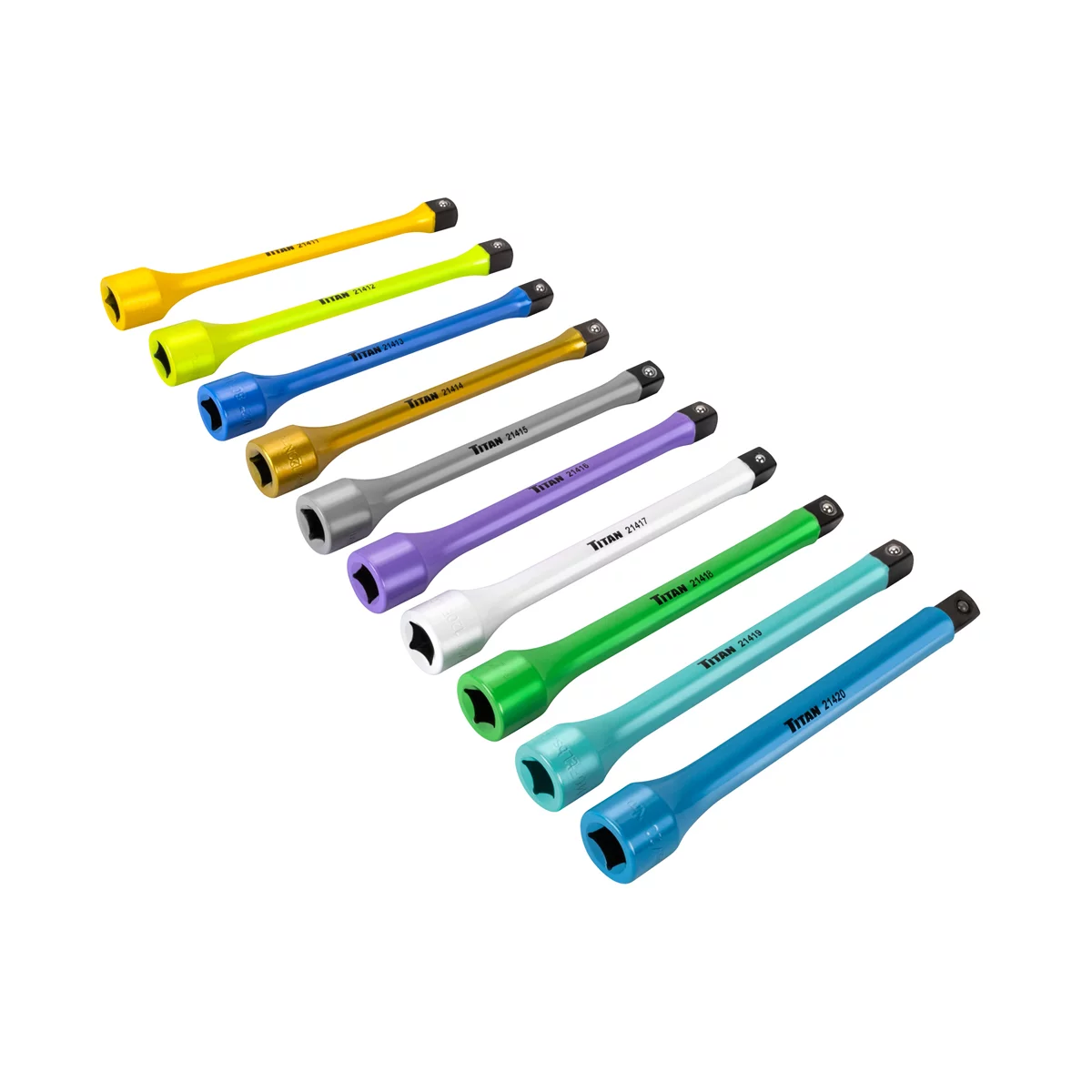
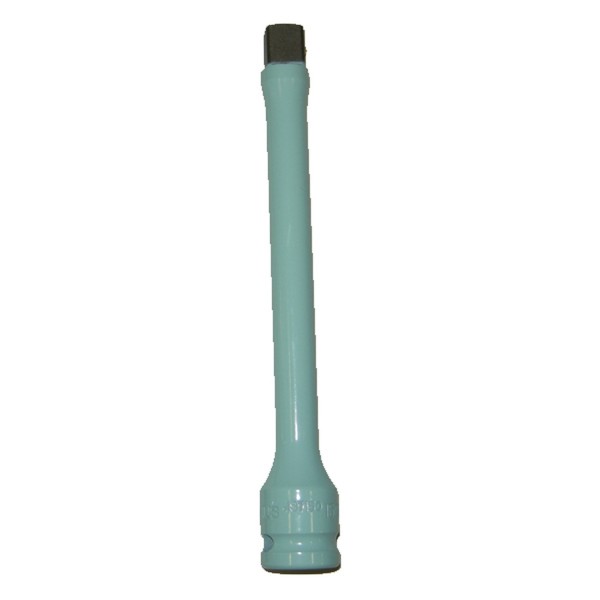
1/2" Drive Torque Extension - Aqua - 150 ft-lbs(200 Nm)
Mfg: Genius Tools
Part #: 487150
Removing Lugs That Won’t Budge Without Making It Worse
When you’re facing a lug torqued way beyond spec, technique matters more than brute force:
- Pull any extension off the impact gun and put the socket directly on the anvil — extensions bleed off impact energy through torsional flex and “bounce” losses at every connection point, so a bare gun-to-socket setup delivers noticeably more usable torque than the same gun with an extension in line. This does not apply to torque wrenches, whose reading is unaffected by extension length, but it absolutely applies to impact tools.
- Confirm you’re using the correct size and a six-point impact socket, not a worn twelve-point or a universal joint adapter, before applying serious force — rounding starts the moment the socket doesn’t fully engage the flats.
- Use a breaker bar long enough to generate leverage without a cheater pipe if at all possible; a cheater pipe on a 24″ bar plus body weight can realistically generate 400-500+ ft-lbs, which is enough to snap studs, not just nuts.
- If a nut still won’t move, a short burst of penetrating oil or careful heat at the nut (not the stud, to avoid weakening it) can help break corrosion-assisted galling, though this is less common than pure over-torque as the root cause.
- Never use a click-type torque wrench to break a seized fastener loose. Exceeding its rated maximum can knock the calibration out or damage the internal mechanism. If a torque wrench is your only tool on hand and the fastener won’t move within its rated range, stop and switch to a breaker bar.
When the Lug Rounds Anyway: Extraction and Stud Replacement
If a lug has already rounded — whether from the shop’s over-torque or from improper socket use during removal — don’t keep fighting it with the same worn socket. A lug nut extractor (a reverse-spiral socket) or a damaged-nut removal set designed for rounded fasteners, run with an impact gun, is the fastest clean path. If the stud itself is damaged (stretched, cross-threaded, or the threads are stripped), replace the stud rather than chasing threads with a die — a stretched stud has lost clamping integrity even if it looks intact, and it’s a safety item, not a cosmetic one.
After extraction, always replace the lug nuts too, not just the stud. A lug nut that’s been over-torqued or run with a cross-threaded start can have deformed threads internally even if it looks fine externally.
Setting Up a Torque Verification Protocol in Your Shop
The fix for chronic over-torque complaints isn’t a better impact gun — it’s a documented verification step. A simple, auditable process looks like this: the installing tech hand-threads every nut, snugs with the gun on a reduced clutch setting or using a torque stick rated near spec, then a second pass with a calibrated torque wrench to the exact spec, followed by a signature or stamp on the work order. Shops that run this process can show a customer exactly who torqued a wheel and to what spec if a comeback happens — and it’s also the fastest way to catch a bad impact gun, a worn torque stick, or an untrained tech before it becomes a liability claim.
Torque wrenches themselves need maintenance to stay trustworthy: store them unlocked (if clicker-type) at the lowest setting when not in use, and get them calibrated on a documented schedule — twice yearly is a common standard for click-type wrenches in daily shop use.
Quick Checklist: Diagnosing and Fixing an Over-Torqued Wheel
- Remove any extension from the impact gun before trying again — socket straight on the anvil
- Confirm the socket is correct size, six-point, and fully seated before applying force
- Rule out breakaway torque (normal) vs. snapped tools/rounded fasteners (abnormal, over-torque)
- Never use a click-type torque wrench to break a seized nut loose
- Extract rounded nuts with a dedicated extractor set, not repeated attempts with a worn socket
- Replace any stretched stud and any nut that was cross-threaded or over-torqued, not just the rounded one
- Document torque with a hand-thread → torque-stick snug → calibrated torque wrench final-check process
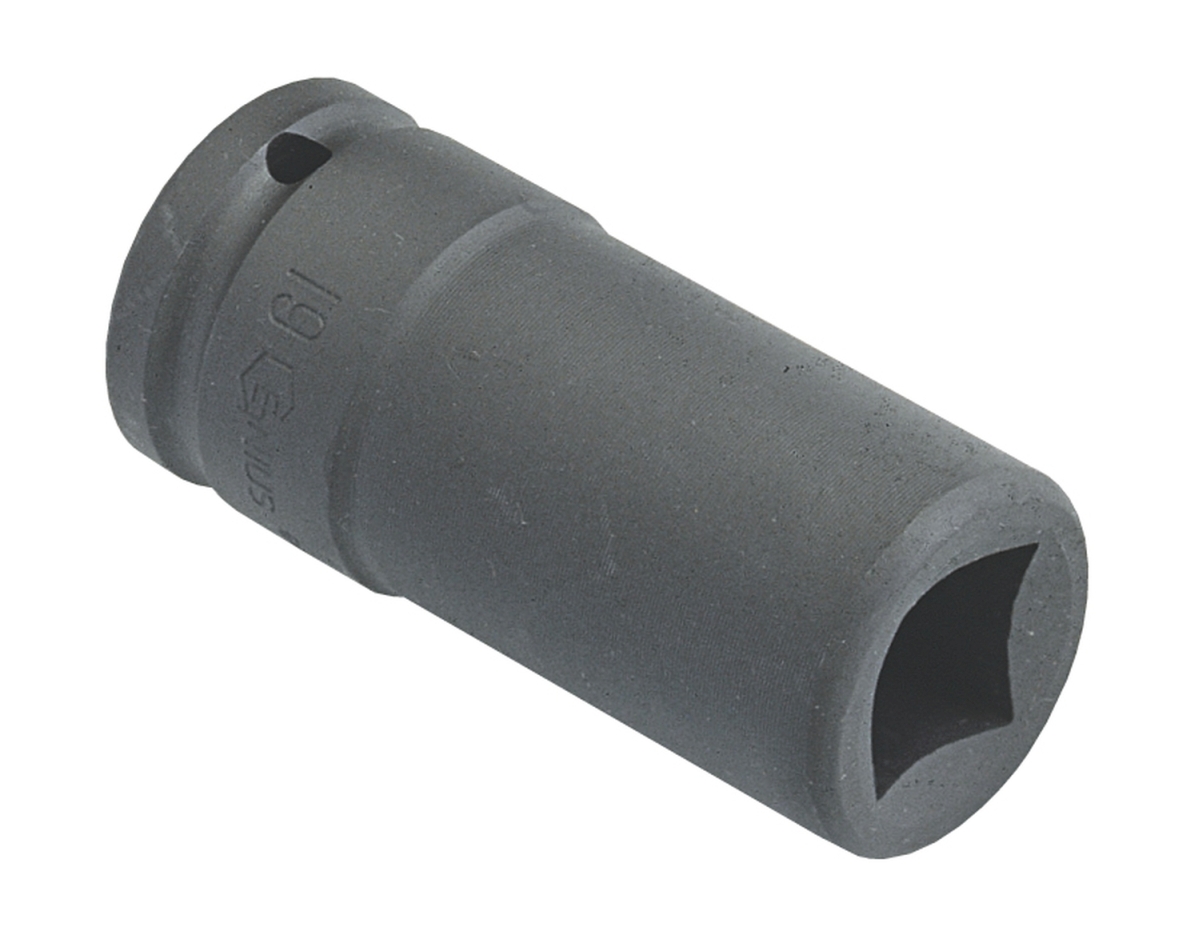
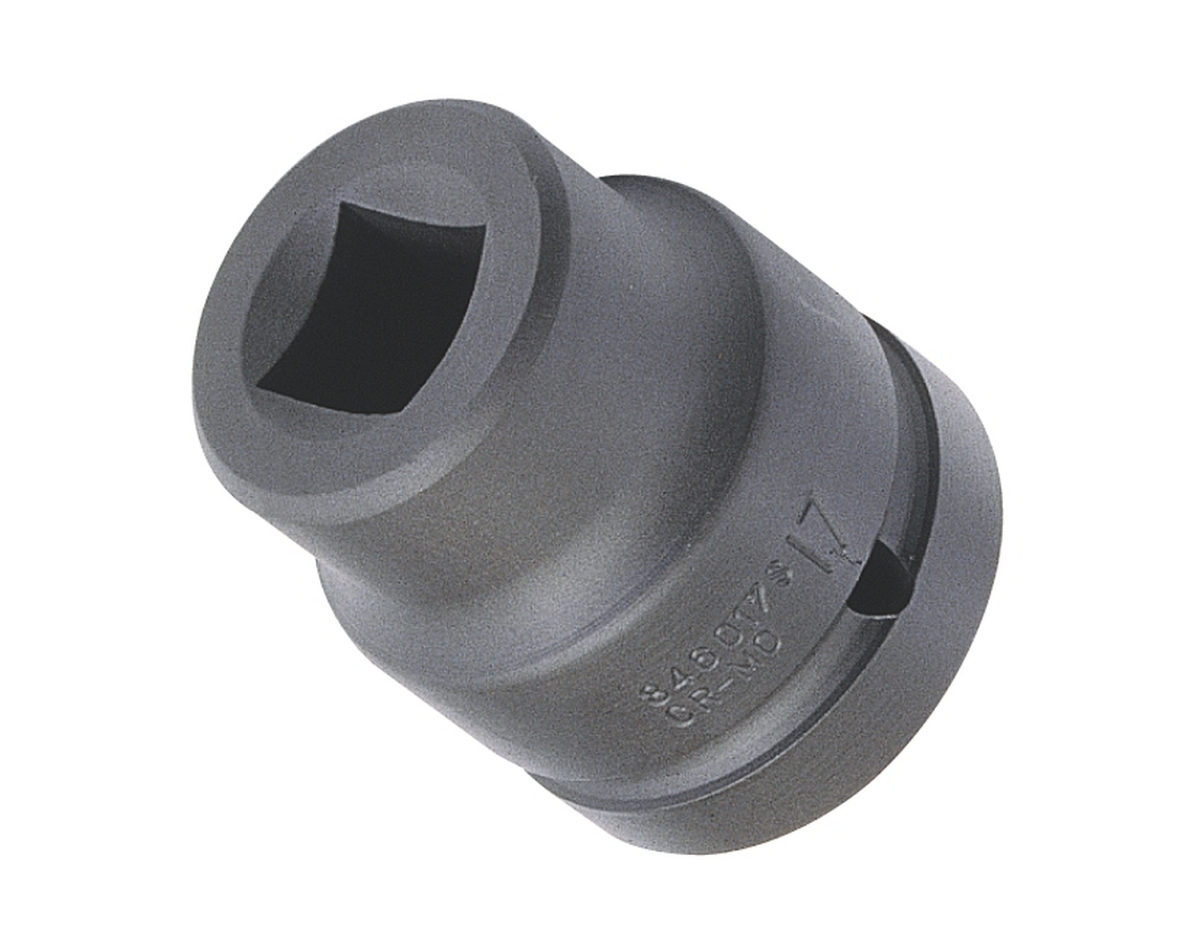
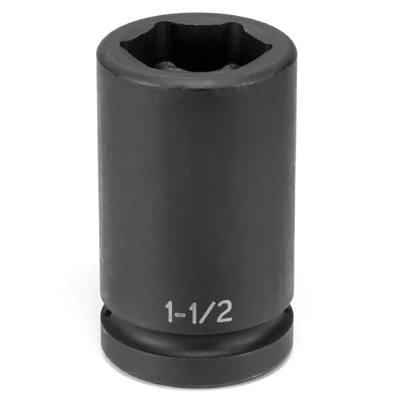
1" Drive Budd Wheel Impact Socket, 1-1/2" Limited Hex
Mfg: Grey Pneumatic
Part #: 4048DB
Frequently Asked Questions
Can I use a torque wrench to loosen a lug nut?
Only if the breakaway torque is below the wrench’s rated maximum — exceeding the max rating can throw off calibration or damage the mechanism on some designs. If you don’t know the breakaway torque in advance, use a breaker bar or impact gun instead and save the torque wrench for final tightening.
Does an extension really reduce impact wrench torque?
Yes. Impact energy is delivered in short, sharp hammer strikes, and any extension introduces torsional flex and absorbs energy at each connection (“bounce” losses), lowering the torque that actually reaches the fastener. This does not apply to manual torque wrenches, where extension length doesn’t change the reading.
How do I know if a shop over-torqued my lugs versus normal breakaway resistance?
Normal breakaway can run 50% or more above the installed torque. If removal requires a cheater pipe, body-weight leverage, or snaps a drive extension or socket, that’s well beyond normal breakaway friction and points to genuine over-torque, often 3x spec or more.
What should I do if a shop rounded my lug nuts?
Bring the vehicle back, explain the situation calmly, and ask them to remove the wheel, inspect the studs and nuts, and replace anything damaged. Reputable shops will document the issue with photos and cover the repair; if they refuse, a lug extractor set and new studs/nuts will resolve it independently.
Should I replace just the lug nut or the stud too after rounding?
If the stud shows thread damage, galling, or you suspect stretching from excessive torque, replace the stud, not just the nut. Replace the nut as well, since internal thread damage from over-torque or cross-threading isn’t always visible from the outside.
How often should shop torque wrenches be calibrated?
A common standard for click-type torque wrenches in daily use is calibration twice a year, with storage at the lowest setting (unlocked) between uses to protect the internal spring mechanism.
Recommended Tools for Wheel Service
Removing over-torqued fasteners and setting up a proper torque verification process require the right tools. Our Tire Tools, Wheels & Suspension selection includes impact wrenches, torque wrenches, breaker bars, and specialized extraction equipment.
- Impact wrenches and breaker bars for controlled fastener work
- Calibrated torque wrenches for verification and documentation
- Lug nut extractors and removal sets for rounded or seized fasteners

The Toolsource Technical Team blends decades of real-world automotive service experience with up-to-date technical research. Our writers collaborate with professional mechanics, shop owners, and diagnostic specialists to deliver practical, workshop-ready guidance you can trust.


Follow us on social media