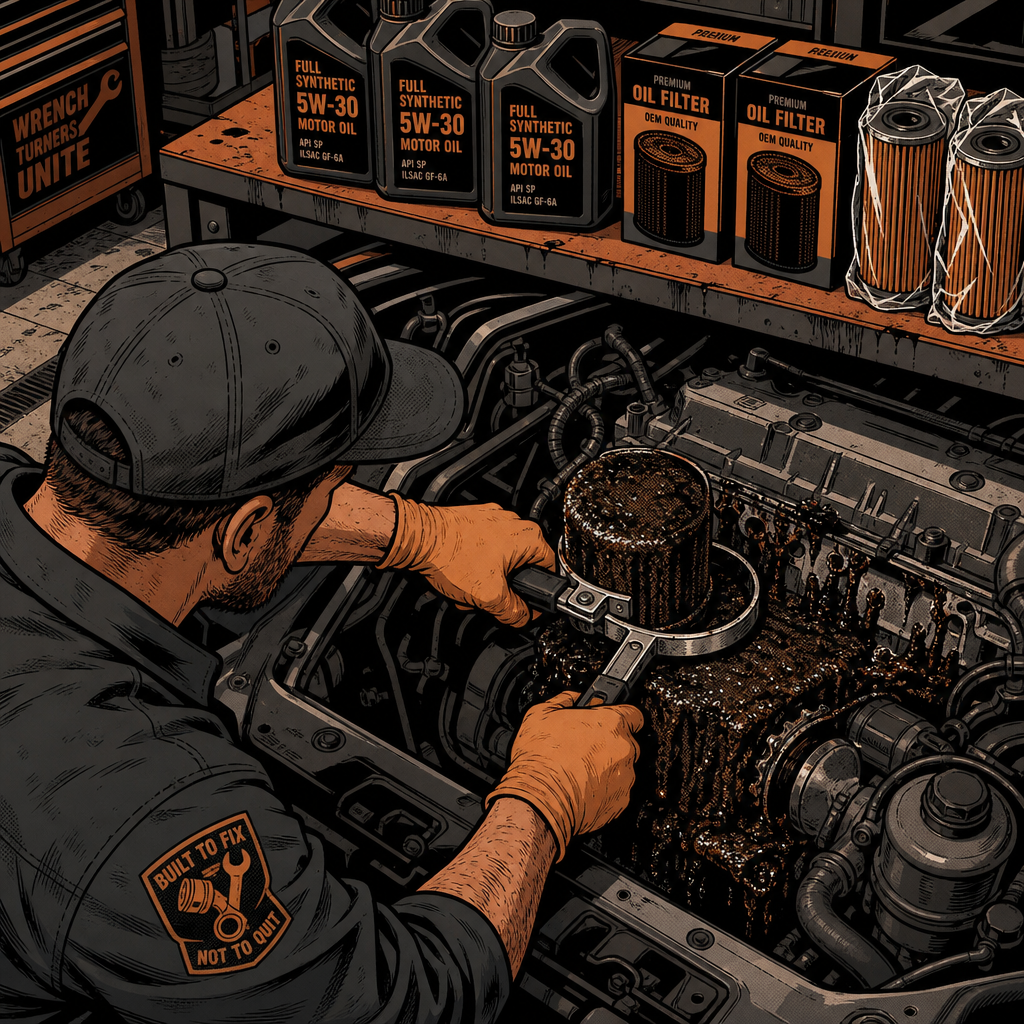
Every shop sees them eventually: vehicles that roll in with oil that looks like honey-glazed charcoal coating the filter housing, dipsticks showing barely readable levels, and owners who sheepishly admit they can’t remember the last service. While catastrophic life events—hurricanes, financial crises, housing loss—sometimes explain severe maintenance neglect, the mechanical reality remains the same. When oil changes get skipped for years instead of months, you’re not just looking at dirty oil. You’re dealing with engine sludge that’s already coating internal components, compromised lubrication systems, and an engine running on borrowed time. The good news? If the engine still runs, there’s a recovery protocol that can slowly reverse some of the damage. The bad news? Complete recovery isn’t always possible, and the window for intervention closes fast.
Understanding What Goes Wrong During Extended Oil Change Intervals
Oil serves three critical functions in an engine: lubrication, cooling, and cleaning. When oil breaks down from heat cycling and contamination over tens of thousands of miles, it stops performing all three jobs effectively. Fresh oil contains detergent additives designed to suspend combustion byproducts, metal particles, and carbon deposits. As the oil ages beyond its service interval, these additives deplete, and the suspended contaminants begin forming sludge—a thick, tar-like substance that adheres to engine internals.
This sludge accumulation creates a cascading failure pattern. First, the oil passages narrow as deposits build up on passage walls, restricting flow to critical components like camshaft bearings and valve train assemblies. Second, the oil’s viscosity changes dramatically; what started as 5W-30 becomes something closer to molasses, especially when cold. Third, the oil pump works harder to push thickened fluid through restricted passages, potentially leading to pump wear or failure. Fourth, heat dissipation suffers because sludge acts as an insulator, trapping heat in components designed to transfer it away.
The oil filter itself tells the story. A filter from a severely neglected engine will show dense, gummy deposits on the element—material that represents only what the filter caught. The same contamination coats piston rings, valve stems, timing chain guides, and every oil gallery in the block. In extreme cases, sludge buildup can cause piston ring sticking, leading to blow-by, oil consumption, and compression loss. Cam lobes can develop wear patterns from inadequate lubrication. Hydraulic lifters may collapse or stick. Variable valve timing actuators can jam. Any engine that has experienced years between oil changes has likely suffered some degree of internal damage, even if it currently runs acceptably.
Initial Assessment and Damage Evaluation
Before starting any recovery protocol, you need to establish a baseline condition assessment. Start with a cold engine compression test across all cylinders. Significant variation between cylinders (more than 10-15% deviation from the highest reading) suggests ring sealing problems potentially caused by sludge-induced ring sticking. Follow up with a wet compression test on any low cylinders to differentiate between ring and valve issues.
Next, check for excessive blow-by by removing the oil filler cap with the engine running. Significant pressure pulsing or smoke indicates compromised ring sealing. Check the PCV system thoroughly—sludge often clogs PCV valves and passages, creating crankcase pressure issues that can blow out seals. Inspect the valve cover breather and PCV valve for restrictions.
Pull a sample of the current oil for visual and tactile inspection. Rub it between your fingers—healthy oil feels slippery, while sludged oil feels gritty and breaks down into particles. Check for glitter (metal particles indicating bearing wear) and milkiness (coolant contamination). Smell the oil; a strong fuel smell indicates ring blow-by allowing fuel dilution. If you have access to oil analysis services, send a sample for baseline metals, viscosity, and contamination testing. This gives you objective data to track improvement over subsequent changes.
Listen for abnormal valve train noise, timing chain rattle, or rod knock. Sludge-starved components often announce their damage audibly before they fail catastrophically. Check oil pressure with a mechanical gauge at idle and at 2000 RPM. Compare readings against manufacturer specifications. Low oil pressure despite full oil level strongly suggests pump wear or bearing clearances have opened up from inadequate lubrication.
===PRODUCT-SEARCH===
oil drain pan | oil filter wrench | mechanic gloves | oil change tools
===PRODUCT-SEARCH-END===
No products found for "oil drain pan | oil filter wrench |"
The Recovery Protocol: Short-Interval Oil Changes
The consensus among experienced technicians for sludge recovery involves frequent oil changes with quality synthetic oil—but not engine flushes. Chemical flush products can dislodge large sludge chunks that then block oil passages, causing immediate bearing failure. The safer approach uses the detergent properties of fresh oil to gradually dissolve sludge over many cycles.
Start with a complete oil and filter change using a quality full-synthetic oil. Synthetic oils maintain their detergent additive packages better than conventional oils and flow better when cold, helping clean while protecting. Some technicians recommend Valvoline Restore and Protect or similar high-detergent formulations specifically designed for cleaning while protecting. Fill to the proper level—overfilling can cause aeration and foam, while underfilling risks starvation.
Here’s the critical part: change the oil and filter every 2,000-3,000 miles for the next 10,000-15,000 miles. This means five to seven oil changes over the next year of driving. Each change pulls out dissolved sludge that has transferred from engine internals into the oil. You should see noticeable improvement in oil appearance with each successive change. The first change will likely produce oil that looks nearly black immediately. The second will run slightly longer before darkening. By the fourth or fifth change, the oil should maintain a cleaner appearance closer to normal service intervals.
Replace the oil filter with every change—this is non-negotiable. The filter is catching suspended sludge particles, and a saturated filter will bypass unfiltered oil directly into the engine. Use quality filters from reputable manufacturers (OEM, Wix, Mobil 1, K&N, Purolator). Budget filters may have lower capacity and inferior bypass valve settings.
During this recovery period, some techs add half a quart of automatic transmission fluid (ATF) or Marvel Mystery Oil to the engine oil about 100 miles before each oil change. These fluids contain high detergent concentrations that help break down sludge. This is controversial—some technicians swear by it, others consider it unnecessary with modern high-detergent synthetic oils. If you use this approach, account for the added half-quart in your oil capacity and don’t exceed the maximum fill line.
Monitoring Progress and Knowing When to Stop
After three to four short-interval changes, consider pulling a valve cover to visually inspect the camshaft and valve train. This is especially feasible on inline engines where valve cover removal is straightforward. You’re looking for sludge reduction on cam lobes, lifter bores, and valve springs. Cam lobes should show clean metal with visible machining marks, not coating layers. If significant sludge remains after four changes, continue the protocol. If you see substantial improvement, you can start extending intervals slightly.
Track your oil consumption between changes. Write down the mileage and quant added if you need to top off between services. Increasing oil consumption suggests ring damage that may be permanent. Stable or decreasing consumption is a positive sign that rings are sealing better as sludge clears from ring lands.
Monitor engine noise throughout the recovery period. Valve train noise should decrease as oil flow improves to hydraulic lifters and cam bearings. If noise increases or new sounds develop (knocking, ticking, grinding), stop driving immediately and investigate. You may have dislodged material blocking a critical oil passage.
After five to seven short-interval changes with improving oil appearance and stable engine performance, you can transition to normal service intervals. For an engine that has experienced severe neglect, “normal” should mean the conservative end of the manufacturer’s recommended range—typically 5,000 miles with synthetic oil rather than extending to 7,500 or 10,000 miles. The engine has sustained damage, and conservative maintenance helps maximize remaining service life.
When Recovery Isn’t Worth It: Knowing Your Limits
Not every neglected engine can be saved, and sometimes the economics don’t make sense. If your compression test shows multiple cylinders below 100 PSI or with more than 20% variation, you’re likely looking at significant ring or valve damage. If oil pressure remains below specification even after fresh oil changes, bearing damage has probably progressed too far. If the engine consumes more than a quart every 500 miles, ring sealing damage is severe.
In these cases, you need to have a realistic conversation about options: continue driving the vehicle as-is while budgeting for replacement, invest in engine replacement or rebuild, or move on to a different vehicle. For a vehicle worth $3,000-$5,000, spending $3,000-$5,000 on engine replacement rarely makes financial sense unless the rest of the vehicle is in excellent condition and you plan to keep it long-term.
If the engine does fail after beginning recovery, don’t assume the oil changes caused it. The damage occurred during the neglect period; failure during recovery simply means you started intervention too late. Think of it like a patient with advanced heart disease—cleaning up their diet might help, but it won’t undo years of arterial damage, and a heart attack during lifestyle changes doesn’t mean the vegetables caused it.
Prevention: Teaching Customers About Oil Change Economics
Many vehicle owners genuinely don’t understand the cost-benefit math of oil changes. They see a $75 oil change as expensive, not recognizing it costs $75 every 5,000 miles while an engine replacement costs $3,000-$5,000. Break it down in per-mile terms: that oil change costs 1.5 cents per mile of protection. Engine replacement costs $300+ per thousand miles of resulting service life. Even customers facing genuine financial hardship need this perspective.
For customers who want to minimize costs, teach them how to do their own oil changes. The tools required—oil drain pan, filter wrench, funnel, and ramps or jack stands—cost less than two professional oil changes. The materials (oil and filter) cost $30-$40. A driveway oil change takes 30 minutes once you’ve done it twice. Many parts stores accept used oil for free recycling. For apartment dwellers without workspace, some auto parts stores allow parking lot oil changes as long as you use absorbent pads and dispose of oil properly inside.
The biggest barrier to oil changes isn’t cost—it’s remembering to do them. Help customers set up reminder systems: phone calendar alerts at mileage-based intervals, windshield stickers, or mileage logbooks. Some modern vehicles track service intervals automatically and display reminders. Teach customers to check these systems and take them seriously.
===PRODUCT-SEARCH===
synthetic motor oil | oil filters | automotive fluids | engine maintenance products
===PRODUCT-SEARCH-END===
Recovery Protocol Quick Reference Checklist
- Perform compression test (all cylinders) and document baseline readings
- Check oil pressure with mechanical gauge at idle and 2000 RPM
- Inspect PCV system and clean/replace PCV valve
- Complete first oil change with full-synthetic oil and quality filter
- Change oil and filter every 2,000-3,000 miles for next 10,000-15,000 miles
- Optional: Add 0.5 quart ATF or Marvel Mystery Oil 100 miles before each change
- Monitor oil consumption and document any top-offs between changes
- After 3-4 changes, remove valve cover to inspect for sludge reduction
- Listen for changes in engine noise throughout recovery period
- After 5-7 changes with improvement, transition to 5,000-mile intervals


Frequently Asked Questions
How long can an engine actually run without an oil change?
It depends entirely on the engine design, oil type, and driving conditions. Some modern engines with synthetic oil can tolerate 10,000-15,000 mile intervals safely. However, most engines begin experiencing accelerated wear beyond 7,500 miles, and sludge formation typically starts around 10,000-12,000 miles on conventional oil. Running 20,000+ miles between changes virtually guarantees sludge buildup and internal damage. Toyota engines tend to tolerate neglect better than most, but even they aren’t immune to sludge-related damage.
Are engine flush products safe to use on a sludged engine?
Most experienced technicians advise against chemical engine flushes on severely sludged engines. These products can dislodge large chunks of sludge that block oil passages, causing immediate bearing failure or oil starvation. The safer approach uses frequent oil changes with high-detergent synthetic oil to gradually dissolve sludge over many cycles. If you do use a flush product, choose a mild one and follow the instructions exactly—never extend the flush cycle beyond recommended time.
How much does it typically cost to recover a neglected engine?
If you’re doing the work yourself, expect to spend $200-$400 in oil and filters over five to seven oil changes ($35-$50 per change × 5-7 changes). Professional oil changes would run $375-$700 for the same service ($75-$100 per change × 5-7 changes). This assumes the engine hasn’t suffered catastrophic damage requiring rebuild or replacement, which would cost $2,000-$6,000 depending on the vehicle.
Can switching to synthetic oil damage an old engine with sludge?
This is a persistent myth. Synthetic oil will not damage a sludged engine—in fact, its superior detergent package and flow characteristics make it the best choice for recovery. The concern comes from synthetic oil’s ability to clean deposits; if an engine has been running on conventional oil for 200,000 miles, suddenly switching to synthetic might clean deposits that were sealing worn components, potentially revealing pre-existing leaks. For a sludged engine, this cleaning action is exactly what you want.
What vehicle brands handle oil change neglect best?
Toyota and Honda engines generally tolerate neglect better than most, with Toyota particularly known for surviving abuse. Their engines tend to have conservative tolerances, robust oil pumps, and effective crankcase ventilation systems. However, this doesn’t mean they’re immune—any engine subjected to years without oil changes will suffer damage. The difference is a Toyota might continue running where other brands would have seized, but “running” doesn’t mean “undamaged.”
How can I tell if my engine is already too far gone to save?
Warning signs of irreversible damage include: compression readings below 100 PSI or more than 20% variation between cylinders, oil pressure below specification with fresh oil, consumption of more than one quart per 500 miles, loud knocking or grinding noises from the bottom end, and metal glitter visible in drained oil. If you see multiple warning signs, the engine likely needs replacement rather than recovery. A single issue might be repairable, but combined symptoms suggest extensive internal damage.
Oil Change Tools & Supplies
Executing a recovery protocol for a neglected engine requires quality supplies and the right equipment. Stock your workspace with proper automotive oil change tools to handle frequent service intervals efficiently.
- Oil drain pans and filter wrenches for safe fluid removal
- Funnels and collection systems to prevent spills and ensure proper disposal
- Mechanical gauges and diagnostic equipment for baseline assessments

The Toolsource Technical Team blends decades of real-world automotive service experience with up-to-date technical research. Our writers collaborate with professional mechanics, shop owners, and diagnostic specialists to deliver practical, workshop-ready guidance you can trust.


Follow us on social media