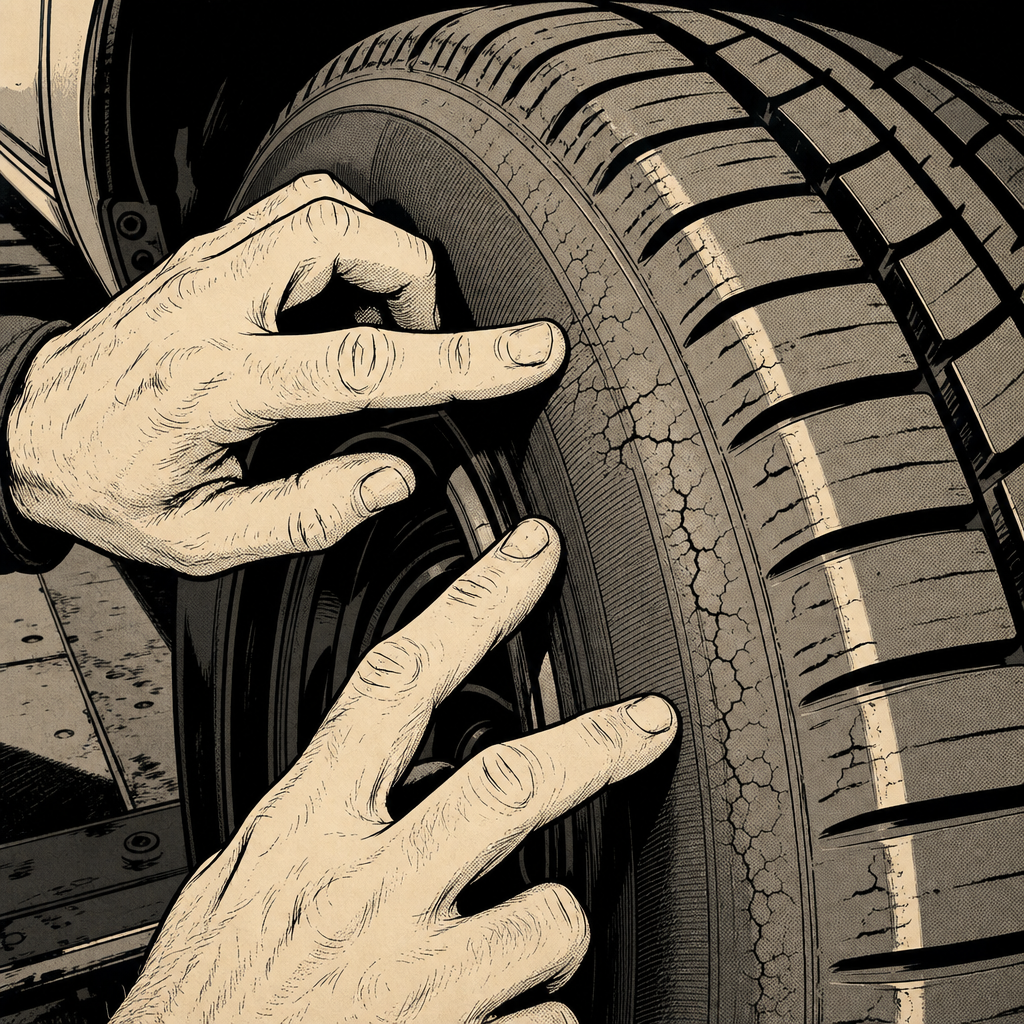
A tire with plenty of tread left can still be a liability the moment it rolls out of your bay. Rubber compounds degrade with time and heat exposure regardless of mileage, and that degradation doesn’t always show up as visible cracking before it causes a failure. Techs who only check tread depth are missing half the inspection. This guide covers how to read a DOT date code, what the manufacturers actually say about tire aging, and how to spot the warning signs before a customer’s tire lets go on the highway.
Why Tire Age Matters More Than Tread Depth
Tires are built from rubber compounds blended with plasticizers and antiozonants that keep the material flexible. Over time, those chemicals outgas — you can smell it as the classic “new tire” odor fading, and you can see it as a light bloom or discoloration on nearby surfaces. As the plasticizers leave the compound, the rubber stiffens. A stiffer tread and sidewall lose grip, especially in the wet, and become more prone to cracking and belt separation under load and heat.
This is why a tire can look nearly new — full tread, no visible cracks — and still be unsafe. The degradation starts in the internal structure before it’s visible on the surface. By the time cracking is obvious in the tread grooves or sidewall, the compound has usually already lost a meaningful amount of elasticity. Heat exposure accelerates the process significantly, which is why vehicles stored or driven in hot climates see faster aging than the same tire in a cooler region.
How to Read a DOT Date Code

Every tire sold in the U.S. carries a DOT (Department of Transportation) code on the sidewall. The last four digits are the manufacture date: the first two digits are the week of the year, the last two are the year. A code ending in 2605 means the tire was built in week 26 of 2005 — 20+ years old at the time of writing. Tires made before 2000 used a three-digit code and are functionally impossible to date precisely by week, which is one more reason a tire that old has no business on a daily driver.
Check the DOT code on all four tires, not just one. Tires get swapped, rotated, and replaced individually, and it’s common to find a mismatched set where one corner is years older than the rest — especially on spares, trailers, and vehicles that sat on a dealer lot before being sold. Always confirm the code on the outboard sidewall; some tires only stamp the full code on one side.
===PRODUCT_SEARCH_1===


Industry Guidelines: 6, 8, or 10 Years?
There’s no single federal age limit for tires in service, which is part of why this causes so much confusion at the counter. Vehicle and tire manufacturers publish their own guidance, and it varies:
Most major tire manufacturers recommend replacement at 10 years from the manufacture date, regardless of tread depth or apparent condition. Some brands are more conservative — Goodyear has historically recommended replacement starting around 6 years for tires without a spare, with several vehicle manufacturers (including some German automakers) also citing 6 years in owner’s manuals. A widely cited general guideline in the industry is: inspect annually starting at year 5, and plan on replacement somewhere between 6 and 10 years depending on the brand, usage, and storage conditions.
Because there’s a range rather than one hard number, treat manufacturer statements as the floor, not the ceiling. A tire stored indoors in a climate-controlled space will age slower than an identical tire that’s spent a decade outdoors in direct sun. When in doubt, or when a customer’s vehicle or tire brand doesn’t specify a limit, err toward the more conservative end of the range — especially for anything carrying passengers at highway speed.
Inspecting for Age-Related Failure Signs
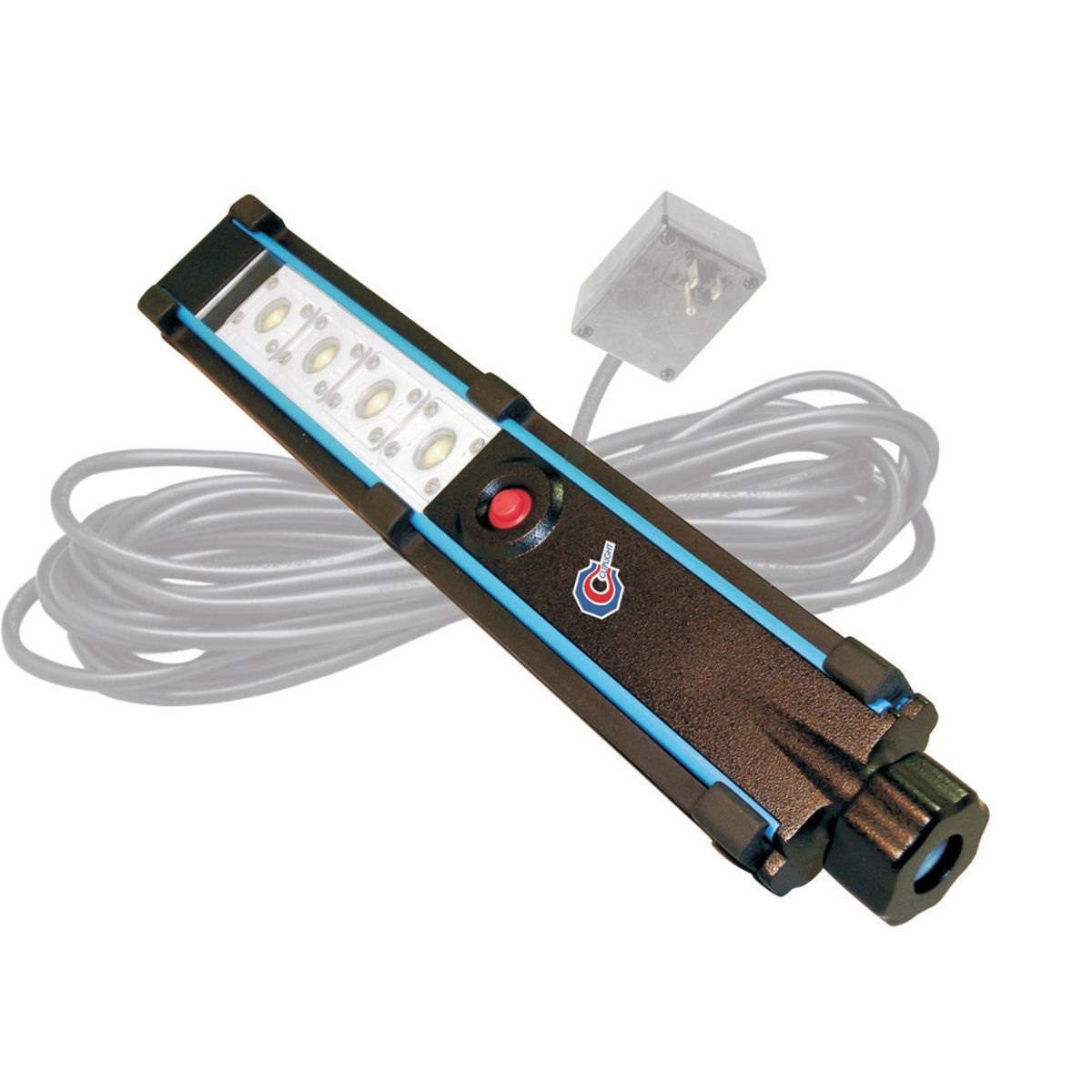
Cliplight Hemitech 4 LED Work Light 25ft Cord Ultra Bright
Mfg: Cliplight
Part #: 123407

A proper age inspection goes beyond tread depth and includes:
- Sidewall cracking (weather checking): Fine cracks running across the sidewall or in the base of the tread grooves are a hallmark of ozone and UV degradation. Cracks that reach into the cord layer are grounds for immediate replacement.
- Tread groove cracking: Even tires with 6-7/32″ of tread remaining can show cracking at the base of the grooves — this is often the first visible sign of a compound that’s already lost significant elasticity.
- Bulges or sidewall deformation: Indicates internal belt or ply separation, which is more common in aged tires under normal load.
- Uneven or unexplained vibration/handling complaints: Customers sometimes describe an aged tire as feeling like “driving in the rain” on a dry day, or generally vague and disconnected steering feel — that’s reduced grip from hardened rubber, not necessarily an alignment or balance issue.
- Repair history and location: Shop policy at many tire retailers is to decline repairs (patches, plugs) on tires past a certain age threshold, since the rubber around the repair site is less able to seal reliably.
Run this inspection on any vehicle that’s been sitting — trade-ins, storage units, inherited vehicles, low-mileage “garage queens,” and anything a customer says “barely gets driven.” Low mileage is not a proxy for tire safety; it’s often the opposite, since a tire that ages in place without regular flexing and rotation can develop drier, more brittle rubber than one in normal use.
Storage, Climate, and Usage Factors That Accelerate Aging
A few conditions reliably speed up tire degradation and are worth flagging to customers during service:
Heat and climate: Vehicles in hot, sunny regions see meaningfully faster tire aging than the same vehicle in a cooler climate. This applies to daily drivers and stored vehicles alike.
UV and ozone exposure: Direct sunlight and ozone (from sources like electric motors, generators, or general urban air) both break down rubber compounds faster than indoor, shaded storage.
Underinflation and low use: Tires that sit underinflated or unused for long stretches — motorcycles, RVs, trailers, seasonal vehicles — flex less and can develop dry, brittle rubber even with minimal mileage.
Load and vehicle type: High-load applications — RVs, trucks hauling trailers, motorcycles — carry more risk from an aged tire failure because the consequences of a blowout are more severe. These applications warrant tighter age limits than a lightly loaded commuter car.
Communicating Tire Age Risk to Customers
Customers are usually surprised to learn tread depth isn’t the whole story — many have never checked a DOT code in their life. A few practical approaches for the service counter:
Show them the code directly on the tire and walk through how to read it; it builds trust faster than just stating a recommendation. Frame the replacement conversation around the specific risk factors present (climate, storage, vehicle type, load) rather than a blanket rule, since that’s what the manufacturer guidance actually reflects. For vehicles that see occasional or seasonal use — classic cars, RVs, motorcycles, trailers — recommend an annual age and condition check even when mileage is negligible, and document tire age in the service record so it’s tracked over time like a maintenance item rather than forgotten.
Quick Tire Age Inspection Checklist
- Locate and record the DOT date code on all four tires (plus spare)
- Flag any tire 6+ years old for closer inspection; recommend replacement at manufacturer’s stated limit
- Check sidewalls and tread groove bases for cracking
- Check for bulges, deformation, or uneven wear inconsistent with tread depth
- Note storage conditions and typical usage (climate, mileage, load) in the customer record
- Decline repairs on tires past shop age policy; recommend replacement instead
===PRODUCT_SEARCH_2===
FAQs
How do I find the manufacture date on a tire?
Look for the DOT code on the sidewall. The final four digits are the week and year of manufacture — for example, “2618” means the 26th week of 2018. Pre-2000 tires used a three-digit code and should be treated as end-of-life regardless of appearance.
Is 6 years or 10 years the real limit?
It depends on the brand and vehicle manufacturer. Most tire makers cite 10 years as an outer limit; some, along with a number of vehicle manufacturers, recommend closer to 6 years. Absent brand-specific guidance, treat 6 years as the point to start close inspection and 10 years as a hard outer limit.
Can a tire with plenty of tread still be unsafe?
Yes. Tread depth measures wear, not rubber compound condition. A tire can pass a tread depth check and still have hardened, cracking rubber underneath from age and heat exposure.
Do low-mileage or garage-kept vehicles need this check too?
Especially those. Tires that sit unused for long periods can age and stiffen without the flexing that comes from regular driving, sometimes aging worse than tires in normal daily use.
Should I repair a tire that’s past the recommended age?
Most shops set a policy against repairing tires beyond a certain age (commonly around 6-8 years) because the compound around a repair site is less reliable at holding a seal. Recommend replacement instead.
Does storing tires indoors prevent aging?
It slows it significantly by limiting UV and heat exposure, but it doesn’t stop it. Indoor-stored tires still age from oxidation and should be checked against the same manufacturer date guidelines.
Recommended Tools
Proper tire inspection goes beyond tread depth. You’ll find depth gauges, pressure tools, and jacks for safe under-vehicle inspection in Tire Tools, Wheels & Suspension.
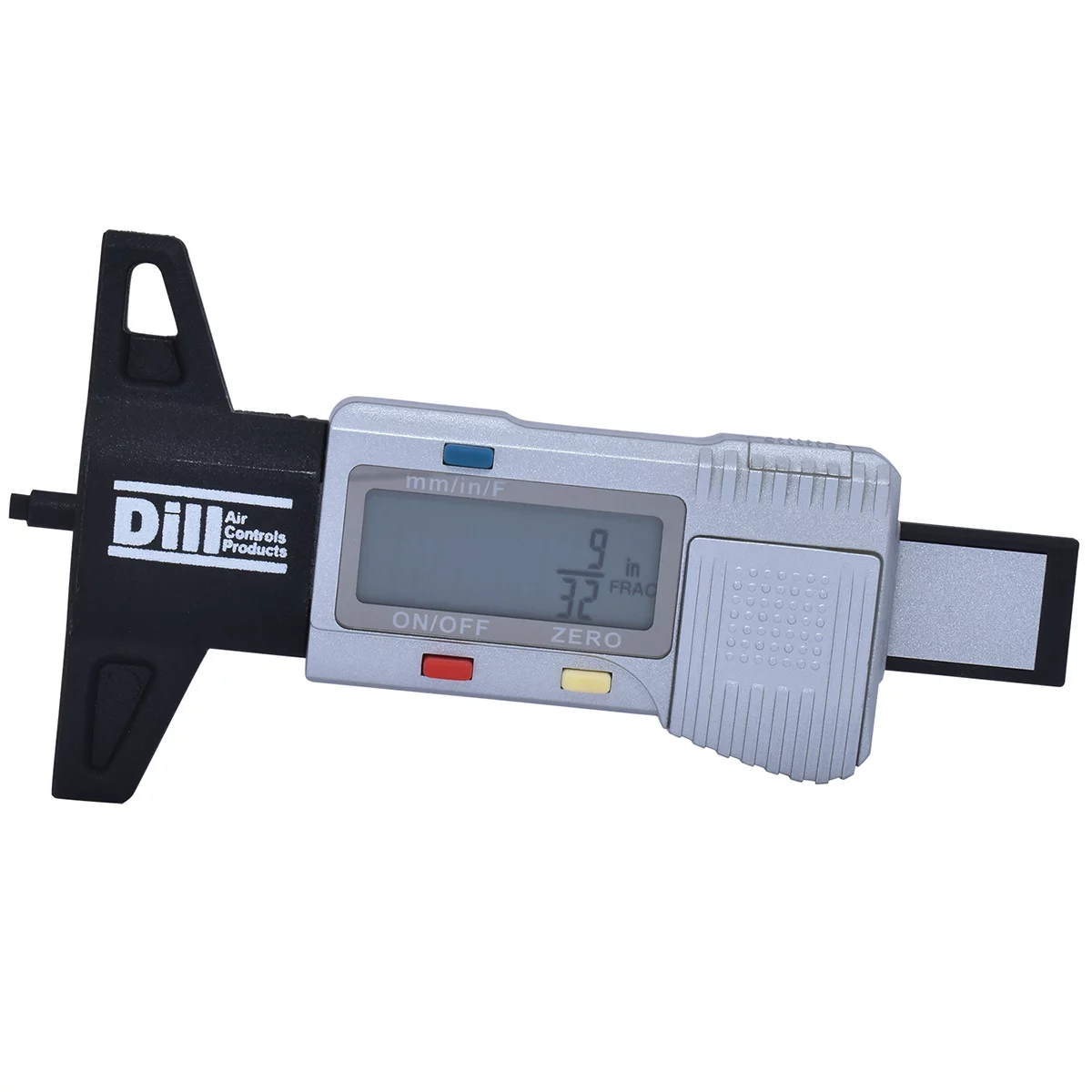
- Tire depth gauges to measure remaining tread accurately
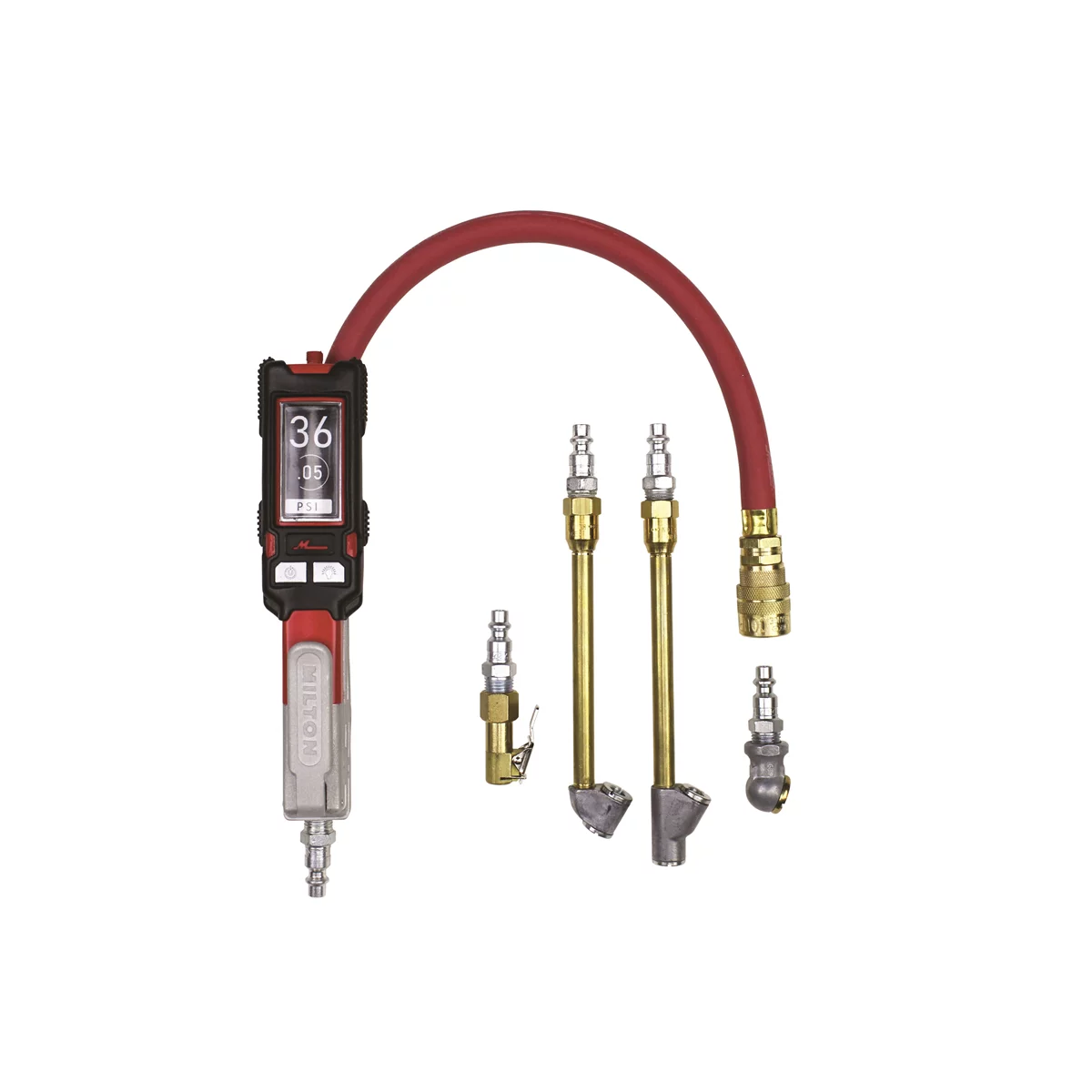
- Tire pressure gauges for complete tire condition assessment
- Jacks and stands for safe lifting during inspection
Essential Tools for Tire Safety: Beyond understanding DOT codes, having the right tools ensures you can properly assess and maintain your tires. Browse our tire maintenance and inspection tools to keep your vehicle safe and roadworthy.
- Digital tire depth gauges for accurate tread measurements
- Tire pressure monitoring systems and diagnostic tools
- Professional tire inspection kits and safety checklist guides

The Toolsource Technical Team blends decades of real-world automotive service experience with up-to-date technical research. Our writers collaborate with professional mechanics, shop owners, and diagnostic specialists to deliver practical, workshop-ready guidance you can trust.


Follow us on social media