A customer or family member borrows a vehicle, returns it with the parking brake apparently left engaged for a couple of hours, and now the steering wheel shakes noticeably at speed. It’s a common enough scenario in the shop, and it’s also a common source of misdiagnosis — because the two symptoms, while related in the story, are almost never related mechanically. Here’s how to work through it correctly instead of jumping straight to “warped rotors.”
Understand What a Dragging Parking Brake Actually Does
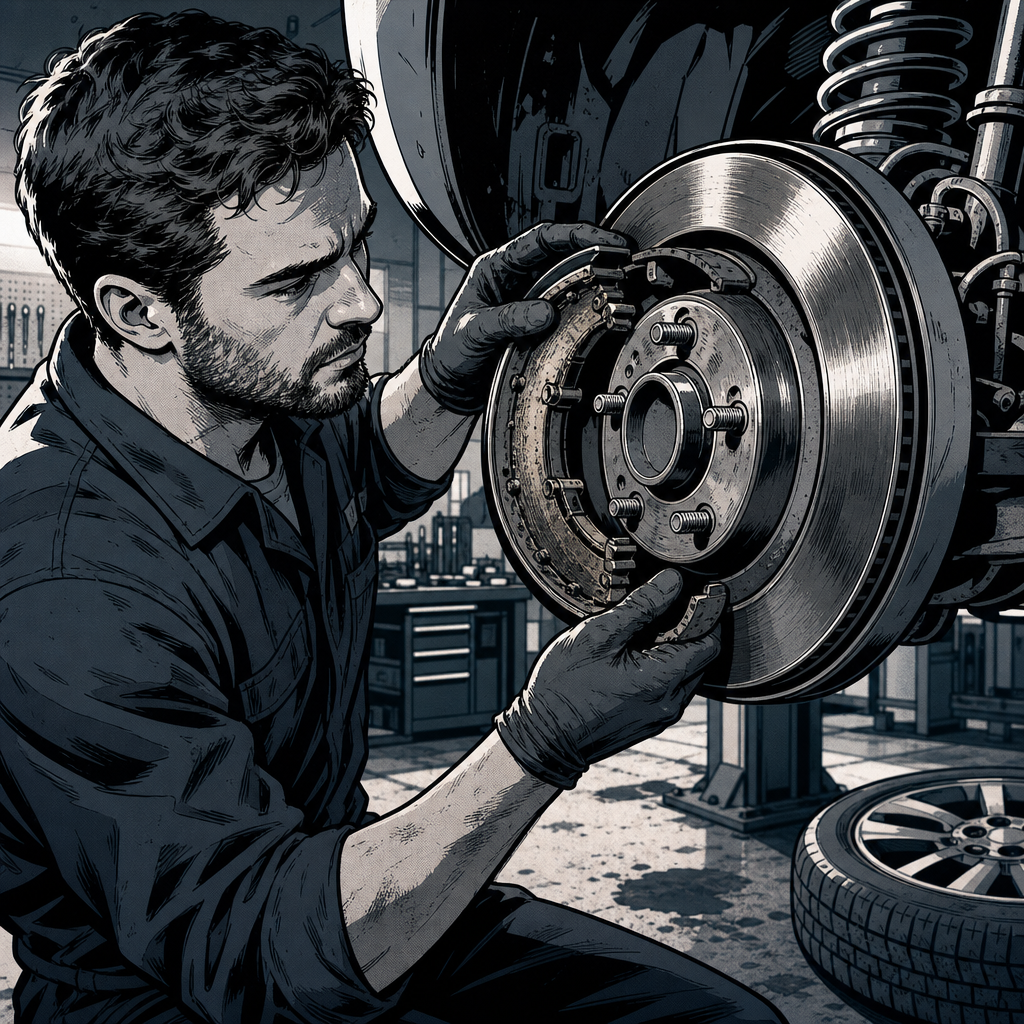
On the vast majority of rear-disc vehicles, the parking brake is not the caliper and pad you see clamping the rotor for normal stops. It’s a separate drum-in-hat mechanism: a small set of shoes inside a drum machined into the hat of the rear rotor. When the parking brake is left on and the vehicle is driven, those shoes drag against the inside of the rotor hat, generating friction heat that has nowhere to go but into the hub, bearing, and rotor.
Two hours of driving with the parking brake engaged is a lot of sustained heat cycling. That’s long enough to glaze or completely wear away the parking brake shoe lining, discolor or heat-check the rotor hat, and — more importantly for the technician — cook the grease out of the rear wheel bearing if it’s a sealed hub unit. None of this affects the front axle, and none of it explains a shaking steering wheel.
Why the Parking Brake Isn’t the Cause of Steering Wheel Shake
The steering wheel is mechanically connected to the front wheels, tie rods, and steering rack. Vibration felt through the wheel is, in the overwhelming majority of cases, a front-end problem: an out-of-balance tire, a bent wheel, a warped front rotor, a worn front wheel bearing, or a failing CV axle or strut. A dragging rear parking brake — even one left on for hours — has no physical pathway to transmit vibration to the steering column. If a customer reports steering wheel shake specifically (as opposed to the whole car shaking, or a pulsation felt in the brake pedal), start your inspection at the front axle, not the rear.
The exception is a vibration felt only when the brakes are applied. If the shake happens exclusively under braking, that points to a warped or heat-checked rotor — but check the front rotors first, since front rotors do the majority of braking work and are more prone to thickness variation from heat.

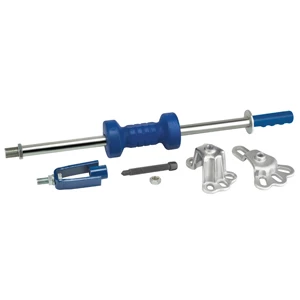
148895 66370 S & G Tool Aid SG66370 TA66370 SGT-66370 10 lb. Slide Hammer & Puller for Front Wheel Hubs & Rear Axles
Mfg: S & G Tool Aid
Part #: 66370
ID: 148895
What to Actually Inspect on the Rear Axle
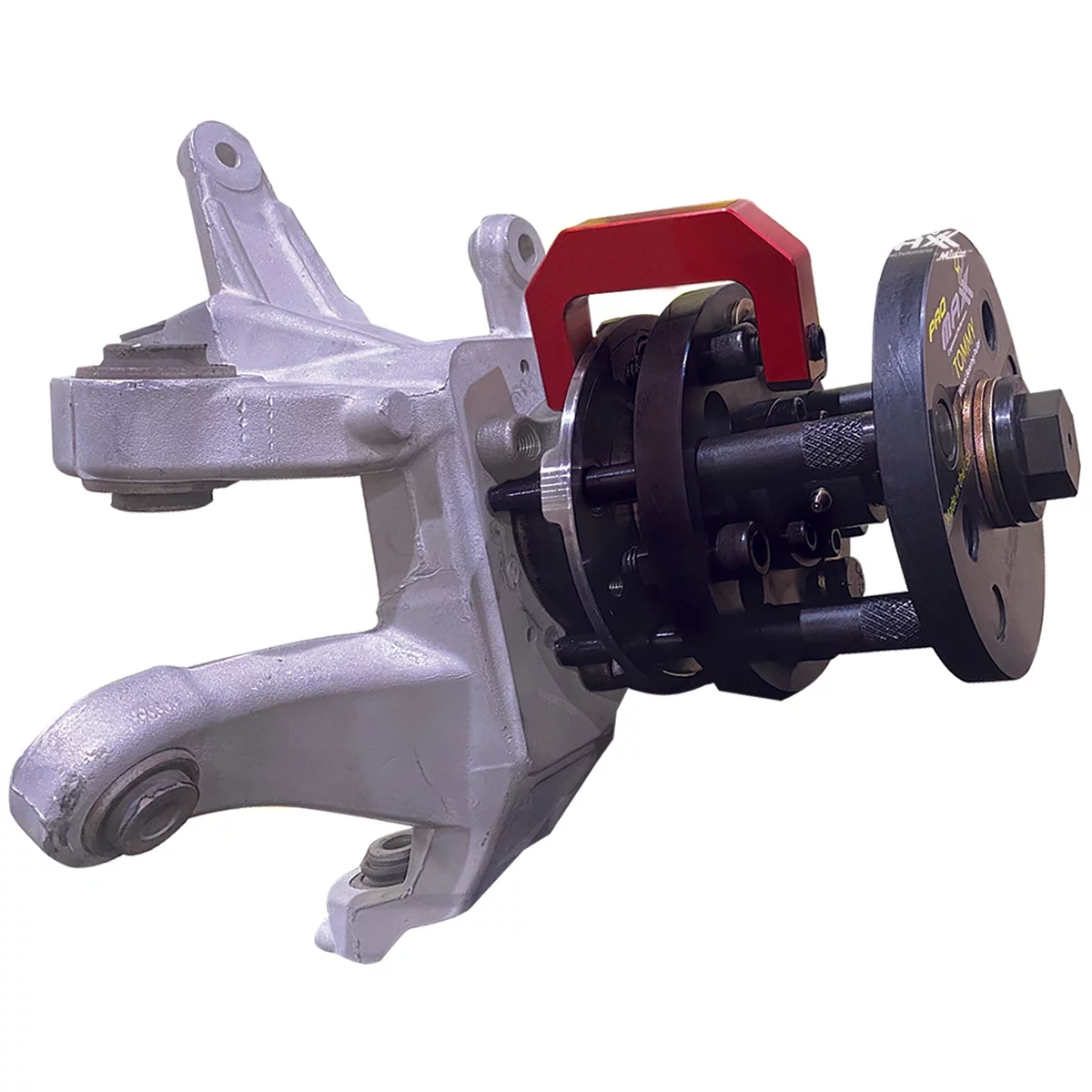
PROMAXX Tommy - Wheel Bearing Hub Puller Removal Kits: Ford
Mfg: ProMaxx Tool by Milton
Part #: TOM400PRO
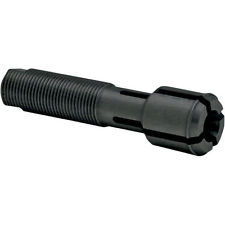
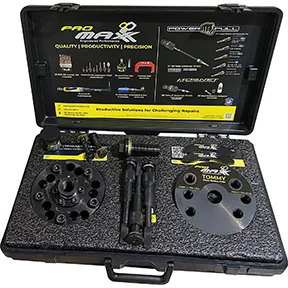
PROMAXX Tommy - Wheel Bearing Hub Puller Removal Kits: Ford Or S
Mfg: ProMaxx Tool by Milton
Part #: TOM410PRO
Even though the parking brake isn’t causing the steering shake, two hours of drag is real damage and needs to be checked before you clear the vehicle:
- Pull the rear wheels and inspect the parking brake shoes for glazing, uneven wear, or lining worn to the backing plate.
- Check the rotor hat/drum surface for scoring, blueing, or heat cracks.
- Spin each rear wheel by hand and check for roughness, noise, or play in the bearing — sealed hub bearings are especially vulnerable to sustained heat, which can break down the internal grease and accelerate wear.
- Grab the wheel at 12 and 6 o’clock and rock it to check for hub bearing play. Any looseness means the hub assembly needs replacement, not just repacking.
- Confirm the parking brake cable and adjuster still function correctly and that the brake releases fully with no residual drag.
If the rear rotors are heat-checked or the parking brake shoes are worn past spec, replace them as a set along with the hub if bearing play is present. Don’t assume “no metal-to-metal contact” means everything is fine — heat damage to bearing grease doesn’t always show up as immediate noise or play, but it shortens bearing life.
Diagnosing the Actual Front-End Vibration

Mercedes Benz 1/2 Inch Drive 10 Point Socket Kit 8mm and 10mm
Mfg: Baum Tools
Part #: MBWHEELKIT
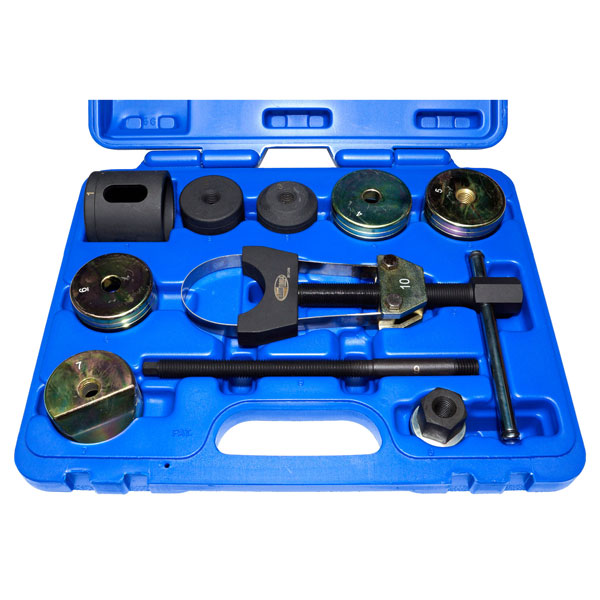
E87/90/93 M3 Rear Lower Control Arm Bushing Ball Joint Remover a
Mfg: Baum Tools
Part #: B334470KIT
With the rear axle addressed, move to the front end where the shake is actually originating. Work through this in order of likelihood and cost to check:
- Tire and wheel balance — the single most common cause of steering wheel vibration above 55 mph. Rebalance all four, front especially. A tire that lost a weight or picked up a chunk of debris in the tread will throw this off immediately.
- Bent wheel — check for runout on the balancer or with a dial indicator on the vehicle. A curb strike or pothole impact (a real possibility if the vehicle wasn’t driven carefully) can bend a rim without visible damage to the tire.
- Front rotor thickness variation or warp — measure with a micrometer; don’t eyeball it. This typically shows up as pedal pulsation more than steering shake, but severe cases can transmit through the knuckle.
- Front wheel bearing — check for play and listen for bearing noise that changes with vehicle speed or turning.
- CV axles — inspect boots for tears and check for axle play or clicking on turns, especially under acceleration.
- Struts and suspension bushings — worn strut mounts or bushings can allow enough movement to produce a shake that mimics a balance issue, particularly on higher-mileage vehicles.
Ask the customer (or the person who borrowed the car) specific questions: Does it shake at all speeds or only above a threshold? Does it worsen under braking? Did they hit a curb, pothole, or drive aggressively? A story that includes “drifting in a parking lot” or “smacked a curb” changes the diagnostic priority immediately toward bent wheels and impact damage over simple wear.
Quick Diagnostic Checklist
- Confirm parking brake fully releases and check rear shoes/rotors for heat damage
- Check rear wheel bearings for play or roughness before clearing the vehicle
- Balance all four tires, front wheels first
- Check front and rear wheels for bend or runout
- Measure front rotor thickness variation if shake occurs under braking
- Inspect front wheel bearings, CV axle boots, and strut mounts
- Get a clear description from the driver: speed-related, brake-related, or constant
Frequently Asked Questions
Can a parking brake left on cause the steering wheel to shake?
No. The parking brake operates on the rear wheels through a separate drum-in-hat mechanism and has no mechanical connection to the front steering components. A dragging parking brake can damage the rear brake shoes, rotor hat, and bearing, but it will not cause the steering wheel to shake.
What does it mean if the car shakes only when braking?
A vibration that appears specifically under braking, whether felt in the pedal or the steering wheel, usually points to warped or unevenly worn front rotors from heat. This is different from a constant speed-related shake, which is almost always a tire, wheel, or bearing issue.
How do I know if a rear wheel bearing was damaged by dragging the parking brake?
Spin the wheel by hand and listen for roughness or grinding, then check for play by rocking the wheel at 12 and 6 o’clock. Sustained heat from a dragging parking brake can break down bearing grease even without producing immediate noise, so if there’s any doubt after two-plus hours of drag, replace the hub assembly rather than waiting for it to fail.
My customer says the vibration only happens above 55 mph — what should I check first?
Start with tire and wheel balance. Vibration that appears or worsens specifically at highway speed is the classic signature of an out-of-balance tire or a bent wheel, not a brake issue.
Is it normal for a parking brake to be stuck on without causing damage?
Short durations or light drag often cause no lasting damage. But hours of driving with the parking brake engaged generates significant sustained heat, which increases the risk of glazed shoes, heat-checked rotor hats, and bearing grease breakdown — even if the vehicle drives normally afterward. It’s worth a rear-end inspection any time this happens, regardless of how the car feels.
Should I replace both rear rotors if the parking brake was left on?
Only if inspection shows heat cracking, scoring, or thickness beyond spec. If the shoes have wear but the rotor hats are within spec, replacing the parking brake shoes alone is usually sufficient — but always inspect before deciding, since guessing either way can mean unnecessary cost or a comeback.
Recommended Tools for Suspension & Wheel Diagnosis
Diagnosing steering wheel shake requires systematic inspection of wheels, tires, bearings, and suspension components. Explore our tire and suspension tools to find everything needed for this diagnostic process.
- Tire balancing and wheel runout measurement instruments
- Bearing inspection and hub service tools
- Suspension diagnostic gauges and inspection equipment
Expand Your Diagnostic Toolkit
Addressing steering wheel shake and brake-related issues demands precision diagnostics and quality repair equipment. Whether you’re a shop technician or dedicated DIY mechanic, our selection of automotive diagnostic tools will help you identify problems faster and solve them right the first time.
- Professional-grade brake system pressure gauges and diagnostic equipment
- Suspension and wheel alignment measurement tools for thorough inspections
- Complete diagnostic scan tools and code readers for comprehensive system analysis

The Toolsource Technical Team blends decades of real-world automotive service experience with up-to-date technical research. Our writers collaborate with professional mechanics, shop owners, and diagnostic specialists to deliver practical, workshop-ready guidance you can trust.


Follow us on social media