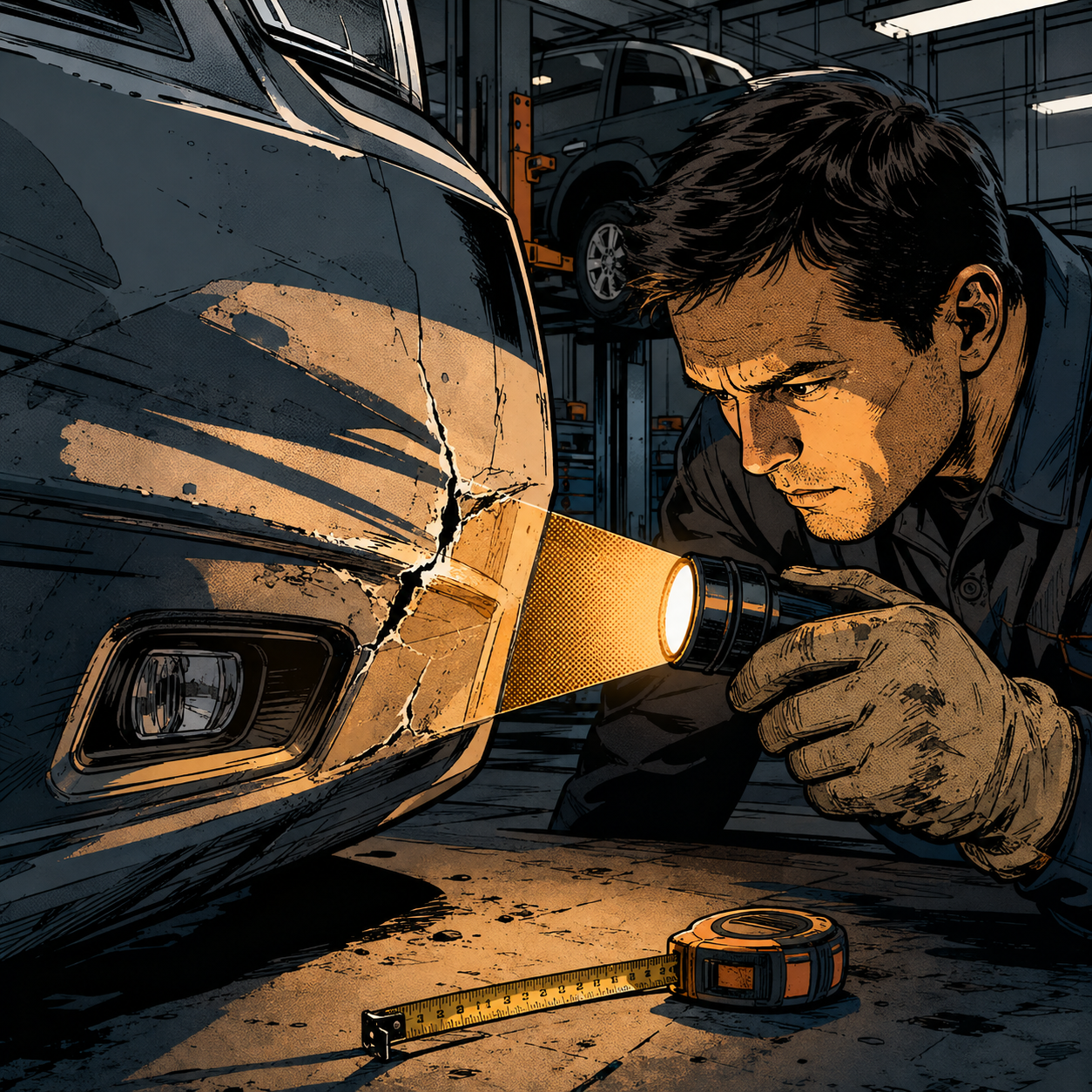
A customer pulls into the bay with a scuff on the bumper and a story: someone in a parking lot swears they hit their car, exchanged info, and now wants cash instead of an insurance claim. The customer wants to know if they’re actually on the hook. This scenario shows up constantly in online forums and just as often at the service counter, and the shop’s read on the damage carries real weight. A tech who can methodically confirm or rule out vehicle-to-vehicle contact gives the customer something more useful than a guess — documented evidence they can hand to an insurer, a claims adjuster, or a small claims judge if it comes to that.
Why These Disputes End Up on Your Bench
Parking lot “soft-tap” claims are common enough that adjusters and body shops see recurring patterns. Someone approaches a driver, points to damage on their vehicle, and pushes for a cash settlement outside of insurance — often citing a lapsed policy, a high deductible, or a desire to “keep it simple.” The request to pay a shop directly, without an insurance claim number or police report, is the biggest tell that something isn’t right, and it’s usually the point where the customer asks a technician to weigh in before any money changes hands.
Techs aren’t insurance investigators, and nothing here should be framed as a legal opinion. But a shop can document the physical evidence accurately, and that documentation is what protects everyone — the customer, the shop, and eventually the insurer who has to sort out the claim.
Step One: Check for Paint Transfer
Contact between two painted panels almost always leaves a trace. If Vehicle A’s silver paint scraped Vehicle B’s gray bumper, you should find silver residue embedded in the gray panel, and vice versa. Absence of any transferred paint color on either vehicle is a strong indicator the damage didn’t come from those two vehicles touching each other.
- Use a bright inspection light or UV flashlight at a low angle to catch residue that’s hard to see under shop lighting.
- Compare the transferred color against the actual paint code of the other vehicle — a close-but-not-matching color (white residue on a car that has no white components, for example) rules out that vehicle as the source.
- Check for embedded texture, not just color. Genuine transfer often carries clearcoat flecks or primer along with color.
===FYP-PRODUCT-SEARCH-1===

Step Two: Match Damage Height and Contact Pattern
Bumper heights, mirror positions, and body lines are specific to a vehicle’s make and model. Measure the height of the damage on both vehicles from the ground and compare. A scrape at 22 inches on one car and 26 inches on the other did not come from the same contact event unless there’s a documented reason for the mismatch (steep incline, one vehicle jacked up, etc.).
Pattern matters as much as height. A sideswipe against another vehicle typically leaves a linear, consistent scrape with a defined direction of travel. Damage from hitting a curb, pillar, cart corral, or another fixed object tends to look different — often more concentrated, with gouging or abrasion inconsistent with a glancing vehicle-to-vehicle contact. Experienced estimators can usually tell the two apart on sight; if you’re not confident, photograph both damage areas at matching angles and let a body shop estimator or adjuster compare them side by side.
Step Three: Look for Signs of Old Damage
Fresh damage has sharp, bright edges in the exposed metal or plastic, and any dust or debris in the scrape is minimal. Older damage shows dulling, slight oxidation at the exposed edges, road grime buildup, or touch-up paint that doesn’t quite match. If a customer says the damage is unrelated to today’s incident, or if you suspect a claimant is pointing to pre-existing wear, this comparison is often the deciding factor. Photograph close-up shots with a ruler or coin in frame for scale, and note any rust or grime in the damaged area — it’s hard to fake age on fresh damage under good lighting.
Documenting Findings the Right Way
Whatever you find, put it in writing. A short written assessment carries far more weight than a verbal opinion later.
- Photograph both vehicles’ damage from multiple angles, including wide shots showing the vehicles’ relative position and height, plus close-ups of any paint transfer.
- Note measurements: damage height from ground, length and depth of the scrape or dent, and paint color comparisons.
- Record the date, time, and who requested the inspection.
- Avoid writing a conclusion like “this is a scam” — stick to observable facts (“no paint transfer detected consistent with claimant’s vehicle color”) and let the customer’s insurer draw the legal conclusion.
- Give the customer a copy of the written findings and photos, not just a verbal summary.
This kind of documentation is exactly what an insurance company needs when a customer says “I’m not sure I actually hit them.” Insurers are equipped to verify claims themselves — they can pull the other party’s policy details, request the police report if one exists, and compare adjuster notes on both vehicles. A shop’s job is to hand them clean, factual evidence, not to adjudicate the dispute.
Advising Customers on Next Steps
Techs get asked “what would you do?” more than they’d like. A few points are safe to pass along without stepping into legal advice:
- Any communication about the incident should go through insurance, not direct cash payment, especially if the other party hasn’t produced proof of insurance on the spot.
- A request to pay a repair shop directly, bypassing an insurance claim, is unusual for a legitimate accident and worth treating with caution.
- If there’s any doubt about what happened, filing a report with local police (even after the fact, where allowed) creates an official record that protects both parties.
- Most parking lots have security cameras; checking with the property before agreeing to anything can resolve the dispute faster than back-and-forth negotiation.
Checklist: Verifying a Vehicle-to-Vehicle Damage Claim
- Inspect both vehicles for paint transfer under strong or UV light
- Compare transferred color against the actual paint code of each vehicle
- Measure damage height on both vehicles and compare
- Evaluate whether the damage pattern matches a vehicle contact or a fixed-object strike
- Check for signs of aging (oxidation, grime, dulled edges) versus fresh damage
- Photograph everything with scale references and note measurements in writing
- Advise the customer to route communication through insurance, not cash payment
===FYP-PRODUCT-SEARCH-2===
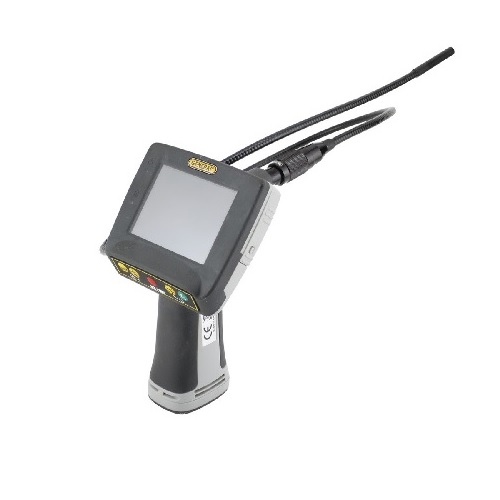
Waterproof Recording Video Inspection Camera/Borescope with 8mm
Mfg: General Tools & Instruments
Part #: DCS660A
FAQ
Can a shop tell for certain whether two vehicles actually collided?
A tech can document strong physical evidence — paint transfer, height matching, damage pattern, and age of the damage — but a definitive determination usually still involves the insurers, and sometimes police, comparing both vehicles and any available evidence like camera footage.
What if there’s no paint transfer at all?
Absence of transfer is a meaningful red flag, especially on a low-speed contact where transfer is expected, but it’s not automatically proof nothing happened — some very light contacts leave minimal residue. Combine it with height and pattern checks before drawing conclusions.
Should a shop accept payment directly from someone other than the vehicle owner or their insurer?
Be cautious. Legitimate claims typically route through an insurance company with a claim number. A third party requesting to pay a shop directly, without going through either party’s insurer, is a pattern worth flagging to the customer.
Is filing a police report necessary for minor parking lot damage?
Requirements vary by state and by damage threshold, but many jurisdictions require reporting once damage exceeds a set dollar amount. When in doubt, encourage the customer to check local requirements or file a report anyway — it creates a record that protects them regardless of outcome.
What tools help most for this kind of inspection?
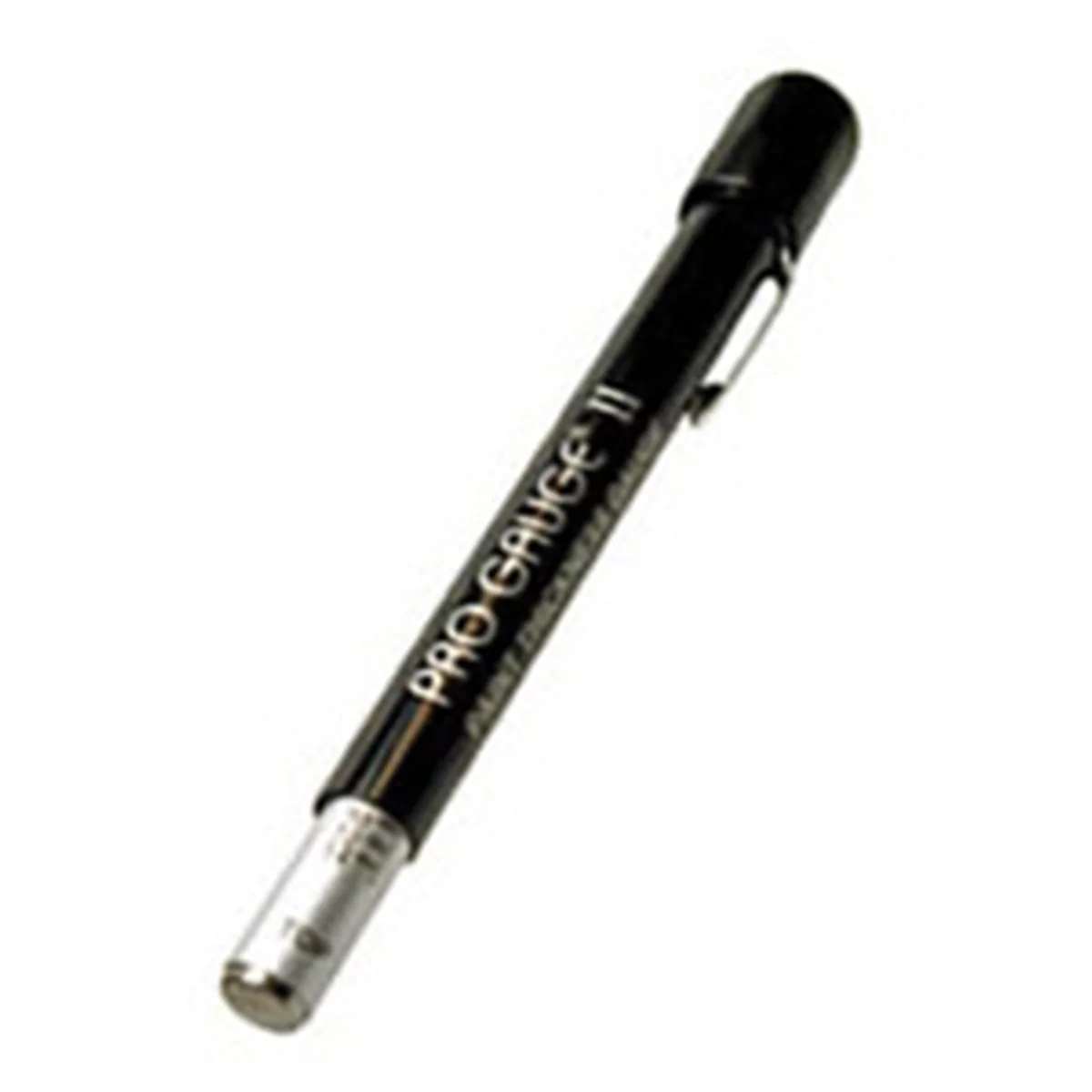
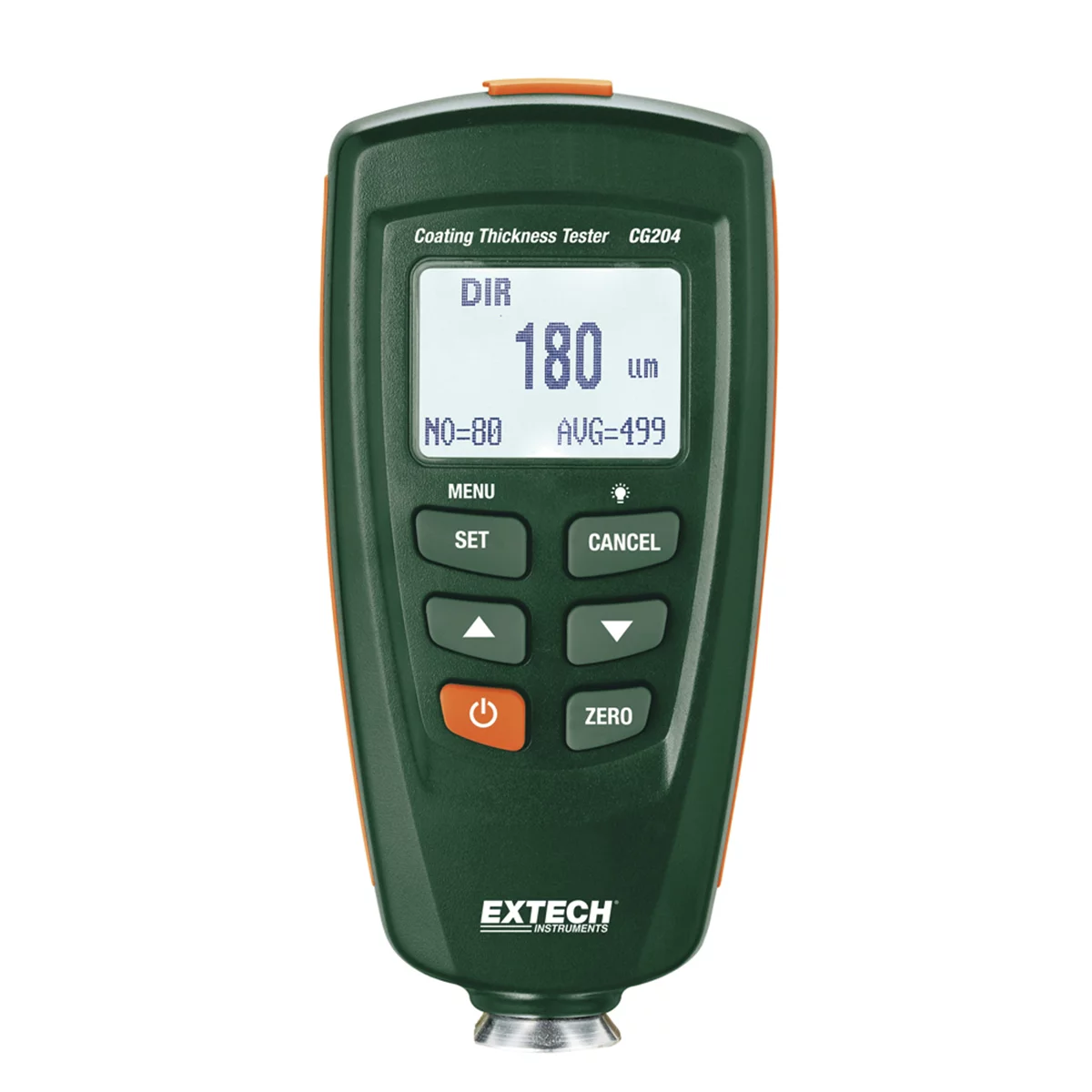
A strong UV or LED inspection flashlight for spotting paint transfer, a paint thickness gauge to check for prior bodywork or filler, a tape measure or height gauge for comparing damage positions, and a camera or phone with a macro setting for close-up documentation.
How should a shop word its written findings to stay neutral?
Stick to observable, measurable facts — colors, heights, patterns, and condition of the damage — and avoid concluding whether a claim is fraudulent. That determination belongs to the insurer or, if it goes further, to law enforcement or a court.
Equipment for Damage Inspection
The inspection steps in this article depend on having the right tools. Our Measurement Tools and Inspection category carries everything you need to document collision damage accurately.
- Inspection lights and UV flashlights to spot paint transfer
- Rulers, calipers, and height gauges for precise measurements
- Paint thickness gauges and photography accessories for clear documentation

The Toolsource Technical Team blends decades of real-world automotive service experience with up-to-date technical research. Our writers collaborate with professional mechanics, shop owners, and diagnostic specialists to deliver practical, workshop-ready guidance you can trust.


Follow us on social media