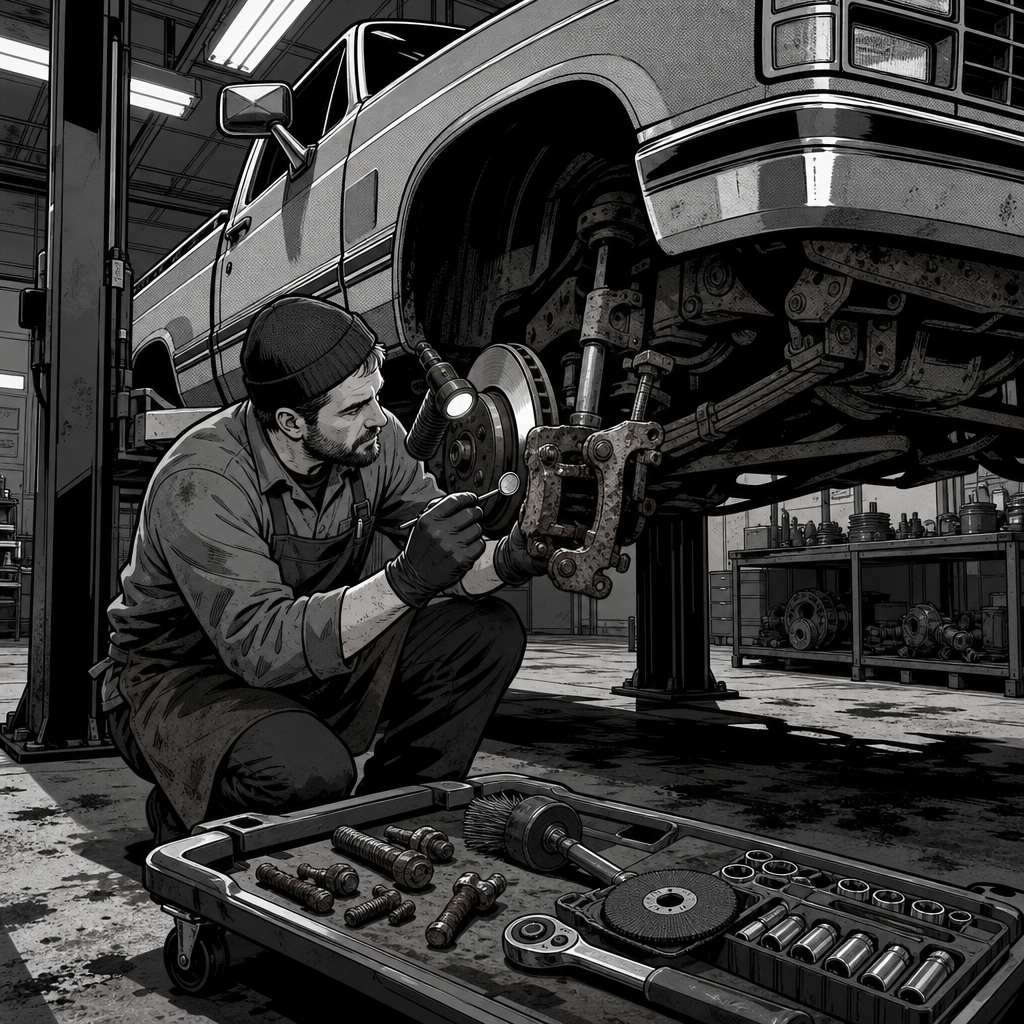
Every technician with a few years under their belt has a story about a side job that went sideways. You agree to help out a friend with what sounds like a simple repair, only to discover rust-welded fasteners, hidden damage, or scope creep that turns a Saturday morning into an all-weekend ordeal. Then comes the real punch: instead of gratitude, you get complaints about the price, accusations when something else breaks months later, or worse—complete radio silence when it’s time to settle up. The Reddit threads are full of these war stories, and they all point to the same hard truth: good fences make good neighbors, and clear business practices make good friendships last.
Never Quote Jobs You Haven’t Inspected
The cardinal sin of side work is agreeing to a price before you’ve put eyes and hands on the vehicle. A 27-year-old truck from the rust belt isn’t the same job as a five-year-old sedan from Arizona, even if the repair manual says it’s a three-hour job. When you commit to a price sight unseen, you’re gambling that nothing will go wrong—and on older vehicles, something always goes wrong.
One tech recounted agreeing to do a “simple” brake line replacement on a relative’s Taurus, only to discover that all the hard lines throughout the entire car were compromised. What started as a quick Saturday repair turned into an all-day fabrication job on a patio with no proper shop, bending lines around paint cans and fence posts. The customer complained it took too long and later blamed him for an unrelated stuck caliper. The lesson: inspect first, quote second, and build in a rust-belt contingency if you’re anywhere near the salt belt.
Visual inspection isn’t enough on older vehicles. Get underneath with a wire brush and a pick. Tap on frame rails. Check fastener heads for rounding. A frame-up brake line job might be quoted at four hours in a southern climate, but the same job on a 15-year-old Michigan vehicle could easily run eight to ten once you account for seized fittings, corroded mounting points, and the inevitable broken studs. If you can’t inspect it properly before quoting, give a wide range or decline the work entirely.
Set Clear Terms Before the First Wrench Turns
The most successful side-work arrangements treat friends like customers—because they are customers. That means written estimates, defined scope, hourly rates, and payment terms discussed up front. One shop owner who spent 25 years learning this lesson the hard way now runs 90% of friends’ work through his shop with formal estimates and invoices, even if he’s discounting the rate. He sleeps better that way.
Establish your hourly rate and stick to it. Many techs charge $50-$100 per hour for side work when local shop rates run $180-$240. That’s already a substantial friend discount. Make it clear you’re charging for actual wrench time, not the theoretical book time that assumes perfect conditions and no rust. One fleet mechanic solved the estimation problem by refusing to quote flat rates anymore—he gives ballpark figures but bills actual hours worked. It’s eliminated the arguments about why a “two-hour job” took five.
Be explicit about what’s included and what’s not. Are you providing parts or is the customer sourcing them? Who pays for consumables like brake cleaner and shop towels? What about disposal fees for old fluids? Is there a trip charge if you’re coming to them? These details feel petty when you’re helping a friend, but they’re exactly what causes resentment later when expectations don’t match reality. Put it in writing, even if it’s just a text message that says “4-6 hours at $75/hr, you supply parts, I’ll grab fluids and add to invoice.”
Build Contingency Into Rust Belt and Aged Vehicle Work
Vehicles over ten years old from salt-exposed regions require a different pricing model. The fasteners you expect to remove will break. The “while you’re in there” discoveries will multiply. The simple job will become complex. Account for this reality in your estimate or you’ll eat hours of unforeseen work while the customer wonders why it’s taking so long.
One approach is time-and-materials pricing with a not-to-exceed cap. “This should take 4-6 hours at $75 per hour, so figure $300-450. If I hit serious rust issues that push it over six hours, I’ll stop and call you before continuing.” This gives you permission to address problems as they arise while giving the customer cost certainty. The alternative—absorbing overruns to preserve the relationship—breeds resentment on both sides.
Have the extraction toolkit ready and price accordingly. On a 20-year-old exhaust job, you’re not removing bolts—you’re cutting, grinding, and drilling. Budget time for seized caliper bolts, rounded bleeder screws, and frozen suspension components. If you quote the job like it’s coming apart clean, you’re setting yourself up to work for free when reality intervenes. Better to overestimate and finish early than to underestimate and have an awkward conversation about additional charges.
Consider requiring the customer to be present during the work, especially on high-risk jobs. It serves two purposes: they see firsthand why the job is taking longer than expected, and they’re available for immediate decisions when you discover additional problems. One tech makes friends work alongside him on their own vehicles—even if it’s just handing tools and cleaning parts. It’s amazing how understanding people become about pricing when they’re the ones lying on the creeper in January.
Know When to Decline the Work
The most important skill in side work isn’t diagnostic ability or speed—it’s knowing when to say no. Some jobs are too risky, some vehicles are too far gone, and some people are too difficult to work with profitably. Experienced techs report that turning away problem jobs has improved both their income and their relationships.
Red flags include customers who’ve already been quoted by multiple shops, vehicles with obvious neglect or abuse, jobs that require specialty tools you don’t own, and work that needs to be done immediately on someone else’s timeline. The customer who shows up Saturday night with a rusted brake line and expects to drive the car out of state Sunday afternoon is setting you up for failure. The person who’s been quoted $1,200 by three shops and wants you to do it for $300 is either ignorant about what’s involved or deliberately looking for someone to exploit.
Some techs adopt a policy of working only on vehicles they’d be willing to work on for free. If you wouldn’t donate your Saturday to the cause anyway, don’t do it for money—the economics rarely work out and the relationship usually suffers. One fleet mechanic only works on his elderly neighbor’s car because he’d be helping her regardless of payment. When she insists on paying, it’s a bonus. When there are delays or complications, neither party is stressed because the foundation is service, not commerce.
Recognize that some people view friends as free labor rather than discounted professionals. They’ll agree to your rate, then complain about it. They’ll interrupt your work to socialize, then wonder why it’s taking so long. They’ll blame you for problems that develop later, even when their own mechanic clears your work. These aren’t customers—they’re liabilities. Every experienced tech has learned to identify these people and politely direct them to a commercial shop.
The Side Work Decision Framework
Before agreeing to any side job, run through this checklist to determine if it’s worth your time and risk:
- Can you inspect the vehicle before committing to a price? If no, decline or provide only a wide range.
- Is the customer willing to accept hourly billing for aged or rusty vehicles? If they want a flat rate on a 20-year-old rust belt truck, pass.
- Do you have the tools and space to do the job properly? Working without a lift, quality tools, or shelter increases your time and risk dramatically.
- Is the timeline reasonable and flexible? If they need it done immediately or by a hard deadline, send them to a commercial shop.
- Are you willing to do this work for free? If not, treat it as a business transaction with written estimates and professional boundaries.
- Has this person been a good customer in the past? Previous payment problems or complaints are reliable predictors of future problems.
- Can you afford the relationship damage if something goes wrong? Sometimes the smart move is preserving the friendship by avoiding the work.
Managing Customer Expectations Throughout the Job
Communication gaps cause more side-work disputes than pricing or quality issues. Customers who don’t understand what’s involved will always feel overcharged and inconvenienced, even when you’re giving them a tremendous deal. Your job is to educate them before, during, and after the work.
Take photos of problem areas during inspection and text them to the customer with brief explanations. “Here’s why this is taking longer—three of the four caliper bracket bolts were seized and had to be cut off. Replacing the hardware now.” This creates a documentary record and helps non-technical customers understand what they’re paying for. It also protects you if they later claim you did unnecessary work or damaged something.
Provide status updates if the job spans multiple days or sessions. A simple text saying “Got the disassembly done today, waiting on parts, should have it wrapped up Saturday” prevents the customer from wondering if you’ve forgotten about them or hit problems you’re not disclosing. It also manages their expectations about timeline, which is critical if they’re counting on the vehicle for work or other obligations.
After completion, explain what you did and what they should watch for. “Replaced all four brake lines and flushed the system. Everything is working correctly now, but this is a 25-year-old vehicle—if you notice any leaks or soft pedal, let me know immediately and don’t drive it.” This demonstrates professionalism and establishes that you’re not responsible for the age-related failures that will inevitably occur on older vehicles. It also gives them a path to contact you with legitimate concerns rather than talking to other people about problems.
When the job is complete and payment is due, provide an itemized invoice even for cash side work. List the labor hours, hourly rate, parts costs, and any consumables or fees. This transparency reinforces the value you provided and justifies the final number. It also serves as a receipt for their records and proof of the work if they later need warranty coverage on parts or have questions for another technician.
===PRODUCT-SEARCH-1===
The Math of Side Work vs. Shop Work
Many techs assume side work is automatically more profitable than their shop wage, but the math often doesn’t support this. When you account for tool wear, consumables, insurance risk, time spent on administrative tasks, and the jobs that don’t pay or take twice as long as expected, that $75 hourly side rate might not beat your $35 hourly shop wage once you factor in actual earnings over time.
Consider a brake job that you quote at four hours and $300. In the shop, that same job might pay you four hours of flag time regardless of actual time spent, and you’re done when it’s done. On the side, you spend an hour returning calls and sourcing parts, four hours on the actual repair, another hour cleaning up and putting away tools, plus drive time if you’re mobile. That’s six hours invested. If the customer slow-pays or disputes the bill, you might not collect for weeks. Your effective hourly rate just dropped to $50, and you worked evenings or weekends to earn it.
Factor in risk exposure. In a shop, you have liability insurance, professional systems for handling comebacks, and management to mediate customer disputes. On side work, you’re personally liable if something goes wrong. A wheel that comes off, a brake failure, a fire from a fuel system repair—these are low-probability events, but when they happen to a side job, they can be financially and legally catastrophic. Some techs avoid side work entirely for this reason, concluding that no amount of extra income justifies the risk to personal assets.
The economics improve significantly if you have a proper home shop setup. A two-post lift, air tools, parts washer, and organized tool storage can cut job times in half and make the work far more pleasant. But that represents a substantial capital investment that takes years to amortize. If you’re working in a driveway with a floor jack and hand tools, you’re probably not competing effectively with commercial shops on either speed or quality, which means your only selling point is price—and competing on price alone is rarely a path to prosperity.
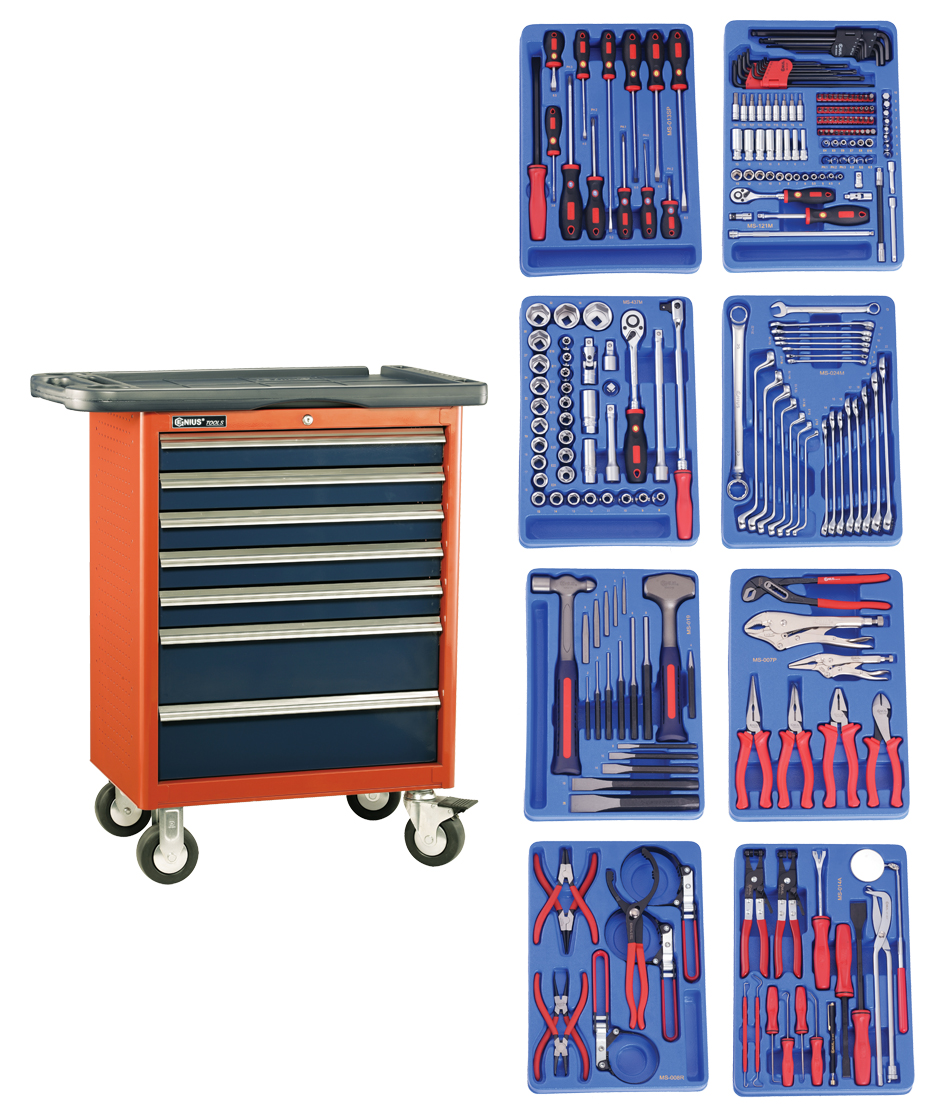
243PC Metric Mechanics Tool Set with Roller cabine
Mfg: Genius Tools
Part #: MS-243TS
Frequently Asked Questions
How much should I charge for side work compared to shop rates?
Most experienced techs charge $50-$100 per hour for side work when local shop rates are $150-$250 per hour. This represents a 40-60% discount that compensates the customer for the reduced convenience and protections of a commercial shop while still valuing your time appropriately. Avoid the temptation to work for $25-30 per hour just because it beats your shop wage—you’re not accounting for overhead, risk, and unbillable time. If you can’t command at least $50 per hour, you’re better off picking up overtime at the shop.
Should I give free or heavily discounted work to close friends and family?
The consensus among experienced techs is to either do the work entirely free as a gift, or charge a modest but real rate. The dangerous middle ground is the “favor” that you expect gratitude for but that the recipient sees as free help among friends. If you’re doing it free, make it explicitly a gift with no expectation of payment or reciprocity. If you’re charging anything, treat it professionally with estimates and invoices. Many techs report that family members who insist on paying—even modest amounts—make better customers than friends who want deals.
What do I do when I discover a job is much worse than expected?
Stop work and communicate immediately. Take photos of the problem, explain what you’ve found and what it will take to address it, and provide a revised estimate. Give the customer three options: proceed with the additional work at additional cost, return the vehicle to its current state for the originally agreed price, or tow it to a commercial shop. Never continue working hoping they’ll be understanding when you present a bill that’s double the estimate—that approach destroys trust and guarantees conflict.
How do I handle customers who blame me for unrelated problems that develop later?
Document everything. Take before and after photos. Provide a written invoice that clearly states what work was performed. When they call about an unrelated issue, calmly explain what you did and why it’s unrelated to the new symptom. Offer to inspect it if they want, but be clear that it will be a separate diagnostic charge. If they’re hostile or unreasonable, accept that you’ve lost a customer and move on. Don’t do additional free work trying to appease someone who’s determined to be unhappy—it never works and it establishes you as a doormat.
===PRODUCT-SEARCH-2===
Is it worth doing mobile side work, or should I only work in my own space?
Mobile work introduces significant complications: you’re limited to tools you can transport, you have no control over the work environment, and travel time is rarely billable. Many techs will do mobile work only for premium rates ($100+ per hour) or for very simple jobs (battery replacement, fluid changes) that don’t require specialty tools. Complex repairs should be done in your own space where you have access to your full toolkit, proper lighting, and a controlled environment. The exception is if you invest in a well-equipped mobile setup with a service van, but that requires substantial capital and tips the work from “side job” to “business.”
Should I mark up parts or charge cost only?
Practices vary, but many side-work techs charge parts at cost plus a modest handling fee (10-15%) to cover the time spent researching, ordering, and dealing with returns. This is far below the 30-50% markup commercial shops apply, but it acknowledges that parts management isn’t free. Be transparent about this—explain that you’re saving them significant money on parts but need to cover your procurement time. The alternative is building this time into your hourly labor rate, but itemizing it separately often makes customers more comfortable because they can verify parts costs online.
How do I transition away from side work without damaging relationships?
Many techs reach a point where side work is no longer worth the hassle and want to wind it down. The graceful approach is to gradually raise rates, reduce availability, and be more selective about which jobs you accept. When someone calls, you’re “pretty booked up, but I can probably fit you in three weeks from now” or “I’m trying to spend more time with family on weekends, but I can refer you to a great shop.” Most people will get the message and find alternatives. For persistent requesters, a simple “I’m not really doing side work anymore, but I’d be happy to recommend someone” is honest and final. The people who get angry about this weren’t friends—they were users.
Essential Hand Tools for Side Work
Working on friends’ vehicles requires reliable, portable equipment that won’t let you down in a driveway or garage corner. A well-stocked collection of quality hand tools is the foundation of any side work setup, letting you diagnose problems and handle fasteners without expensive shop equipment.
- Wire brushes, picks, and pry bars for identifying seized fasteners and rust damage during inspection
- Precision sockets and wrenches for brake work, suspension, and fastener removal on older vehicles
- Screwdrivers, pliers, and specialty extractors for rounded bolts and stuck hardware

The Toolsource Technical Team blends decades of real-world automotive service experience with up-to-date technical research. Our writers collaborate with professional mechanics, shop owners, and diagnostic specialists to deliver practical, workshop-ready guidance you can trust.


Follow us on social media