Every shop has a version of the same story: a car that should have gone 300,000 miles comes in on a flatbed with a knock you can hear from the parking lot, and the service history shows maybe three oil changes in its entire life. These engines aren’t fragile — a well-documented 1.8L Toyota four-cylinder, for example, routinely runs past 300K on nothing more than 5,000-mile oil changes and periodic brake jobs. When one dies young, it’s almost never a design flaw. It’s oil starvation, and by the time it knocks, the damage is already done. Here’s how to work through the diagnosis, the repair-or-replace decision, and the conversation that keeps the next customer’s engine off your lift.
Reading the Symptoms: What Oil Starvation Looks Like Before Failure
Rod bearing failure doesn’t happen instantly. Oil that’s gone too long without a change loses viscosity, picks up abrasive particulate, and eventually breaks down into sludge that can’t maintain a hydrodynamic film between the bearing and the crank journal. The progression technicians see most often:
- Low oil pressure warning or gauge drop at idle, especially when hot — thinned or sludged oil can’t maintain film pressure.
- A faint tapping or knocking noise that’s more noticeable on cold start and fades as oil warms and thins further, then returns as bearing clearance grows.
- Metallic sheen in the oil on the dipstick or at a drain — this is bearing material, not just normal wear debris.
- Increasing oil consumption without visible leaks, often from a worn PCV system working alongside bearing wear.
- A deep, rhythmic knock that scales with RPM — by this point the bearing has spun or the crank journal is scored, and the engine is on borrowed time.
Customers almost always report hearing “something” weeks before it got loud enough to worry about. That gap is diagnostic gold if you can get the car in early — a bearing caught at the tapping stage might be saved with an oil and filter change and an oil analysis; one caught at the deep-knock stage is already a teardown.
Confirming the Diagnosis Before You Quote a Repair
Don’t quote a rebuild off engine noise alone. Confirm it first so you’re not guessing with the customer’s money:
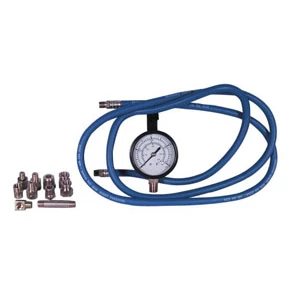
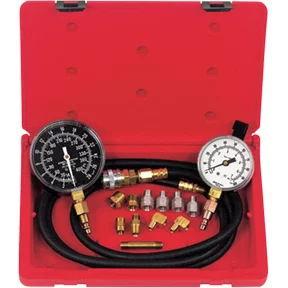
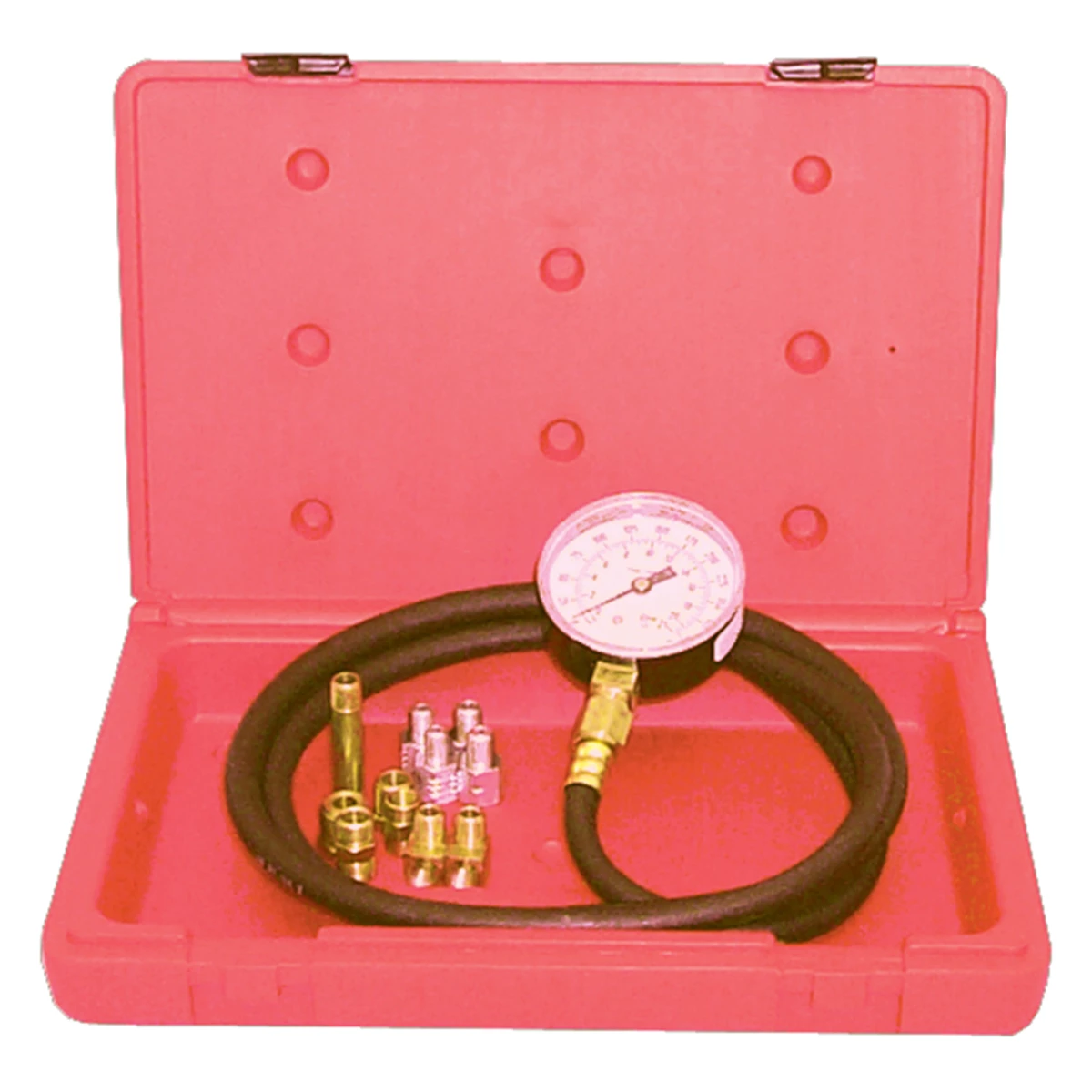
- Oil pressure test with a mechanical gauge at the sending unit port, checked cold and hot, idle and at 2,500 RPM. Compare against factory spec — a reading significantly below spec at operating temperature all but confirms bearing wear.
- Pull the oil pan or valve covers if pressure is low and inspect accessible bearings visually where possible. Shiny, copper-colored bearing material instead of the original babbitt coating means the bearing has already worn through.
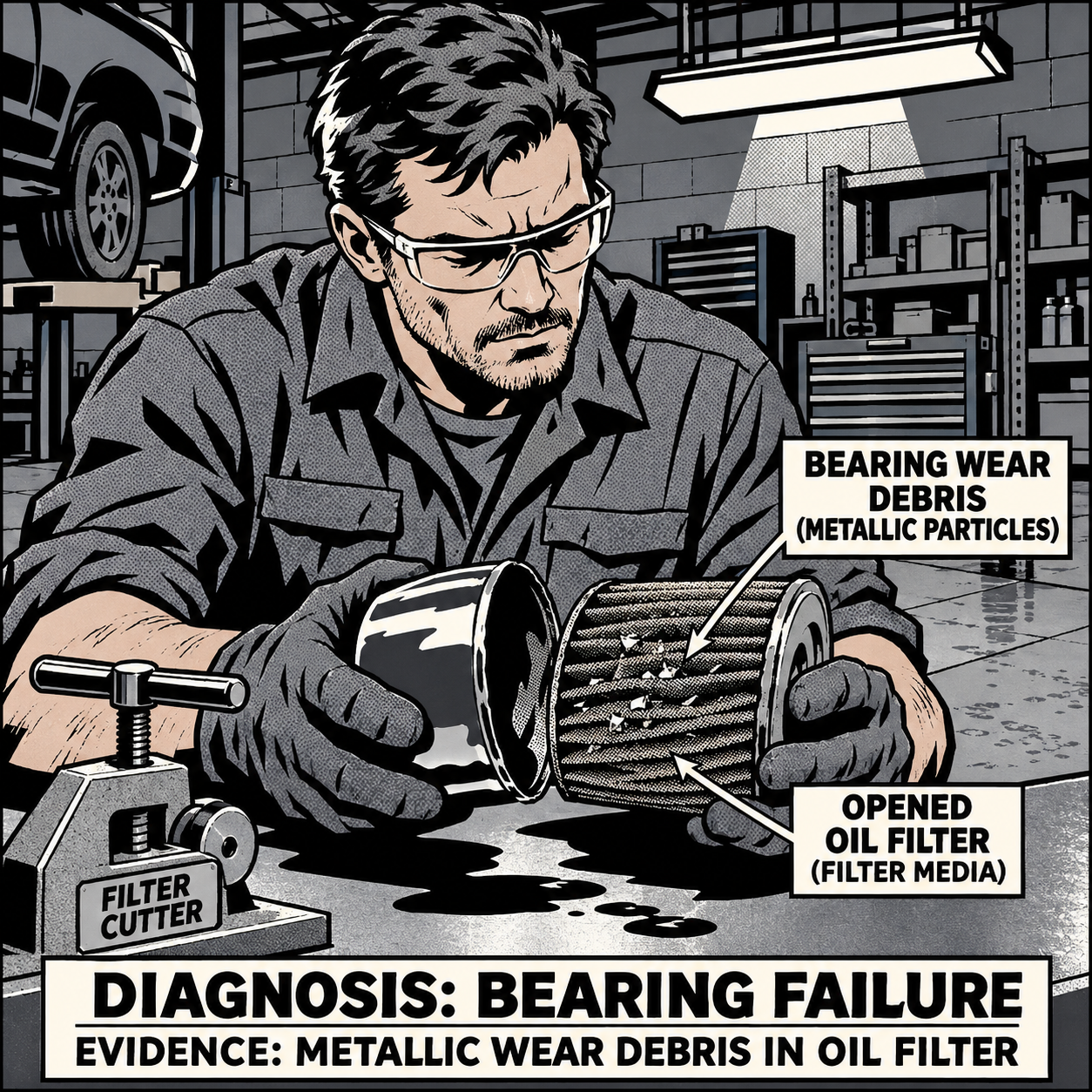
- Cut open the oil filter and check the pleats for metallic debris — a quick, low-cost confirmation that catches most advanced cases.
- Listen with a mechanic’s stethoscope along the block near each cylinder to localize which rod is knocking, which matters if you’re deciding between a spot repair and a full rebuild.
If you want a shop-grade pressure test without tying up a full diagnostic bay, a basic mechanical oil pressure test kit pays for itself within the first few comebacks it rules out.
Repair, Rebuild, or Walk Away: Making the Call
Once you’ve confirmed bearing failure, the real conversation is economic, not mechanical. Walk the customer through it in this order:
- Mileage and overall condition. A spun bearing on a car with rust-free unibody, good suspension, and a clean interior is a different decision than the same failure on a car that’s falling apart everywhere else. If the rest of the car won’t outlive the repair bill, don’t sink money into the engine.
- Isolated vs. systemic damage. If only one rod bearing failed and the crank journal isn’t scored, a bearing and journal inspection/polish with new bearings can be a same-day, lower-cost fix. If multiple bearings show wear or the crank is scored, you’re into a full rebuild or crank regrind — plan for a teardown quote, not a parts swap.
- Rebuild vs. junkyard replacement. A full in-house rebuild (new bearings, rings, gaskets, machine work as needed) gives you known quality but costs more in labor. A low-mileage used engine from a salvage yard is often cheaper and faster, provided you can verify its history.
- Labor availability and turnaround. Factor in whether this is a DIY project for the owner, a weekend job for your shop, or something you need to sub out to a machine shop — that changes both price and timeline expectations you set with the customer.
Be straight with customers who ask about just “topping it off and seeing how long it lasts.” A knocking rod bearing is a matter of when, not if, it lets go completely — continuing to drive it risks throwing a rod through the block, turning a bearing job into a total loss.
If You’re Sourcing a Junkyard Replacement Engine
Used engine swaps are a legitimate, cost-effective repair path, but only if you vet the source:
- Get mileage and pull reason from the yard. An engine pulled from a car totaled in a collision is a better bet than one pulled for “unknown noise.”
- Ask for a compression test or video of it running before it ships, if the yard offers it. Many do for an extra fee, and it’s worth paying for.
- Change the oil and filter immediately on arrival, before first start, regardless of what the yard claims was done. You have no reliable history on that oil.
- Replace the oil pump, timing components, and any rubber seals/gaskets as a matter of course — these are cheap insurance against comebacks on a swap you’re already investing labor into.
Setting Intervals That Prevent the Next One
The single biggest lever here is boringly simple, which is exactly why it gets skipped: regular oil and filter changes. For customers who ask what “regular” actually means in practice:
- Conventional oil: every 3,000–5,000 miles.
- Full synthetic: every 5,000–7,500 miles for most daily-driven vehicles, check manufacturer spec for extended-interval claims.
- Severe service (towing, extended idling, short trips in cold weather, dusty conditions): shorten the interval, don’t stretch it.
- Use a quality filter every time — a cheap filter bypassing under load defeats the point of fresh oil.
This is also the moment to point customers toward a full synthetic oil and filter bundle sized for their engine, rather than letting them default to whatever’s cheapest on the shelf.
Quick Checklist: Protecting an Engine From Bearing Failure
- Change oil and filter on schedule — don’t let “it still looks okay” extend the interval.
- Check oil level and condition monthly, not just at service visits.
- Investigate any new tapping or knocking noise immediately, not after it gets louder.
- Watch the oil pressure gauge or warning light — don’t dismiss a flicker as a sensor glitch without checking.
- Cut open old filters occasionally to catch metallic debris before a full failure.
- Keep a written service record so the next owner — or the next tech — knows what’s actually been done.

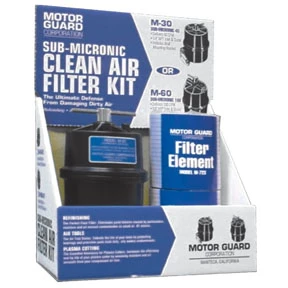
Compressed Air Filter Kit - Sub-Micronic (M30) 1/4 NPT
Mfg: Motor Guard
Part #: M-45KIT
Compressed Air Filter Kit - Sub-Micronic (M100) 1/2 NPT
Mfg: Motor Guard
Part #: M100KIT
Frequently Asked Questions
Can a rod bearing knock be fixed without pulling the engine?
Sometimes, on engines where the rod caps are accessible with the engine in the car and oil pan dropped, but this depends heavily on make/model and how much journal damage exists. In many cases you need enough access to inspect and possibly regrind the crank, which means pulling the engine.
How much does a rod bearing repair typically cost compared to a full rebuild?
An isolated bearing replacement with no crank damage is a fraction of a full rebuild’s cost, since it avoids machine shop time and full gasket/seal replacement. Once a crank regrind or multiple bearings are involved, costs climb toward rebuild territory, which is why accurate diagnosis up front matters.
Is synthetic oil really necessary to prevent this kind of failure?
No single oil type prevents bearing failure by itself — interval discipline matters more than oil type. Synthetic oil holds up better over longer intervals and in temperature extremes, but a conventional oil changed on time will protect bearings better than synthetic oil run far past its interval.
What’s a reasonable mileage limit for buying a used junkyard engine?
There’s no universal cutoff — focus on documented history and pull reason over mileage alone. A 90,000-mile engine pulled from a flood or collision car with service records beats a 60,000-mile engine with no history and an unexplained pull.
Can I keep driving a car with a confirmed rod knock to save up for repairs?
Not safely for long. A knocking bearing is actively wearing and can fail catastrophically, potentially throwing a rod through the block and turning a repairable job into a total engine loss. Minimize driving to essential trips only until the repair is done.
Does an extended-interval oil (10,000+ miles) increase bearing failure risk?
It can, if the vehicle sees severe-service conditions the extended interval doesn’t account for. Manufacturer extended intervals assume specific oil specs and driving conditions — stop-and-go, short trips, or towing can outpace that interval even with a compliant oil.
Recommended Tools
Confirming bearing failure and executing the repair require the diagnostic equipment detailed throughout this guide. Browse our Engine Repair Tools to find the oil pressure gauges, bearing pullers, and inspection instruments every shop needs.
- Oil pressure test kits and mechanical gauges for bearing diagnosis
- Bearing inspection and crankshaft diagnostic tools
- Specialty pullers and engine teardown equipment

The Toolsource Technical Team blends decades of real-world automotive service experience with up-to-date technical research. Our writers collaborate with professional mechanics, shop owners, and diagnostic specialists to deliver practical, workshop-ready guidance you can trust.


Follow us on social media