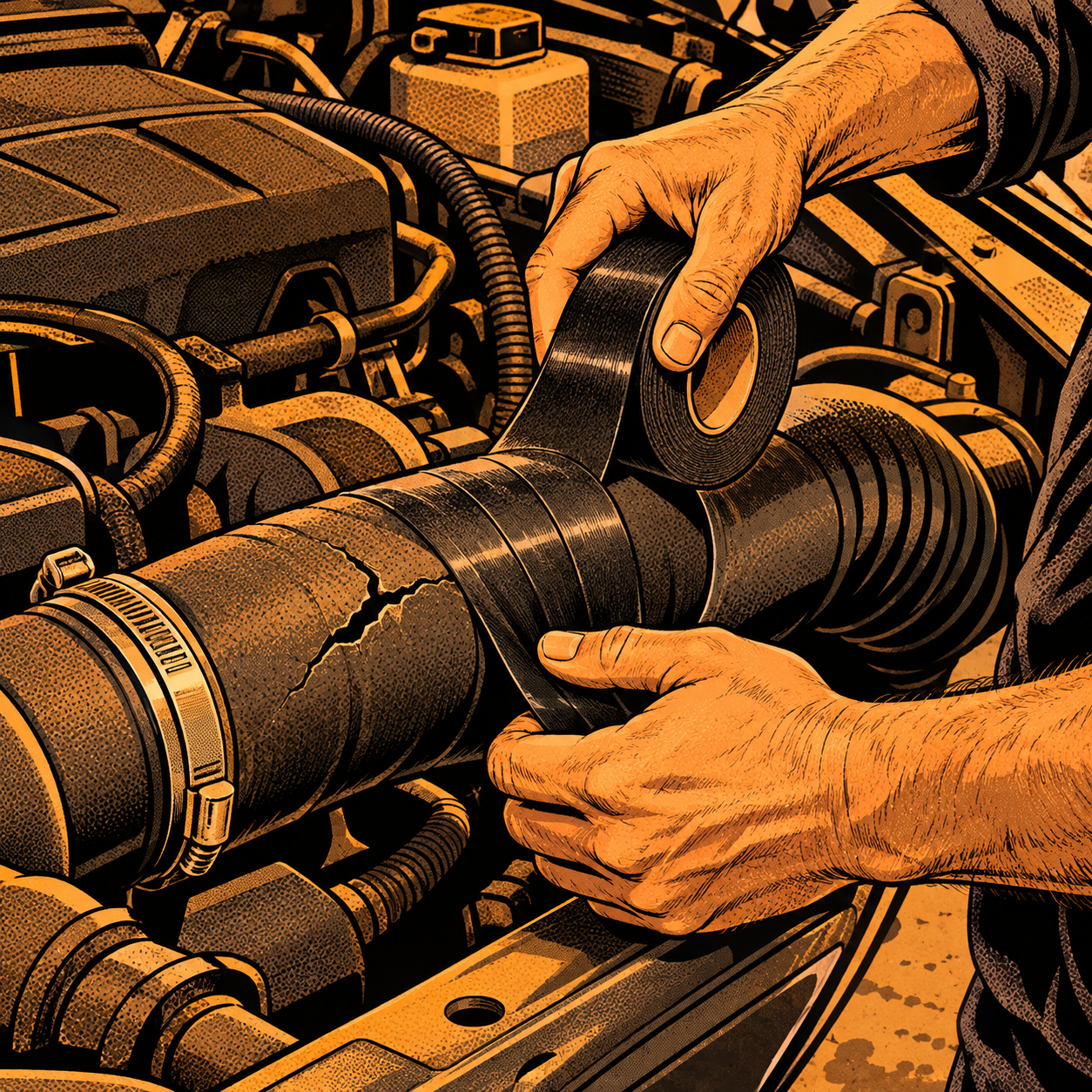
A split or cracked intake air hose is one of those problems that looks minor in a photo but can mean very different things depending on exactly where it’s located. Customers and DIYers often ask whether a crack “matters,” and the honest answer is: it depends on which side of the mass airflow (MAF) sensor the damage sits on. This guide walks through how to find and assess the crack, what it’s actually doing to the engine, how to field-patch it correctly if you need to drive it another day, and how to source a proper replacement without getting stuck paying dealer prices for what is often a simple molded rubber or plastic tube.
Why Crack Location Relative to the MAF Sensor Changes Everything
The intake tract runs from the air filter box, through the MAF sensor, and into the throttle body or intake manifold. A crack upstream of the MAF sensor (between the filter and the sensor) lets unfiltered air into the system, but that air still gets measured, so the engine computer can compensate reasonably well with fuel trims. The real damage here is mechanical, not drivability: dust, sand, and grit bypass the air filter element entirely and get pulled straight into the combustion chamber, where they act like sandpaper on cylinder walls, rings, and valves over time.
A crack downstream of the MAF sensor — between the sensor and the throttle body — is a different problem entirely. That air never gets measured. The engine pulls in more air than the computer thinks it has, which creates a vacuum leak and a lean condition. Short term, that shows up as rough idle, hesitation, or reduced fuel economy. Left alone, the oxygen sensors will keep reporting excess oxygen in the exhaust, and the ECU will keep adding fuel to compensate. Over months, that imbalance can foul plugs, degrade the catalytic converter, and trigger lean-condition codes (P0171, P0174, etc.).
Before doing anything else, trace the hose from the filter box to the throttle body and note where the MAF sensor sits relative to the crack. This single detail determines whether you’re dealing with a filtration problem or a metering problem, and it changes how urgently the repair needs to happen.
Reading the Symptoms: What the Car Is Telling You
Once you know the crack’s position, match it against what the vehicle is actually doing:
- Check engine light with lean fuel trim codes almost always points to a leak after the MAF sensor. Pull the freeze frame data and look at long-term fuel trims — numbers climbing above +10% at idle are a strong indicator of unmetered air entering downstream.
- No check engine light but gritty-sounding intake or visible dust buildup near the air box usually means the leak is upstream of the sensor. The computer isn’t seeing a problem because it’s still metering the air correctly; the damage is happening mechanically and silently.
- Rough or surging idle is a classic vacuum leak symptom and lines up with a downstream crack, especially if it gets worse when you wiggle or press on the hose near the crack.
- Noticeable drop in fuel economy with no other obvious cause is worth checking against hose condition, particularly on vehicles that already have 80,000+ miles on the factory intake tubing, since the rubber and plastic become brittle with heat-cycling over time.
A simple shop test: with the engine idling, spray a small amount of brake cleaner or unlit propane around the suspected crack. A momentary RPM change confirms a vacuum leak at that location. This works reliably for downstream cracks; it won’t tell you much about upstream filtration leaks since those don’t affect metered vacuum.
[PRODUCT_SEARCH: self-fusing silicone repair tape automotive]


Scotch Performance 233+ Automotive Refinish Masking Tape 12/case
Mfg: 3M Automotive
Part #: 26340 case

Field-Patching the Hose When You Can’t Replace It Today
Duct tape is the instinctive answer, but plain duct tape performs poorly here — it won’t bond to a surface that’s oily, dusty, or flexing with engine vibration, and the adhesive breaks down with underhood heat. A proper temporary patch takes a bit more prep but holds far longer:
- Clean the surface first. Wipe the cracked area with rubbing alcohol or brake cleaner to strip oil film and dust. Let it fully dry before applying anything. Skipping this step is the single biggest reason tape patches fail within days.
- Use self-fusing silicone tape instead of standard duct tape if the hose is rubber and flexes. Self-fusing tape stretches, bonds to itself rather than relying on surface adhesive, and tolerates engine bay heat far better than cloth-backed tape.
- Use foil-backed HVAC duct tape for rigid plastic sections. On hard plastic intake tubing (common on many Hondas and other economy models), aluminum foil duct tape designed for HVAC ducting holds up better than cloth tape and resists heat distortion.
- Wrap generously, not minimally. Run tape a few inches past each side of the crack and use multiple overlapping wraps. A single thin strip over the crack line is the most common reason these patches fail on the highway.
- Inspect for underlying causes. A crack right at a hose bend or mounting point is sometimes a symptom of a failed or broken engine mount putting stress on the tube. If the hose is torn rather than just split from age, check mount condition before you re-tape it, or it’ll tear again in the same spot.
Treat any patch as a bridge to a real repair, not a permanent fix. Plastic intake components get more brittle with every heat cycle, and a patched crack tends to spread.
Sourcing and Installing a Permanent Replacement
For OEM-specific molded intake tubes — especially on vehicles where the factory part is a one-piece plastic shape — dealer pricing can be steep for what is essentially a formed tube. Before paying dealer price, check these in order:
- Aftermarket parts stores: many common applications have a direct aftermarket replacement in the $40–60 range. Search by year/make/model/engine size rather than part number alone, since factory part numbers sometimes don’t cross-reference cleanly in parts-store catalogs.
- Salvage/wrecking yards: a used OEM tube from a yard is often the cheapest like-for-like fix, particularly for older or less common models where aftermarket coverage is thin.
- Online marketplaces: search by exact OEM part number on resale sites — sellers parting out wrecked vehicles frequently list these individually.
- Universal cold air intake kits: if the factory tube is discontinued or unreasonably priced, a universal intake tube or full cold air intake kit can replace the damaged section, though you’ll want to verify it clears other components under the hood before committing.
When installing, replace any factory hose clamps that look corroded or stripped, and route the new hose exactly as the old one sat — kinks or tight bends in flexible sections create their own stress points that lead to premature cracking.
Quick Reference Checklist
- Identify crack location relative to the MAF sensor (filtration issue vs. metering/vacuum leak)
- Pull codes and check long-term fuel trims if the check engine light is on
- Confirm a vacuum leak with a brake cleaner or propane test at idle
- Clean the area thoroughly before applying any tape patch
- Use self-fusing silicone tape (rubber) or foil HVAC tape (plastic) — not standard duct tape
- Check for a damaged engine mount if the tear happened at a stress point
- Source a permanent replacement via aftermarket, salvage yard, or online before defaulting to dealer price
[PRODUCT_SEARCH: engine air intake hose replacement]


Flex Hose Assembly - Cylinder Leakage Tester Replacement Part
Mfg: K-Line Industries
Part #: AT1006-10

Frequently Asked Questions
Can I just drive with a cracked intake hose?
Short distances, yes, especially if the crack is small and upstream of the MAF sensor. But any crack lets in either unfiltered air or unmetered air, both of which cause cumulative damage the longer it’s ignored. Treat it as a near-term repair, not something to defer indefinitely.
Will a cracked intake hose throw a check engine light?
Only if the leak affects air that’s already been measured by the MAF sensor. A crack between the filter box and the sensor usually won’t trigger a code because the computer still sees accurate airflow data — the damage there is dirt ingestion, not a sensor-reported fault.
Why won’t regular duct tape hold on an intake hose?
Standard cloth-backed duct tape relies on an adhesive that degrades with heat and won’t bond well to a surface covered in road dust or oil residue. It also doesn’t flex well with vibration. Self-fusing silicone tape or foil HVAC tape holds up significantly longer under the hood.
Is this a DIY-friendly repair?
Yes, in most cases. Intake hoses are typically held with simple clamps and are easy to access without lifts or specialty tools. The hardest part is usually sourcing the correct replacement part, not the installation itself.
How much does a replacement intake hose typically cost?
Aftermarket replacements commonly run $40–60 for the part. Dealer-only OEM tubes can run significantly higher, which is why checking aftermarket catalogs and salvage yards first is worth the extra few minutes.
Can a cracked intake hose damage my catalytic converter?
Indirectly, yes, if the crack is downstream of the MAF sensor. The resulting lean condition causes the ECU to keep adding fuel to compensate, and sustained rich-running conditions over time can shorten catalytic converter life. This is one more reason not to let a downstream leak go unaddressed for long.
Tools for This Repair
Whether you’re patching or replacing an intake hose, having the right tools and supplies on hand makes the job cleaner and more reliable. Browse our Engine Repair Tools for the equipment you need.
- Hose clamps and clamp pliers for secure, rattle-free connections
- Diagnostic tools and scan equipment for reading fuel trim codes
- Gasket scrapers and cleaning supplies for proper surface prep

The Toolsource Technical Team blends decades of real-world automotive service experience with up-to-date technical research. Our writers collaborate with professional mechanics, shop owners, and diagnostic specialists to deliver practical, workshop-ready guidance you can trust.


Follow us on social media