Every service bay has had this conversation at least once: a customer pulls the dipstick, sees the level sitting above the full mark, and assumes the worst. Most of the time, a small overfill is a non-issue — sometimes it’s even intentional. But “a little over” and “a lot over” are not the same problem, and knowing where that line sits is what separates a reasonable explanation from a comeback complaint. This guide breaks down how much overfill actually matters, why certain engines burn oil as part of normal operation, and how to check and correct a fill the right way.
How Much Overfill Actually Causes Problems
The space between the two hash marks on most dipsticks represents roughly one quart (about one liter). A fill that lands at or slightly above the top mark is typically a quarter- to a half-quart over — and on its own, that amount does nothing. It won’t contact the crankshaft, won’t cause foaming, and won’t raise oil pressure in any meaningful way.
The real threshold is when the level is high enough for the rotating crankshaft or counterweights to physically contact the oil in the pan. At that point the crank whips air into the oil, creating foam. Foamed oil doesn’t lubricate or transfer heat as well as liquid oil, oil pressure can spike or fluctuate, and in bad cases the pickup tube starts drawing foam instead of oil, leading to temporary starvation at the bearings. That generally takes an overfill of a full quart or more above the max line on most passenger car sumps — and on some vehicles, considerably more than that before symptoms show up. Builders who intentionally demonstrate this on YouTube with see-through valve covers have shown that most engines tolerate two to three times a normal “oops” overfill before anything visibly changes inside the crankcase.
Context matters too. Oval-track and off-road racers sometimes run a half-quart to a full quart over on purpose, because hard cornering and sustained hill angles can momentarily uncover the pickup tube on a stock sump. A slightly higher fill reduces the odds of oil starvation in that specific use case. Dry-sump systems are the exception — they’re far more sensitive to fill volume, and manufacturer specs should be followed exactly.
Why Oil Level Checks Go Wrong
A surprising number of “overfill” complaints are actually measurement errors, not fill errors. A few basics that get skipped under time pressure:
- Park on level ground. A slope in either direction will skew the reading in either direction.
- Let it sit before checking. On an engine that doesn’t consume much oil, give it 5–10 minutes after shutdown so oil draining from the upper block and valve cover settles into the pan. Checking immediately after a drive can show a false low reading.
- On an oil-burning engine, this rule relaxes. If a car visibly uses oil between changes, waiting the full 10 minutes matters less than just checking consistently and topping off as needed — you’re managing consumption, not chasing precision.
- Wipe and reseat the dipstick fully before pulling it for the real reading; a partial seat gives a false high reading.
- Read it twice. One pull-and-wipe-and-recheck takes fifteen seconds and eliminates most user error.
If a customer insists an engine is overfilled but checked it hot, on a slope, or immediately after a drive, walk them through a correct recheck before touching the drain plug.


Engines That Burn Oil by Design
Not all oil consumption is a problem to be fixed. Every internal combustion engine burns some oil — a small amount passes the piston rings into the combustion chamber, and oil vapor from the PCV system is drawn into the intake and burned as well. That’s expected and shows up as a slow, steady drop between changes.
Some engine families consume noticeably more than others as a known characteristic, not a defect:
- Honda K-series engines (used across Civic Si, Accord, CR-V, and others from roughly 2002–2016) are widely known among techs to burn oil between changes, even on low-mileage examples. It’s considered normal wear behavior for the platform, not a warning sign by itself.
- Hybrid engines like Toyota’s Prius powertrain use low-tension oil control rings and thin-viscosity oil (commonly 0W-16 in the US) to cut friction and improve fuel economy. The tradeoff is less effective oil control, and Toyota’s own documentation accounts for roughly a quart of consumption per 800 miles in some cases. Thicker oil within the approved range and staying current on oil changes helps keep the control rings from gumming up and getting worse over time.
- High-mileage or performance-oriented engines in general tend to consume more as rings and valve seals wear, regardless of brand.
The practical takeaway: if a specific engine has a known consumption reputation, a shop topping it off slightly above full at service is a reasonable buffer against the customer running low before the next interval — not an error.
What a Genuinely Dangerous Overfill Looks Like
Don’t let the “it’s probably fine” guidance above create blind spots. A real overfill — multiple quarts above max, or any amount on a system that explicitly warns against it — causes distinct, checkable symptoms:
- Milky or frothy oil on the dipstick or filler cap, indicating aeration/foaming.
- Oil pressure readings higher than normal at idle or on a scan tool, or an oil pressure warning light behaving erratically.
- Oil appearing at the dipstick tube, valve cover gasket, or crank seals — excess crankcase pressure from a badly overfilled sump can push oil past seals that were never designed to hold back that volume.
- Blue smoke from the exhaust if oil is being pushed up past the rings or into the intake in volume.
If any of these show up, don’t guess — drain to the correct level immediately and inspect for seal damage before the car goes back on the road.
Correcting a Fill at Home
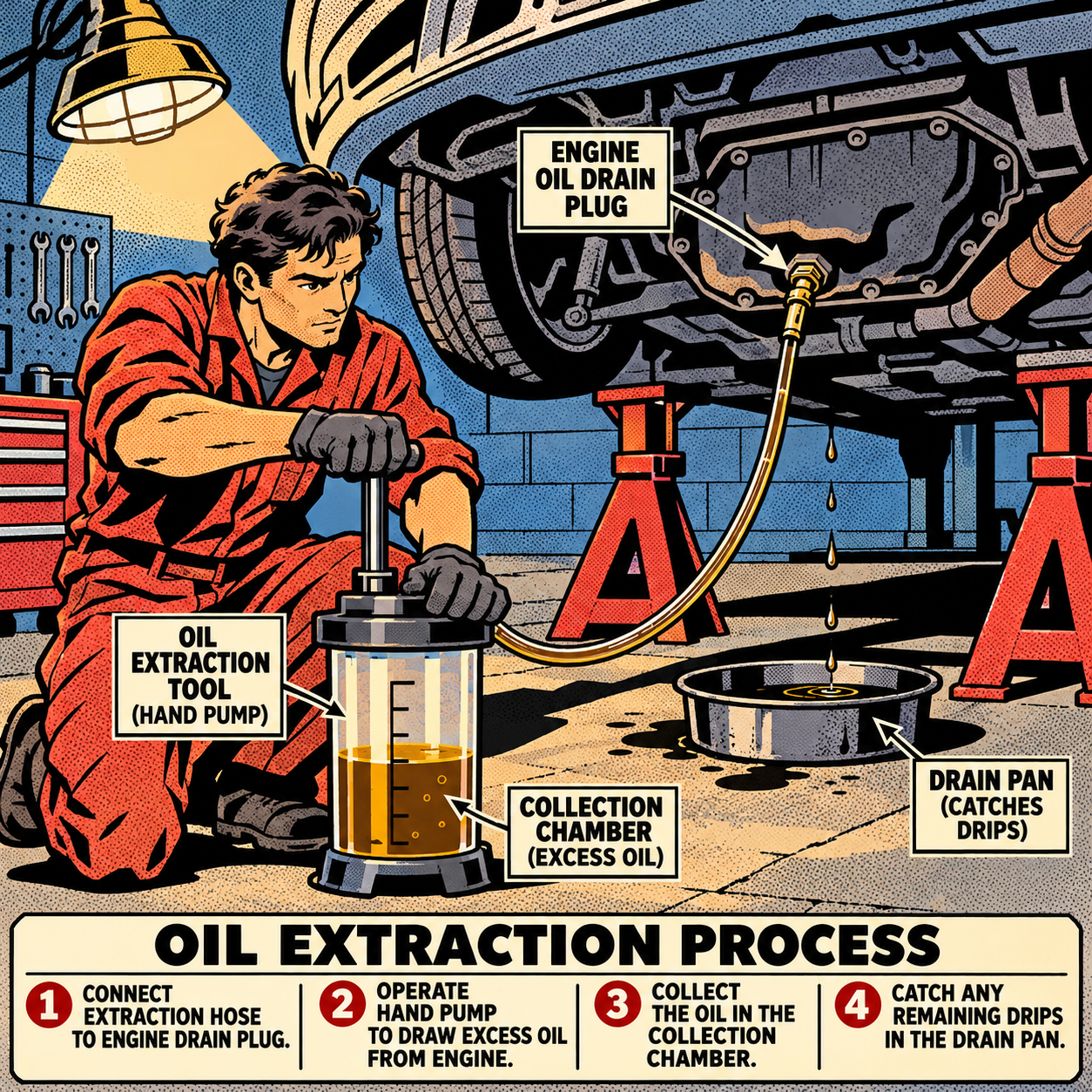
If a dipstick check confirms a real overfill (not just a measurement error), fixing it is simple and doesn’t require a lift:
- Warm the engine briefly so oil flows, then shut it off and let it settle for a few minutes.
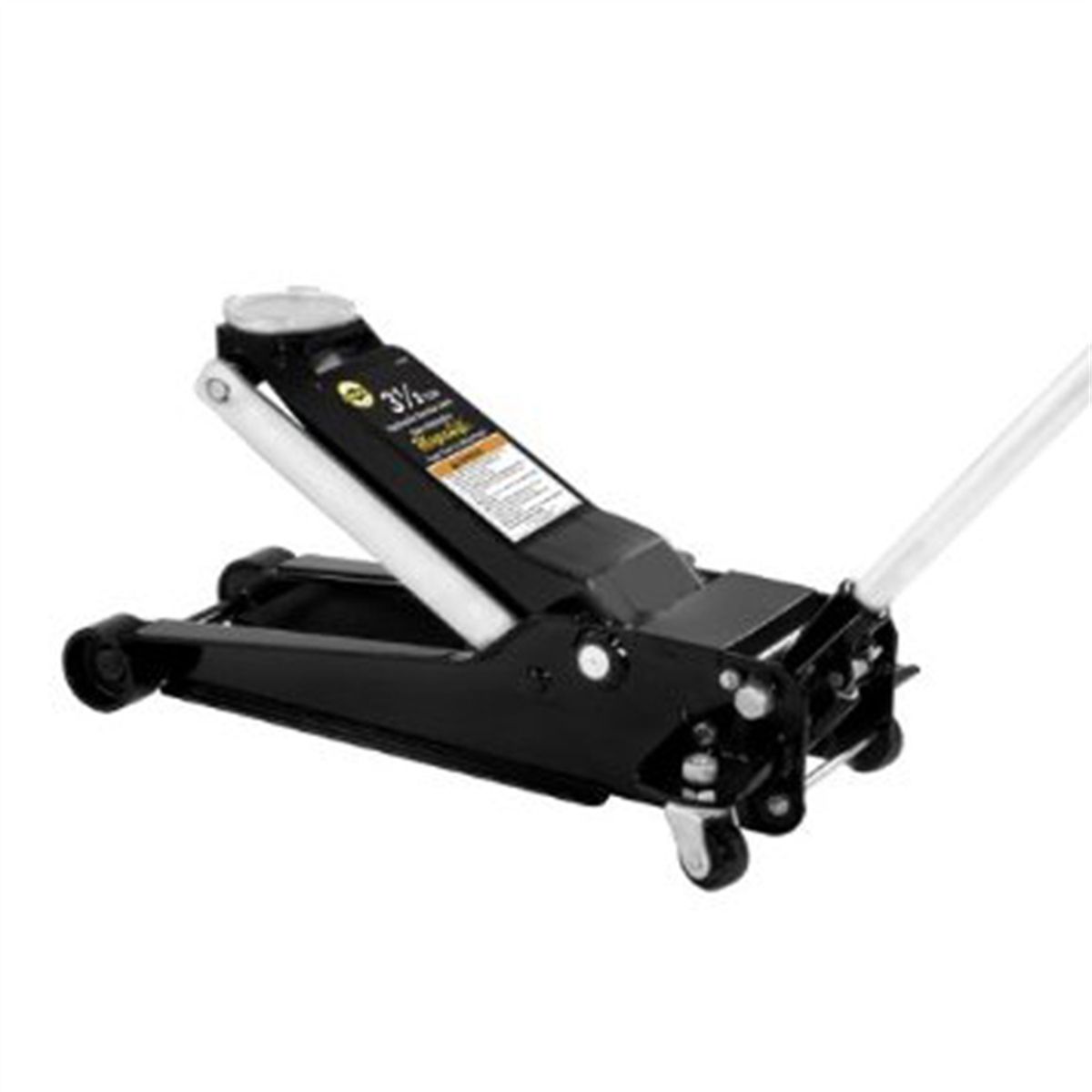
- Raise the vehicle safely on jack stands rated for the weight — ramps or a floor jack with stands work fine for this, no lift needed.
- Pull a small amount through the drain plug using a hand pump, turkey baster, or by partially loosening the plug over a drain pan and retightening once enough has come out.
- Recheck the dipstick on level ground after the oil settles, and adjust in small amounts rather than draining it all and starting over.
- Torque the drain plug to spec and double check for leaks after a short drive.
A basic drain pan, funnel, and a correctly sized wrench or socket cost a fraction of a single shop oil change, and a quick-drain valve (commonly called a Fumoto valve) removes the need for tools on future changes entirely.
Quick Checklist: Is This Overfill Actually a Problem?
- Level is at or just above the full mark (roughly a quarter to half quart over) → no action needed.
- Level is a full quart or more above max → monitor; drain down if the vehicle has a dry sump or the manual warns against overfill.
- Oil looks foamy/milky on the dipstick → drain to spec immediately, don’t drive it hard until corrected.
- Oil pressure gauge or warning light acting abnormal → treat as urgent, check level and oil condition before continuing to drive.
- Checked level on a slope or right after driving → recheck on level ground after a proper settle time before concluding anything.
- Known oil-burning engine (K-series Honda, hybrid, high-mileage) → slightly over full at service is a reasonable buffer, not a red flag.


Frequently Asked Questions
How much oil overfill is actually dangerous?
A quarter to half quart over the full mark is harmless on nearly every passenger vehicle. Problems generally start at a full quart or more above max, where crankshaft contact with the oil can cause foaming and pressure issues. Dry-sump systems are more sensitive and should stick to spec.
Will the extra oil just burn off?
Only if the engine already burns oil as part of normal operation. An engine that doesn’t consume oil between changes won’t burn off an overfill — it’ll just sit at the higher level until the next drain. That’s fine at small overfill amounts; it’s not a fix for a large one.
Should I check oil hot or cold, and how long should I wait?
Check on level ground, ideally 5–10 minutes after shutdown so oil in the upper engine has time to drain back to the pan. On a vehicle that visibly burns oil, consistency matters more than exact timing — check it the same way every time.
Why does my car burn oil between changes when others don’t?
Some engine designs trade oil control for lower friction and better fuel economy (common in hybrids) or simply have a reputation for ring/seal wear patterns that let more oil into the combustion chamber (common in certain Honda engines). This can be normal for that specific engine family rather than a fault.
My mechanic filled it slightly above the max line — should I be concerned?
Generally no. A slight overfill at service is sometimes done intentionally as a buffer against consumption before the next interval, and a small amount over causes no measurable harm. Ask them directly how much over it is and why, but a quarter to half quart over isn’t worth a comeback visit.
What tools do I need to check or correct an overfill myself?
A drain pan, a wrench or socket matching your drain plug, a funnel, and either a hand-operated extraction pump or patience with the drain plug method. A quick-drain valve eliminates tools for all future oil changes.
Essential Oil Change Equipment
The tools and techniques covered in this guide — drain pans, funnels, extraction pumps, and quick-drain valves — are all available in our Automotive Oil Change Tools category. Having the right equipment on hand makes checking levels, draining, and refilling a straightforward job every time.
- Drain pans and funnels for safe, mess-free fluid handling
- Oil extraction pumps and wrenches sized to fit common drain plugs
- Quick-drain valves and jack stands to make future maintenance faster and easier

The Toolsource Technical Team blends decades of real-world automotive service experience with up-to-date technical research. Our writers collaborate with professional mechanics, shop owners, and diagnostic specialists to deliver practical, workshop-ready guidance you can trust.


Follow us on social media