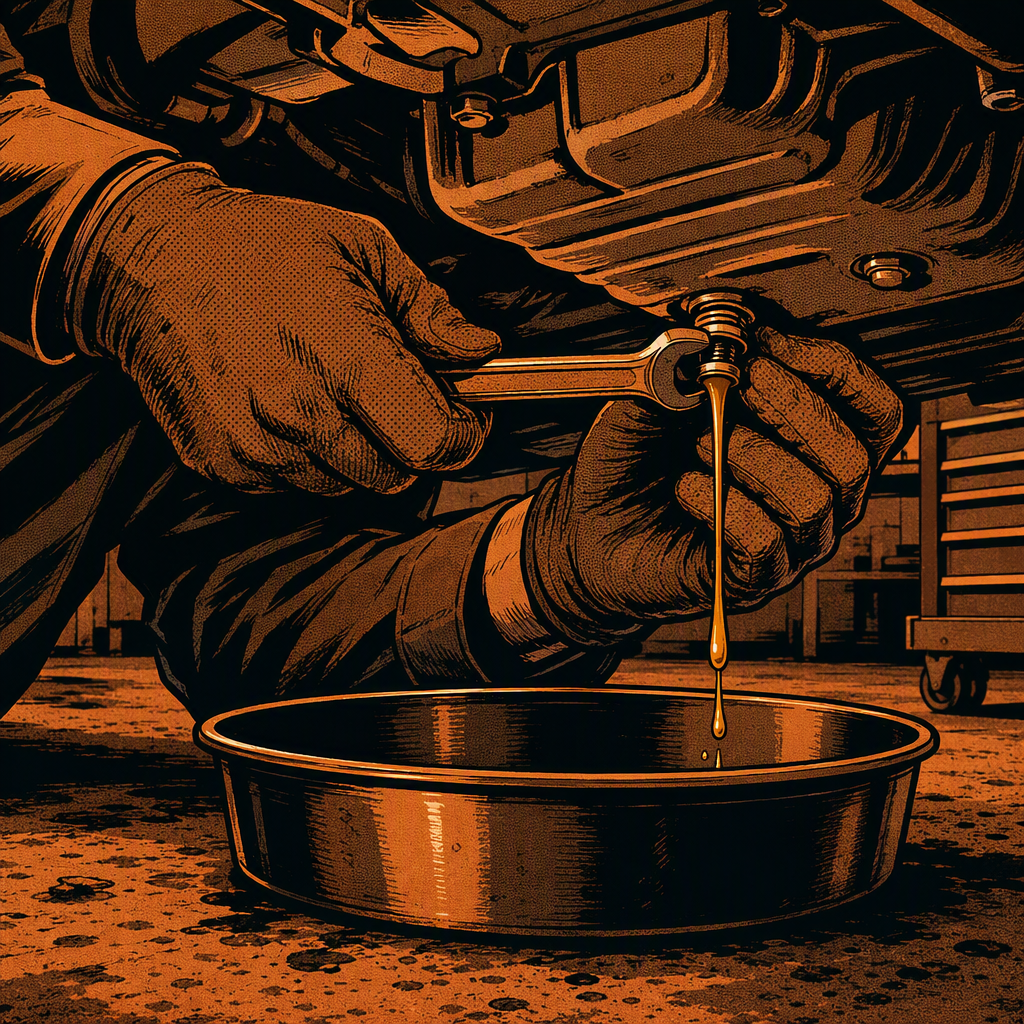
Overfilled oil is one of the most common comebacks after a quick lube visit or a DIY oil change, and it causes more anxiety than it usually deserves. A quart low is a lubrication problem; a quart high is usually a nuisance, not a catastrophe — but “usually” isn’t “always,” and the difference matters most on turbocharged and performance engines. This guide covers how to gauge severity, why overfill actually hurts an engine when it does, and the fastest, cleanest ways to correct it in the bay or in a driveway.
How Much Overfill Actually Matters
Context first: most passenger car crankcases hold 4.5 to 6 quarts, and the distance between the low and full marks on a dipstick typically represents about one quart. A half-quart to one-quart overfill — the most common mistake when a tech miscounts bottles or a DIY customer “tops off” after a service light — rarely causes measurable damage on a naturally aspirated engine. It’s a different story once you’re two or more quarts over, or on any turbocharged application, where tolerances for oil level and crankcase pressure are tighter.
Before doing anything, get an accurate reading. Park on level ground, let the car sit at least five minutes after the last run so oil drains back to the pan, pull the dipstick, wipe it clean, reinsert fully, and read it. A car that was checked on a slope or immediately after driving will give a false high or low reading, and that’s the single most common reason someone thinks they’ve overfilled when they haven’t.
Why Overfilled Oil Actually Damages an Engine
The mechanism isn’t “too much lubrication” — it’s aeration. When oil level sits high enough that the rotating crankshaft or connecting rods contact it, the spinning assembly whips the oil into foam, the same way a mixer aerates batter. That foamy, bubble-laden oil gets pulled into the pickup and circulated through the engine. Aerated oil compresses under load instead of maintaining a solid hydrodynamic film, so it breaks down the oil wedge on rod and main bearings, cams, and other close-tolerance surfaces. Sustained foaming is what causes bearing wear and, in bad cases, spun bearings — not the extra volume itself.
Two secondary risks worth flagging to a customer: on older diesels, oil pushed past the rings via crankcase pressure can enrich the intake charge enough to cause “runaway,” where the engine keeps running on its own oil vapor after the key is off — rare today but not unheard of on older diesel fleet vehicles. And on turbocharged engines, excess crankcase pressure and hotter-running oil are more likely to push oil past turbo seals, leading to oil consumption or smoke from the turbo, even when the same overfill amount would be a non-issue on an N/A engine.
The practical takeaway for diagnosis: check the dipstick after a drive for foam or a milky, aerated appearance clinging to the stick. If it comes out clean and full without foam, and there’s no unusual smoke, blue exhaust, or oil pressure warning, the engine is very likely fine at a half-quart to one-quart over.
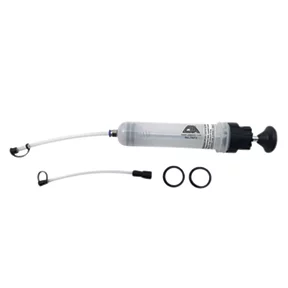
EXTRACTION/FILLING PUMP W/ EXTRA HOSE - 200CC
Mfg: CTA Manufacturing Corp.
Part #: 7073
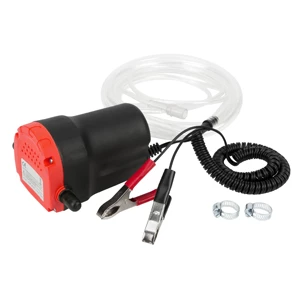
Performance Tool 12V Self-Priming Oil Extraction Pump
Mfg: Wilmar - Performance Tool
Part #: W54170
Correcting the Level: Three Shop-Proven Methods
Once you’ve confirmed a real overfill (not a slope or hot-check misread), pick a removal method based on how much excess oil you’re dealing with and what tools are on hand.
Drain plug crack method (best for small overfills, under a quart): Position a drain pan, loosen the drain plug just enough to let oil dribble out in a controlled stream, and pull it for a few seconds at a time. Reinstall the plug, run the engine a minute to redistribute oil, then recheck the dipstick. Repeat in small increments — it’s far easier to remove too little and repeat than to overshoot and have to add oil back in. Torque the plug to spec on the final reinstall and replace the crush washer if it’s a one-time-use type.
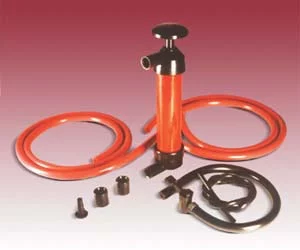
Manual extraction pump (cleanest option, no mess, no plug removal): A hand-operated fluid transfer pump with a thin tube run down the dipstick tube or filler neck lets you pull oil directly from the pan without disturbing the drain plug or getting underneath the vehicle. This is the preferred method for a shop that doesn’t want oil dripping on a lift or a customer working in a driveway without ramps. Pump slowly, check the dipstick between pulls, and stop as soon as the level sits mid-range between the marks.
Filter-crack method (last resort, expect a mess): Loosening the oil filter slightly lets a small amount of oil weep out before you retighten it. It works but it’s messier and less controllable than the other two methods, and it risks damaging the filter gasket seal if you’re not careful on the reinstall. Only use this if a drain plug or extraction pump genuinely isn’t accessible.
Whichever method you use, remove oil in small increments and recheck the dipstick after each pass rather than guessing a volume and hoping it lands correctly.
{{PRODUCT_SEARCH_1}}
Turbocharged and Performance Engines Need a Lower Tolerance
If the vehicle in the bay is turbocharged, treat overfill more conservatively than you would on a naturally aspirated engine. Higher sustained oil temperatures on turbo applications accelerate the effects of any aeration, and the same foam that’s a non-event on an N/A engine can more readily find its way to turbo shaft seals under boost. It doesn’t take a dramatic overfill to cause a problem here — bring turbo engines back to spec even for what would be a “don’t worry about it” amount on a standard engine, and flag any blue smoke on startup or under boost as a reason to recheck oil level and turbo seal condition.
The same lower-tolerance approach applies to engines with known oil-pressure-sensitive variable valve timing systems, since foamy or over-pressurized oil can cause erratic VVT solenoid behavior and trigger drivability codes that have nothing to do with the solenoid itself.
When It’s Genuinely Not Worth Fixing
For a naturally aspirated engine sitting at a half-quart to roughly one quart over full, with no foaming on the dipstick and no smoke, the standard shop answer is to note it, tell the customer, and let it ride until the next service — normal consumption and burn-off typically brings it back toward full before the next oil change. Chasing a few milliliters off the dipstick by repeated dip-and-wipe checks is not a real correction method; each check removes a negligible film off the stick, and it would take hundreds of checks to move the needle. If a measurable correction is warranted, use one of the three methods above instead.
Quick Reference Checklist
- Confirm the reading: level ground, 5+ minutes since last run, dipstick wiped and fully reseated
- Check for foam or a milky appearance on the dipstick, not just the level line
- Note engine type: naturally aspirated vs. turbocharged changes the acceptable margin
- Under 1 quart over, N/A engine, no foam/smoke: log it, advise customer, no action required
- Over 1 quart, any turbo engine, or foam/smoke present: remove excess via drain plug crack or extraction pump
- Recheck dipstick after each small removal — don’t estimate a single large pull
- Document the correction on the repair order, including starting and ending oil level
{{PRODUCT_SEARCH_2}}
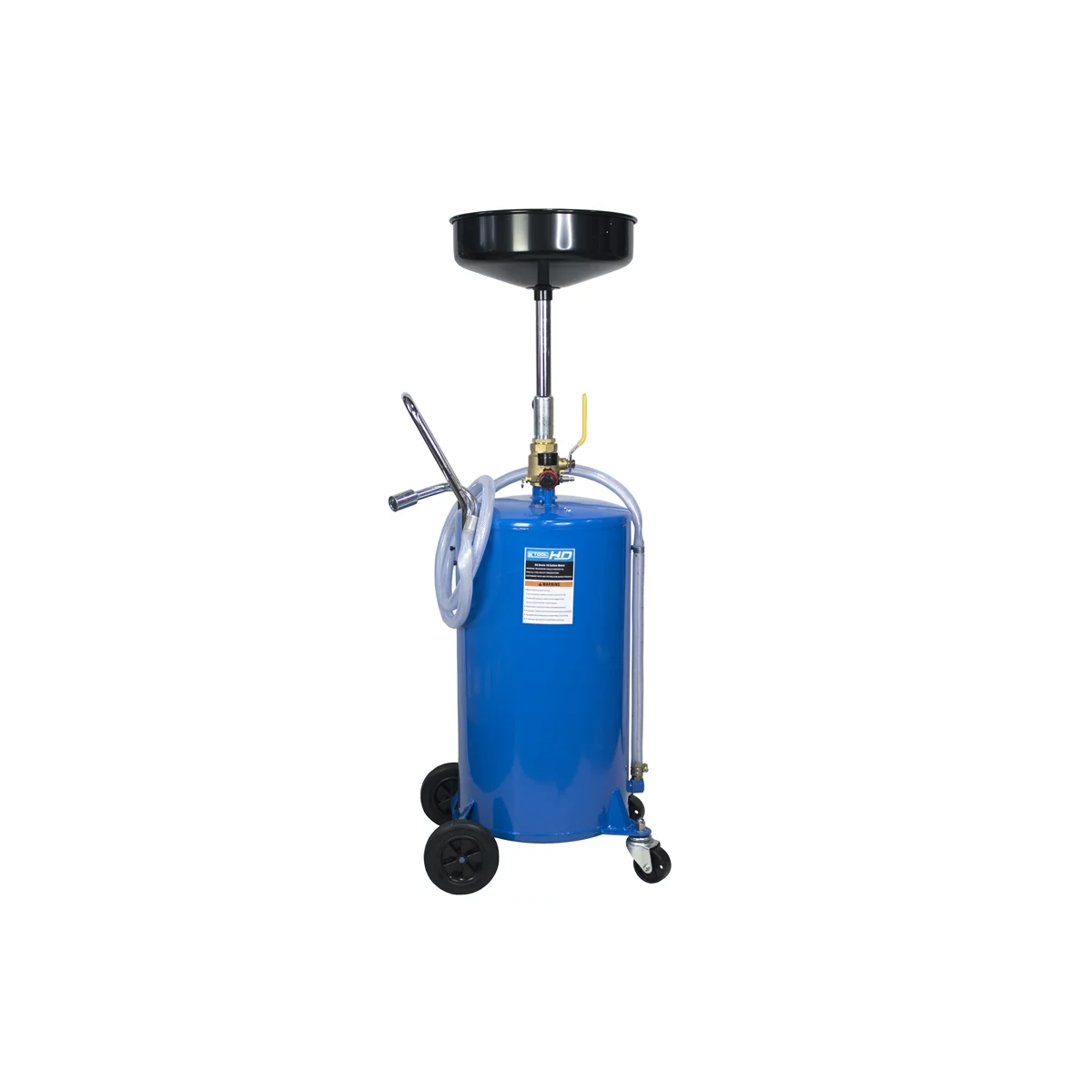
K Tool International Oil Drain 18 Gallon Metal
Mfg: K Tool International
Part #: HTOD18
Frequently Asked Questions
How much overfill is actually dangerous?
On a naturally aspirated engine, a half-quart to one quart over full is generally considered low-risk and often resolves itself through normal burn-off. Two or more quarts over, or any amount on a turbocharged engine that causes visible foaming on the dipstick, warrants correction.
Can I just keep checking the dipstick to wipe oil down to the correct level?
No. Each dip and wipe removes only a fraction of a milliliter of oil clinging to the stick — not a meaningful volume. Correcting a real overfill requires draining, pumping, or a controlled filter crack, not repeated dipstick checks.
Is it safe to use the drain plug to remove a small amount of oil?
Yes, and it’s often the most practical option if the vehicle is already on a lift or ramps. Crack the plug briefly to let oil dribble into a pan, reinstall, and recheck — repeating in small increments avoids overshooting the target level.
Why is overfill worse on turbocharged engines?
Turbo engines run oil hotter and under more crankcase pressure, which increases the chance that aerated or excess oil reaches the turbocharger’s shaft seals, leading to oil consumption, smoke, or seal failure — even from an overfill amount that wouldn’t concern a naturally aspirated engine.
What does foamy oil on the dipstick mean?
Foam indicates the oil level was high enough for the crankshaft or connecting rods to whip air into it. Aerated oil doesn’t maintain proper lubricating film on bearings, so foam is the clearest sign that an overfill needs to be corrected rather than left alone.
Will an overfilled engine just burn off the extra oil on its own?
For minor overfills without foaming, yes — normal oil consumption over the following weeks typically brings the level back down near full by the next service interval. This isn’t a fix for foaming, smoke, or larger overfills; those need active correction.
Recommended Tools for Oil Service
Whether you’re doing a routine oil change or correcting an overfill, the right tools make the job cleaner and faster. Check out our Automotive Oil Change Tools for everything from drain pans to extraction pumps.
- Drain pans and plug wrenches for safe removal and reinstallation
- Manual extraction pumps for clean overfill corrections
- Torque wrenches and dipsticks for level verification and fastener spec

The Toolsource Technical Team blends decades of real-world automotive service experience with up-to-date technical research. Our writers collaborate with professional mechanics, shop owners, and diagnostic specialists to deliver practical, workshop-ready guidance you can trust.


Follow us on social media