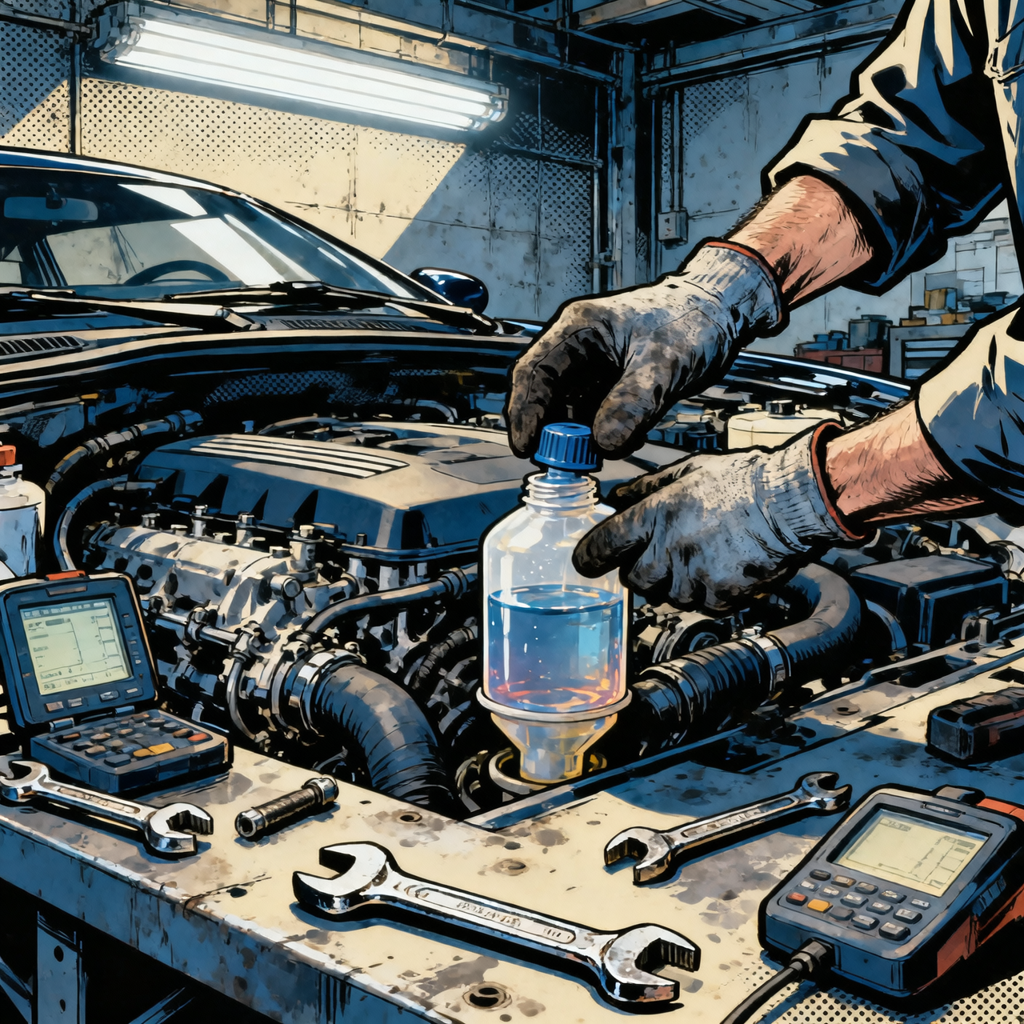
Power steering fluid keeps your steering system operating smoothly. Like all automotive fluids, it degrades over time and requires periodic inspection to prevent pump failure, rack damage, or steering system breakdown. Checking power steering fluid is a basic maintenance task that takes minutes and can save thousands in repairs. This guide shows you how to locate your reservoir, assess fluid condition, and know when to call a professional.
Locating Your Power Steering Fluid Reservoir
Before checking your power steering fluid, locate the reservoir. Location varies by manufacturer and vehicle configuration, but a systematic approach will identify it quickly.
Common reservoir locations by vehicle type
In front-wheel-drive vehicles with transverse engines, the reservoir typically sits near the firewall on the passenger side. Rear-wheel-drive vehicles with longitudinal engines often position it on the driver’s side near the front. Many Ford trucks mount it low on the driver’s side frame rail, while older GM trucks place it high near the brake master cylinder. European vehicles like BMW and Mercedes-Benz frequently integrate the reservoir into the power steering pump assembly itself, located lower in the engine bay near the accessory drive belt.
Many modern vehicles manufactured after 2015—particularly economy cars and trucks built after 2020—use electronic power steering (EPS) systems that eliminate hydraulic fluid entirely. The Chevrolet Silverado and GMC Sierra switched to electric steering in 2020, as did most Honda and Toyota compact models by 2016. If your vehicle uses EPS, no power steering reservoir exists.
Identifying the reservoir cap and label
Power steering reservoir caps display a steering wheel icon, often with “Power Steering” or “PS Fluid” text. Caps are typically black or yellow, though some transparent or semi-transparent reservoirs allow visual inspection without removal. The cap may be twist-off or incorporate a dipstick attached to the underside. Ford, Chrysler, and domestic manufacturers favor dipstick caps, while European and some Asian manufacturers use separate reservoirs with level markings molded into the translucent plastic. Don’t confuse the power steering reservoir with the brake fluid reservoir, which sits on the brake master cylinder and warns about paint damage from fluid spills.
Checking Fluid Level: Step-by-Step
Once you’ve located the reservoir, checking fluid level requires understanding your specific system. The procedure differs based on reservoir design and manufacturer specifications.
Checking with a dipstick or sight glass
For dipstick-style caps, ensure the engine is off and the vehicle sits level. The engine should be cold or warm—not hot—for accurate readings. Remove the cap by turning counterclockwise and pulling straight up. Wipe the dipstick clean with a lint-free cloth, reinsert it fully, then remove it again and observe the fluid level against the marked indicators.
Most dipsticks show “COLD” or “MIN” and “HOT” or “MAX” markings. With a cold engine, fluid should register between cold minimum and maximum marks. With a warm engine (driven 10-15 minutes then cooled slightly), the level should fall between hot range indicators. Fluid expands when heated, so warm readings naturally appear higher than cold readings.
Translucent reservoirs with sight glass windows eliminate the dipstick entirely. These feature “MIN” and “MAX” lines embossed into the plastic. Observe where the fluid sits against these markings while looking from the side with good lighting. Fluid should remain between minimum and maximum indicators regardless of temperature, though some systems specify different checking procedures.
Checking without a dipstick using alternative methods
Many European vehicles and newer designs lack external dipsticks or sight glasses. BMW, Volkswagen, and some Mercedes-Benz models require removing the cap and visually inspecting fluid inside the reservoir opening. Look straight down—you should see fluid near the top, typically within 1-2 inches of the cap sealing surface.
Some systems incorporate internal float-type level sensors that illuminate dashboard warning lights when fluid drops too low. The absence of a warning light generally indicates adequate fluid level, though periodic visual verification remains advisable.
Engine running vs. engine off: which is correct
Most American and Asian vehicles specify checking with the engine off after cooling several minutes following operation. This allows circulated fluid to return to the reservoir for accurate readings.
Certain European systems—particularly older ZF pumps used in BMW, Audi, and some Mercedes-Benz models—require checking at idle with the steering wheel centered. These systems retain significant fluid volume outside the reservoir when the engine is off. Always consult your owner’s manual for the manufacturer-specified procedure, as incorrect checking can lead to overfilling and fluid expulsion.
No products found for “power steering fluid turkey baster extractor”
Interpreting Fluid Condition and Color
Fluid level tells only part of the story. Condition and color reveal crucial information about system health and whether topping-off suffices or complete replacement becomes necessary.
Healthy fluid appearance and characteristics
Fresh power steering fluid ranges from clear to light amber or pink, depending on formulation. Automatic transmission fluid (ATF) used in many systems appears bright red or pink. Dedicated power steering fluids may be clear, light amber, or pale yellow. Regardless of color, healthy fluid should be transparent or translucent. It should have a mild petroleum odor similar to fresh motor oil. Consistency should be smooth and slippery without visible particles, sediment, or separation. When wiped on white cloth, the fluid should leave a clean, uniform stain without dark specks, metallic flakes, or grittiness.
Warning signs: contamination, degradation, and discoloration
Dark brown or black fluid indicates significant oxidation and thermal degradation after 50,000-100,000 miles without replacement. Degraded fluid loses lubricating properties and hydraulic efficiency, increasing pump wear and steering effort. Dark fluid warrants complete system flushing rather than simple topping-off.
Milky, foamy, or opaque fluid signals water contamination from condensation or failed seals allowing coolant intrusion. Water compromises lubrication and promotes corrosion of pump components. Fuel-like odors suggest gasoline or diesel contamination from leaking fuel pressure regulators. Both scenarios require immediate fluid replacement and source repair.
Brake fluid contamination produces amber darkening and changes fluid characteristics. Since brake fluid is incompatible with petroleum-based power steering fluids, contamination causes seal swelling and system damage. This typically occurs from accidental misfilling. This condition necessitates complete system flushing and possibly seal replacement.
What metal particles and burnt smell indicate
Fine metallic particles visible in fluid or deposited on dipsticks indicate internal pump wear. As wear progresses, microscopic metal particles circulate through the system. The reservoir filter screen traps these particles, but heavy contamination overwhelms filtration.
A burnt odor—distinct from normal petroleum smell—signals severe overheating from running the pump dry, prolonged operation at full lock, or excessive system pressure from pump failure. Burnt fluid appears very dark, almost black, and feels less slippery than fresh fluid. Burnt power steering fluid often accompanies whining or groaning noises, indicating imminent failure.
When discovering metal particles or burnt fluid, fluid replacement alone isn’t sufficient. Replace the reservoir filter screen, inspect all hoses for deterioration, and examine the pump for unusual noise or leaking seals. If contamination stems from pump wear, flushing without pump replacement simply circulates metal particles through fresh fluid, accelerating damage to the steering rack.
Vehicle-Specific Considerations
Power steering systems vary significantly across manufacturers, requiring attention to specific fluid types, checking procedures, and system designs.
Fluid type specifications by manufacturer (ATF, CHF, OEM blend)
Domestic manufacturers traditionally use automatic transmission fluid. Ford specifies Mercon or Mercon V ATF, Chrysler uses ATF+4, and General Motors historically recommended Dexron III or VI. Never substitute one manufacturer’s ATF for another, as friction modifier packages and seal swell agents differ significantly.
European manufacturers often require dedicated power steering fluids incompatible with ATF. BMW specifies Pentosin CHF 11S (Central Hydraulic Fluid), a synthetic mineral oil-based fluid with specific viscosity characteristics. Mercedes-Benz uses either MB 236.3 or Pentosin CHF 202 depending on model year. Volkswagen and Audi specify various G-series fluids (G 002 000, G 004 000) that differ from both ATF and other power steering formulations.
Asian manufacturers show more variation. Honda specifies genuine Honda Power Steering Fluid, while Toyota uses genuine Toyota ATF or compatible Dexron formulations. Nissan systems vary between ATF and dedicated power steering fluid. Subaru typically used ATF in older models but switched to dedicated formulations in newer vehicles. Always verify the correct specification on the reservoir cap or in your owner’s manual before adding fluid.
Electronic power steering systems: do they have fluid?
Electric power steering (EPS) systems eliminate hydraulic components entirely, using an electric motor mounted on the steering column or steering rack. These systems contain no power steering fluid, pump, hoses, or reservoir. If your vehicle uses EPS, there’s nothing to check regarding power steering fluid.
EPS has become increasingly common due to improved fuel efficiency, reduced weight, and easier integration with advanced driver assistance systems. Most vehicles manufactured after 2015 in compact and midsize segments use electric steering. However, heavy-duty trucks, performance vehicles, and some luxury models retain hydraulic systems.
Modern vehicle variations (2020+ models without hydraulic systems)
Many newer vehicle owners searching for power steering fluid will discover their vehicles don’t have any. The 2020 Chevrolet Silverado 1500 and GMC Sierra 1500 eliminated hydraulic power steering, as did the 2021 Ford F-150 in most configurations. Popular vehicles like the Honda Civic (2012+), Toyota Corolla (2014+), and Mazda3 (2014+) use electric steering.
If you recently purchased a vehicle built after 2015 and cannot locate a power steering reservoir, consult your owner’s manual’s specifications section. Look for “Electric Power Steering” or “EPS” in the steering system description. The absence of a reservoir isn’t a defect—it’s intentional system design.
Maintenance and When to Flush
Understanding checking procedures is valuable only when paired with knowledge about service intervals and proper maintenance practices that extend system life.
Recommended checking frequency and service intervals
Check power steering fluid every oil change or approximately every 3,000-5,000 miles as part of routine maintenance. This quick inspection takes less than two minutes and allows early detection of leaks, contamination, or degradation.
Complete fluid replacement intervals vary by manufacturer. Many domestic vehicles recommend changing power steering fluid every 50,000 miles or three years, whichever comes first. European manufacturers often specify longer intervals—75,000 to 100,000 miles—or list power steering fluid as “lifetime fill,” though experienced technicians recommend service every 60,000-80,000 miles regardless. Heavy-duty use, extreme climates, or commercial applications warrant more frequent service every 30,000-40,000 miles.
DIY flushing procedures and tools needed
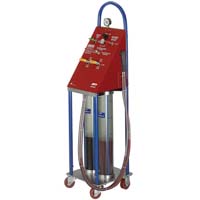
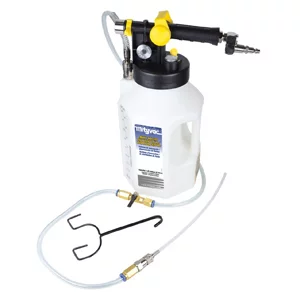
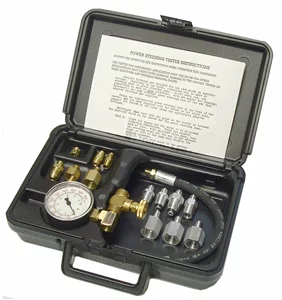
PowerJET Power Steering Fluid Flush and Exchange SKY500100X
Mfg: Skye
Part #: 500100X

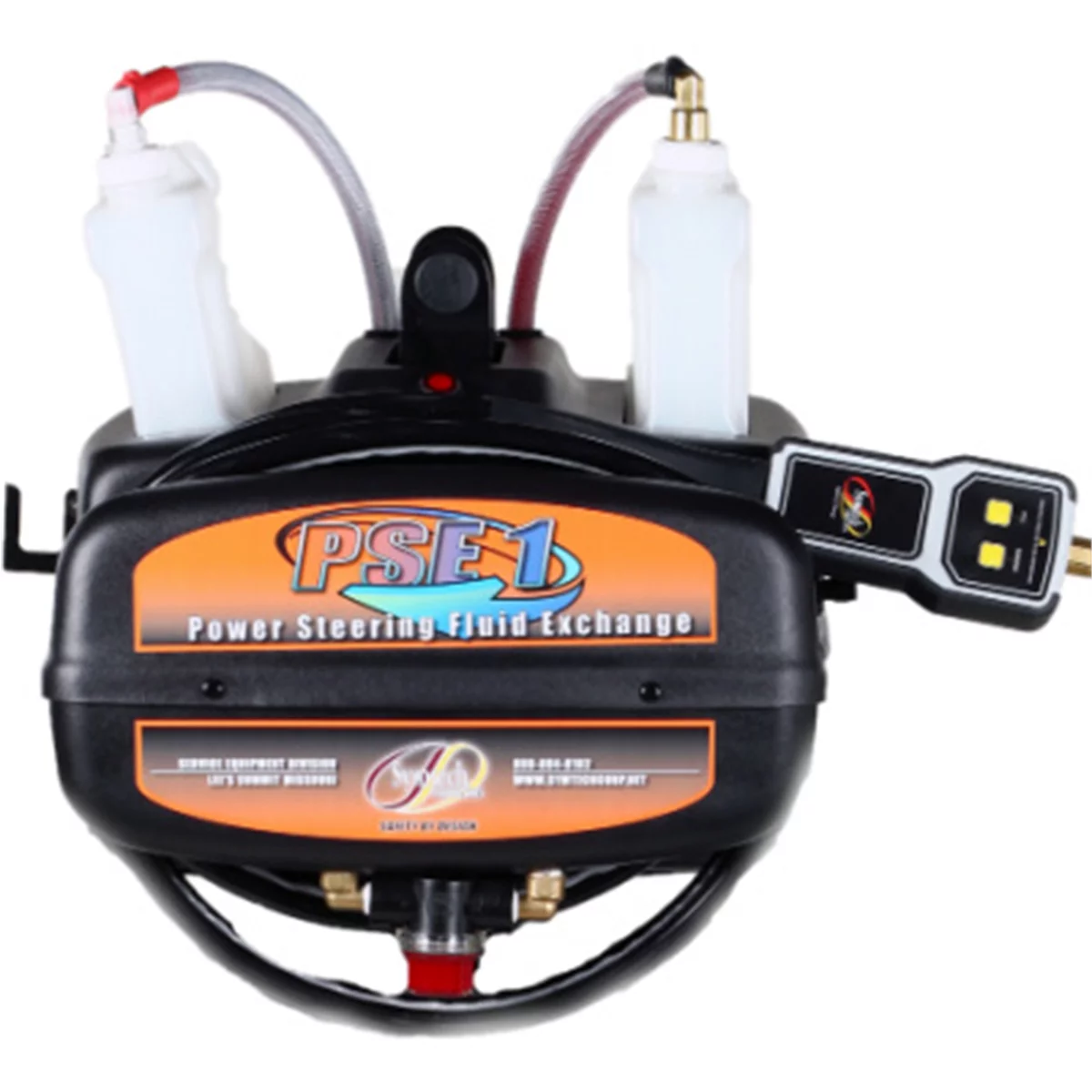
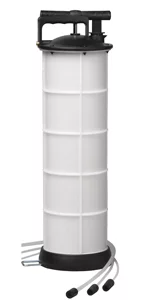
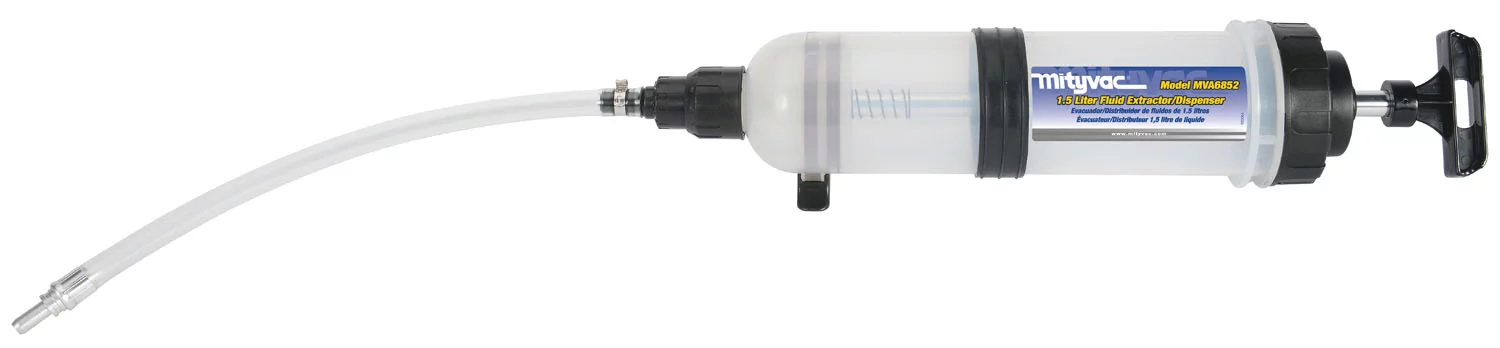
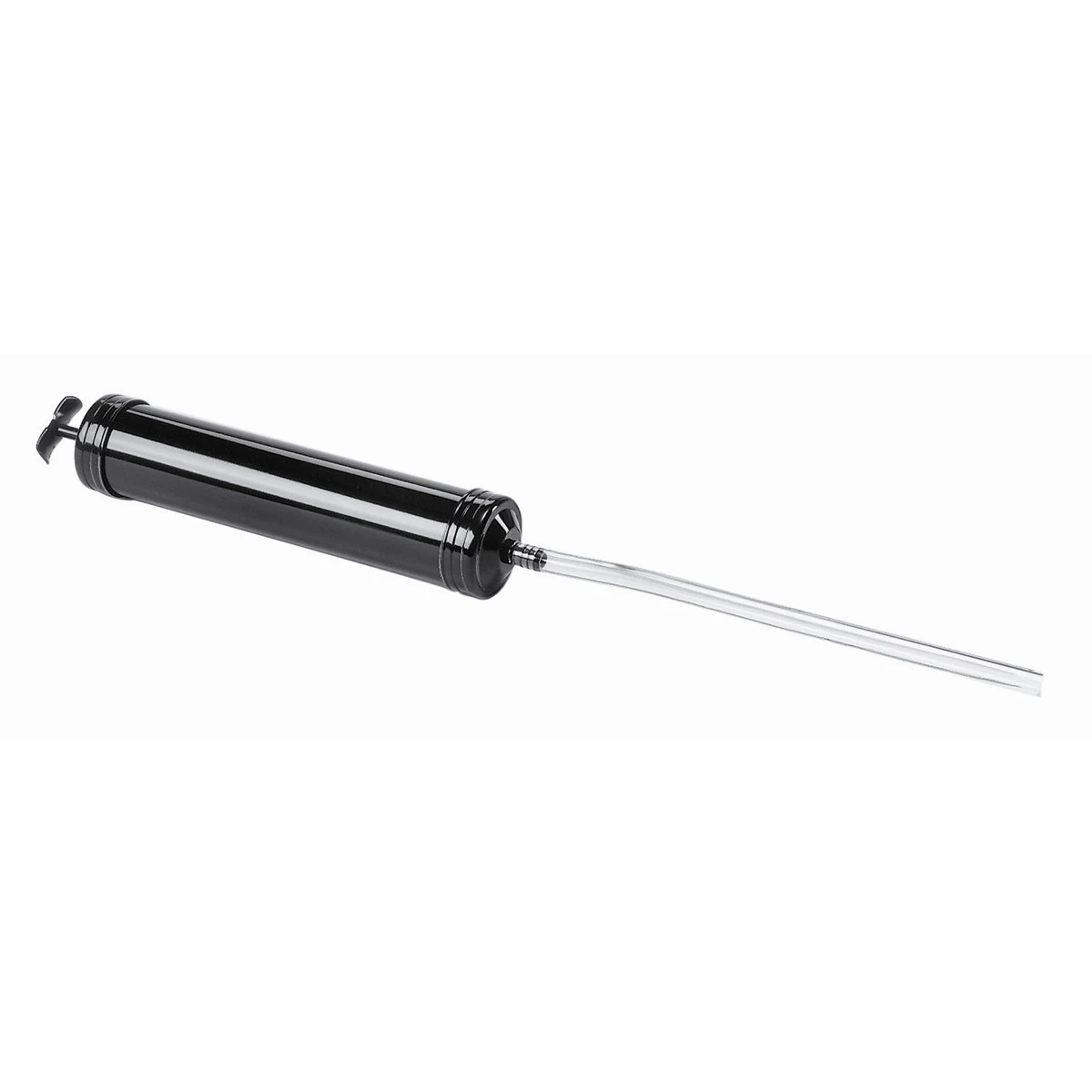
A complete power steering flush requires a turkey baster or fluid extractor, drain pan, funnel, and replacement fluid. Extract as much fluid as possible from the reservoir using the baster or extractor. Refill to the maximum mark with fresh fluid, then start the engine and turn the steering wheel fully left and right several times without holding it against the stops.
Stop the engine and extract the reservoir fluid again—it will be darker from mixing with old fluid. Repeat this process 3-5 times until extracted fluid appears clean and matches fresh fluid color. This method flushes approximately 80-90% of old fluid without disconnecting hoses.
For a more thorough flush, disconnect the return hose (typically the thinner hose with a spring clamp) from the reservoir and direct it into a drain pan. Have an assistant start the engine briefly while you capture old fluid draining and simultaneously pour fresh fluid into the reservoir. Continue until fresh fluid emerges from the return hose, then reconnect everything. This complete flush exchanges nearly all system fluid but requires more time and fluid quantity.
When to replace vs. top-off contaminated fluid
Minor discoloration from age without visible particles warrants complete flushing but doesn’t necessarily indicate component damage. If fluid appears darker than fresh but maintains transparency and shows no metallic particles, a thorough flush restores system performance effectively.
Heavily contaminated fluid with metal particles, water emulsification, or burnt characteristics requires more than simple flushing. Replace the reservoir and its internal filter screen, inspect all hoses for deterioration, and examine the pump for unusual noise or leaking seals. If contamination stems from pump wear, flushing without pump replacement simply circulates metal particles through fresh fluid, accelerating damage to the steering rack.
Never simply top off heavily contaminated fluid. Complete replacement provides far better protection than topping off with fresh fluid.
| Fluid Condition | Appearance | Recommended Action | Additional Service Needed |
|---|---|---|---|
| Fresh/Good | Clear to light amber, transparent, no particles | None, continue regular inspection | None |
| Aged/Oxidized | Brown, translucent, slight petroleum odor | Complete flush using turkey baster method | None if no noise or steering issues present |
| Contaminated | Milky, foamy, fuel smell, or metallic particles | Complete system flush with hose disconnect method | Replace reservoir filter, inspect pump and hoses, identify contamination source |
| Severely Degraded | Black, burnt odor, opaque, heavy particle content | Complete fluid replacement | Replace pump, reservoir, and filter; inspect rack for damage; may require complete system overhaul |
Power Steering Fluid Inspection Checklist
- Verify vehicle has hydraulic power steering (not electric EPS system)
- Locate reservoir and confirm correct identification via cap markings
- Park on level surface with engine off and cooled (unless manufacturer specifies otherwise)
- Check fluid level against dipstick markings or sight glass indicators
- Inspect fluid color and transparency by observing on white paper towel
- Smell fluid for burnt odor or fuel contamination
- Look for metallic particles, water contamination, or foam
- Check reservoir cap and sealing surfaces for damage or leaks
- Inspect visible hoses for cracks, swelling, or seepage
- Listen for pump whine or groaning when turning steering wheel
- Document findings and schedule flush or service if contamination detected
- Top off only with manufacturer-specified fluid type
Frequently Asked Questions
Where is the power steering fluid reservoir located in my vehicle?
Front-wheel-drive cars typically position the reservoir near the passenger-side firewall, while rear-wheel-drive vehicles often place it on the driver’s side near the front of the engine. Look for a black or yellow cap marked with a steering wheel icon. Many modern vehicles built after 2015 use electric power steering and have no reservoir. If you cannot locate a reservoir, consult your owner’s manual or look for “Electric Power Steering” in your vehicle specifications.
What should power steering fluid look like and smell like?
Healthy power steering fluid ranges from clear to light amber or pink, appearing transparent when held to light. It should have a mild petroleum odor similar to fresh motor oil. Dark brown or black coloration indicates oxidation and age. Milky appearance suggests water contamination. A burnt smell signals overheating or pump damage. Metallic particles visible on the dipstick indicate internal pump wear requiring more than simple fluid replacement.
How often should I check my power steering fluid?
Check power steering fluid every oil change or approximately every 3,000-5,000 miles as part of routine maintenance. This allows early detection of leaks, contamination, or degradation. Complete fluid replacement should occur every 50,000-75,000 miles for most vehicles. Heavy-duty use, extreme climates, or commercial applications warrant more frequent service every 30,000-40,000 miles. Always follow manufacturer-specific intervals in your owner’s manual.
Can I use any power steering fluid in my vehicle?
Never use generic or incorrect fluid in your power steering system. Manufacturers specify particular fluids—some use automatic transmission fluid (ATF) like Mercon V or Dexron VI, while others require dedicated formulations like Pentosin CHF 11S or Honda Power Steering Fluid. Using incorrect fluid causes seal swelling, degradation, and potential pump damage. Always verify the correct specification on your reservoir cap or in your owner’s manual.
What does it mean if my power steering fluid is foamy or has bubbles?
Foamy or bubbly power steering fluid typically indicates air intrusion from a loose connection, failing pump seal, or low fluid level. It can also signal water contamination from condensation or coolant intrusion. Aerated fluid reduces hydraulic efficiency and causes groaning or whining noises when turning. Address this by checking for leaks, verifying proper fluid level, and ensuring all connections are tight. If foam persists after topping off, complete fluid replacement and system inspection becomes necessary.
Do I need to check power steering fluid with the engine running or off?
Most American and Asian vehicles specify checking power steering fluid with the engine off after allowing several minutes for fluid to return to the reservoir. Certain European systems—particularly those using ZF pumps in BMW, Audi, and Mercedes-Benz models—require checking at idle with the steering wheel centered. Always consult your owner’s manual for the manufacturer-specified checking procedure to avoid incorrect readings that could lead to overfilling or underfilling.
Essential Power Steering Fluid Tools & Products
Now that you know how to check your power steering fluid, you’ll want to have the right tools on hand. Our automotive maintenance category features everything you need to keep your power steering system in top condition.
Browse our recommended products for power steering maintenance:
- Fluid Level Indicators & Gauges – Accurate measurement tools to monitor your fluid levels between check-ups
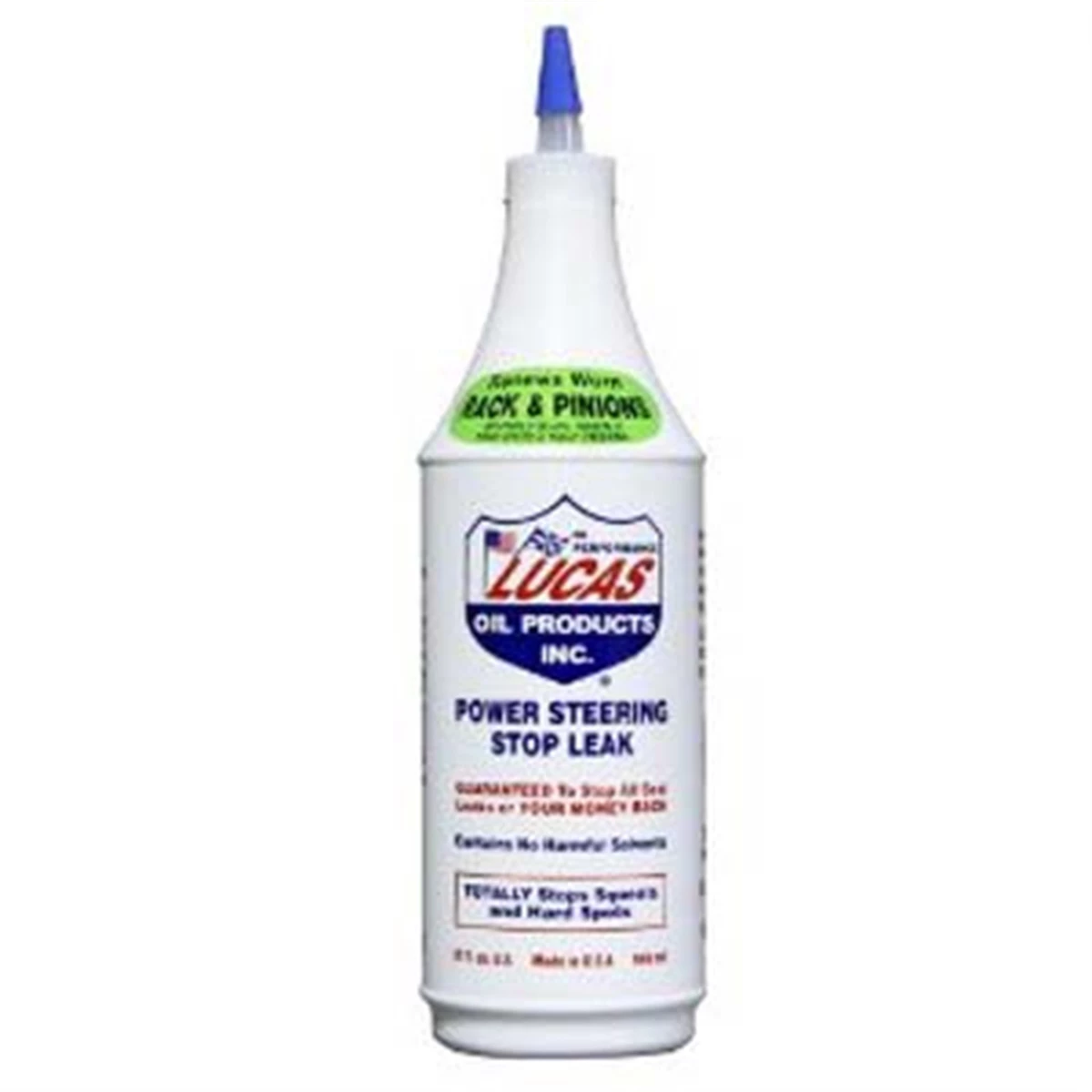
- Power Steering Fluid & Additives – OEM-compatible fluids and system cleaners to maintain optimal performance
- Fluid Transfer & Extraction Kits – Professional-grade equipment for safe fluid changes and disposal
For the tools in this guide, browse Fluid Evacuators at Tool Source.

The Toolsource Technical Team blends decades of real-world automotive service experience with up-to-date technical research. Our writers collaborate with professional mechanics, shop owners, and diagnostic specialists to deliver practical, workshop-ready guidance you can trust.


Follow us on social media