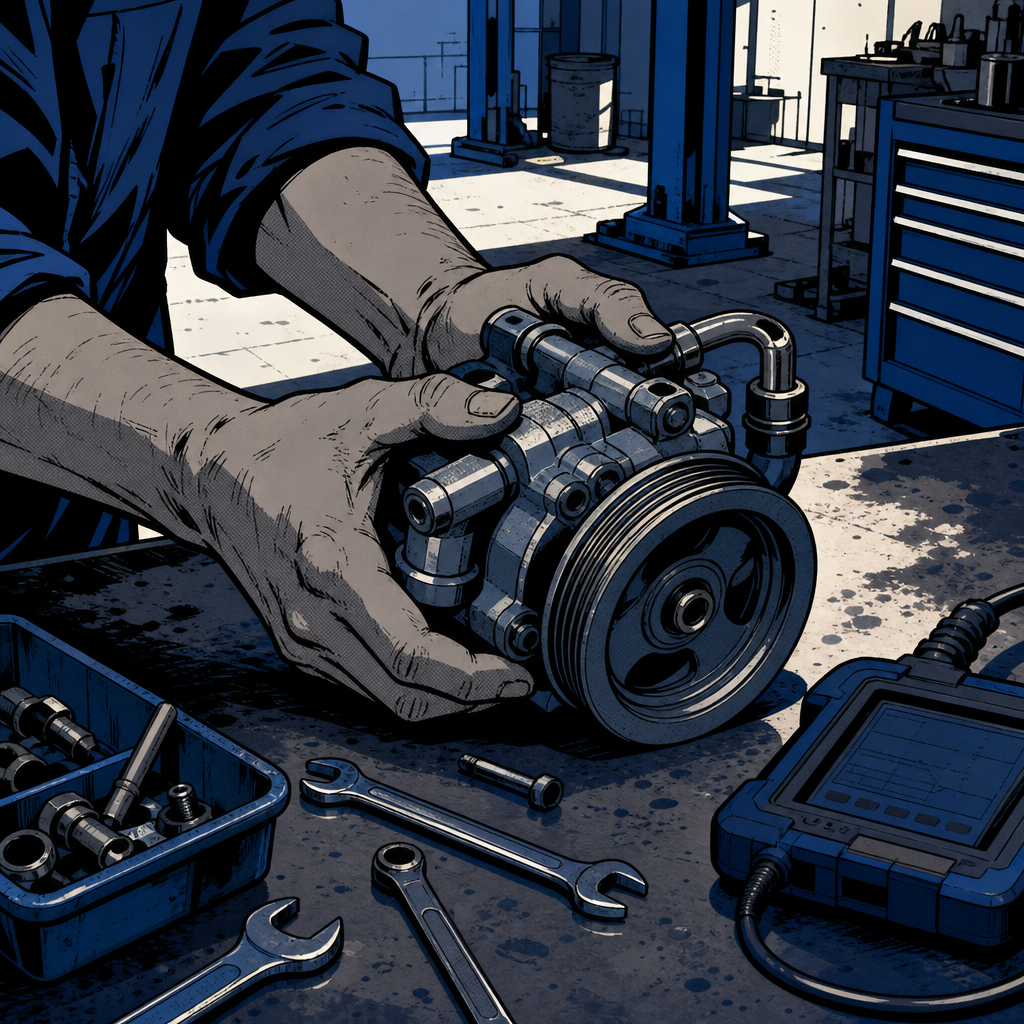
A failing power steering pump doesn’t require a $600+ dealership bill. With basic skills, you can save $400-500 in labor. This guide covers pricing, replacement steps, and whether to DIY or hire help.
Is Power Steering Pump Repair a DIY Job?
Yes, for most people. Pump replacement is moderate-difficulty work that takes 40-90 minutes once you know the process.
Difficulty Level and Time Investment
Mechanics rate pump replacement as a 0.6-1.3 hour job. Access varies by vehicle—front-wheel-drive cars are easier than rear-wheel-drive trucks. The process is straightforward: drain fluid, disconnect hoses, unbolt pump, reverse to reinstall. Your first attempt may take an hour; subsequent jobs go faster.
Required Tools
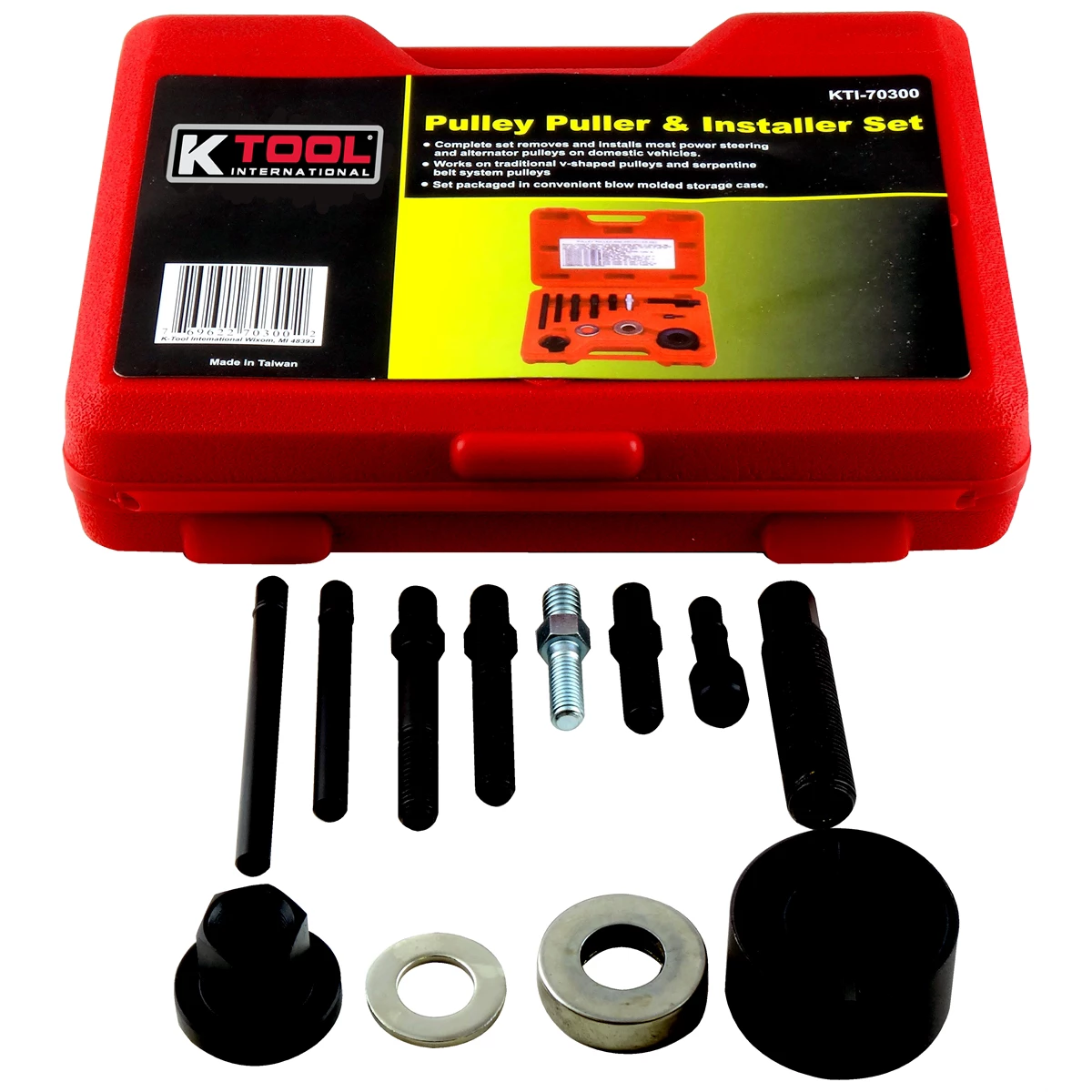
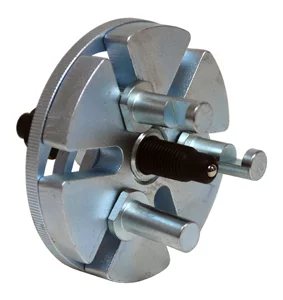
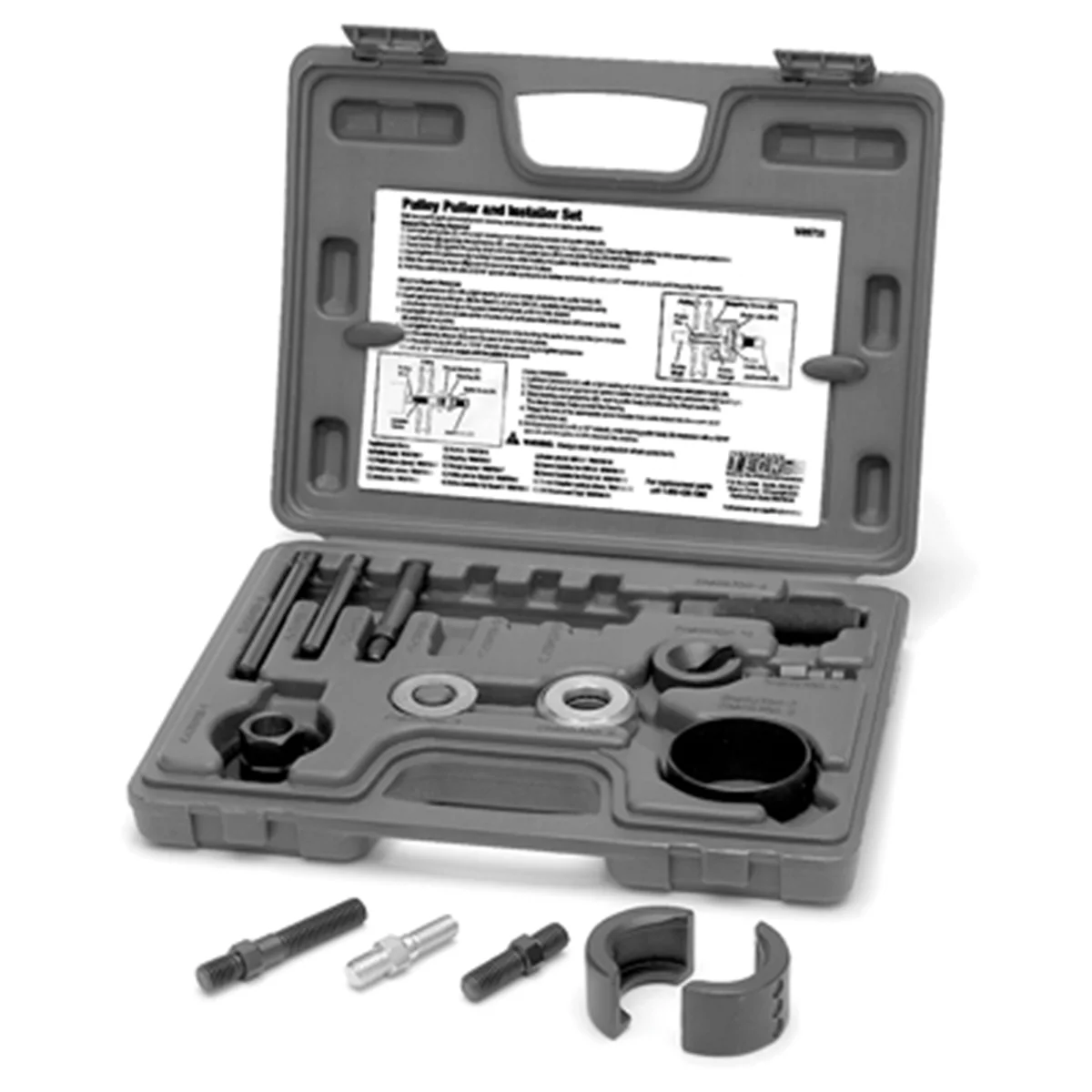
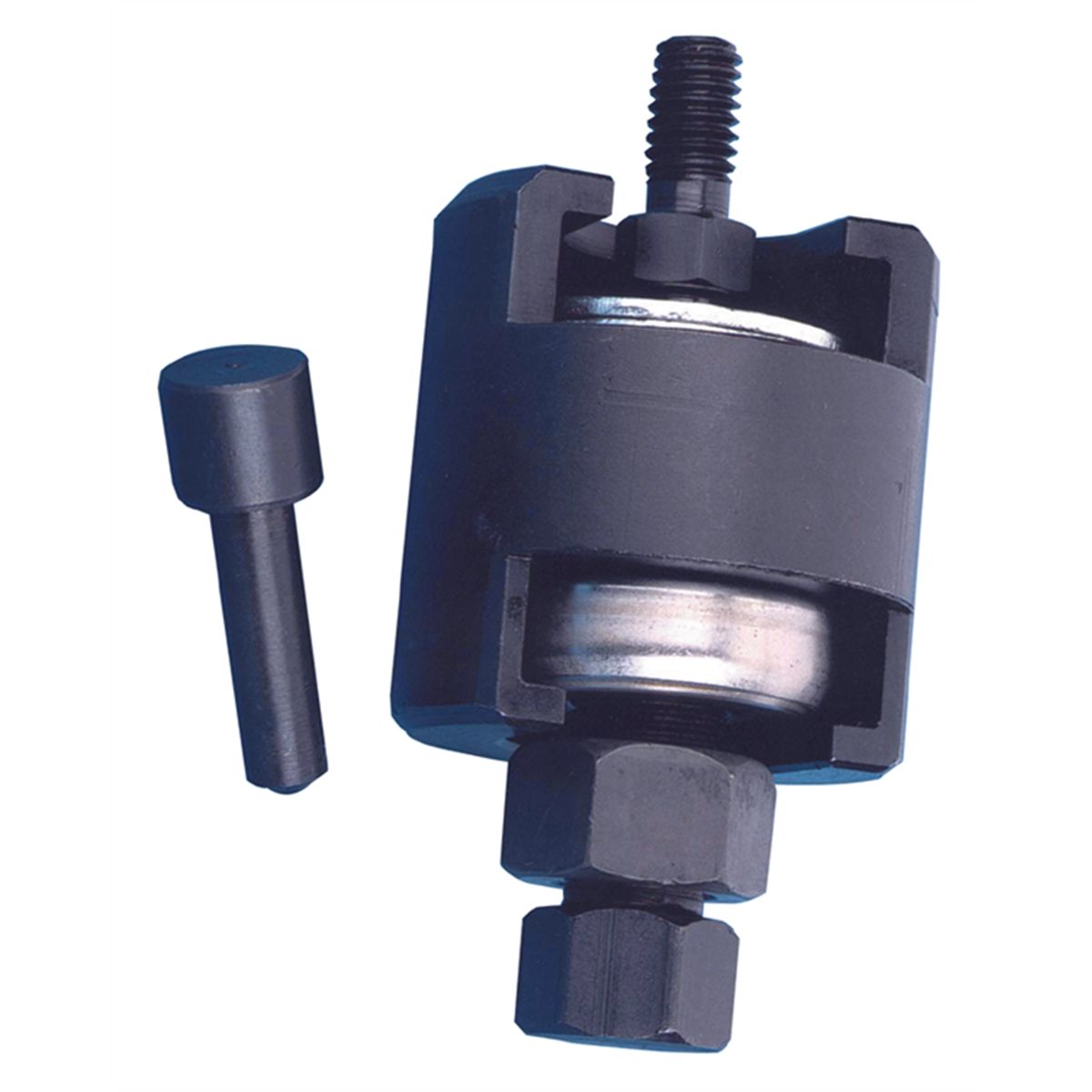
You likely have most tools: socket set, wrenches, drain pan. Specialty items like pulley pullers are free to borrow from Advance Auto Parts, AutoZero, or O’Reilly with a refundable deposit. A pulley remover kit costs $40-80 to buy.
When to Call a Professional
Call a pro if the pump sits behind the intake manifold (turning a 1-hour job into 4 hours), the vehicle has electronic variable-assist power steering requiring calibration, you can’t safely raise the vehicle, or you’re unsure about the diagnosis. Steering problems sometimes stem from rack leaks, stuck valves, or air in the system instead of pump failure.
Cost Breakdown: DIY vs Professional
Parts Sourcing
Online retailers beat dealership prices. A quality remanufactured pump from RockAuto costs $60-120 versus $180-280 at dealerships. Add 2 quarts of fluid ($12-18), O-rings ($4-8), and a serpentine belt ($15-35) for $90-180 total. RockAuto shows multiple options with clear core charges. Local shops match online prices with coupons and offer same-day availability.
Pump Comparison
| Pump Type | Cost | Warranty | Best For |
|---|---|---|---|
| OEM New | $250-450 | 1-2 years | Vehicles under warranty |
| Quality Aftermarket | $80-160 | Lifetime | Best value for DIY |
| Budget Remanufactured | $45-75 | 90 days-1 year | Older vehicles |
| Rebuild Kit | $30-60 | None | Experienced mechanics only |
Quality aftermarket pumps from A1 Cardone or BBB Industries offer the best value. Cheap pumps often fail within months. Independent mechanics charge $150-250 labor ($300-400 total); dealerships ask $500-800 for the same work. Chain shops often upsell unnecessary services.
Parts Checklist and Tools
Essential Parts
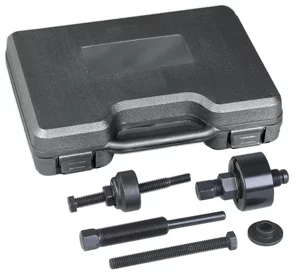
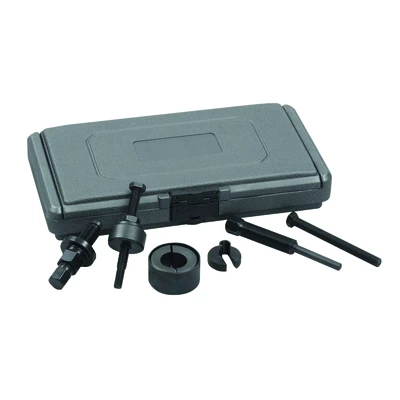
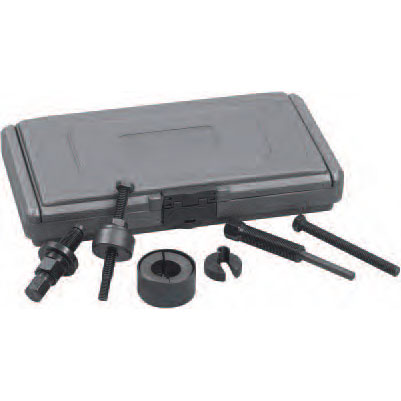
Stinger Power Steering Pump Pulley Service Set
Mfg: OTC Tools and Equipment
Part #: 4530
- Replacement power steering pump (verify fitment by VIN)
- Power steering fluid (2 quarts minimum—check owner’s manual for type)
- Inlet and outlet hose O-rings/gaskets
- Reservoir cap seal if worn
- Thread sealant for pressure line fittings (if applicable)
Don’t assume a new pump includes a pulley or mounting hardware. Check product details before ordering. Fluid type matters: wrong fluid damages seals. Honda specifies Honda PSF; many GM vehicles use Dexron ATF.
Since you’re removing the serpentine belt, inspect it for cracks or fraying. Replace if worn or over 50,000 miles ($15-35 cost, zero additional labor). Check the belt tensioner and idler pulleys for rough bearings.
Essential Tools
- Socket set (3/8″ drive) and wrenches
- Drain pan (1-gallon minimum)
- Turkey baster or fluid transfer pump
- Serpentine belt tool or breaker bar
- Power steering pulley puller and installer (borrow free)
- Line wrenches for pressure hose fittings
- Jack and jack stands or ramps
- Shop rags, nitrile gloves, flashlight
No products found for “power steering fluid serpentine belt”
Step-by-Step Replacement
Draining and Fluid Management
Empty the reservoir with a turkey baster or transfer pump before disconnecting anything. Position drain pan under the pump and hose connections. Power steering fluid stains concrete, so use cardboard or absorbent pads. Disconnect the negative battery terminal if the pump sits near the alternator—fluid conducts electricity and ruins electronics. Cap or plug hoses immediately with rubber caps, golf tees, or rags to prevent further draining and contamination.
Removing Old Pump and Installing Replacement
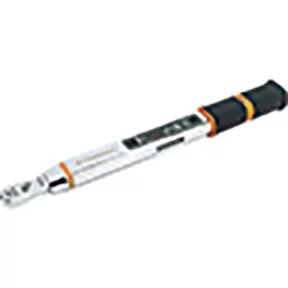
1/4 Dr. 5-25Nm Fixed Head E-Spec Electronic Torque Wrench Kit
Mfg: GearWrench
Part #: 85235
1 Inch Drive Dual Scale Dial Torque Wrench - 0-1000 ft-lbs
Mfg: CDI Torque Products
Part #: 10005LDFN
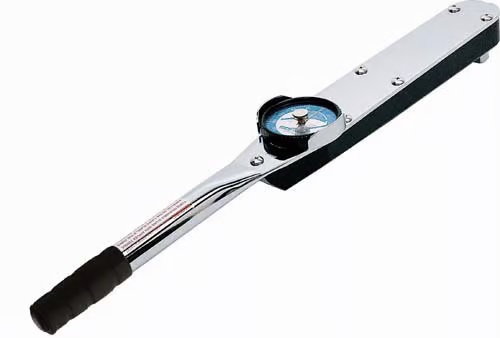
Release belt tension with the tensioner tool or breaker bar, then slip off the belt. Snap a photo of the belt path before removal. Disconnect the pressure line (use a line wrench) and return hose (squeeze spring clamp or loosen screw clamp). Remove pump mounting bolts (usually 2-4) and wiggle the pump free gently.
Transfer the pulley from old to new pump using puller and installer tools—this requires care to avoid cracking the pulley or damaging the shaft. Install the new pump by reversing removal: position, hand-tighten bolts, then torque to spec (typically 18-25 ft-lbs). Reconnect hoses carefully, threading pressure line by hand before using a wrench. Torque to spec (typically 20-25 ft-lbs).
System Bleeding
Proper bleeding prevents whining, erratic assist, and pump wear. Fill the reservoir to correct level. Engine off, turn the steering wheel fully lock-to-lock 10-20 times. Top off fluid as the level drops. Start the engine and idle, turning steering slowly lock-to-lock 5-10 more times. Watch for bubbles rising in the reservoir—continue until they stop and level holds steady. Watch for leaks at all connections. A small weep at the pressure line usually needs just one-eighth turn with the wrench.
Critical Safety Tips
Why You Can’t Drive with a Leaking Pump
A leaking pump causes cavitation—air bubbles that implode inside, damaging internal parts and speeding wear. Steering becomes unpredictable. Losing power assist during emergency maneuvers can prevent proper steering input. Leaking fluid also damages belts, hoses, engine mounts, and contaminates the ground.
Preventing Pump Dry-Run Damage
Running the engine with empty reservoir destroys pumps in minutes. Without fluid for lubrication, internal parts overheat and score. A locked pulley causes catastrophic belt failure, killing all accessories. If the water pump runs off the belt, this means immediate overheating and possible head gasket failure. Always check reservoir level before starting after steering work.
Electrical Risks and Alternator Protection
Power steering fluid conducts electricity and corrodes connections. If the pump sits above the alternator, leaks drip directly onto it, causing failure weeks later. Alternator replacement costs $150-400. Disconnecting the battery before work prevents accidental electrical shorts.
Frequently Asked Questions
Should I Rebuild or Replace the Pump?
For most DIYers, replacing with quality remanufactured pumps beats rebuilding. Rebuild kits cost $30-60 but require serious disassembly skill and special tools. Even experienced mechanics usually only rebuild when replacements aren’t available or cost over $400. Replacement is the practical choice.
How Much Does a Power Steering Pump Cost?
Quality remanufactured pumps cost $60-120. OEM pumps cost $250-450. Add $15-30 for fluid and supplies. Independent mechanics charge $300-450 total; dealerships ask $500-800. DIY costs $90-180 in parts and saves $200-500 in labor.
Do I Need Special Tools?
The pulley puller/installer is free to borrow from auto parts stores with a deposit. Everything else is standard tools you likely own. Total cost is $0 using loaner programs.
How Long Does Replacement Take?
Experienced DIYers finish in 40-75 minutes on vehicles with easy access. First-timers should plan 90-120 minutes. Tough-access vehicles take 2-3 hours. Watching a video for your specific vehicle beforehand cuts actual time.
Can I Drive While the Pump is Leaking?
Technically yes, but don’t. Driving accelerates damage, risks steering failure on the road, and causes extra damage to belts and alternator. Fix it immediately.
What If I Don’t Bleed Properly?
Incomplete bleeding leaves air pockets, causing whining, inconsistent assist, and pump wear. Proper bleeding takes 10-15 minutes extra. If you hear whining after replacement, repeat the bleeding process with the engine running and slow lock-to-lock inputs until it quiets.

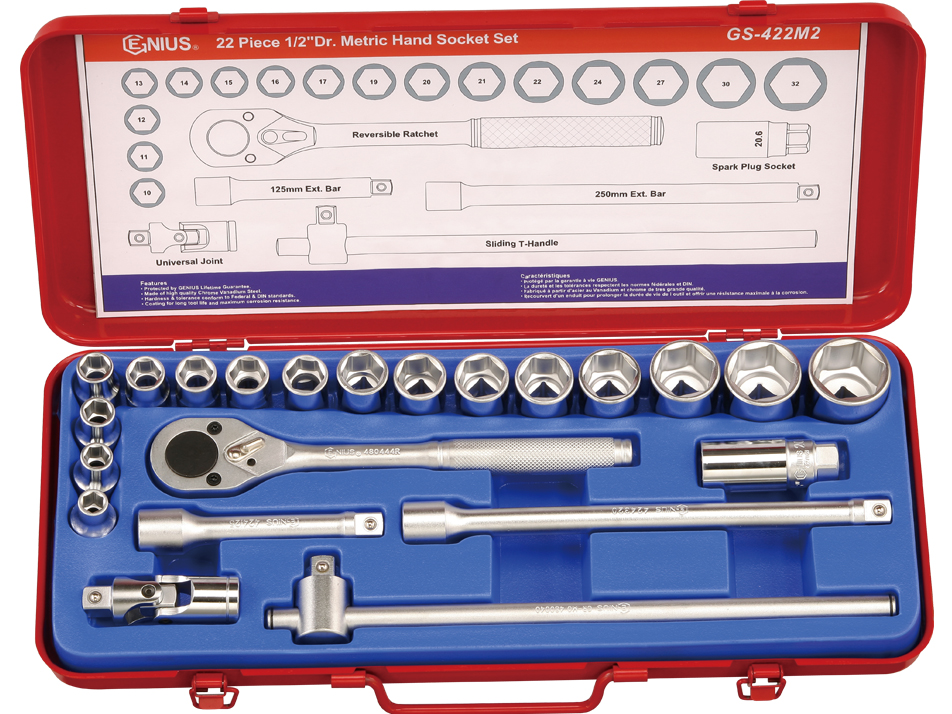
23PC one two inch Dr. 12-pt sae sae standard Hand socket set
Mfg: Genius Tools
Part #: TW-424S4
ID: 314020
Milwaukee Tool PACKOUT 10" Compact Portable Tool Box with Adjustable Dividers and Interior Storage Tray
Mfg: Milwaukee Electric Tools
Part #: 48-22-8427
ID: 406696
Explore Suspension & Steering Tools
After tackling your power steering pump repair, you’ll want quality tools to maintain your suspension and steering system. Our extensive collection of specialized tools makes future repairs faster and more accurate.
- Power Steering Fluid Extractors – Remove old fluid cleanly without mess or spillage
- Steering Wheel Pullers – Essential precision tools for component removal and installation
- Suspension Spring Compressors – Safely compress springs for strut and shock work
Essential Tools for Suspension & Steering Work
While tackling your power steering pump repair, you’ll need the right tools to do the job safely and efficiently. Our Suspension & Steering category features everything from diagnostic equipment to specialized repair tools that professional mechanics rely on.
- Power Steering Fluid Extraction Pumps – Safely drain and replace fluid without mess or spills
- Steering Wheel Pullers & Harmonic Balancer Tools – Professional-grade extractors for precise component removal
- Torque Wrenches & Socket Sets – Ensure proper fastener specifications for steering system reassembly

The Toolsource Technical Team blends decades of real-world automotive service experience with up-to-date technical research. Our writers collaborate with professional mechanics, shop owners, and diagnostic specialists to deliver practical, workshop-ready guidance you can trust.


Follow us on social media