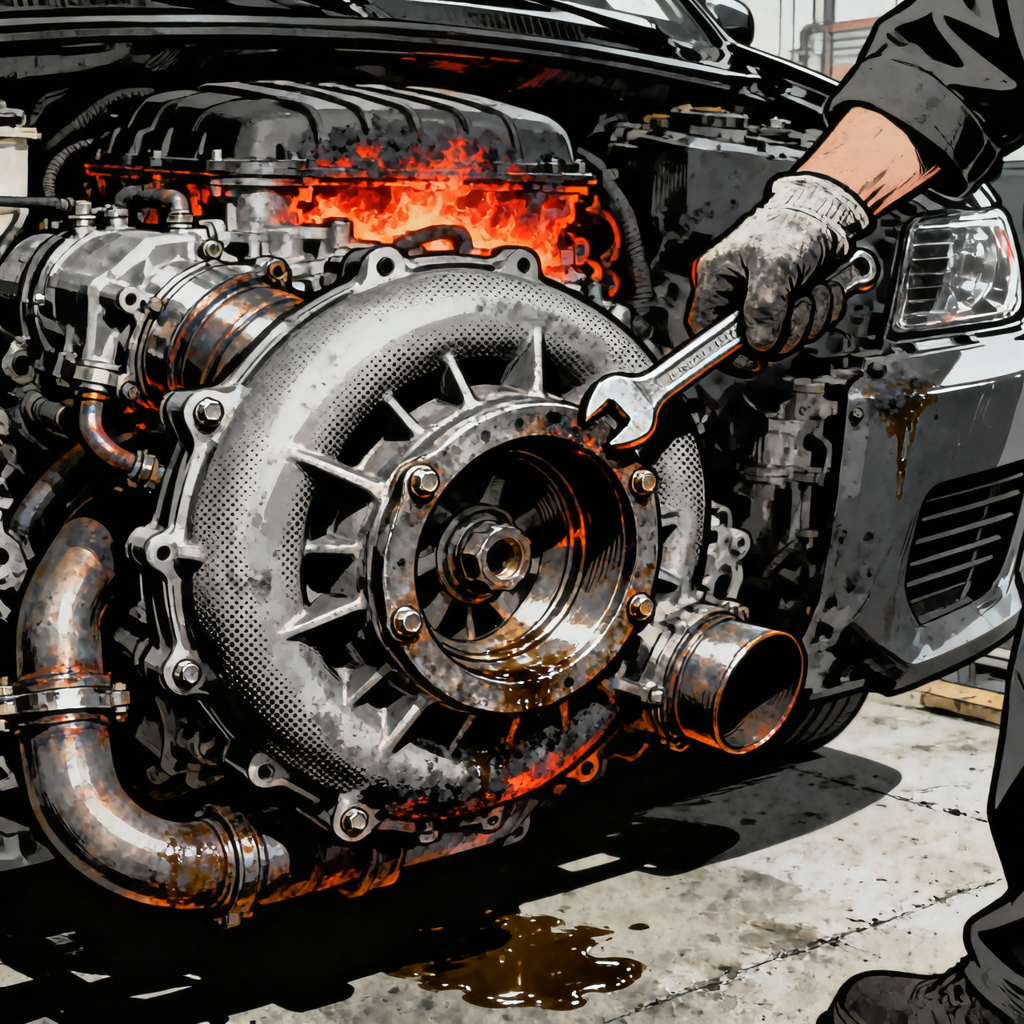
A hood dump exhaust—also called a hood stack, hood exit, or hater pipe—routes exhaust gases directly out through the vehicle’s hood rather than through a traditional rear-exit system. Most commonly seen on turbocharged diesel Volkswagens (particularly MK5 Jetta and Golf TDI models with 1.9L BRM or 2.0L BEW engines), this modification eliminates the catalytic converter, muffler, and rear exhaust piping. The result is a straight exhaust path from the turbocharger outlet through a 2-3 inch pipe that exits vertically through the hood. While this setup maximizes exhaust flow and turbo performance, it creates significant noise, soot accumulation, and legal compliance issues that technicians must understand before recommending or installing such systems.
How Hood Dump Exhausts Work and Performance Benefits
The fundamental principle behind hood dump exhausts is minimizing backpressure after the turbocharger’s turbine wheel. In a turbocharged engine, exhaust gases spin the turbine, which drives the compressor wheel that forces air into the intake. Any restriction in the exhaust path after the turbo creates backpressure that slows turbine speed and reduces boost efficiency. A traditional exhaust system includes a catalytic converter (which restricts flow through its substrate), resonators, mufflers (which create intentional backpressure to dampen sound), and 10-15 feet of piping with multiple bends. Each component adds restriction.
A hood dump eliminates everything downstream of the turbo. The exhaust exits through a downpipe that runs up through the hood—typically 18-24 inches of straight pipe. This creates the shortest, least restrictive path possible for exhaust gases. The performance benefits are measurable: turbo spool times decrease by 200-400 milliseconds, peak boost pressure increases by 2-4 psi (with appropriate tuning), and exhaust gas temperatures drop by 50-100°F under load. On a tuned TDI producing 180-200 horsepower, a hood dump can add 10-15 horsepower and 20-30 lb-ft of torque compared to a cat-back exhaust system.
The configuration also allows technicians to hear turbo operation clearly—the whistle of the compressor, the flutter of surge during throttle lift, and the distinctive bark of an external wastegate if equipped. This auditory feedback helps diagnose turbo issues like shaft play, bearing wear, or boost leaks that might be masked by a full exhaust system. However, the noise level is extreme—typically 95-105 dB at idle and 110-120 dB under acceleration, far exceeding OSHA workplace exposure limits and most municipal noise ordinances.
Installation Procedure and Technical Considerations
Installing a hood dump exhaust requires fabrication skills and careful planning. Start by removing the factory exhaust system from the turbo outlet back. On MK5 TDI models, this means unbolting the downpipe from the turbo’s discharge flange, removing the catalytic converter assembly, and pulling the entire cat-back system. Inspect the turbo’s discharge flange for cracks or warping—this is a common failure point on BRM engines with over 150,000 miles.
The hood dump pipe itself typically consists of a turbo flange adapter (3-bolt or 4-bolt depending on turbo model), a flex section (critical for accommodating engine movement), and a straight pipe section with a 90-degree bend. Most fabricators use 2.5-inch mandrel-bent stainless steel tubing. The flex section must be high-quality braided stainless—cheap flex pipes fail within 6-12 months from heat cycling. Position the pipe so it exits through the hood at least 6 inches from the windshield to minimize soot accumulation on the glass, though some buildup is inevitable.
Cutting the hood requires precision. Mark the exit point, drill pilot holes from underneath, and use a hole saw or plasma cutter to create a 3-inch diameter hole. Deburr all edges thoroughly and apply high-temperature paint or powder coating to prevent rust. Install a grommet or trim ring around the hole to protect the pipe from sharp edges and provide a finished appearance. Do not install rain caps or flapper valves on diesel applications—while these prevent water entry on large equipment, they create backpressure and can fail in high-heat automotive applications. Diesel engines can handle water ingestion far better than gasoline engines due to their higher compression ratios.
Secure the pipe to the hood with rubber-isolated mounts or fabricated brackets. The pipe will experience significant heat (exhaust gas temperatures reach 1200-1400°F under full load) and vibration. Use high-temperature silicone isolators rated to 500°F minimum. Check clearance between the pipe and all hood components—wiring harnesses, washer nozzles, and hood insulation must be at least 2 inches away from the pipe. Remove or relocate hood insulation in the exit area to prevent fire risk.
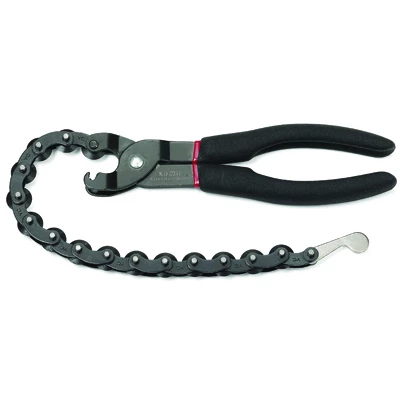
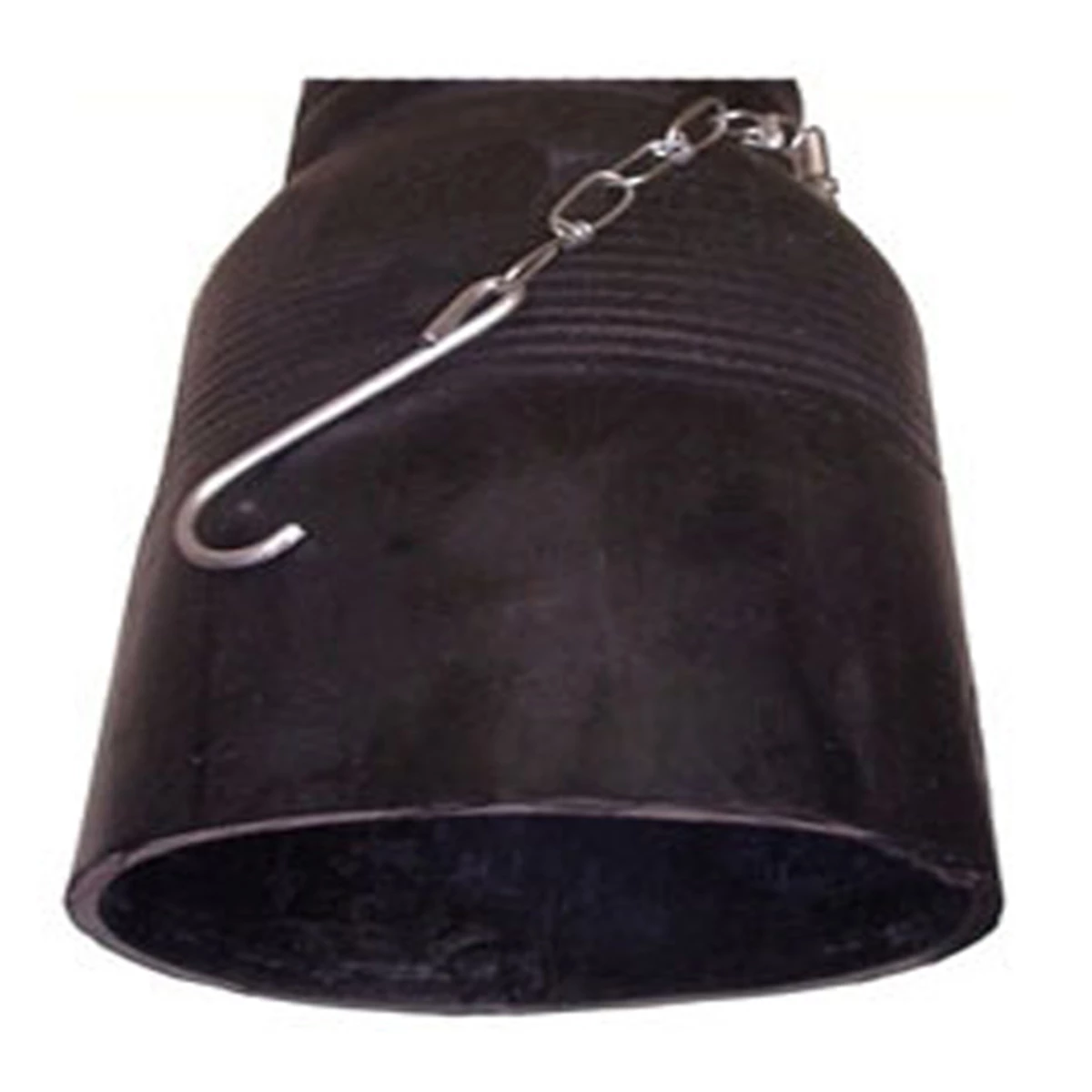
Tailpipe Adapter F575 - Oval 3-1/2 In X 8-1/2 In
Mfg: Crushproof Tubing
Part #: 17AF575
Soot Management and Windshield Protection
Diesel soot accumulation is the most significant practical drawback of hood dump exhausts. Turbocharged diesels produce visible soot under acceleration, especially when tuned for higher fueling rates. With the exhaust exiting 18-24 inches in front of the windshield, every acceleration deposits a fine layer of black particulate matter on the glass. Drivers typically use 2-3 gallons of washer fluid per week—10 times normal consumption.
To minimize soot buildup, technicians should tune the engine for complete combustion rather than excessive fueling. A properly tuned TDI should produce minimal smoke except under full-throttle acceleration from low RPM. Adjust injection timing, boost pressure, and fueling maps to achieve a 14:1 air-fuel ratio or leaner. Install a boost gauge and exhaust gas temperature gauge so the driver can monitor operating conditions—excessive smoke indicates overfueling, which wastes fuel, increases turbo temperatures, and accelerates engine wear.
Recommend high-quality diesel fuel with cetane ratings above 45. Higher cetane improves combustion efficiency and reduces soot formation. Add a fuel system cleaner every 3,000 miles to keep injectors clean—clogged injector nozzles produce poor spray patterns that create incomplete combustion and heavy smoke. Check and clean or replace the mass airflow sensor every 15,000 miles, as sensor drift causes the ECU to calculate incorrect fueling.
For windshield protection, advise customers to apply a hydrophobic coating like Rain-X every two weeks. These treatments help soot wash away more easily and reduce the scrubbing required to clean the glass. Keep windshield wipers in excellent condition—replace blades every month if soot buildup is heavy. Some owners install auxiliary washer nozzles on the hood near the exhaust exit, aimed directly at the windshield, to provide continuous washing during acceleration. This requires adding a secondary washer pump and larger fluid reservoir.
Legal Compliance and Emissions Testing Implications
Hood dump exhausts create immediate legal problems in most jurisdictions. Federal law prohibits removing or modifying emissions control equipment on vehicles driven on public roads. The Clean Air Act makes it illegal to bypass catalytic converters, and penalties include fines up to $2,500 per day for individuals and $25,000 per day for shops. While enforcement varies, technicians should document that customers understand the legal risks and that the vehicle is for off-road or competition use only.
State and local regulations vary significantly. Pennsylvania, for example, does not perform emissions testing on diesel vehicles—only a visual inspection of emissions equipment. However, inspectors can fail a vehicle if the catalytic converter is obviously missing. Other states like California, New York, and Massachusetts require diesel opacity testing, which hood dump vehicles will fail immediately due to visible smoke. Check local regulations before performing this modification.
Even in states without diesel emissions testing, excessive noise violations are common. Most municipalities limit vehicle noise to 85-95 dB measured at 50 feet. A hood dump easily exceeds this limit. Police can issue citations, and repeat violations can result in the vehicle being deemed unroadworthy until the exhaust system is restored to legal configuration. Some insurance companies will deny coverage for vehicles with illegal modifications, leaving owners financially liable for accidents.
For customers who want the performance benefits without legal risk, recommend a high-flow catalytic converter and rear-exit straight pipe instead. A 3-inch downpipe with a racing catalyst flows nearly as well as a hood dump while maintaining catalytic function. This setup provides 90% of the performance gains with vastly better drivability, less maintenance, and full legal compliance in most jurisdictions.
Maintenance Requirements and Common Failure Points
Hood dump exhaust systems require more frequent maintenance than factory configurations. The flex section experiences extreme heat cycling and vibration, leading to failure every 12-24 months depending on mileage and driving conditions. Inspect the flex section every oil change for cracks, separated braids, or exhaust leaks. A failing flex section produces a hissing sound at idle and visible exhaust seepage. Replace with premium braided stainless flex pipes rated for 1400°F continuous operation.
Check all mounting hardware every 3,000 miles. Vibration loosens bolts, and a loose pipe can contact the hood or other components, causing damage. Use high-temperature thread locker on all fasteners and torque turbo flange bolts to manufacturer specifications (typically 18-22 lb-ft for 8mm bolts). Inspect the turbo discharge flange for cracks or distortion—the lack of downstream piping support places unusual stress on the turbo housing.
Monitor turbo health closely. Hood dump configurations expose the turbo to more thermal shock than factory setups because there’s no exhaust piping to absorb and dissipate heat. Turbos on hood dump vehicles often fail 20-30% sooner than stock configurations. Watch for shaft play (grasp the compressor wheel and check for radial movement—any play exceeds tolerance), oil leaks from the center housing, or changes in boost response. Replace turbo oil feed and return lines every 60,000 miles to ensure adequate lubrication.
Clean the hood exit area monthly. Carbon deposits build up around the pipe outlet, creating a fire hazard if they contact leaked oil or other flammable materials. Use a wire brush and degreaser to remove buildup. Inspect the hood paint around the exit hole for heat damage or rust formation—touch up as needed to prevent corrosion from spreading.
Alternative Configurations and Hybrid Approaches
Several alternative exhaust configurations provide similar performance benefits with fewer drawbacks. A fender exit exhaust routes the downpipe through the front fender, usually just behind the wheel well. This keeps exhaust away from the windshield while maintaining a short, unrestricted path. Fabrication is more complex due to tight clearances around suspension components, but the result is quieter and cleaner for the driver.
An external wastegate with a dump tube offers another compromise. This setup retains a traditional rear-exit exhaust but adds an external wastegate that vents boost directly to atmosphere through a short pipe. The wastegate only opens under high boost conditions, so normal driving remains relatively quiet. Under full throttle, the wastegate dumps boost with the distinctive flutter and bark that enthusiasts desire. This configuration provides 70-80% of the performance benefit while maintaining catalytic function and reasonable noise levels.
For competition vehicles, consider a side-exit exhaust that terminates just behind the front wheel. This keeps exhaust length under 4 feet while exiting safely away from the driver compartment. Side exits are common on time attack and drag race vehicles where maximum performance is required but hood dump drawbacks are unacceptable. Fabrication requires routing pipe along the chassis rail and through the rocker panel, demanding skilled welding and careful heat shielding around fuel lines and wiring.
Technicians working on vehicles with electronic boost control can achieve significant performance gains through tuning alone, without exhaust modifications. A proper ECU tune adjusts boost targets, injection timing, and fueling to maximize power within the limits of factory hardware. Combined with a high-flow downpipe and cat-back exhaust (both street-legal in many jurisdictions), tuning can produce 80-90% of the power gains of a hood dump with none of the maintenance or legal issues.
Hood Dump Installation Checklist
- Remove factory exhaust system from turbo back; inspect turbo discharge flange for cracks or warping
- Fabricate or purchase 2.5-3 inch mandrel-bent stainless pipe with high-quality braided flex section
- Mark hood exit location 6+ inches from windshield; drill pilot holes and cut 3-inch diameter hole
- Deburr hood opening thoroughly; apply high-temperature paint to prevent rust formation
- Install grommet or trim ring around hood opening; secure pipe with rubber-isolated mounts
- Check clearance between exhaust pipe and all hood components (minimum 2 inches)
- Remove or relocate hood insulation in exhaust exit area to prevent fire risk
- Torque turbo flange bolts to specification (18-22 lb-ft); use high-temperature thread locker
- Test fit hood closure with pipe installed; verify no contact points or interference
- Start engine and check for exhaust leaks at turbo flange and flex section joints
- Install boost gauge and EGT gauge for monitoring turbo operation and combustion temperatures
- Document modification and inform customer of legal compliance issues and increased maintenance


Frequently Asked Questions
Will a hood dump exhaust damage my engine or turbocharger?
A properly installed hood dump will not damage the engine or turbo. However, the lack of backpressure means the turbo spins more freely and reaches higher speeds, which can reduce bearing life if the engine is not properly tuned. Ensure the ECU tune matches the exhaust configuration, maintain clean oil with frequent changes (every 5,000 miles), and monitor boost levels to avoid overspeeding the turbo. The increased thermal shock from rapid heating and cooling can shorten turbo life by 20-30% compared to factory configurations.
How do I prevent water from entering the exhaust during rain?
Diesel engines can ingest significant water without damage due to their high compression ratios and lack of spark ignition. Water entering through the hood dump will simply turn to steam and exit with exhaust gases. Do not install rain caps or flapper valves—these create backpressure and reduce the performance benefits of the hood dump. Some water accumulation in the exhaust system is normal and will not cause operational issues. Gasoline engines are more sensitive to water ingestion and should not use hood dump configurations.
Can I pass state inspection with a hood dump exhaust?
This depends entirely on your state’s regulations. States without diesel emissions testing (like Pennsylvania) may pass vehicles with hood dumps if the inspector does not fail them for missing catalytic converters. However, most states with any form of emissions testing will fail the vehicle immediately. Excessive noise violations are also common regardless of emissions testing. Consult your state’s vehicle code and inspection requirements before installing a hood dump. For street-driven vehicles, consider legal alternatives like high-flow catalytic converters with rear-exit exhausts.
How much does a hood dump exhaust installation cost?
Professional installation costs $800-1,500 depending on fabrication complexity and labor rates. Basic kits with pre-bent pipes cost $300-600, while custom fabrication from raw materials runs $500-800 in parts. DIY installation is possible for technicians with welding equipment and fabrication skills, reducing costs to $200-400 for materials. Factor in increased maintenance costs—flex section replacement ($80-150 annually), windshield wiper blades ($30-50 monthly), and excessive washer fluid consumption ($50-100 monthly) add up quickly.
What size pipe should I use for a hood dump on a TDI?
For stock or moderately tuned TDIs producing up to 200 horsepower, use 2.5-inch piping. This matches the turbo outlet diameter and provides unrestricted flow for typical power levels. Heavily modified TDIs producing over 250 horsepower benefit from 3-inch piping, but this requires upgrading the turbo to a larger unit with a 3-inch discharge flange. Oversized piping on low-power engines can actually reduce performance by decreasing exhaust gas velocity and slowing turbo spool. Match pipe diameter to power output and turbo sizing.
Why do hood dump exhausts produce so much soot on the windshield?
Diesel combustion always produces some particulate matter (soot), especially during acceleration when fueling rates increase. Normally this exits at the rear of the vehicle where it disperses into the atmosphere. A hood dump places the exhaust outlet 18-24 inches from the windshield, and airflow over the hood carries soot directly onto the glass. The amount of soot depends on tune quality—excessive fueling creates black smoke and heavy deposits. Proper tuning, high-cetane fuel, and clean injectors minimize soot production. Expect to use 2-3 gallons of washer fluid weekly even with optimal tuning.
Tools for Exhaust System Work
Installing or maintaining a hood dump exhaust—or any custom exhaust configuration—requires the right tools for safe, precise work. Our Exhaust & Muffler Tools selection includes:
- Turbo flange wrenches and specialty sockets for safe bolt removal and torque application
- Flex pipe and mandrel-bent piping tools for fabrication and fitment
- Exhaust clamp pliers and band clamp tools for secure mounting

The Toolsource Technical Team blends decades of real-world automotive service experience with up-to-date technical research. Our writers collaborate with professional mechanics, shop owners, and diagnostic specialists to deliver practical, workshop-ready guidance you can trust.


Follow us on social media