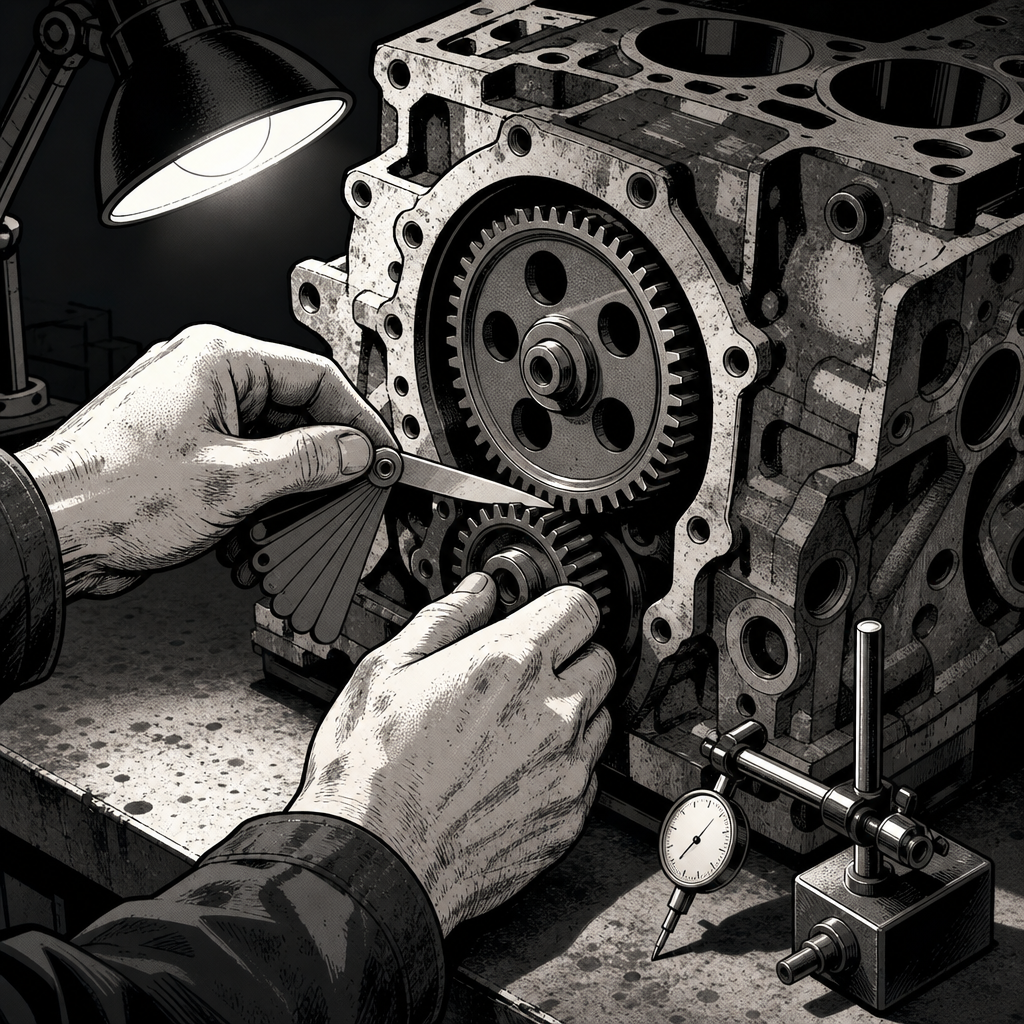
Walk into any shop working on classic muscle cars or heavy-duty diesel trucks, and you’ll hear it immediately: that distinctive high-pitched whine of gear-driven timing systems. While most modern passenger vehicles have moved to chains or belts, gear-driven setups remain the gold standard for durability in specific applications. Understanding the technical trade-offs between these systems helps technicians diagnose noise complaints, set realistic customer expectations, and recommend appropriate timing system solutions based on application requirements.
How Gear Types Affect Timing System Noise
The characteristic whine of gear-driven timing systems comes directly from how the gear teeth make contact. Straight-cut gears—the most common type in timing applications—feature teeth perpendicular to the gear face. When these teeth mesh, their entire surface makes contact simultaneously, essentially slapping together with each revolution. At higher engine speeds, this creates significant noise that intensifies with RPM.
The noise issue becomes particularly noticeable in high-revving engines. While a large-displacement diesel running at 2,500 RPM might produce an acceptable whine level masked by other engine sounds, a sport bike engine spinning to 10,000 RPM or higher creates an unmistakable high-pitched scream. Honda’s VFR800 motorcycle serves as a prime example—its gear-driven cams produce a distinctive whine that some riders love and others find fatiguing during sustained highway cruising.
Helical-cut gears offer a solution to the noise problem. Their angled teeth mesh gradually rather than all at once, significantly reducing noise and vibration. However, this design introduces axial loading—the helical angle creates forces that push or pull shafts along their longitudinal axis. This requires thrust bearings and additional engineering to manage these side loads, increasing complexity and cost. Herringbone gears (which feature opposing helical angles on each side) eliminate axial loading but are extremely difficult and expensive to manufacture, making them impractical for most automotive timing applications.
Why Heavy-Duty Diesels Stick With Gears
Large industrial and commercial diesel engines overwhelmingly use gear-driven timing systems, and for good reason: reliability and longevity. These engines are designed for service intervals measured in hundreds of thousands of miles, and gear drives deliver that durability with minimal maintenance. A properly installed gear drive can run for a million miles or more without replacement—a claim few chain or belt systems can match.
In these applications, noise takes a back seat to reliability. The engines already produce substantial mechanical and exhaust noise, and they typically operate at relatively low RPM ranges where gear whine remains manageable. The absence of tensioners, guides, and flexible components that can wear or fail makes gear drives the logical choice when uptime is critical and maintenance windows are limited.
The Ford 300 inline-six stands as a legendary example in the automotive world. Its gear-driven timing system contributed significantly to the engine’s reputation for bulletproof reliability. Similarly, older mechanical diesel engines like certain Nissan models feature gear-driven cams paired with mechanical fuel pumps—prehistoric by modern standards, but extraordinarily simple and durable in field service.


Manufacturing and Tolerance Challenges
The precision required for gear-driven overhead cam systems presents significant manufacturing challenges that drive up costs. The distance between crankshaft and camshaft centerlines must be held to extremely tight tolerances for proper gear mesh—far tighter than what chain or belt systems require. In mass production, maintaining these tolerances consistently across thousands of engines substantially increases manufacturing costs.
Head resurfacing operations create additional complications. When a cylinder head gets decked to restore flatness after gasket failure or overheating, it changes the cam-to-crank centerline distance. With a chain system, you simply install the chain and set timing. With gear drive, you’d need multiple head gasket thicknesses to compensate for different amounts of material removal, or the gears won’t mesh properly. This creates inventory headaches and complicates repair procedures.
These tolerance issues don’t apply to overhead valve (OHV) engines where the cam sits in the block close to the crankshaft. In these designs, gear drive becomes much more practical—the short distance between gears makes tight tolerances easier to maintain, and head resurfacing doesn’t affect timing gear mesh at all. This explains why gear drive remained common in older OHV designs but rarely appears in modern overhead cam engines.
For shops installing aftermarket gear drives on older engines, proper installation becomes critical. The gears must be correctly aligned and timed, and bearing clearances must be within specification. Improper installation can lead to premature wear, timing issues, or catastrophic failure. Unlike a chain that offers some compliance, gears are unforgiving of installation errors.
Chain Drive Trade-Offs in Modern Engines
Timing chains have become the dominant solution for modern overhead cam engines because they elegantly solve multiple problems simultaneously. Chains accommodate the long distances between crankshaft and camshaft in DOHC designs without requiring intermediate gears. They’re lighter than gear trains, reducing reciprocating mass and improving throttle response. They run quieter than straight-cut gears, helping manufacturers meet increasingly strict noise regulations.
However, chains introduce their own maintenance considerations. Timing chain systems include tensioners, guides, and sometimes multiple chains (upper, lower, left bank, right bank in V-configuration engines). Any of these components can fail, and when a guide breaks or a tensioner fails, the results mirror a snapped belt—jumped timing, bent valves, and expensive repairs. Modern engines with variable valve timing add oil-pressure-actuated components that increase complexity further.
Chain wear becomes a concern in high-mileage engines, particularly when oil change intervals get stretched or oil quality degrades. A worn chain develops slack that allows timing to wander, causing performance issues before complete failure occurs. This gradual degradation at least provides warning signs—unlike a snapped belt’s sudden failure—but monitoring chain condition requires experience interpreting rattling noises, checking for diagnostic trouble codes related to cam timing, and sometimes removing covers for visual inspection.
For technicians, chain systems are generally easier to service than gear drives. Accessing timing components typically requires removing a timing cover and breaker bar work to rotate the engine to timing marks. No precise shimming or gear alignment is needed—just line up the marks, install the chain, and verify timing. However, this simplicity comes at the cost of more frequent service intervals compared to gear systems that may never need replacement.
Practical Considerations for Shop Recommendations
When customers ask about aftermarket gear drive conversions for older engines, technicians need to set realistic expectations. Yes, gear drives offer superior longevity and eliminate chain wear concerns. However, they introduce noticeable gear whine that some customers find objectionable, particularly during steady-throttle highway driving. Installing sound clips of similar setups helps customers understand what they’re signing up for—what sounds “race-ready” at idle may become tiresome after three hours of freeway cruising.
Cost represents another consideration. Gear drive kits typically cost significantly more than replacement chain sets, and installation requires more precision. The investment makes sense for performance builds intended for racing or heavy-duty applications where reliability trumps other concerns. For a daily driver, a quality timing chain properly installed will likely outlast the customer’s ownership period at a fraction of the cost.
Application matters enormously. That classic Camaro with a small-block V8 makes an excellent gear drive candidate—it’s an OHV design with short cam-to-crank distances, and the gear whine adds to the muscle car character. Attempting to retrofit gear drive onto a modern DOHC engine would be prohibitively expensive and complex, if even possible. Understanding these application-specific factors helps steer customers toward appropriate solutions.
Timing System Maintenance Checklist
Regular timing system inspection catches problems before they become catastrophic failures:
- Listen for abnormal noises: New rattling, whining, or ticking from the timing cover area indicates wear or failing components
- Check for oil leaks: Timing cover leaks can lead to inadequate chain or tensioner lubrication
- Monitor oil change intervals: Extended drain intervals accelerate timing chain wear in particular
- Scan for timing-related codes: Cam position correlation codes often indicate chain stretch or tensioner issues
- Verify proper oil pressure: Variable valve timing systems and hydraulic tensioners require adequate oil pressure
- Follow manufacturer service intervals: Replace timing belts and inspect chains according to maintenance schedules
- Inspect related components: Water pumps, idler pulleys, and tensioners often warrant replacement during timing service

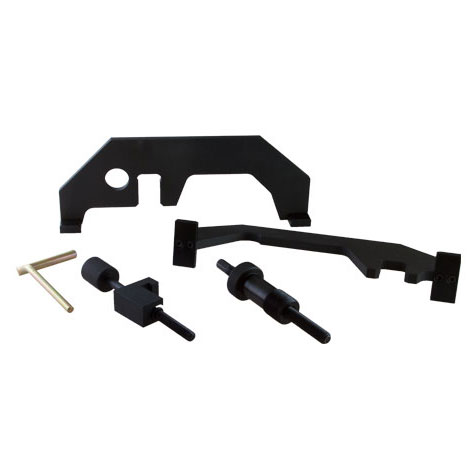
BMW Engine Timing Tool Set N62, N62TU, N73
Mfg: Assenmacher Specialty Tools
Part #: BMW6208
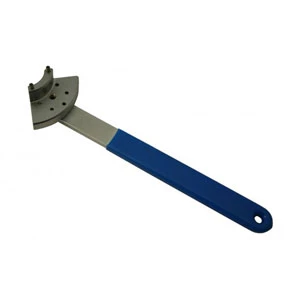
VW/Audi Engine Timing Tool - Precision Fit 2760
Mfg: CTA Manufacturing Corp.
Part #: 2760
Frequently Asked Questions
Why don’t more engines use gear-driven timing if it’s more reliable?
Cost, noise, and manufacturing complexity outweigh the reliability benefits for most passenger vehicle applications. Modern overhead cam designs require long distances between crankshaft and camshafts, making gear trains impractical. Chain systems offer an excellent balance of durability, cost, and noise for typical service intervals.
Can I convert my chain-driven engine to gear drive?
For older OHV engines, aftermarket gear drive kits exist and installation is straightforward. For overhead cam engines, conversion is generally impractical or impossible due to design constraints. Even when possible, the cost rarely justifies the benefit for street-driven vehicles.
How long do timing chains typically last?
Well-maintained timing chains in modern engines often last 150,000-300,000 miles or more. However, extended oil change intervals, low oil levels, or poor oil quality can dramatically reduce chain life. Some engines have specific timing chain durability issues that require earlier replacement.
What causes timing chain failure?
Failed tensioners and guides are the most common culprits, followed by chain stretch from wear. Inadequate lubrication accelerates wear. Some engines have inherent design issues with oil pressure to tensioners or guide material durability that create premature failure patterns.
Is gear whine harmful to the engine?
No, gear whine is simply noise from tooth contact and doesn’t indicate problems when consistent. Increasing whine or changing pitch can indicate wear or mesh issues requiring inspection. In properly installed systems, gear whine is cosmetic rather than mechanical concern.
Are timing belts more reliable than chains?
Not necessarily. Belts require regular replacement (typically 60,000-100,000 miles) and catastrophically fail when they break. Chains usually last much longer but can fail from tensioner or guide problems. Both systems are reliable when properly maintained, but chains generally offer longer service life.
Engine Repair Tools for Timing System Service
Whether you’re diagnosing gear whine, replacing a timing chain, or installing an aftermarket gear drive, having the right tools makes timing system work safer and more efficient. Browse our Engine Repair Tools selection for everything needed to service timing systems properly.
- Timing light and dial indicator tools for precise alignment
- Specialized pullers and installation tools for gears and chains
- Engine support and positioning equipment for overhead work

The Toolsource Technical Team blends decades of real-world automotive service experience with up-to-date technical research. Our writers collaborate with professional mechanics, shop owners, and diagnostic specialists to deliver practical, workshop-ready guidance you can trust.


Follow us on social media