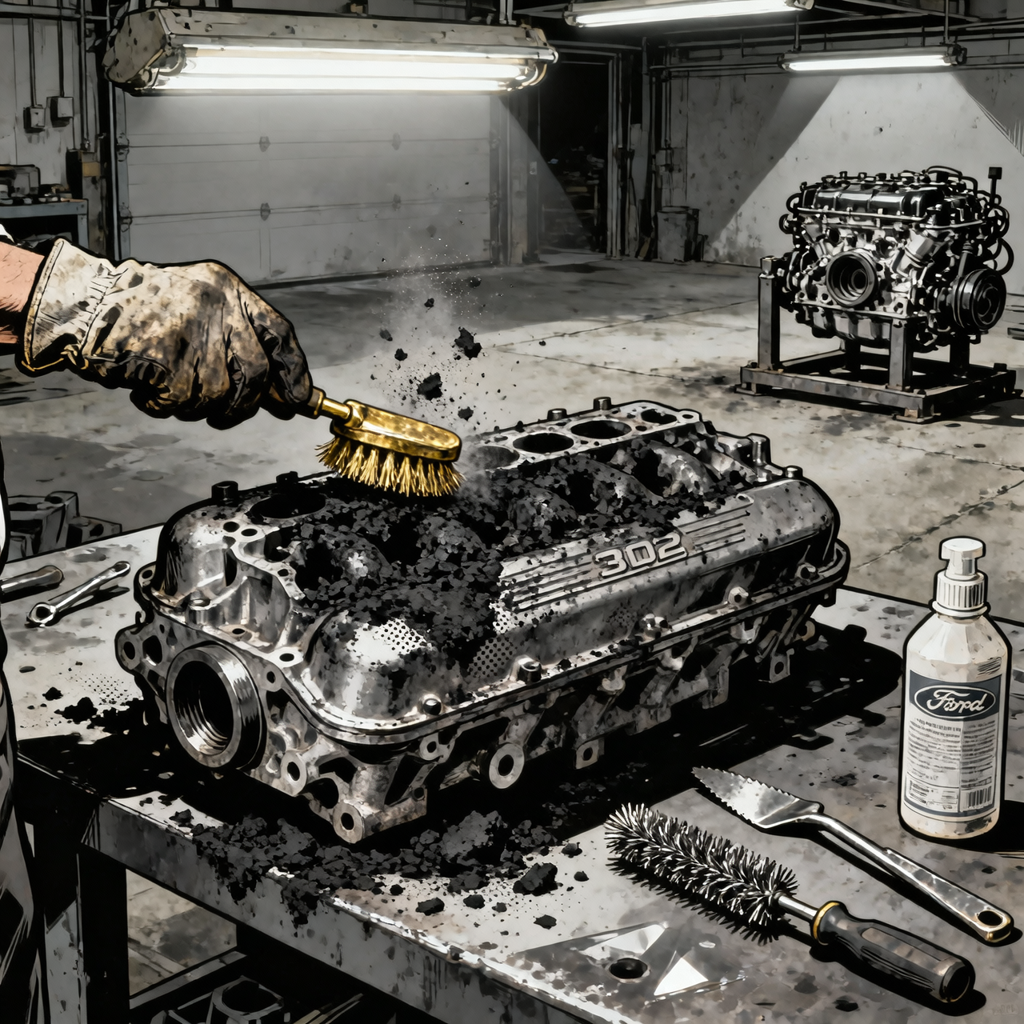
When you pull an intake manifold and find the valley packed solid with black, crusty carbon deposits instead of the expected oil film, you’re looking at severe neglect or a specific mechanical failure. This condition appears frequently in classic Ford Bronco V8s—particularly 302 and 351 engines from the 1980s—and it’s not always what it seems. While many techs immediately blame skipped oil changes, the dry, carbonized texture of these deposits tells a different story. True oil sludge from deferred maintenance stays wet and sticky; this material looks more like barbecue charcoal. Understanding the distinction helps you diagnose the root cause, communicate accurately with the customer, and determine whether the engine can be salvaged or needs replacement.
Understanding Carbon Buildup vs. Oil Sludge
The first step in diagnosis is recognizing what you’re actually looking at. Oil sludge from neglected oil changes forms a thick, viscous coating that remains wet and pliable. It accumulates in valve covers, oil pans, and passages where oil flows slowly. Carbon buildup, on the other hand, appears dry, hard, and brittle—more like coke or char than sludge. This material forms when oil or fuel vapors are exposed to extreme heat without adequate flow or lubrication to carry combustion byproducts away.
In pushrod V8 engines like the Ford 302 and 351, oil is pumped up through the lifters, through hollow pushrods, and out the rocker arms before draining back through the valley into the oil pan. Under normal conditions, this valley stays relatively clean with a light oil film. When you find carbonized deposits filling the entire valley, it indicates oil has been cooking in place rather than circulating properly. The dry, crusty texture confirms that heat—not just time—has transformed the oil into carbon.
This distinction matters because the repair strategy differs significantly. Sludge buildup might respond to aggressive flushing and multiple short-interval oil changes. Carbonized deposits, however, typically indicate a mechanical failure that must be corrected before the engine can return to service. Simply changing the oil won’t solve the underlying problem, and the engine may already have suffered internal damage from oil starvation or overheating.
The Exhaust Crossover Valve Failure
Many carbureted Ford V8 engines from the 1970s and 1980s feature an exhaust crossover passage cast into the intake manifold. This design routes hot exhaust gases beneath the carburetor to heat the intake charge during cold starts, preventing fuel from condensing before it reaches the cylinders. A thermostatic valve in the exhaust manifold controls flow through this passage: it stays closed when cold (forcing exhaust through the crossover) and opens when hot (allowing exhaust to bypass the crossover and exit normally).
When this thermostatic valve sticks in the closed position, exhaust gases continuously flow through the intake manifold crossover passage regardless of engine temperature. This superheats the bottom of the intake manifold and the valley beneath it. Oil pooling in the valley or seeping past valve cover gaskets encounters this extreme heat and cooks into carbon. Over time, these deposits build up into the solid, dry mass that shocks techs when they remove the intake.
To diagnose a stuck crossover valve, inspect the thermostatic valve mechanism in the exhaust manifold. On many Ford engines, this valve is located on the passenger-side exhaust manifold where the crossover passage exits. The valve should move freely when cold and should be open when the engine is at operating temperature. If it’s stuck closed or seized, exhaust gases are continuously heating the intake manifold. You may also notice the carburetor base gasket is burned or deteriorated, and the intake manifold bolts may be discolored from heat.
This failure mode explains why some engines develop extreme carbon buildup despite regular oil changes. The owner may have maintained the vehicle properly, but the stuck valve created a heat condition that carbonized oil faster than normal circulation could remove it. In these cases, the carbon buildup is a symptom of the valve failure, not the root cause of engine problems.
Oil Coking and Heat-Related Failures
Oil coking occurs when lubricating oil breaks down under extreme heat, leaving behind solid carbon deposits. This process requires sustained high temperatures—typically above 400°F—combined with insufficient oil flow to carry away heat and combustion byproducts. In the intake valley of a V8, coking happens when oil can’t drain back to the pan quickly enough or when external heat sources (like a stuck crossover valve) raise temperatures beyond the oil’s thermal stability limit.
Several factors contribute to oil coking in classic Broncos. Overfilled crankcases can cause oil to splash into the valley and pool there, where it’s exposed to heat from the cylinder heads. Clogged or restricted oil return passages prevent drainage, allowing oil to accumulate and cook. Poor-quality oil or extended drain intervals reduce the oil’s ability to resist thermal breakdown. And of course, a stuck exhaust crossover valve directly heats the valley to temperatures that guarantee coking.
To assess whether coking is occurring, check the oil level and condition during routine services. Oil that appears very dark or has a burnt smell indicates thermal stress. Samples sent for analysis can reveal fuel dilution, coolant contamination, or elevated metals that suggest internal wear. If the customer reports frequent oil consumption but the exhaust isn’t smoking, oil may be coking internally rather than burning in the cylinders.
Preventing oil coking requires addressing heat sources and ensuring proper oil circulation. Use high-quality oil appropriate for the engine’s design—many classic V8s benefit from modern synthetic or semi-synthetic formulations that resist thermal breakdown better than older conventional oils. Maintain correct oil levels; overfilling is just as harmful as underfilling. And inspect the exhaust crossover valve system during tune-ups, freeing or replacing stuck components before they cause damage.
Diagnosing Severe Neglect vs. Mechanical Failure
When you encounter an engine with extreme carbon buildup, determining whether the cause is neglect or mechanical failure changes your diagnostic approach and your conversation with the customer. Both conditions produce carbon deposits, but the patterns, texture, and distribution differ in telling ways.
Neglect-related sludge accumulates throughout the engine, particularly in low-flow areas. You’ll find thick deposits in valve covers, around timing chains, and in oil pans. The material stays wet and sticky because it’s a mixture of oil, combustion byproducts, and moisture that never fully cooks. The oil filter may be original or extremely old, and the oil itself will be black, thick, and smell burnt. These engines often have low oil pressure, noisy valvetrain operation, and may have seized components.
Mechanical failure—particularly a stuck crossover valve—produces dry, hard carbon concentrated in the intake valley and around the manifold base. Valve covers may be relatively clean, and oil in the pan might appear normal. The carbon has a charred, brittle texture because it’s been cooked at high temperatures. You may also notice heat damage to gaskets, discolored intake manifold bolts, or warped mounting surfaces. The engine may run poorly due to vacuum leaks from damaged gaskets, but internal components might still be intact.
Check the maintenance history if available. An engine with regular oil changes that still has extreme carbon buildup points toward mechanical failure rather than neglect. Conversely, an engine with no service records, an ancient oil filter, and sludge everywhere is clearly suffering from deferred maintenance. Understanding the difference helps you explain the problem to the customer and set realistic expectations for repair costs and outcomes.
Repair Strategies and Salvage Assessment
Once you’ve identified the cause, you need to determine whether the engine can be saved or requires replacement. This assessment depends on the extent of carbon buildup, the condition of internal components, and whether the root cause can be corrected.
Start with a compression test and leak-down test to assess cylinder health. Carbon buildup in the valley doesn’t always mean cylinder damage, but if the engine has been running with inadequate lubrication or extreme heat, rings may be stuck or cylinder walls may be scored. Low compression or excessive leak-down indicates internal damage that carbon removal won’t fix.
If compression is acceptable, remove the intake manifold and inspect the valley. Use a scraper and wire brush to remove bulk carbon deposits, then clean remaining residue with carburetor cleaner or a dedicated carbon remover. Inspect the manifold mounting surface for warping or heat damage; a warped surface won’t seal properly even with a new gasket. Check all oil return passages to ensure they’re clear and that oil can drain back to the pan.
Address the root cause before reassembly. If the crossover valve is stuck, replace it or remove the entire crossover system if the engine will run fuel injection or doesn’t require intake heating. If neglect caused the buildup, perform multiple oil changes at short intervals (500-1000 miles) using high-quality detergent oil to flush remaining deposits. Consider adding an engine flush product before the first oil change to help dissolve stubborn sludge.
Reassemble with new gaskets and proper torque specifications. Use a high-quality intake manifold gasket rated for the engine’s heat range, and apply gasket sealer only where specified by the manufacturer. Torque bolts in the correct sequence and to the specified values to prevent vacuum leaks and ensure even clamping pressure.
After reassembly, monitor the engine closely. Check for leaks, unusual noises, or performance issues. Change the oil again after 500 miles to remove any remaining carbon particles that may have dislodged during initial operation. If the engine runs smoothly and oil pressure is normal, it may have many more miles of service ahead.
Prevention and Maintenance Best Practices
Preventing carbon buildup requires regular maintenance and attention to early warning signs. While you can’t control how customers maintain their vehicles between visits, you can educate them on the importance of proper care and inspect critical systems during routine service.
Maintenance Checklist:
- Change oil and filter at recommended intervals—every 3,000-5,000 miles for classic engines
- Use high-quality oil appropriate for the engine design and operating conditions
- Inspect exhaust crossover valve operation during tune-ups
- Check for oil leaks at valve covers and intake manifold gaskets
- Monitor oil consumption and top off as needed—frequent consumption warrants investigation
- Verify proper oil level—neither overfilled nor underfilled
- Inspect PCV system for clogs or failures that prevent crankcase ventilation
- Address coolant leaks immediately to prevent oil contamination
Educate customers on the consequences of deferred maintenance. Show them photos of carbon buildup and explain how it happens. Many owners of classic vehicles don’t drive them frequently and may not realize that oil deteriorates even when the vehicle sits. Recommend annual oil changes at minimum, regardless of mileage, to prevent moisture accumulation and oil breakdown.
For customers who plan to keep their classic Bronco long-term, suggest preventive measures like periodic intake manifold removal for inspection and cleaning. Every 50,000 miles or so, pull the manifold, inspect the valley, clean any developing deposits, and replace gaskets. This proactive approach catches problems before they become catastrophic and gives you an opportunity to inspect internal components for wear.
Frequently Asked Questions
Can I clean carbon buildup without removing the intake manifold?
Not effectively. While top-end cleaners and seafoam treatments can help remove carbon from combustion chambers and valves, they won’t reach deposits in the intake valley. The only way to properly clean carbonized buildup in the valley is to remove the intake manifold and manually scrape and clean the affected areas.
Will synthetic oil prevent carbon buildup better than conventional oil?
Synthetic oil resists thermal breakdown better than conventional oil, which can help prevent oil coking under high-heat conditions. However, synthetic oil won’t prevent carbon buildup caused by a stuck exhaust crossover valve or severe neglect. It’s a good preventive measure but not a substitute for proper maintenance and addressing mechanical failures.
How do I know if the exhaust crossover valve is stuck?
Inspect the thermostatic valve mechanism in the exhaust manifold. It should move freely when cold and be open when the engine is at operating temperature. If it’s stuck closed, exhaust gases continuously heat the intake manifold. You may also notice burned gaskets, discolored bolts, or poor cold-start performance as clues that the crossover system isn’t functioning properly.
Is an engine with extreme carbon buildup worth saving?
It depends on the extent of internal damage. Perform compression and leak-down tests to assess cylinder health. If compression is good and the root cause can be corrected, cleaning the carbon and addressing the underlying problem may restore the engine to reliable service. If internal components are damaged or worn, replacement may be more cost-effective than rebuilding.
How often should I change oil in a classic Ford V8?
Change oil every 3,000-5,000 miles or at least annually, whichever comes first. Classic engines lack the tight tolerances and advanced filtration of modern engines, so they benefit from more frequent oil changes. If the vehicle sees severe service (towing, off-road use, or frequent short trips), shorten the interval to 2,500-3,000 miles.
What’s the best way to prevent this problem in the first place?
Regular oil changes with quality oil, periodic inspection of the exhaust crossover valve, and maintaining proper oil levels are the most effective prevention strategies. Educate customers on the importance of maintenance and watch for early warning signs like oil consumption, heat-damaged gaskets, or poor performance that might indicate developing problems.
Engine Repair Tools for Carbon Removal and Inspection
Diagnosing and cleaning carbon buildup requires the right tools on hand. Our Engine Repair Tools selection includes everything you need for intake manifold work, compression testing, and valve inspection.
- Compression and leak-down testers for assessing cylinder health
- Manifold scrapers, wire brushes, and cleaning tools for carbon removal
- Gasket removal and surface preparation tools

The Toolsource Technical Team blends decades of real-world automotive service experience with up-to-date technical research. Our writers collaborate with professional mechanics, shop owners, and diagnostic specialists to deliver practical, workshop-ready guidance you can trust.


Follow us on social media