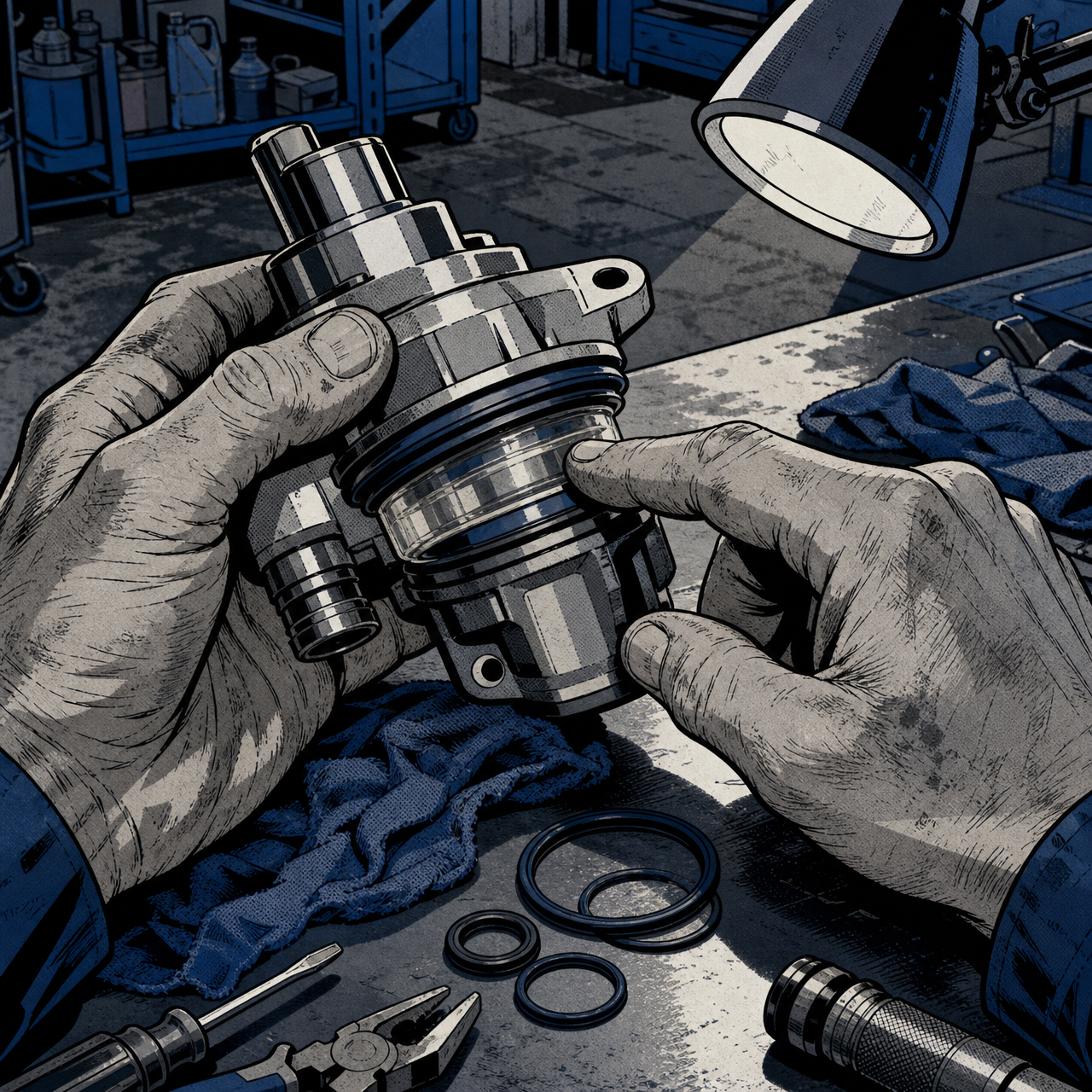
Every few months a customer rolls in asking whether it’s safe to run E85 in their truck or sedan, usually because they saw a price sign $2 a gallon cheaper than regular. The honest answer is “it depends on the vehicle, not on the fuel” — E85 isn’t some degraded or dangerous product, but it behaves differently enough in a fuel system that running it in the wrong vehicle, or ignoring a few maintenance basics, will cause real problems. This guide covers what to actually check before clearing a vehicle for E85, which components take the abuse, how to walk a customer through the real cost-per-mile math, and what changes if they want to tune for performance.
What E85 Actually Is — and Isn’t
E85 is a blend that’s legally allowed to run anywhere from 51% to 83% ethanol, with the rest gasoline — the exact ratio shifts seasonally and by region, which is why customers sometimes notice a tank that runs noticeably better or worse than the last one. Ethanol carries less energy per gallon than gasoline, so fuel economy drops — typically in the 15-30% range depending on the vehicle and driving style. That’s a chemistry fact, not a defect. The “E85 ruins engines” myth mostly traces back to people conflating it with the 10% ethanol blend in standard pump gas sitting too long in small engines and older vehicles, where it absorbs moisture and gums up components never designed for alcohol content. E85 at 51-83% ethanol is a different animal, and in a vehicle actually built for it, it’s just a fuel choice with different burn characteristics — not a corrosive hazard.
The upside beyond price is higher octane. Ethanol resists knock better than gasoline, which is why E85 shows up constantly in tuning and racing circles — it allows more aggressive timing, boost, and compression without detonation. That’s a performance lever, not a reason by itself to switch a daily driver.
Verifying Flex-Fuel Compatibility Before Anyone Fills Up
This is the step that actually matters, and it’s not about “circuitry” in the way customers often describe it. A flex-fuel vehicle (FFV) has a fuel composition sensor or uses adaptive learning to detect ethanol content, and the ECU adjusts injector pulse width and timing accordingly. But the bigger differentiator is materials: FFVs use ethanol-resistant seals, gaskets, O-rings, and fuel lines, along with fuel pumps and injectors rated for the higher flow and different lubricity of an ethanol-heavy blend. A non-flex-fuel vehicle lacks those materials, and high ethanol content will degrade rubber components not built for it over time.
- Check the fuel door or cap for a yellow ring/flex-fuel badge — not foolproof, but a quick visual flag.
- Pull the VIN and cross-reference it against the manufacturer’s flex-fuel vehicle list, or check the owner’s manual fuel section directly — don’t rely on trim badges alone.
- If the customer has a build sheet or window sticker, the FFV designation is usually listed under engine/fuel options.
- When in doubt, the EPA and Renewable Fuels Association both publish current-year FFV compatibility lists that are more reliable than dealer memory.
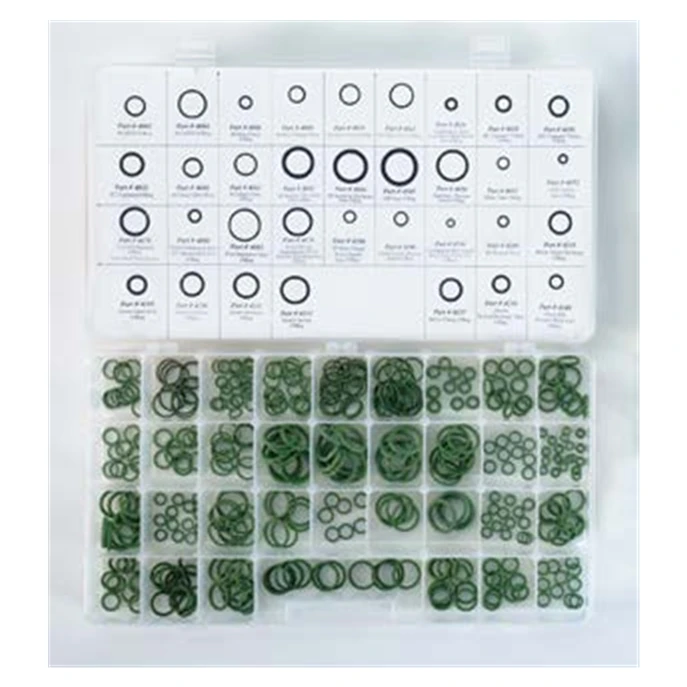
===PRODUCT_SEARCH: ethanol-resistant fuel line and O-ring kit===


Universal O-Ring Kit TLRK by CPS Products - Durable & Lightweigh
Mfg: CPS Products
Part #: TLRK
Fuel System Components That Take the Wear
Even in a certified FFV, a few components are worth flagging during routine service once a vehicle has a history of running E85 regularly:
Fuel pumps: Ethanol has different lubricating properties than gasoline, and older or non-FFV-rated pumps can see accelerated wear. On FFVs this is already accounted for in the OE pump spec, but on vehicles with aftermarket pumps installed for unrelated reasons, confirm the pump is E85-rated before assuming it’s fine.
Injectors: Ethanol’s higher latent heat and different flow characteristics mean injectors sized for gasoline will run leaner on E85 unless the ECU compensates — which stock FFV tunes do, but aftermarket performance setups often don’t without a flex-fuel kit and a corresponding tune.
Seals and gaskets: This is the most common real-world failure point on vehicles that aren’t truly flex-fuel rated but get run on E85 anyway, intentionally or by mistake at the pump. Standard nitrile rubber seals swell or degrade with sustained high-ethanol exposure; FFV-spec seals (typically fluorocarbon or ethanol-resistant compounds) don’t have this issue.
Oil: Ethanol combustion byproducts can dilute oil faster, and several commenters in the field report cutting oil change intervals when a vehicle runs E85 heavily — worth flagging to customers who tow or run E85 as their primary fuel rather than occasionally.
Running the Real Cost-Per-Mile Math With Customers
This is where most of the confusion with E85 actually lives, and it’s worth walking customers through directly rather than letting them go by price-per-gallon alone. Because E85 returns noticeably fewer miles per gallon, a lower price at the pump doesn’t automatically mean a lower price per mile. The breakeven point most experienced users land on is roughly a 25-30% price discount versus gasoline — below that threshold, the reduced fuel economy eats the savings or puts the customer behind. Above it, especially at discounts of 40-50% (which shows up seasonally in some regions), E85 comes out clearly ahead on cost.
The only reliable way to know is to have the customer track it themselves: note the price difference at the pump, note the mileage over a comparable tank, and calculate cost-per-mile rather than cost-per-gallon. A quick shop-floor way to frame it — if E85 is priced at least a quarter less per gallon than regular/premium, it’s usually worth it on cost alone; if it’s only a nickel or dime cheaper, the economics don’t favor it.
Storage, Moisture, and Shelf-Life Considerations
Ethanol is hygroscopic — it absorbs water from the air — which is the real mechanism behind most ethanol-related fuel problems, including the ones people wrongly pin on E85 specifically. A vehicle that sits for weeks or months with E85 in the tank is more prone to water absorption and phase separation (where water and ethanol separate out from the gasoline portion) than one running standard gas. This isn’t unique to E85, but the higher ethanol content makes it more pronounced.
Practical guidance for customers with seasonal or infrequently driven vehicles: don’t leave E85 sitting in a tank for extended idle periods, run the tank down and switch to regular gas before storage, or use a fuel stabilizer rated for ethanol blends. For daily drivers in regular rotation, this isn’t a meaningful concern.
Tuning for Performance Gains
On the performance side, E85’s higher octane is the whole draw. But the gains people cite — sometimes 50+ horsepower on a turbocharged platform — only show up with supporting hardware: a flex-fuel kit with a wideband ethanol content sensor, fuel injectors sized for the higher flow E85 demands (it takes roughly 30% more fuel volume to make equivalent power versus gasoline), a fuel pump rated for the increased flow, and a tune that actually leverages the knock resistance with more aggressive timing and boost. Simply pouring E85 into a vehicle tuned for gasoline, flex-fuel capable or not, won’t produce a power gain by itself — the stock tune is calibrated conservatively and won’t take advantage of the extra octane headroom. For naturally aspirated, low-compression stock applications, expect little to no power change, just the fuel economy and cost tradeoffs described above.
Quick Reference Checklist
- Confirm FFV status via VIN/manual, not just a yellow fuel door ring
- Inspect seals, O-rings, and fuel lines for ethanol-resistant spec if vehicle has E85 history
- Verify fuel pump and injector ratings before extended E85 use, especially on modified vehicles
- Have customer calculate cost-per-mile, not cost-per-gallon, before committing to E85
- Advise against letting E85 sit unused for extended periods — moisture absorption risk
- For performance gains, confirm flex-fuel kit, correct injector sizing, and a supporting tune are in place
===PRODUCT_SEARCH: flex fuel conversion kit and ethanol content sensor===


M18 FUEL? ?? Lockbolt Tool 1/ ONE-KEY? Bare Tool
Mfg: Milwaukee Electric Tools
Part #: 2661-20
FAQs
Will E85 damage a non-flex-fuel vehicle?
Running it occasionally by mistake won’t cause immediate damage, but sustained use risks degrading non-ethanol-rated seals, gaskets, and fuel lines over time. It’s not recommended as a regular fuel choice outside of certified FFVs.
Why is E85 cheaper if it’s not actually saving money for everyone?
Ethanol is subsidized and often locally produced, keeping the per-gallon price lower, but the lower energy density means more gallons are needed to travel the same distance — so the savings depend entirely on the size of the price gap in a given market.
Does E85 hurt engine longevity?
In a properly spec’d FFV, no — the components are built for it. Some shops recommend slightly shorter oil change intervals for vehicles running E85 heavily, due to combustion byproducts diluting oil faster, but this is a maintenance adjustment, not an engine-damage issue.
Can I just run E85 without any tune changes for more power?
No. Without a flex-fuel kit and supporting tune, a stock ECU calibrated for gasoline won’t exploit E85’s higher octane, and injectors sized for gasoline may run too lean on the higher-flow-demand fuel.
How do I know if E85 will actually save a customer money?
Have them compare price-per-gallon against their expected mileage drop (commonly 20-30%). As a rule of thumb, a discount of roughly 25% or more versus regular/premium tends to favor E85 on cost; smaller discounts usually don’t.
Is it true E85 shouldn’t sit in a tank for long periods?
Yes — ethanol’s higher moisture absorption makes long-term storage riskier than standard gasoline. For vehicles parked for extended periods, recommend running the tank low and switching to gasoline, or using an ethanol-compatible fuel stabilizer.
Fuel System Tools
Whether you’re verifying FFV compatibility, inspecting seals for ethanol damage, or testing fuel system components, the right diagnostic equipment matters. Our Automotive Fuel System Tools selection covers testing kits, diagnostic equipment, and replacement supplies.
- Fuel system diagnostic and flow testing equipment
- Fuel pump and injector testing and replacement tools
- Seal, gasket, and O-ring replacement supplies

The Toolsource Technical Team blends decades of real-world automotive service experience with up-to-date technical research. Our writers collaborate with professional mechanics, shop owners, and diagnostic specialists to deliver practical, workshop-ready guidance you can trust.


Follow us on social media