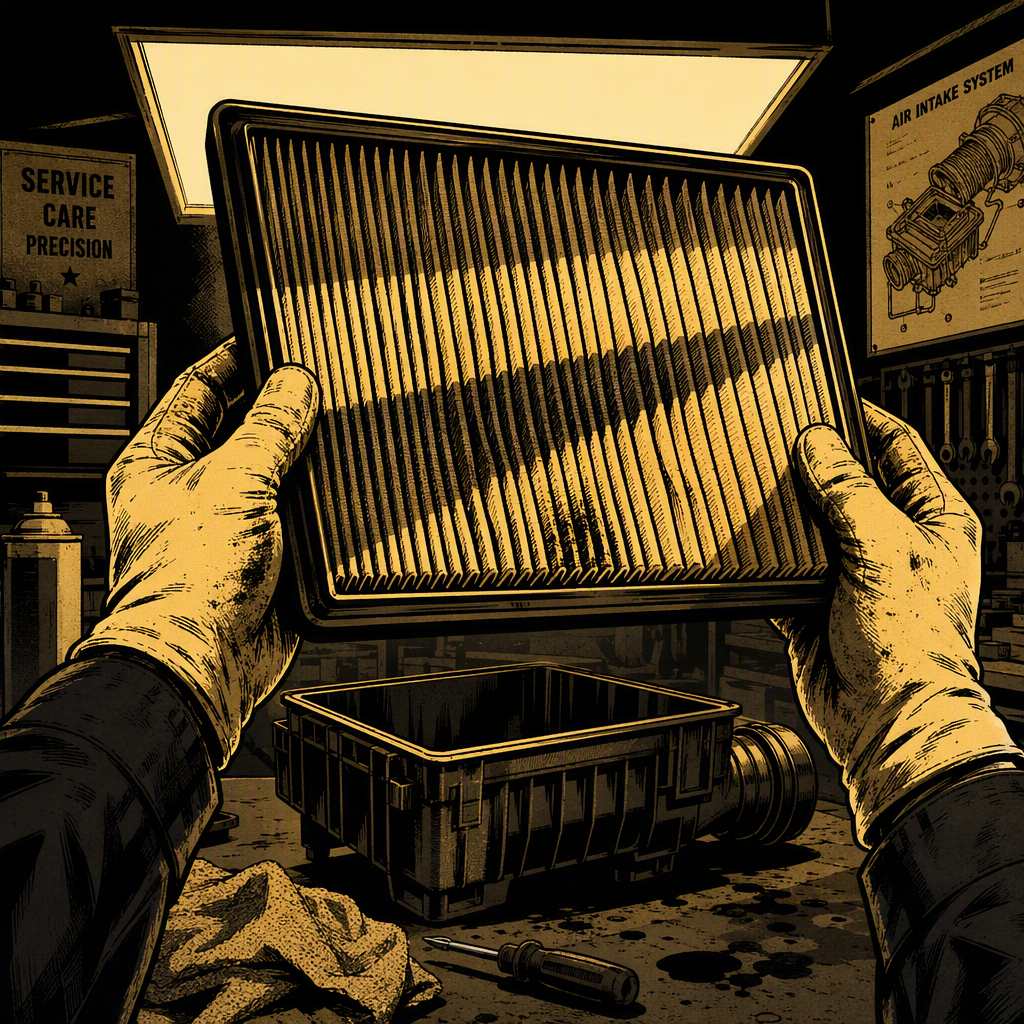
Every service bay has seen it: a customer pulls an air filter, holds it up to the light, and asks “is this bad enough to replace?” The honest answer is almost always yes — engine air filters are inexpensive, take about five minutes to swap, and the downside of running one too long (reduced airflow, lower performance, potential for debris reaching the intake) far outweighs the cost of a new one. This guide walks through how to properly inspect a filter, what actually warrants replacement, and how to do the swap correctly instead of guessing based on color alone.
Why Air Filter Condition Matters More Than the Interval Sticker
Manufacturer service intervals (often 12,000–15,000 miles, or annually) are a baseline, not a rule. Actual filter life depends heavily on driving environment — dusty roads, construction zones, wildfire smoke, or a garage near gravel will clog a filter far faster than highway commuting. The practical guidance from experienced techs is simple: replace filters when they’re dirty, not strictly when they’re “due.” A filter that looks black and packed with debris at 8,000 miles needs to come out now; one that still looks clean at 15,000 miles can often go a bit longer. Relying on the interval alone means you’re maintaining the calendar, not the car.
How to Properly Inspect a Filter
A quick glance at the intake side of the filter isn’t enough — plenty of filters look fine from the front but are packed with grime in the pleats or corners. Pull the filter fully out of the housing and hold it up to a bright light or the sun. If you can’t see light coming through most of the pleats, airflow is restricted and it’s time to replace it. Spread the pleats open gently and check inside the folds, not just the flat surface — debris tends to accumulate deep in the pleat corners first. Also check the housing itself while the filter is out: leaves, dust, and even small debris can build up in the airbox and should be cleaned out before installing a new filter, otherwise you’re just recontaminating it immediately.
Look for these specific signs the filter needs to go:
- Visible dirt, dust, or debris packed into the pleats
- Little to no light passing through when held up to a bright source
- A gray, brown, or black film coating the paper media (some darkening is normal — heavy, uniform coating is not)
- Oil residue (common on vehicles with aftermarket oiled performance filters, or from a PCV/breather issue)
- Torn paper media, a warped frame, or a damaged rubber gasket
{{PRODUCT_SEARCH_1}}

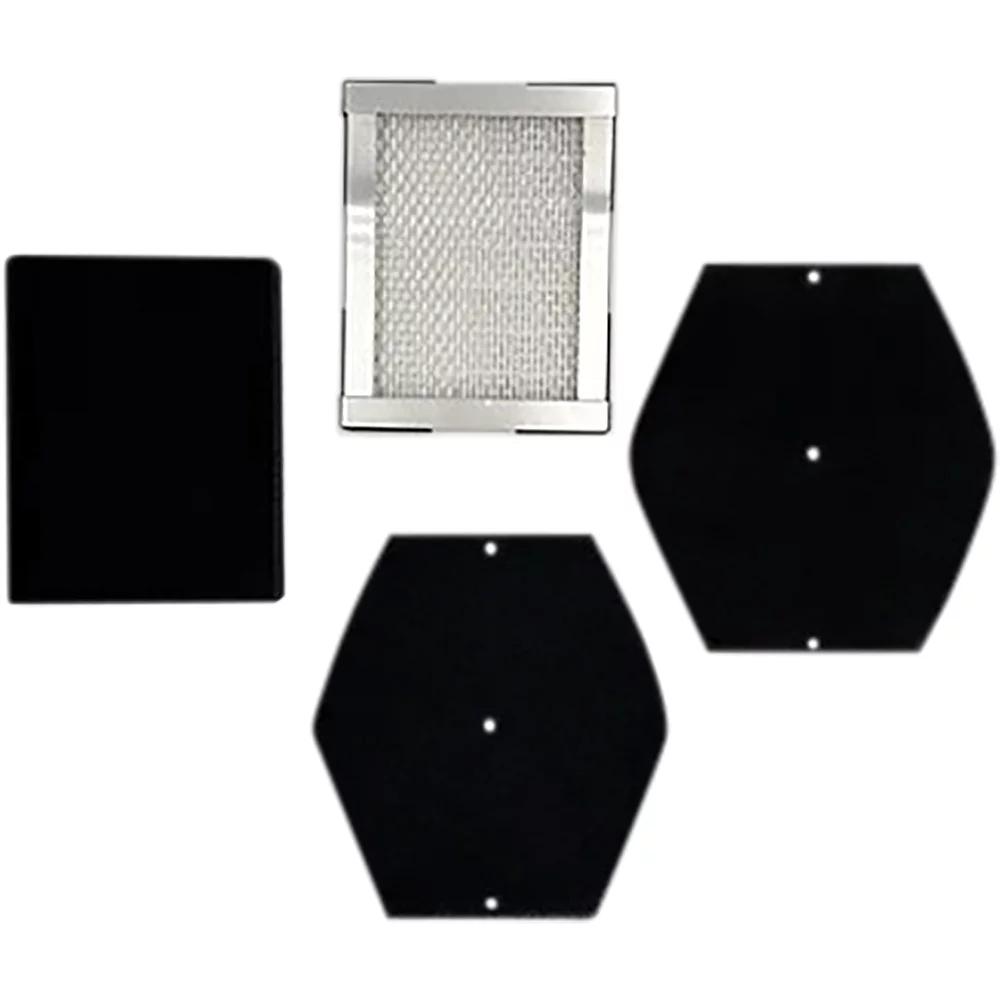
RTI-D500-RK Rebuild Kit, Use With: Competitor System, DEVDAD
Mfg: Reading Technologies
Part #: RTI-D500-RK

Reading Technologies Perfect Air PERF-25-RK PERF-25 Repair Kit
Mfg: Reading Technologies
Part #: RTI.PERF-25-RK

Paper vs. Reusable Filters: What Techs Actually Recommend
Most factory-style engine air filters are pleated paper (cellulose or synthetic blend) housed in a plastic or rubber frame. These are not washable or reusable — once dirty, they get replaced, full stop. Attempting to blow one out with compressed air or rinse it can damage the media and create tiny gaps that let unfiltered air through, which does more harm than the dirt ever would. Reusable oiled cotton filters (the kind associated with aftermarket “performance” intakes) are a different category — they’re designed to be cleaned and re-oiled per the manufacturer’s kit instructions, typically every 25,000–50,000 miles depending on conditions. If a customer has one of these installed, don’t just swap it for a paper filter without checking whether the housing and MAF calibration were set up for the oiled type.
On filter brand selection, there’s a wide range of acceptable options — Champion, WIX, Fram, Bosch, and OEM parts are all common choices in shops. Brand loyalty is often based on a tech’s own experience or what a trusted mechanic recommends. For air filters specifically, media quality differences between reputable brands are usually minor, though brand quality matters more when it comes to oil filters, where filtration efficiency and anti-drainback valve reliability have a bigger real-world impact. When in doubt, match OEM specs for fit and micron rating rather than chasing a specific brand name.
Step-by-Step Replacement Procedure
The swap is one of the simplest jobs in the shop, but it’s worth doing carefully so nothing gets dropped into the intake tract.
- Locate the airbox — usually a black plastic housing near the front of the engine bay, connected to the throttle body or intake tube.
- Release the clips or screws holding the lid on. Note the orientation of any arrows or airflow markings before removing the old filter.
- Remove the old filter and inspect the housing for debris, leaves, or an insect nest. Vacuum or wipe it out before installing the new one.
- Check the new filter’s gasket seats fully around the housing edge — a gap here lets unfiltered air bypass the filter entirely.
- Reinstall the lid and secure all clips or fasteners. A loose lid can allow unfiltered air in just as easily as a missing filter.
- If the vehicle has a mass airflow sensor (MAF), avoid touching the sensor element with bare hands or cleaner unless it’s actually dirty — oils from skin can throw off readings.
Don’t Ignore the Cabin Air Filter While You’re In There
Every time an engine air filter gets pulled, it’s worth checking the cabin air filter too — they’re unrelated systems but get replaced on similar intervals, and neither one is expensive or hard to access. A clogged cabin filter reduces HVAC airflow, can cause musty odors, and forces the blower motor to work harder. Most cabin filters sit behind the glovebox or under the dash and take just a few extra minutes to swap once you’re already in maintenance mode.
When a Dirty Filter Signals a Bigger Problem
An air filter that’s dirty far ahead of schedule, or coated in oil, is a symptom worth investigating rather than just replacing and moving on. Oil residue on the filter media often points to a failing PCV valve, a clogged breather system, or excessive blow-by from engine wear — replacing the filter without addressing the source means it’ll be oily again in a few thousand miles. Similarly, a filter packed with fine black soot faster than expected can indicate an aftermarket intake with a poor seal, or a vehicle regularly driven in heavy dust or off-road conditions that may need more frequent service intervals than the factory schedule assumes.
{{PRODUCT_SEARCH_2}}
Quick Checklist
- Pull the filter and hold it to a light source — minimal light through the pleats means replace it
- Check pleat corners and folds, not just the flat surface
- Inspect for oil residue, tears, or a warped frame
- Clean debris out of the airbox before installing the new filter
- Confirm the gasket seats fully and the lid clips are secure
- Check the cabin air filter while the airbox is open
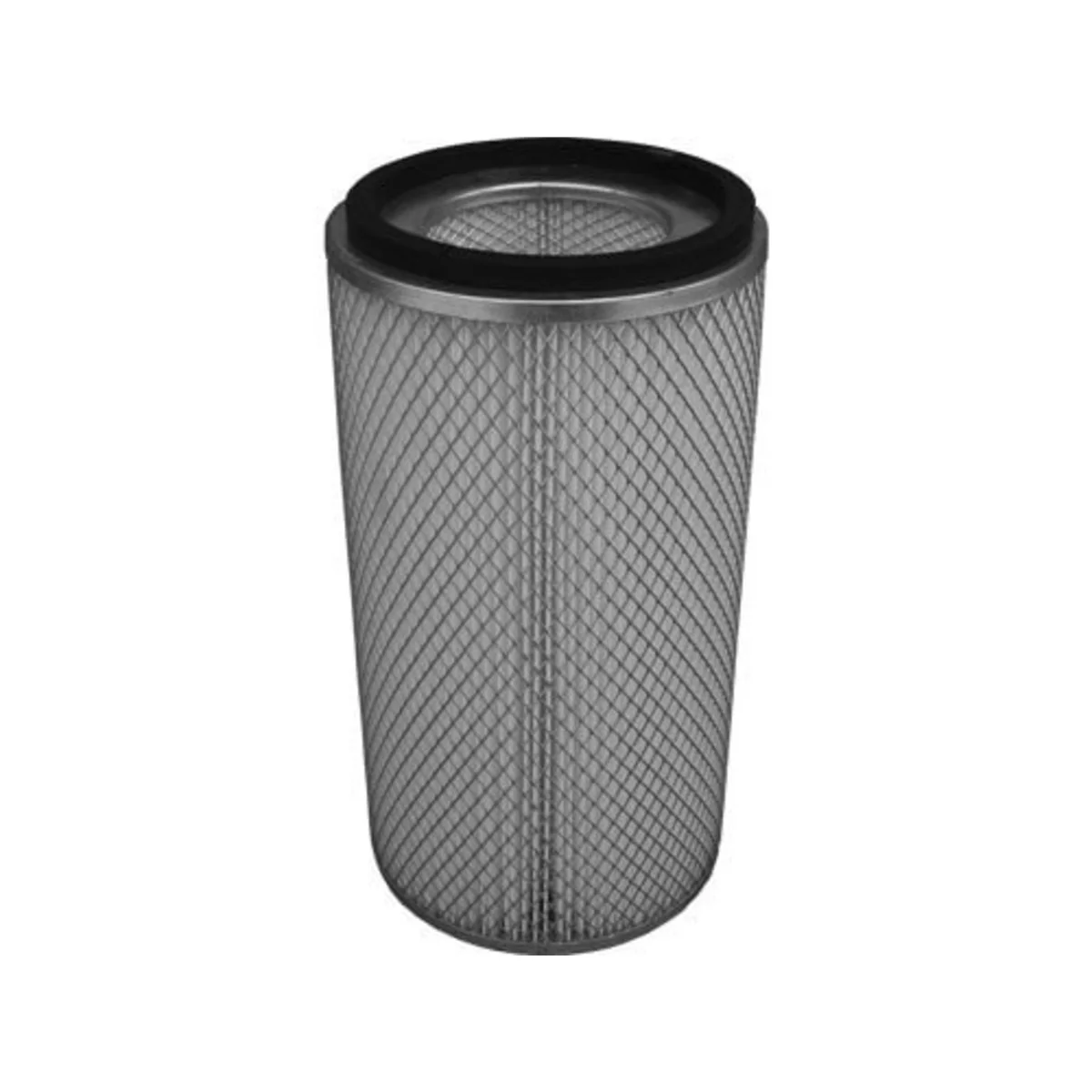
Atlas Automotive Equipment VACUUM FILTER FOR SANDBLAST CABIN
Mfg: Atlas Automotive
Part #: HTSBC420-29

FAQs
How often should an engine air filter really be replaced?
Most manufacturers recommend every 12,000–15,000 miles or annually, but actual replacement should be based on condition. Dusty, gravel-road, or stop-and-go city driving can cut that interval significantly.
Can I clean a paper air filter instead of replacing it?
No. Standard pleated paper filters are not designed to be washed or blown out — doing so can damage the media and let debris pass through unfiltered. Only purpose-built reusable oiled filters can be cleaned and re-oiled per their kit instructions.
Does a dirty air filter actually hurt fuel economy and performance?
Yes, though the effect is more noticeable on older carbureted or throttle-body-injected vehicles than modern fuel-injected engines with computer-controlled air-fuel ratios. Regardless of era, a severely clogged filter restricts airflow and can measurably reduce throttle response and power.
Is it safe to drive with a very dirty air filter for a while longer?
Generally yes in the short term — it won’t cause sudden failure — but it’s not advisable to delay. Reduced airflow strains the engine’s air-fuel mixture, and a filter that’s failing structurally (torn or warped) can let unfiltered debris reach the intake.
What’s the difference between air filter brands like WIX, Champion, and Fram?
All are reputable brands producing OEM-equivalent filters. Differences in filtration media and build quality are more significant for oil filters than air filters; for air filters, correct fitment and a reliable gasket seal matter more than brand name.
Should I replace the cabin air filter at the same time?
It’s convenient to do so since both are low-cost, quick jobs, but they serve different systems and don’t need to be replaced on the same schedule. Check the cabin filter independently — a musty HVAC smell or weak airflow are signs it needs attention regardless of engine air filter condition.
Shop Engine Repair Tools
Whether you’re replacing an air filter or diagnosing a deeper intake or PCV issue, having quality replacement parts and tools on hand makes the job efficient. Browse our Engine Repair Tools selection.
- Engine and cabin air filters for most makes and models
- Filter housings, gaskets, and seal materials
- PCV valves and breather system components

The Toolsource Technical Team blends decades of real-world automotive service experience with up-to-date technical research. Our writers collaborate with professional mechanics, shop owners, and diagnostic specialists to deliver practical, workshop-ready guidance you can trust.


Follow us on social media