A customer rolls in complaining their steering wheel shakes at highway speed, or a tech spots a wheel that doesn’t sit flush against the hub during a routine inspection. Before quoting a new rim or a wheel bearing, it pays to run through a short, repeatable diagnostic sequence. Wobble and bent-rim complaints usually come down to one of four causes: an improperly seated tire bead, a wheel not mounted flat against the hub, incorrect or uneven lug torque, or a suspension setup that’s hammering the wheel on every road imperfection. Here’s how to isolate which one you’re dealing with.
Start With the Symptom: Feel, Sound, and Speed
The first diagnostic branch is simple: does the vibration show up at low speed, highway speed, or both? A wobble that’s only noticeable at highway speeds (50+ mph) and comes through the steering wheel points toward a front-end balance or alignment issue, or a bent front rim. A wobble that’s felt in the seat or floor more than the wheel often points to a rear wheel or driveline issue. Ask the customer or note during test drive:
- Does it get worse with speed, or does it plateau?
- Is there an audible noise (clicking, grinding, humming) along with the vibration?
- Does braking change the intensity?
- Did the symptom start suddenly (likely impact damage) or gradually (likely wear, loose hardware, or balance loss)?
A sudden onset after hitting a pothole or curb is the classic signature of a bent rim or a knocked-loose wheel bearing. Gradual onset points more toward balance weights falling off, tire wear, or loosening lug nuts.
Visual Inspection: Bead Seating and Rim Flange
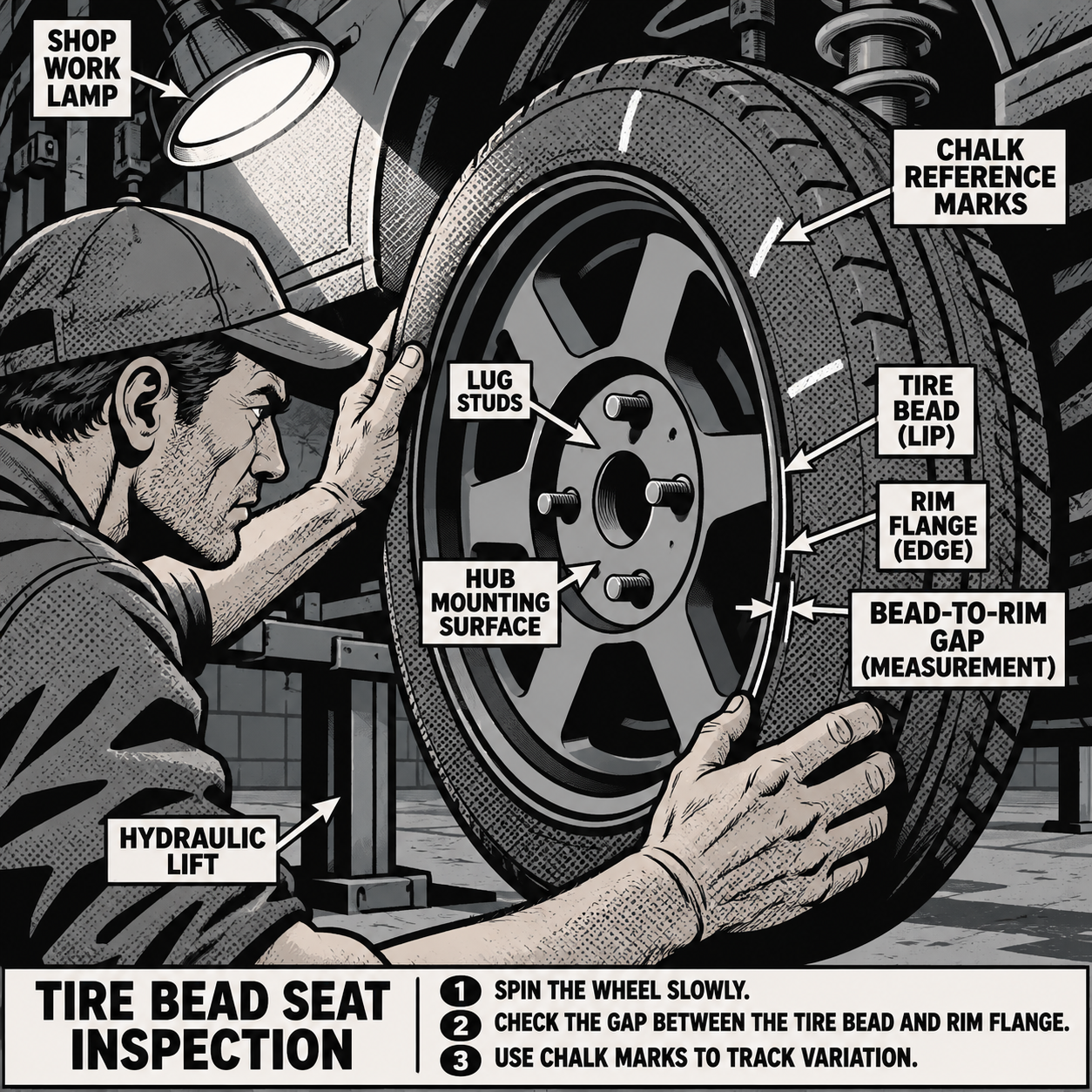
Before pulling the wheel, spin it slowly with the car jacked up (or on a lift) and watch where the tire bead meets the rim flange on both sides. Mark a reference point with chalk and rotate the wheel through a full turn while watching the gap between the bead line (the raised ring molded into the tire sidewall near the rim) and the rim edge. If that gap narrows and widens as the wheel turns, the bead isn’t seated evenly all the way around — this alone can cause a wobble that mimics a bent rim, even on a perfectly good wheel. An unevenly seated bead is common after a tire shop mounts a tire without adequate lubricant or enough initial air pressure to pop the bead fully into place.
If the bead gap stays consistent but the rim itself visibly deviates in and out as it spins, you’re likely looking at a bent or out-of-round rim rather than a seating problem. Confirm with a dial indicator against the inner and outer rim flange if you want a number instead of an eyeball call — more than about 0.045–0.060″ of lateral runout on a passenger wheel is generally enough to cause a noticeable highway wobble.
Product search: wheel runout dial indicator gauge kit


Check the Hub Mounting Surface and Lug Torque
A wheel that wobbles specifically “on the face” — meaning you can see or feel side-to-side movement right at the wheel’s mounting surface rather than at the tire tread — is not a balance problem. That symptom means the wheel isn’t sitting flat against the hub, or something behind it is bent or loose. Work through this sequence:
- Remove the wheel completely and inspect the hub flange for rust buildup, debris, or a lip of corrosion that prevents the wheel from seating flush. Clean the mating surface with a wire brush.
- Inspect the hub face itself and the wheel’s mounting surface for visible warping, gouges, or a stud that isn’t sitting straight.
- Reinstall the wheel using a star/cross torque pattern, snugging all fasteners first, then torquing to spec in two or three passes. Uneven or single-pass torque is a common cause of a wheel seating slightly off-center, which reads exactly like a bent rim on the road.
- Re-spin and re-check runout. If reinstalling with proper pattern and torque resolves the wobble, the original issue was mounting, not the wheel or hub hardware.
If the wobble persists after a clean reinstall with correct torque, move on to checking for a bent wheel stud, a warped rotor hat (on some vehicles this can transmit a very similar shake), or a damaged hub bearing with play.
Why Lowering Springs Make Rim Damage Worse
If the vehicle has aftermarket lowering springs, factor that into the diagnosis directly — it changes how much force potholes and road seams transmit into the wheel. Reduced ride height means less suspension travel is available to absorb an impact before the tire and rim bottom out against the edge of a pothole or expansion joint. The same size pothole that a stock-height car shrugs off can transmit a sharp, direct hit into the rim flange on a lowered car, bending it or knocking a bead loose instantly.
Two practical mitigations worth discussing with the customer:
- Moving wheels that take the hardest hits (commonly front wheels, since they see the brunt of pothole impacts on acceleration/steering inputs) to the rear positions can extend rim life, since rear wheels on most front-wheel-drive layouts see somewhat less direct impact loading.
- Switching to a slightly higher-profile tire (within the size range the vehicle supports) adds a bit more cushioning sidewall between the road and the rim, reducing the chance of flange damage from the same size impact.
Neither of these eliminates the risk entirely — a lowered suspension simply has less margin, and the customer should be told that plainly rather than promised a permanent fix.
Reseating or Replacing the Wheel
Once you’ve identified bead seating as the issue, break the tire down, clean both bead surfaces and the rim bead seat of old lubricant residue and corrosion, re-lube, and remount using enough initial inflation pressure to pop both beads simultaneously (follow the tire’s max mounting pressure rating, not the vehicle’s recommended running pressure, for the initial seat only). Rebalance after reseating — a bead that was sitting unevenly will usually have been balanced incorrectly to begin with.
If the wheel itself is confirmed bent via runout measurement, don’t attempt to true it by hand on a damaged alloy rim; that’s a job for a specialty wheel repair shop with proper straightening equipment, and only for certain lower-severity dents on the outer barrel — never on a crack, and never on a structural bend near the hub bore or lug holes. A visibly cracked or heavily deformed wheel should be replaced outright.
Quick Diagnostic Checklist
- Note when the vibration occurs (speed range, braking, noise) before touching anything
- Spin the wheel and check for uneven tire bead-to-rim gap around the full circumference
- Measure lateral runout with a dial indicator if the bead looks even but wobble persists
- Remove, clean the hub face, and reinstall using a star-pattern, multi-pass torque sequence
- Factor in lowering springs or any aftermarket suspension when assessing impact damage risk
- Reseat and rebalance the tire if bead seating is the root cause; replace, don’t straighten, a cracked or badly bent wheel
Product search: wheel balancing and tire mounting shop equipment

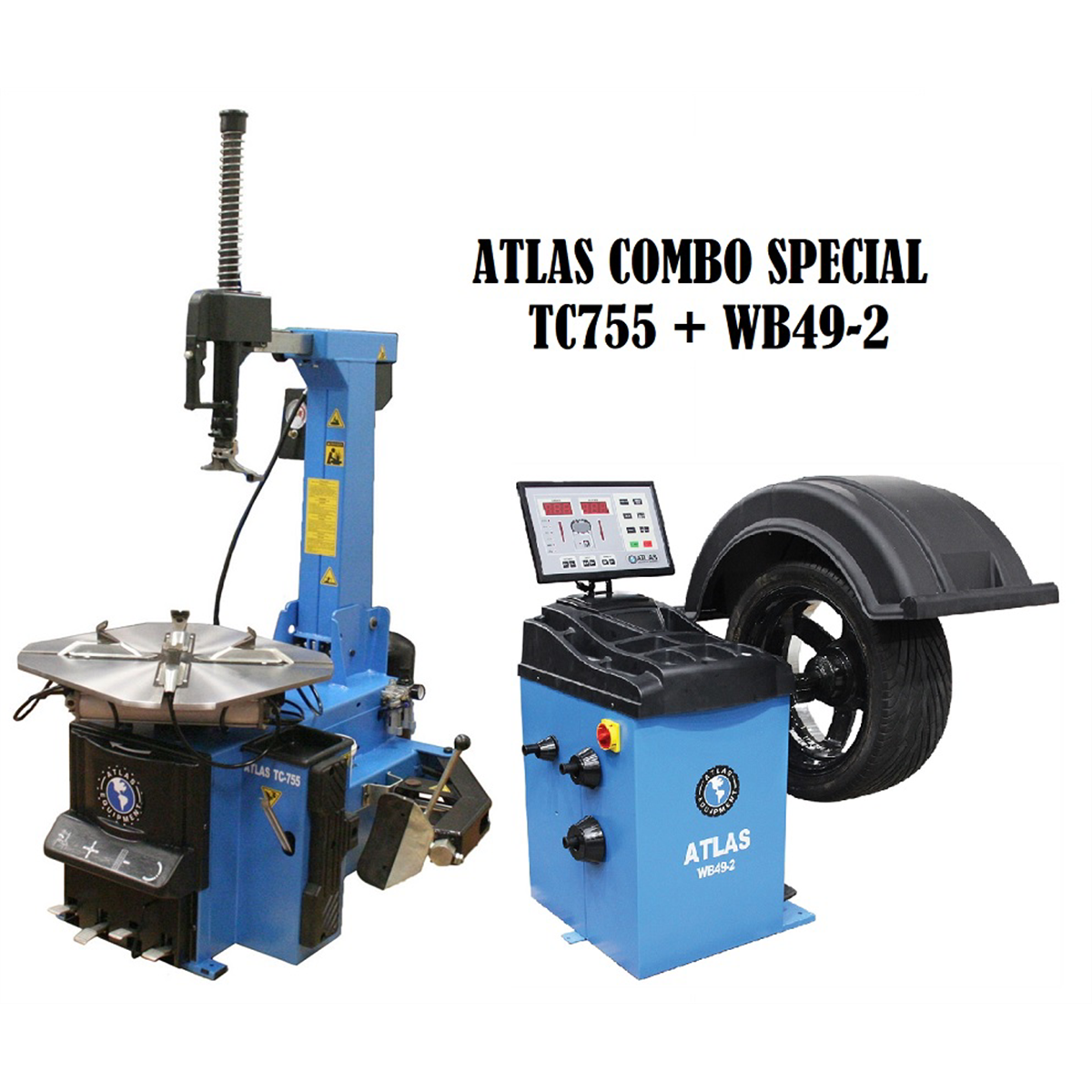
Atlas TC755 Tire Changer & WB49-2 Wheel Balancer Combo
Mfg: Atlas Automotive
Part #: TCWB-COMBO3

FAQs
Can a tire shop cause a bent rim during mounting?
It’s uncommon for a mounting machine to bend a rim outright, but improper mounting can leave the tire bead seated unevenly, which produces a wobble that feels just like a bent rim. Always rule out bead seating before condemning the wheel.
What does a wobble felt specifically at the wheel face, not the tread, usually mean?
That symptom points to the wheel not sitting flat against the hub — caused by corrosion on the mounting surface, incorrect torque sequence, or a bent component behind the wheel (hub, rotor hat, or stud). It’s a mounting/mechanical issue, not a balance issue.
Will moving a bent-rim-prone wheel to the rear fix the problem?
It reduces the frequency of new damage on vehicles with lowering springs since rear wheels typically see less direct pothole impact, but it doesn’t address an already-bent wheel and isn’t a guaranteed fix — it’s a mitigation.
Is it safe to drive on a wheel with a confirmed bent rim?
Not recommended. A bent rim can leak air slowly or suddenly if the bead loses seal entirely, and the resulting vibration accelerates wear on bearings, tie rods, and suspension bushings. Get it inspected and replaced or professionally repaired promptly.
How much lateral runout on a wheel is considered acceptable?
General shop guidance treats under 0.045″ (about 1.1mm) as acceptable for most passenger vehicles, with wobble becoming noticeable to the driver above roughly 0.060″. Exact tolerances vary by vehicle and tire sensitivity, so treat this as a practical reference, not a hard spec.
Does lowering a car with aftermarket springs void the factory wheel warranty claims from pothole damage?
Factory wheel warranties typically exclude impact damage regardless of ride height, but lowered suspensions make that kind of damage more likely since there’s less travel to absorb the hit before the rim contacts the road edge.
Recommended Tools for Wheel Diagnosis
Diagnosing wheel wobble and bent rims requires specific tools and equipment. Check our Tire Tools, Wheels & Suspension selection for dial indicators, torque wrenches, and wheel balancing equipment.
- Wheel runout dial indicators for measuring rim lateral deviation
- Torque wrenches for proper lug nut installation
- Tire mounting and balancing equipment

The Toolsource Technical Team blends decades of real-world automotive service experience with up-to-date technical research. Our writers collaborate with professional mechanics, shop owners, and diagnostic specialists to deliver practical, workshop-ready guidance you can trust.


Follow us on social media