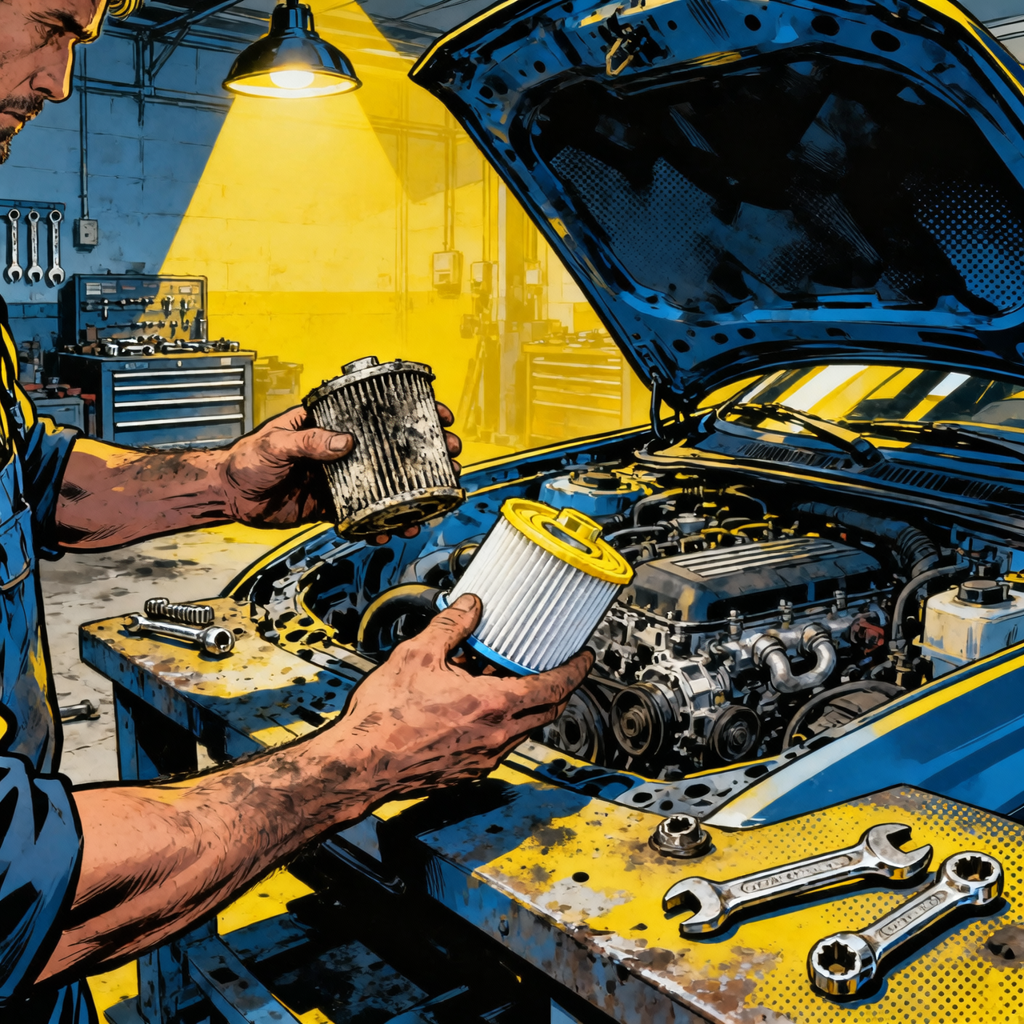
Air filter replacement is one of the most common upsells at quick-lube shops and dealerships, yet it’s one of the simplest maintenance tasks you can perform yourself—typically requiring no tools and less than five minutes. Understanding when replacement is actually needed and doing it yourself can save you hundreds of dollars over your vehicle’s lifetime.
When You Actually Need to Change Your Air Filter
The most reliable way to determine if replacement is needed is visual inspection, not mileage. Hold the filter to a light source; if minimal light passes through, replacement is warranted. If light passes through clearly and pleats aren’t heavily clogged with debris, the filter still has life. Check both sides—the intake side naturally accumulates dust, but you’re looking for substantial buildup that restricts airflow. If both sides appear equally dark and individual pleats are indistinguishable, replacement is due.
Manufacturer recommendations suggest replacement every 15,000 to 30,000 miles, but these are guidelines, not rules. Actual condition assessment always beats arbitrary mileage. Hybrid vehicles need special consideration—engines run significantly less than total vehicle mileage suggests, potentially extending filter service life well beyond stated intervals. Driving environment dramatically impacts lifespan: highway commuters in clean areas might achieve 40,000+ miles, while rural drivers on gravel roads may need replacement every 10,000 miles. If you regularly drive on unpaved roads or dusty areas, inspect every 5,000 miles. If you primarily drive paved highways in low-dust environments, extend inspection intervals. Establish a schedule appropriate to your conditions rather than following generic recommendations.
Engine vs. Cabin Air Filters: Know the Difference
Many owners confuse these completely separate systems, and service advisors sometimes exploit this to recommend unnecessary replacements.
What each filter does
The engine air filter protects your engine from abrasive particles in intake air, sitting in a housing near the engine. A severely clogged engine filter can reduce performance and fuel efficiency, though modern engines with computer controls often compensate for moderate restrictions. The cabin air filter filters air entering your HVAC system, removing dust, pollen, and odors. A clogged cabin filter reduces vent airflow and may cause odors, but won’t affect engine performance or fuel economy.
Separate maintenance schedules
Engine air filters typically last 15,000-30,000 miles depending on conditions, while cabin filters last 15,000-25,000 miles or annually. Cabin filter intervals depend heavily on environment—vehicles in high-pollen areas or dusty climates may need replacement twice annually. These filters follow completely different schedules and should be evaluated independently based on actual condition.
Identifying which filter needs replacement
When replacement is recommended, ask which filter is being referenced and request to see it. The engine air filter is usually more accessible, requiring no tools. Cabin filters vary widely by vehicle location. If both filters are recommended, insist on inspecting both or request photographic documentation of each filter’s condition.
Step-by-Step DIY Air Filter Replacement
Air filter replacement ranks among the simplest automotive tasks, requiring no mechanical experience and typically no tools.
Tools and parts ($10-50)
You’ll need zero tools for most vehicles—housings use spring clips or latches designed for tool-free access. Some require a screwdriver. The filter is your only expense: OEM filters cost $15-35, aftermarket filters run $10-25, and premium filters cost $25-50. Stick with recognized brands; a $20 filter protecting thousands of dollars of engine components is excellent value.
Finding your air filter
Pop your hood and look for a black plastic box near the engine front—this is your air intake housing. It’s typically rectangular or oval, 12-18 inches on the longest side, positioned to one side of the engine. Follow the large intake tube backward from the throttle body toward the front. On trucks and SUVs, the housing may be higher or in the fender area. YouTube tutorials for your specific vehicle provide visual confirmation.
Safe removal and installation
Most housings secure with spring clips—simply unhook them and lift the top away. Some use quarter-turn fasteners or screws. Remove fasteners, note positions, and lift carefully. Remove the old filter and note its orientation (filters have arrows indicating airflow direction). Wipe debris from the housing bottom before installing the new filter, matching the old filter’s orientation. Ensure proper seating, replace the housing top, and secure all fasteners. The entire process takes 3-5 minutes.
| Service Option | Typical Cost | Time | Best For |
|---|---|---|---|
| Dealership | $65-120 | 30-60 min wait | Warranty needs, no DIY confidence |
| Independent Shop | $35-75 | 20-45 min wait | Convenience with other services |
| Quick-Lube Chain | $25-50 | 15-30 min wait | Combined with oil change |
| DIY | $10-35 | 5-10 min | Maximum savings, complete control |
Real Cost Breakdown
DIY replacement saves 50-75% versus dealership service. A vehicle driven 120,000 miles needing replacement every 30,000 miles requires four replacements. Dealership service at $85 per replacement totals $340, while DIY using $20 filters costs $80—saving $260. If inspection extends filter life to 40,000 miles, you need only three replacements: DIY costs $60 versus dealer cost of $255, saving $195. These calculations don’t include time saved avoiding dealership visits. Savings multiply with multiple vehicles.
Dealerships charge $65-120 for a task requiring five minutes of labor, charging shop rates ($100-180/hour) like complex repairs. Service advisors receive commission on parts and labor, creating incentive to recommend replacement regardless of actual condition. OEM filters guarantee correct fitment, but aftermarket brands like Fram, K&N, WIX, and Purolator often meet or exceed OEM specifications at lower cost. Auto parts stores typically charge $10-25 for quality aftermarket filters versus $20-40 for OEM equivalents.
Red Flags: Protecting Yourself from Upsells
Air filter replacement is one of the most common unnecessary recommendations because the low-skill, high-markup nature makes it attractive for upselling.
Common pressure tactics
Service advisors often appear with a visibly dirty filter during oil changes, claiming “immediate replacement” is needed or that driving with it will “damage your engine.” While severely clogged filters affect performance, most shown during these pitches have substantial remaining life. Another tactic cites mileage without actual inspection: “You’re at 25,000 miles, so it’s time for a new filter.” Aggressive shops combine urgency with pressure: “We can do it right now while you’re here.” Some imply that declining service relieves them of responsibility for future problems.
Questions to ask before authorizing
“Can I see the actual filter removed from my vehicle?” (Not a generic dirty filter). “Can you show me both sides held up to light?” “When was this last replaced and how many miles since?” “What specific problems will occur if I drive another 5,000 miles on this filter?” Vague answers suggest the recommendation isn’t urgent. “Can I take the filter with me to reinstall if I decide it doesn’t need replacement?” “Is this based on mileage interval or actual condition?” This question clarifies whether you’re receiving legitimate advice or a sales pitch.
Request visual documentation
Ask for photos showing both sides of your filter held up to light demonstrating restricted airflow. Legitimate providers will gladly provide this documentation. If present during service, ask to inspect the filter yourself. You have the right to verify recommendations before authorizing unnecessary work.
Air Filter Maintenance Checklist
- ☐ Locate your air filter housing and practice opening/closing it
- ☐ Note current mileage and installation date in maintenance records
- ☐ Inspect every 10,000-15,000 miles or during oil changes
- ☐ Hold the filter to light to check for adequate airflow
- ☐ Keep a replacement filter on hand before you need it
- ☐ Check your cabin air filter separately—different location, different schedule
- ☐ Photograph your filter condition for future comparison
- ☐ Clean debris from the air filter housing during replacement
- ☐ Verify correct filter orientation using airflow direction arrows
- ☐ Ensure all housing latches or fasteners are properly secured
- ☐ Decline recommendations until you verify condition yourself
- ☐ Request visual proof before authorizing shop replacement
Frequently Asked Questions
How often should I change my air filter?
Inspect every 15,000 miles or annually, but replace only when visual inspection shows significant restriction. Typical intervals range 15,000-40,000 miles depending on driving conditions. Highway drivers in clean environments may exceed 40,000 miles; rural or dusty environment drivers may need 10,000-15,000 mile intervals. Your owner’s manual provides recommendations, but actual condition assessment always takes precedence over mileage alone.
Can I safely replace my air filter myself?
Absolutely. Replacement requires no mechanical expertise and typically no tools beyond possibly a screwdriver. The housing is designed for regular access with easily released latches or fasteners. You cannot install incorrectly enough to cause damage—worst case is reduced performance if not properly seated, which you’ll notice immediately. Millions of owners successfully replace their own filters.
What’s the difference between engine and cabin air filters?
The engine filter protects your engine from particles and sits in a housing near the engine. The cabin filter protects passengers from pollen, dust, and odors by filtering HVAC air, typically behind the glove box or near the windshield. They serve completely different functions, follow different schedules, and should be evaluated independently. A clogged cabin filter reduces vent airflow but doesn’t affect engine performance. A clogged engine filter reduces power but doesn’t affect interior air quality.
Will a dirty air filter damage my engine?
A severely clogged filter can reduce performance and fuel efficiency, but won’t cause catastrophic damage like oil starvation or overheating. Modern engines compensate for moderate restriction through computer controls. The primary risk is reduced power output and slightly decreased fuel economy. Replace genuinely clogged filters promptly—”severely” is the key word. Most filters shown during upsell scenarios have substantial remaining life.
What happens if I install the air filter backwards?
Most modern filters are symmetric and can’t be installed backwards. If your filter has specific orientation (indicated by arrows), installing backwards reduces filtration efficiency but won’t damage anything. If you realize the orientation is wrong, simply reinstall correctly. Some filters have structural support that should face the clean side, but even backwards installation causes reduced efficiency rather than damage.
Are premium or performance air filters worth the extra cost?
For most drivers, standard OEM or quality aftermarket filters provide adequate protection and performance. Premium filters cost $25-50 versus $10-25 for standard filters. Unless you drive in extremely dusty conditions, tow heavy loads regularly, or track your vehicle, benefits are minimal. Reusable oiled cotton filters can last the vehicle’s lifetime if maintained, potentially saving money long-term, but require regular cleaning and re-oiling. Standard disposable filters are simpler and more practical for most applications.

The Toolsource Technical Team blends decades of real-world automotive service experience with up-to-date technical research. Our writers collaborate with professional mechanics, shop owners, and diagnostic specialists to deliver practical, workshop-ready guidance you can trust.


Follow us on social media