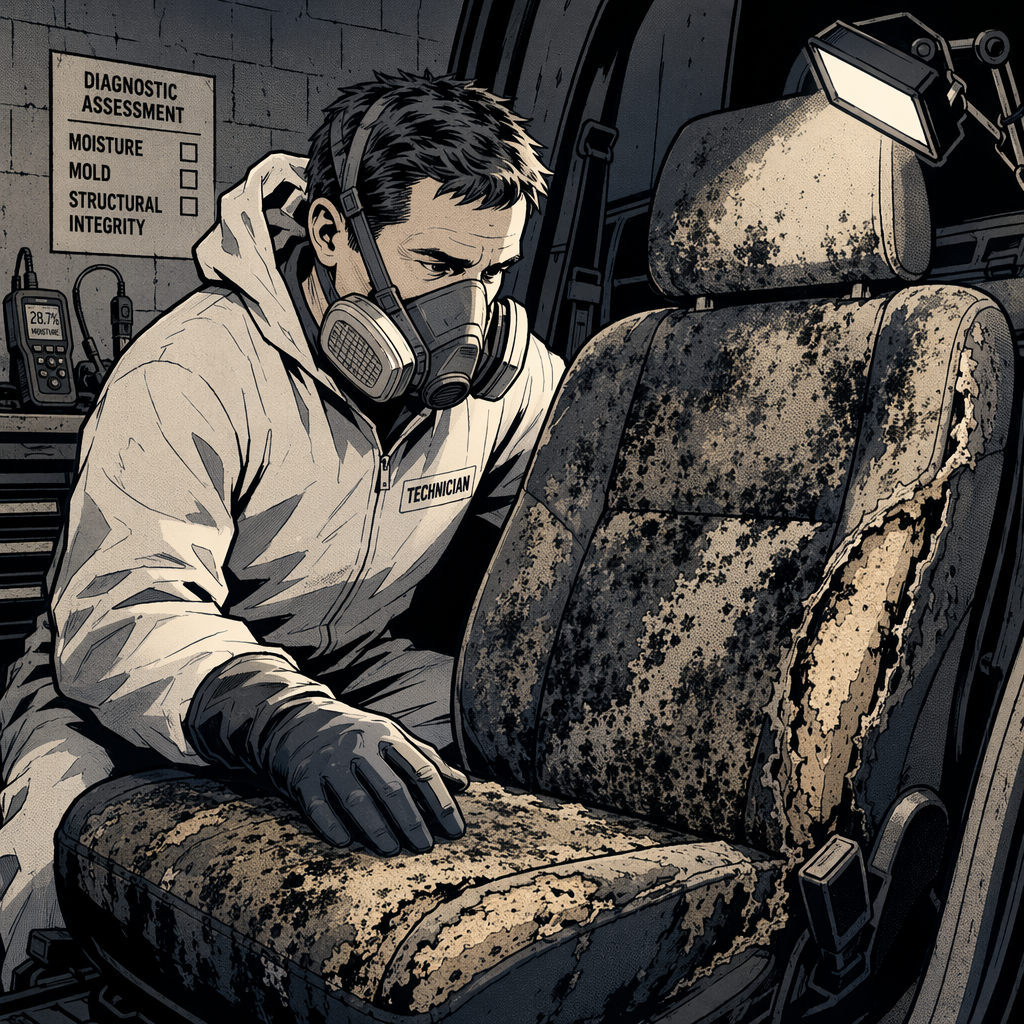
Every technician eventually encounters a vehicle interior that makes them question whether the job is worth taking. While most detailing challenges can be overcome with the right products and techniques, some vehicles present genuine biohazard conditions that threaten your health and aren’t economically viable to restore. Understanding the difference between a difficult job and a dangerous one is critical for protecting yourself, your employees, and your business. This guide helps you identify true biohazard situations, assess restoration feasibility, and understand why walking away is sometimes the professional choice.
Recognizing Biohazard Conditions in Vehicle Interiors
A biohazard vehicle interior contains biological materials that pose serious health risks. Unlike standard dirt or staining, these conditions can cause illness or infection if handled improperly. The most common biohazards include extensive mold colonization, bodily fluids (blood, urine, feces, vomit), decomposition materials, and combinations thereof.
Mold growth beyond surface contamination indicates deep penetration into foam, padding, and structural materials. When you see thick mold coverage on seats, especially with visible moisture or a fuzzy texture, the contamination has likely reached the foam core. Plastic and vinyl surfaces may appear clean because mold doesn’t consume these materials, but it uses them as colonization platforms while feeding on organic materials underneath.
Bodily fluid contamination presents different challenges. Fresh or dried blood, urine, and fecal matter carry pathogens including hepatitis, HIV, and various bacterial infections. When these materials have been present long enough to generate secondary mold growth, you’re dealing with compound contamination that has thoroughly penetrated porous materials.
The smell is often your first indicator. Biohazard odors are distinct from typical automotive smells—they’re organic, penetrating, and don’t improve with ventilation. If opening the door causes you to reflexively step back, that’s your body warning you of potential danger.
Understanding Insurance Total Loss Determinations
Insurance companies maintain specific protocols for biohazard contamination. Most major insurers will declare a vehicle a total loss when biohazard contamination is documented, regardless of the vehicle’s mechanical condition or market value. This isn’t arbitrary—it’s based on liability concerns and restoration cost reality.
The total loss determination typically occurs when estimated restoration costs exceed 70-75% of the vehicle’s actual cash value, though biohazard contamination often triggers automatic total loss classifications. Insurance adjusters understand that proper biohazard remediation requires specialized equipment, disposal procedures, and potential parts replacement that quickly exceeds economical repair thresholds.
When a vehicle is totaled for biohazard reasons, the title is typically branded as salvage. This significantly impacts resale value, even after successful restoration. Anyone attempting to restore and resell such a vehicle faces disclosure requirements in most states, and many buyers will walk away regardless of the quality of restoration work performed.
For technicians, understanding this insurance perspective is crucial. If an insurance company has already determined a vehicle is a biohazard total loss, there’s sound reasoning behind that decision. Taking on such a project privately means assuming all liability and health risks the insurance company declined to accept.
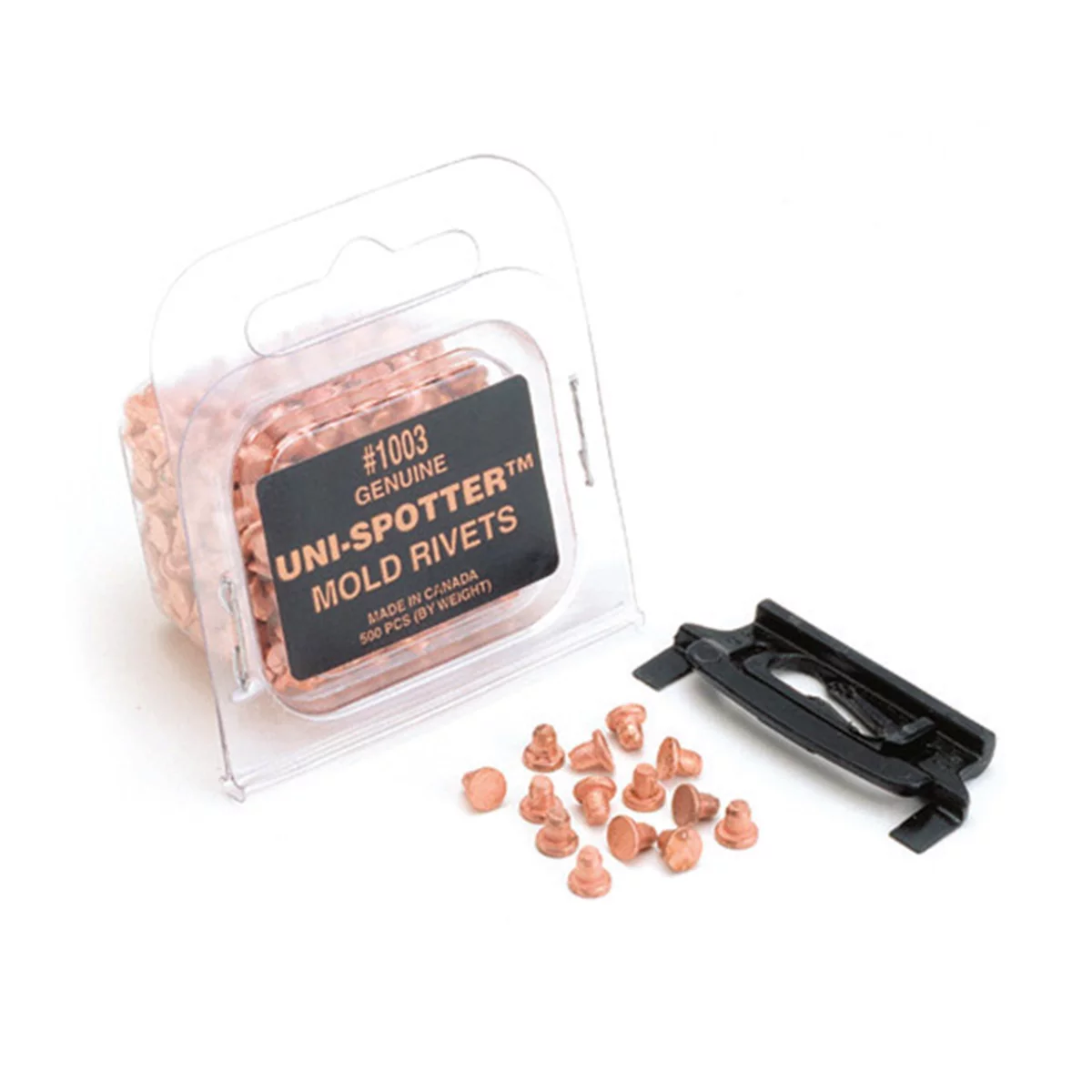

10490PK Rocker Molding Retainer, 17 mm Dia Head x 11 mm L St
Mfg: Disco Automotive Hardware
Part #: 10490PK
Real Cost Analysis: Beyond the Initial Price
The purchase price of contaminated seats or a biohazard vehicle represents only a fraction of true restoration costs. A realistic cost breakdown reveals why these projects rarely make financial sense.
Material replacement costs start with obvious items: seat foam, padding, covers, and hardware. However, contamination rarely stays isolated. Carpeting, headliners, door panels, and HVAC components often harbor the same contamination. What appears to be a $100 seat restoration project quickly becomes a $1,000+ full interior replacement.
Disposal costs are significant and legally mandated. Biohazard materials can’t be placed in regular trash. Proper disposal requires certified waste handling services, specialized containers, and documentation. Depending on your location and the contamination severity, disposal costs can range from $200-500 or more.
Personal protective equipment isn’t optional. At minimum, you need respirators with appropriate filters (not basic dust masks), chemical-resistant gloves, protective suits, and eye protection. Quality PPE for a single biohazard job costs $100-200, and some items are single-use.
Time investment must be calculated at your shop rate, not as “free” labor. Proper decontamination, disassembly, cleaning attempts, reassembly, and disposal can consume 15-30 hours. At typical shop rates of $80-150/hour, labor alone can exceed $1,200-4,500.
Hidden costs include contamination of your workspace (requiring additional cleanup), potential odor transfer to other vehicles or equipment, and the risk of incomplete decontamination leading to recurring problems. Many technicians who’ve attempted biohazard restorations report persistent odors despite extensive cleaning, rendering the entire project worthless.
Health Risks You Cannot Ignore
The health implications of biohazard work extend far beyond temporary discomfort. Mold exposure, particularly to toxic varieties like black mold (Stachybotrys), can cause respiratory problems, allergic reactions, and long-term health complications. Symptoms include difficulty breathing, chronic coughing, headaches, and immune system suppression.
Bodily fluid contamination carries pathogen risks. Bloodborne pathogens remain viable in dried blood for weeks. Fecal matter contains E. coli, salmonella, and other bacteria that cause serious gastrointestinal illness. Urine contamination that has fostered mold growth creates ammonia compounds that damage lung tissue.
Cross-contamination is a serious concern. Biohazard materials easily transfer to tools, clothing, and other surfaces in your workspace. Without proper protocols, you risk contaminating clean vehicles, spreading pathogens to coworkers, or carrying contaminants home to your family.
Long-term exposure effects are particularly concerning for professional detailers. Repeated exposure to mold spores, even with PPE, can lead to sensitization where your body develops increasingly severe reactions. Some detailers have been forced to leave the profession after developing chronic respiratory conditions from biohazard exposure.
Legal liability also enters the equation. If you restore a biohazard vehicle and sell it without proper disclosure, or if an employee becomes ill from exposure in your shop, you face potential lawsuits and regulatory penalties. Workers’ compensation claims from biohazard exposure can be substantial.
Professional Biohazard Remediation Standards
Legitimate biohazard remediation requires specialized training, equipment, and procedures that most automotive shops don’t possess. Professional biohazard technicians complete OSHA bloodborne pathogen training, understand proper containment and disposal protocols, and use industrial-grade equipment designed for hazardous material handling.
Proper remediation involves complete isolation of the work area with negative air pressure systems to prevent contamination spread. HEPA filtration, not standard shop ventilation, is required to capture microscopic mold spores and pathogen particles. All materials contacting the contamination must be treated as medical waste and disposed of accordingly.
Decontamination chemicals used in professional remediation are stronger than automotive detailing products. EPA-registered disinfectants, antimicrobial treatments, and enzymatic cleaners designed for biological material breakdown are necessary. These chemicals require specific handling, mixing, dwell times, and disposal procedures.
Documentation and testing are standard in professional remediation. Air quality testing before and after treatment, surface swab testing to confirm decontamination, and photographic documentation of the process provide liability protection and quality assurance. Few automotive shops have access to these testing capabilities.
The reality is that proper biohazard remediation of a vehicle interior typically costs $2,000-5,000 when performed by qualified professionals. This is why insurance companies total these vehicles rather than repair them—the cost exceeds most vehicles’ value, and the liability risks are substantial.
When Walking Away Is the Right Business Decision
Professional judgment means recognizing when a job doesn’t make business sense. Several clear indicators signal that walking away is appropriate: visible extensive mold growth, any bodily fluid contamination, persistent organic odors that don’t dissipate with ventilation, moisture damage with soft or deteriorating foam, and situations where the vehicle has been declared a total loss by insurance.
Consider the opportunity cost. The time and resources spent attempting an unviable restoration could be applied to profitable jobs. Every hour wrestling with a biohazard situation is an hour not spent on legitimate detailing work that generates real profit without health risks.
Your reputation is at stake. If you take on a biohazard job and can’t fully remediate it, you’ve created an unhappy customer and potential legal liability. Word spreads quickly in local markets when a shop delivers a vehicle with persistent odors or visible contamination. The damage to your reputation far exceeds any potential profit from the job.
Insurance and licensing considerations also matter. Most general liability insurance policies exclude biohazard work. If an employee is injured or a customer claims illness from incomplete remediation, you may have no coverage. Some jurisdictions require specific licensing for biohazard remediation work, and operating without proper credentials carries legal penalties.
Setting professional boundaries establishes your shop’s standards. Turning down biohazard work positions you as a quality-focused professional who prioritizes safety and realistic outcomes. Customers respect technicians who honestly assess what’s feasible rather than taking money for impossible jobs.
Biohazard Assessment Checklist
Use this checklist when evaluating a potential biohazard situation:
- Is there visible mold growth beyond surface spots?
- Are organic materials (seats, carpet, headliner) visibly deteriorated or discolored?
- Does the interior have persistent organic odors that don’t improve with ventilation?
- Is there evidence of bodily fluids (blood, urine, feces, vomit)?
- Are materials wet or damp without an obvious clean water source?
- Has the vehicle been closed up for an extended period with contamination present?
- Has insurance already totaled the vehicle for biohazard reasons?
- Would restoration costs exceed 50% of the vehicle’s market value?
- Do you have proper PPE and disposal capabilities for biohazard work?
- Can you isolate this work from your regular shop operations?
If you answer yes to three or more of these questions, the job likely presents biohazard conditions that warrant refusal. If you answer yes to any question regarding bodily fluids or insurance total loss, walking away is the correct professional decision.
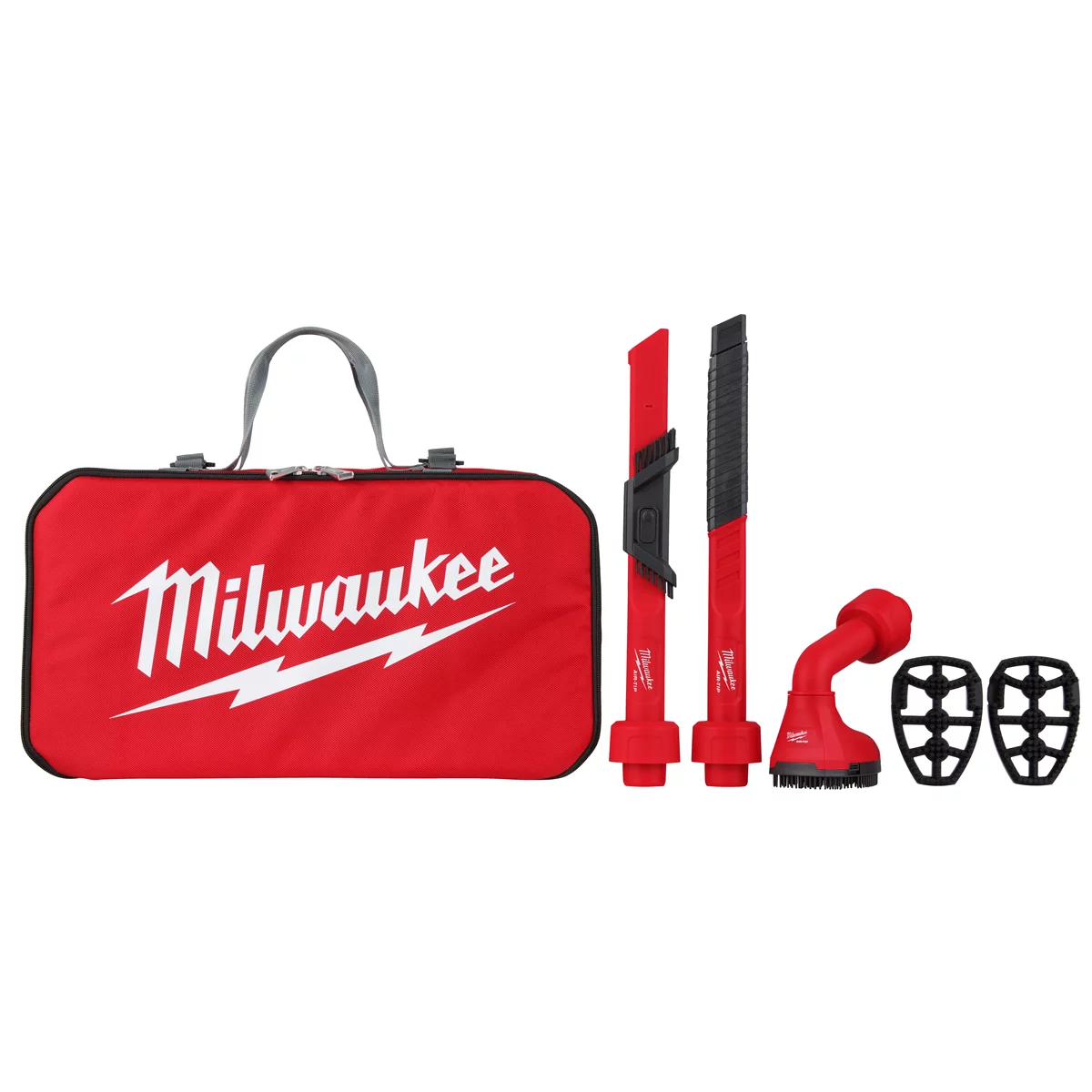
AIR-TIP(TM) 3-Piece Automotive Vacuum Tool Kit
Mfg: Milwaukee Electric Tools
Part #: 49-90-2019A
VIM Tools Promotional Tear-Off Microfiber Roll 12 Inch by 12
Mfg: VIM Tools
Part #: MFR30P
Frequently Asked Questions
Can’t I just clean mold off seats with bleach and disinfectant?
Surface cleaning doesn’t address mold that has penetrated into foam and padding. Mold sends microscopic hyphae deep into porous materials, and surface treatment only kills what’s visible. The underlying contamination continues growing and producing spores. Effective mold remediation requires removing contaminated materials entirely.
What if someone offers me free seats from a biohazard vehicle?
Free doesn’t mean worthwhile. You still face disposal costs, cleaning time, health risks, and potential contamination of your workspace. If seats are contaminated enough that someone is giving them away, they’re typically beyond viable restoration. The hidden costs of “free” biohazard materials almost always exceed the value of salvageable components.
How can plastic parts look clean when seats are covered in mold?
Mold doesn’t consume plastic, metal, or vinyl, but it does colonize on these surfaces while feeding on organic materials nearby. Mold appears to spare hard surfaces, but spores and microscopic contamination are still present. This is why thorough decontamination requires treating all surfaces, not just visibly affected areas, and why the contamination is more extensive than it appears.
Will ozone treatment kill mold and eliminate biohazards?
Ozone can kill surface mold and reduce odors temporarily, but it doesn’t remove dead mold (which still triggers allergies), doesn’t penetrate deep into materials where active mold lives, and doesn’t address the moisture and nutrients allowing regrowth. Ozone is a supplementary tool in professional remediation, not a standalone solution for biohazard conditions.
What should I tell a customer who insists I take on a biohazard job?
Be direct and professional: explain that the contamination presents health risks your shop isn’t equipped to handle safely, that proper remediation costs exceed the vehicle’s value, and that incomplete decontamination creates liability for both parties. Recommend proper biohazard remediation services or suggest the customer work with their insurance company. Standing firm on safety and professional standards protects everyone involved.
Are there any biohazard situations worth taking on?
Very limited surface contamination on non-porous materials, caught early before deep penetration, might be viable with proper PPE and protocols. However, the scenarios technicians typically encounter—extensive mold, bodily fluid contamination, or long-term moisture damage—are not economically or safely restorable in standard automotive shops. When in doubt, refer to professionals with proper training and equipment.
Protect Yourself with Proper Safety Apparel
Biohazard work demands more than standard shop tools—it requires appropriate personal protective equipment and safety gear. Whether you’re assessing a contaminated vehicle or performing remediation work, proper respiratory protection, chemical-resistant gloves, protective suits, and eye protection are essential safeguards. Browse our Shop Safety and Apparel selection to find the PPE and safety equipment needed for hazardous situations.
- Respirators with appropriate filtration for mold and pathogen protection
- Chemical-resistant gloves and protective suits for biohazard work
- Safety eyewear and other protective equipment for contaminated environments

The Toolsource Technical Team blends decades of real-world automotive service experience with up-to-date technical research. Our writers collaborate with professional mechanics, shop owners, and diagnostic specialists to deliver practical, workshop-ready guidance you can trust.


Follow us on social media