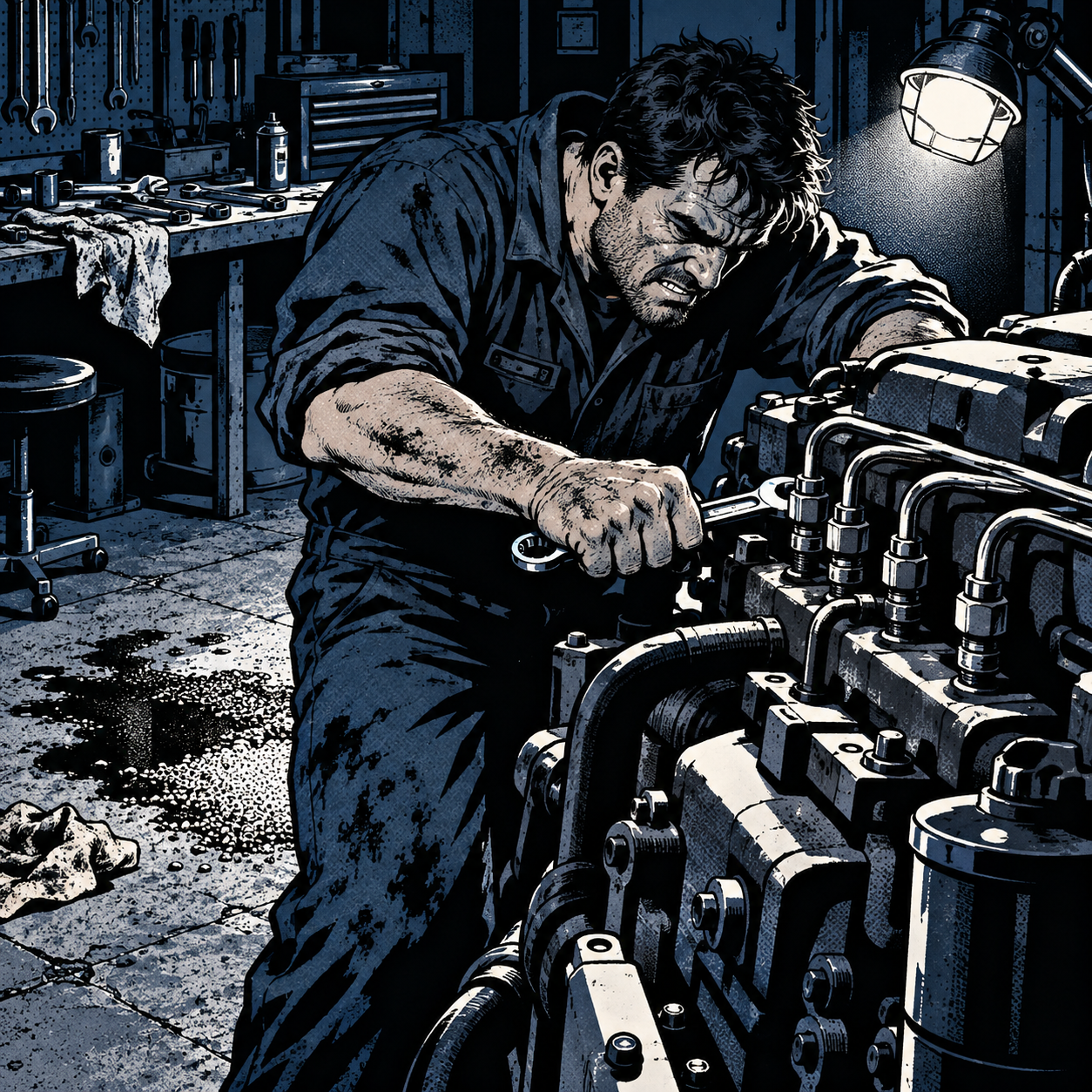
Every technician has a version of the same story: it’s late, the job is almost done, and one more push turns a routine repair into a flooded floor, a snapped bolt, or worse. Mechanics who’ve been at this for years consistently say the same thing — mental exhaustion shows up long before physical exhaustion does, and it’s usually the last hour of a long session that produces the mistake that costs the most time, money, or blood to fix. This isn’t about working less. It’s about recognizing the specific signs that your judgment has degraded and building habits that catch the problem before the problem catches you.
Why Fatigue and Frustration Cause the Expensive Mistakes
There’s a reason the worst shop accidents tend to cluster around late-night sessions and fights with stubborn bolts: frustration narrows attention. When you’re angry at a fastener or a part that won’t cooperate, your brain locks onto the immediate obstacle and stops scanning for the surrounding risk — a loose fitting, a line you haven’t fully torqued, a tool left somewhere it shouldn’t be. That’s how a 427 missing a fitting ends up spraying oil across a shop in ten seconds, or how a loose diesel injection line slips off at full pressure instead of during a controlled bleed. The physical skill to do the job hasn’t gone anywhere; what’s gone is the peripheral judgment that normally stops a small oversight from becoming a serious one.
The pattern reported again and again is the same: the mistake doesn’t happen because the tech didn’t know better. It happens because they were tired, frustrated, or rushing to finish before bed, and skipped the half-second check they’d never skip on a fresh morning.
Recognize the Warning Signs Before You Get Hurt
You don’t need a wellness app to tell you when you’re done for the night — your own shop gives you the signs if you pay attention to them. Common tells reported by working techs:
- You can’t tell your tools apart anymore — everything on the bench starts to look the same.
- You’re fighting the same bolt, connector, or panel for 20+ minutes with no progress.
- You’re rationalizing skipping a step you’d normally never skip (“it’s probably fine, I’ll just finish”).
- You notice you’re gripping tools harder than the job requires — a sign you’re forcing instead of diagnosing.
- You keep thinking “just this one more thing” past your third or fourth “one more thing.”
Any one of these on its own isn’t a crisis. Two or more together, especially late at night, is the point where the data says to stop — not because the job won’t get done, but because the next 20 minutes are statistically where the expensive mistake happens.
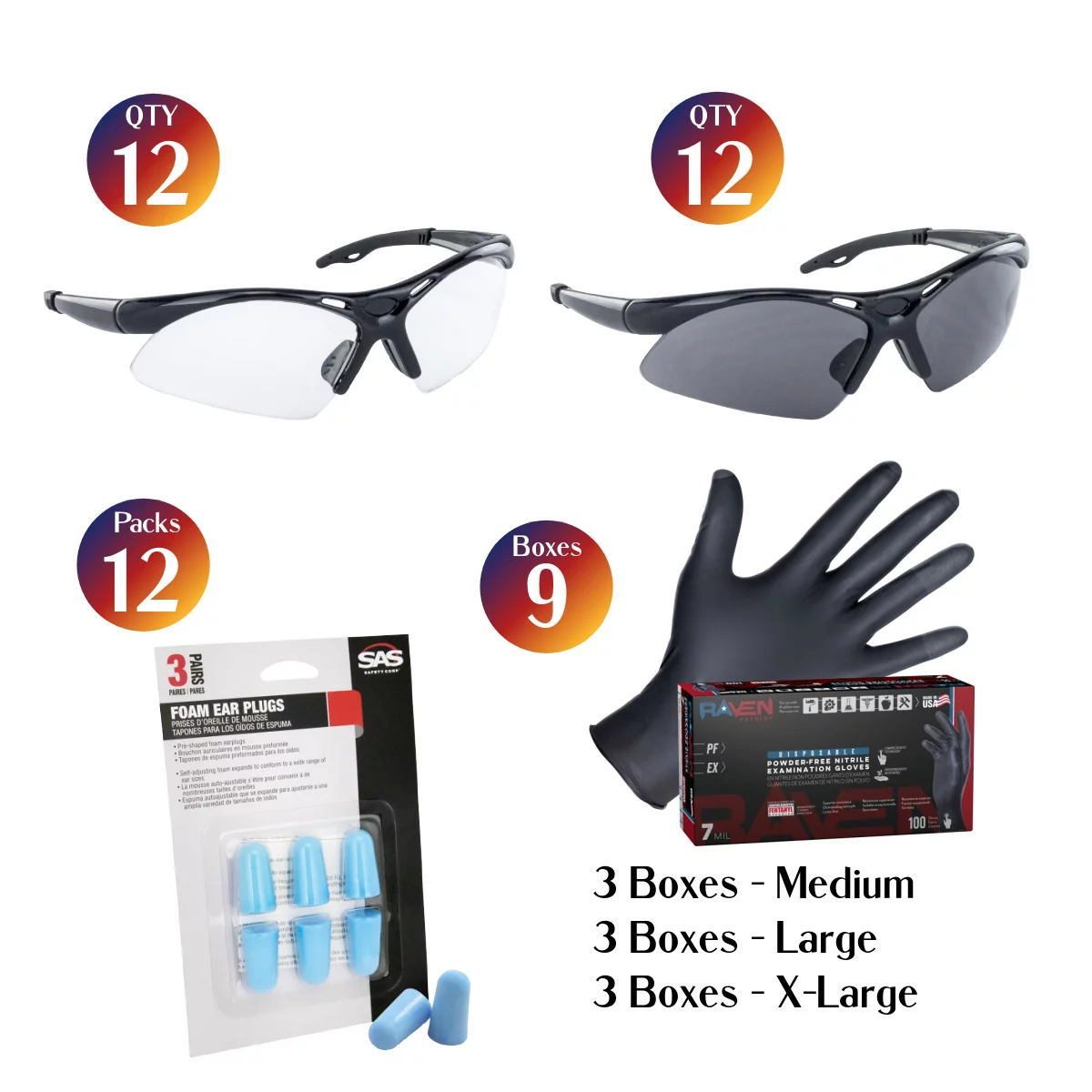
SAS Safety PPE Kit - Diamondback Glasses, Raven Gloves and E
Mfg: SAS Safety Corp
Part #: MACSAFETY001


The “Walk Away” Rule: When and How to Reset
The single most repeated piece of advice from experienced techs is also the simplest: when frustration hits, put the tool down and leave the bay. Not for the rest of the night necessarily — even a one-minute reset away from the job can be enough to break the tunnel vision that’s driving the mistake. A short break costs you a few minutes. Fighting through frustration and making a bad call can cost an hour of cleanup, a broken part, a trip to urgent care, or all three.
This matters even more for techs running their own shop. Without someone else setting the pace or calling the stopping point, it’s entirely on you to notice when you’ve crossed from focused to forcing. Several working mechanics specifically note that their mistake rate dropped once they started managing their own breaks instead of pushing through on a schedule set by someone else — because now they’re the one paying for the mistakes, out of their own pocket, in both parts and time.
Practical ways to apply this on a real job:
- Set a mental rule: if you’re fighting one fastener or connection for more than 15-20 minutes, stop and reassess instead of adding more force.
- If you’re torquing down the last connections before a vehicle has to roll out in the morning, treat that step with the same care you’d give it at 9am — rushing the last step on a late job is exactly where lines get left loose and fittings get left unseated.
- If you’re too tired to remember what you just did, you’re also too tired to catch what you’re about to miss. That’s the signal to log where you stopped and finish in the morning.
Protecting Your Tools and Workspace During Late-Night Sessions
Fatigue doesn’t just threaten you — it threatens your tools and your shop floor. A missed fitting or a loose line doesn’t just make a mess; it can put fluid on steel tools fast enough to start surface rust before you’ve even noticed the spill, and depending on what let go, it can put fluid at pressure somewhere it shouldn’t be. A few habits reduce the damage when (not if) something gets away from you during a long session:
- Keep oil-absorbent floor dry or granules stocked and within reach — not across the shop — so a spill gets contained in the first 30 seconds instead of spreading under toolboxes and lift columns.
- Wipe down and apply a light rust inhibitor to any tools that got splashed before you leave for the night, even if you’re too tired to do a full cleanup. A quick wipe now beats pitted chrome later.
- Store loose fittings, o-rings, and small hardware in labeled trays during teardown — fatigue is exactly when a dropped o-ring becomes a “which injector did that come from” problem the next morning.
- If you’re working under pressure (fuel systems, A/C, diesel injection lines), double-check every fitting is seated and torqued before you crack a valve or bleed a line — this is the single highest-consequence step to rush.
Safety Gear That Reduces the Cost of a Late-Night Mistake
Technicians who’ve been doing this for decades have at least one story about an injury that happened on a late job specifically because basic PPE got skipped “just for a minute.” Bleeding diesel injection lines, cracking fuel fittings, and working around anything under pressure are exactly the tasks where a tired, rushed shortcut turns into a serious eye or hand injury. Safety glasses rated for impact, cut-resistant gloves for sheet metal and blade work, and a proper flashlight or headlamp instead of holding one in your teeth all reduce how bad a late-night mistake can get — even if they can’t prevent the mistake itself.
The gear only works if it’s already on before the slip happens, not after you decide the job looks risky. Make putting on glasses part of picking up the tool, not a separate decision you have to remember to make at 2am.
Building Habits That Prevent Repeat Mistakes
The techs who report the biggest drop in late-night mistakes didn’t get there by willpower alone — they built structure around the problem. That includes setting a hard stop time before starting a job, keeping a notepad or phone note of exactly where you left off (which injector, which torque spec, which line), and treating a second consecutive mistake in one session as a mandatory stop, not a reason to push harder out of frustration. Maintenance on your own focus works the same way as maintenance on a machine: skip it long enough and it schedules itself for you, usually at the worst possible time.
Pre-Shutdown Checklist for Late Shop Sessions
- Note exactly where you stopped (component, torque spec, which side/cylinder) before you walk away.
- Confirm every fitting and line you touched tonight is seated and torqued — not “probably fine.”
- Wipe down and lightly oil any tools that got fluid on them.
- Contain and clean fresh spills now; don’t leave fluid sitting on the floor overnight.
- Put loose hardware in labeled trays, not loose on the bench.
- If you fought with one fastener or step for 20+ minutes, flag it for a fresh look in the morning instead of finishing it tired.
Find Shop Supplies That Keep Pace With Long Sessions


Frequently Asked Questions
How do I know if I’m too tired to keep working safely?
If you’ve fought the same step for 20+ minutes, you can’t tell your tools apart, or you’re rationalizing skipping a check you’d normally never skip, those are reliable signs your judgment has degraded even if your hands still feel steady. Stop and reassess rather than pushing through.
Does taking a break really save time compared to just finishing the job?
Yes, according to techs who track their own mistake rates — a short break costs minutes, while a frustration-driven mistake (a snapped bolt, a flooded floor, a mis-torqued fitting) typically costs an hour or more in cleanup and rework, plus parts.
What’s the fastest way to contain an oil or fuel spill in the shop at night?
Keep floor dry or absorbent granules stocked near your main work bay, not across the shop, and apply it immediately. The faster a spill is contained, the less it spreads under toolboxes, lifts, and stored parts — and the less rust risk it creates on nearby tools.
Why do fuel and injection line fittings seem to cause the worst late-night incidents?
Because they’re under pressure, a loose or improperly seated fitting releases fluid immediately and forcefully, rather than leaking slowly like a gravity-fed system. Rushing the final torque check on a pressurized line is one of the highest-consequence shortcuts a tired tech can take.
Should I always wear safety glasses even for a “quick” late-night task?
Yes — injuries from pressurized fluid or debris typically happen on tasks the tech assumed were quick or low-risk. Make eye protection part of picking up the tool rather than a judgment call you make each time.
How do I protect tools that got splashed with fluid during a late-night mistake?
Wipe them down and apply a light rust inhibitor before you leave, even if you’re too tired for a full cleanup. A short wipe-down that night prevents the pitting and surface rust that a fluid-soaked tool left overnight will develop.
Protect Yourself During Long Shop Sessions
The safety equipment mentioned throughout this article is most effective when it’s already within reach and part of your routine. Shop Safety and Apparel carries what you need to reduce the cost of a late-night mistake.
- Impact-rated safety glasses for pressurized fluid spray and sharp debris
- Cut-resistant gloves for sheet metal, blade work, and handling difficult fasteners
- Headlamps and work lights that keep your hands free when visibility matters

The Toolsource Technical Team blends decades of real-world automotive service experience with up-to-date technical research. Our writers collaborate with professional mechanics, shop owners, and diagnostic specialists to deliver practical, workshop-ready guidance you can trust.


Follow us on social media