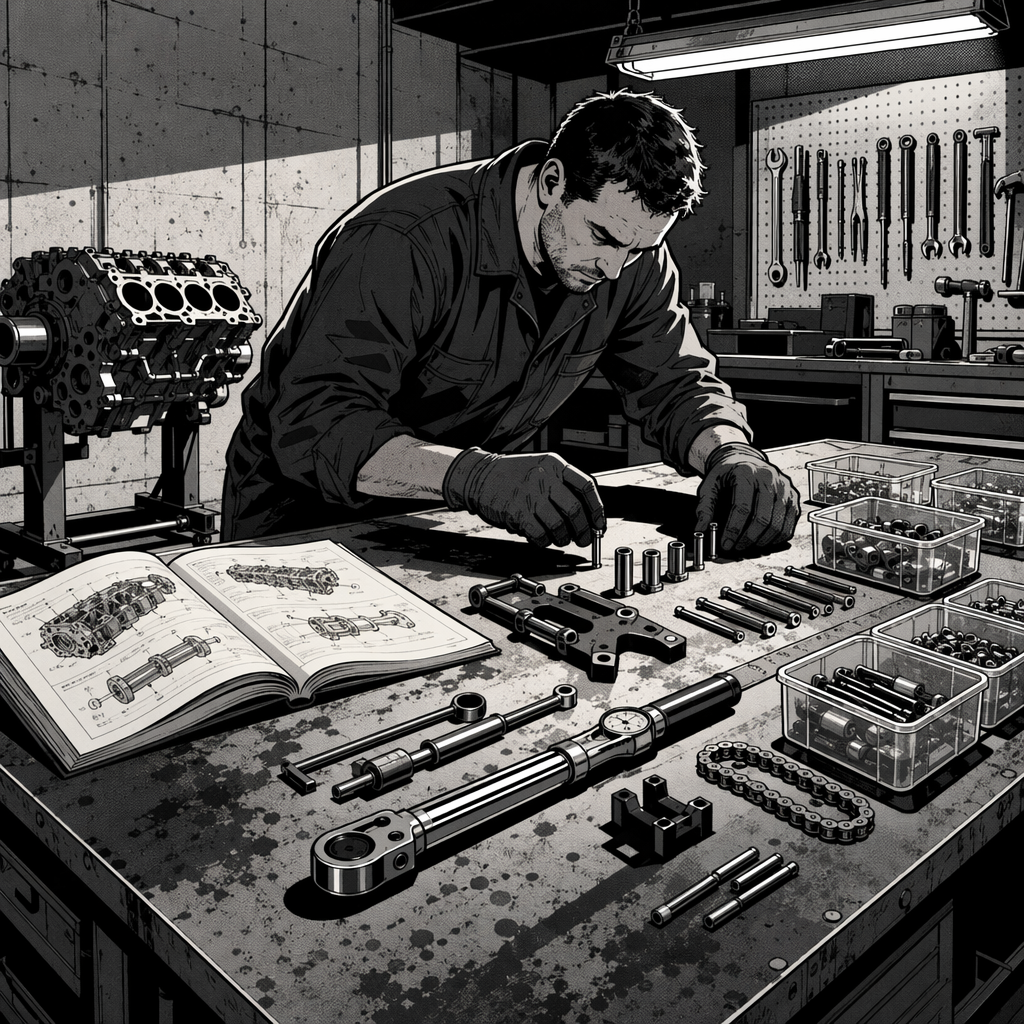
Pulling an engine from a Porsche 911 Turbo or tearing into an R34 GTR isn’t a job you improvise. Between six-figure vehicle values, hard-to-source specialty tools, and owners who expect perfection, these jobs punish shortcuts. The guidance below comes from technicians who’ve built independent businesses around exactly this kind of work — what to check before the car goes on the lift, which tools are non-negotiable, and how to structure the job so a $12,000 estimate doesn’t turn into a liability.
Confirm Lift Placement and Anchoring Before the Car Goes Up
Lift pad placement on lowered, resto-modded, or mid-engine exotics is not the same as a standard sedan. Aftermarket splitters, side skirts, and rotisserie-rebuilt chassis change where it’s safe to make contact, and guessing wrong risks cracking a fiberglass or carbon panel — or worse, an unstable lift. Before you put any high-value car in the air:
- Pull the manufacturer’s factory lift-point diagram, not a generic guide. Aftermarket body kits often cover or shift factory pinch welds.
- Check ride height with a tape measure against your lift’s arm clearance — lowered cars frequently need low-profile adapters or drive-on ramps instead of standard pads.
- Inspect for rotisserie or resto-mod modifications that relocate structural mounting points; ask the owner or previous shop for documentation if the car has a non-stock chassis history.
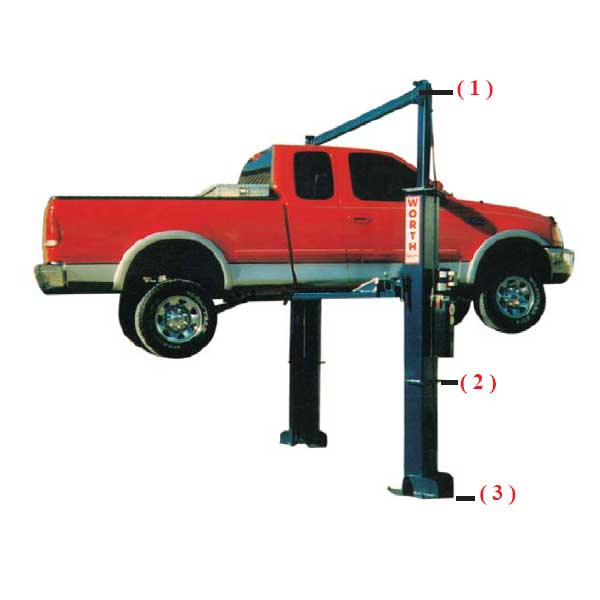
- Verify your lift’s anchoring. A two-post or four-post lift rated for the vehicle’s weight is only safe if it’s bolted into concrete rated for the load — thin, cracked, or non-reinforced slabs are a common failure point in home and small-shop garages. Confirm minimum slab thickness and rebar/mesh requirements with the lift manufacturer before drilling.
Get this step wrong and everything downstream — diagnostics, teardown, reassembly — inherits the risk. It’s the cheapest insurance in the entire job.
Stock the Specialty Tools Before You Quote the Job
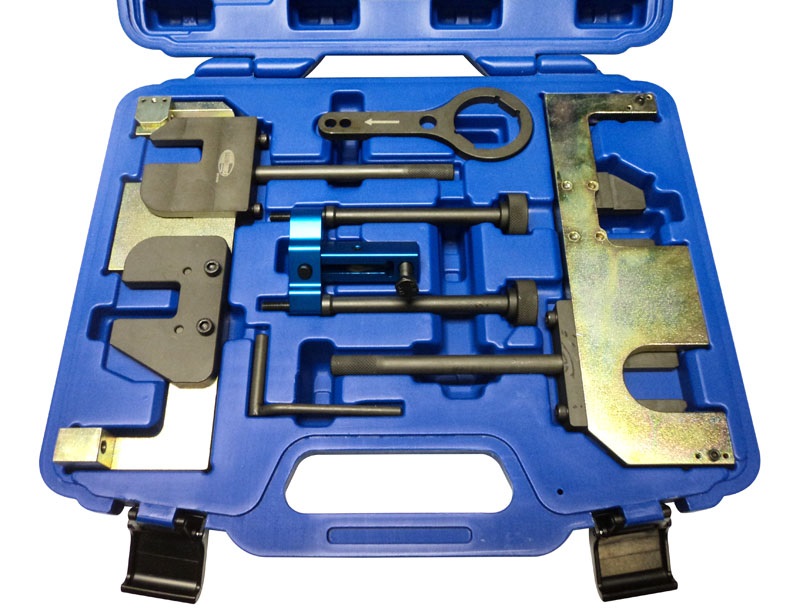
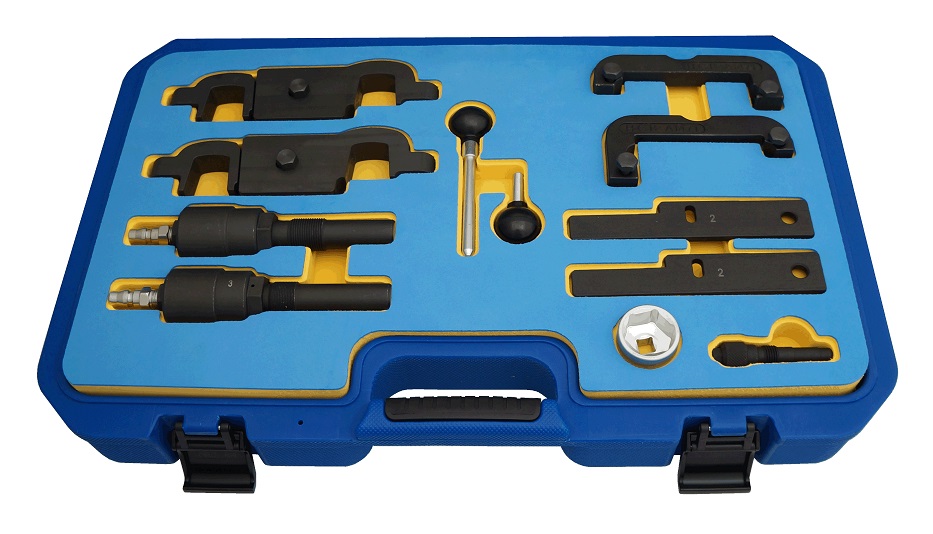
Exotic and high-performance JDM engines are built around proprietary timing, alignment, and torque procedures that generic tool sets don’t cover. Porsche flat-six and RB-series inline-six engines in particular require dedicated timing chain/cam alignment tools, crank locking pins, and specific torque-to-yield sequences — attempting either without the correct kit is how techs bend valves or destroy a timing chain guide mid-job.
Before you commit to a timeline or price:
- Identify the exact tool kit required for that engine family (not a “close enough” universal kit) and confirm you own it or can rent/borrow it in time.
- Factor tool cost into your quote. A dedicated timing tool set for a 911 Turbo flat-six or an RB26 can run into four figures — that cost has to be recovered across jobs, not eaten on one.
- Cross-reference OEM service bulletins for the specific model year; running changes between years can quietly change tool or fastener specs.
- Stage every tool and torque spec on the bench before the first bolt comes loose. Mid-teardown tool shopping trips cost more in labor hours than the tool itself.
===PRODUCT_SEARCH_1===

Engine Removal Is the Easy Part — Reassembly Is Where Jobs Go Sideways
Techs who’ve done several exotic pulls consistently make the same point: getting the engine out is mechanically straightforward compared to what follows. Reassembly is where sequencing errors, torque mistakes, and missed calibration steps turn into comebacks.
- Photograph and label every harness connector, vacuum line, and bracket during teardown. On engines with dense bay packaging, memory alone isn’t reliable days or weeks later.
- Bag and tag fasteners by subassembly — exotic engines frequently mix metric fastener grades and lengths that look interchangeable but aren’t.
- Follow OEM torque sequence and specs exactly on head, main, and rod fasteners. Many performance engines use torque-to-yield or torque-plus-angle procedures that require single-use fasteners — reusing them is a warranty and safety risk.
- Budget real time for post-install calibration: cam/crank relearns, ECU adaptation resets, and a supervised warm-up/leak-check cycle before the car leaves the lift.
Treat the reinstall like its own job with its own checklist, not just “reverse of removal.”
Resto-Mod and Rotisserie Builds Need a Slower, More Deliberate Pace
Cars that have already been through a full rotisserie restoration or resto-mod build carry a different risk profile. Every panel, wiring run, and fastener may have been touched by a previous builder, and owners of these cars tend to be highly detail-oriented about the finished result. Treat these differently from a routine service:
- Do a full walk-around and under-car inspection with the owner (or detailed photos) before touching anything, so pre-existing cosmetic or mechanical issues are documented up front.
- Protect finished surfaces — fender covers, seat covers, and floor mats aren’t optional on a car with a show-quality restoration.
- Expect the job to take longer than a stock-configuration equivalent, and price accordingly. Rushing a car that’s been “obsessively” built invites callbacks and reputation damage that cost far more than the extra labor hours.
- Confirm any non-stock parts (stroker kits, oversized injectors, aftermarket fuel systems) against their actual documentation rather than assuming factory specs apply.
Basic Maintenance Still Pays the Bills — Don’t Neglect It
Headline jobs like full engine rebuilds are what get attention, but routine work — oil changes, A/C diagnosis, power steering leak tracing — is what keeps a shop’s schedule full between the big-ticket estimates. On older exotics and JDM imports, these routine jobs often have their own quirks:
- A/C systems on 20+ year old imports frequently have degraded o-rings and obsolete refrigerant fittings; have adapter fittings and the correct refrigerant type on hand before diagnosing “inop A/C” complaints.
- Power steering leaks on older Japanese and German performance cars are commonly traced to pump seals or cooler line fittings that have hardened with age — pressure-test rather than guess.
- Keep a maintenance interval reference specific to each import platform; service intervals and fluid specs for gray-market or JDM-only models often aren’t in mainstream U.S. databases.
Structuring a Shop That Can Take On This Work Safely
Independent techs who’ve moved from dealership work into running their own space consistently flag the same setup requirements: adequate concrete for lift anchoring, proper ventilation, and enough bay space to keep a long-duration teardown car out of the way of daily quick-service work. If you’re scaling from side jobs into a real shop:
- Separate your “in for a week” teardown bay from your quick-turnaround service bay so a stalled parts order doesn’t block daily cash flow work.
- Track job profitability by hour, not just by invoice total — specialty jobs with expensive tooling can look profitable on paper while eating far more labor time than a routine service.
- Set clear intake documentation (photos, pre-existing damage notes, signed estimates) for every high-value vehicle before it’s on your lift, not after.
Quick Pre-Job Checklist
- Lift points and anchoring confirmed against manufacturer specs
- Full specialty tool kit for that engine family on hand, not assumed
- Teardown documentation plan (photos, labeled bags) set before first bolt is removed
- OEM torque specs and reassembly sequence printed or pulled up, not from memory
- Owner walk-around and damage documentation completed for resto-mod/high-value vehicles
- Post-reassembly calibration and leak-check time built into the schedule
===PRODUCT_SEARCH_2===
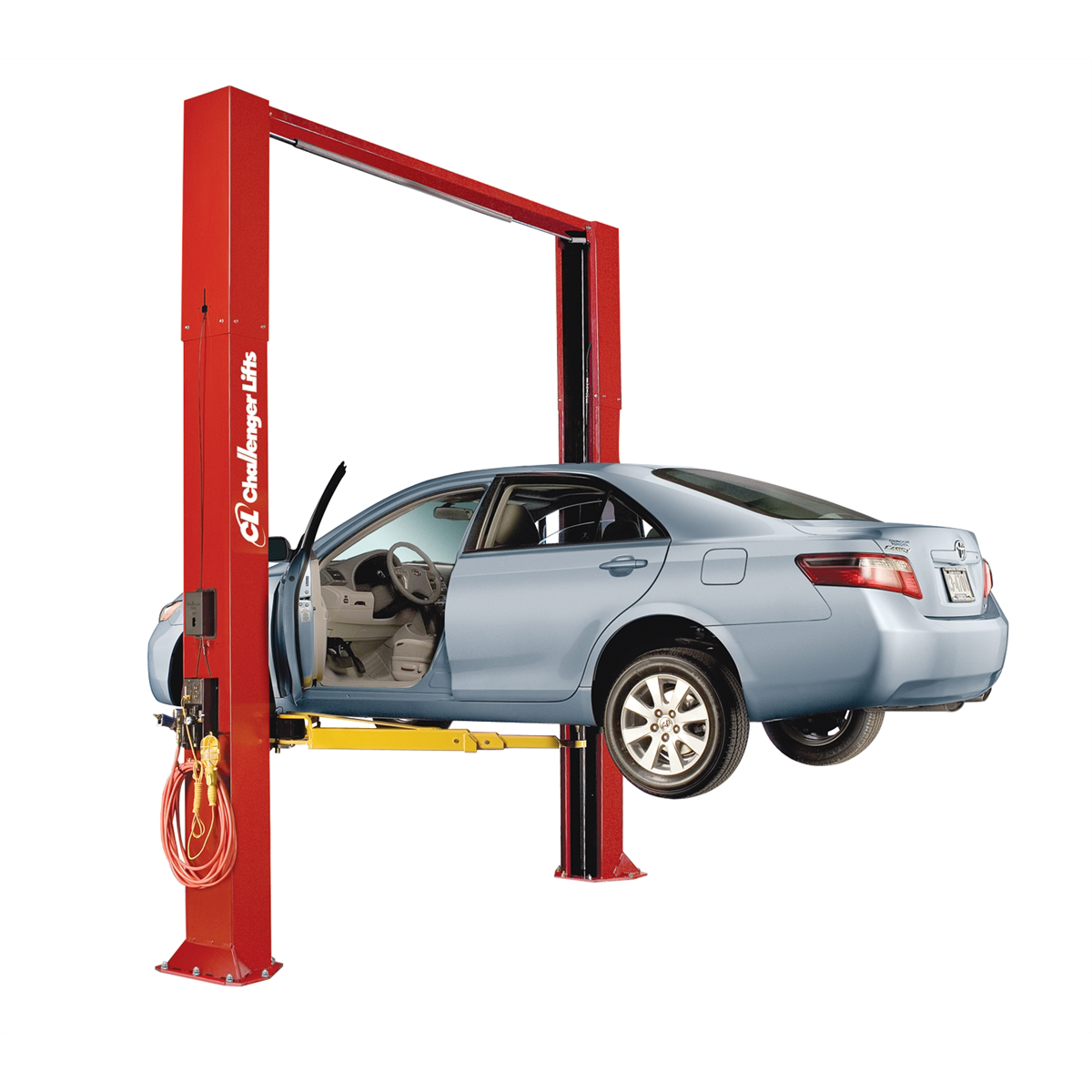
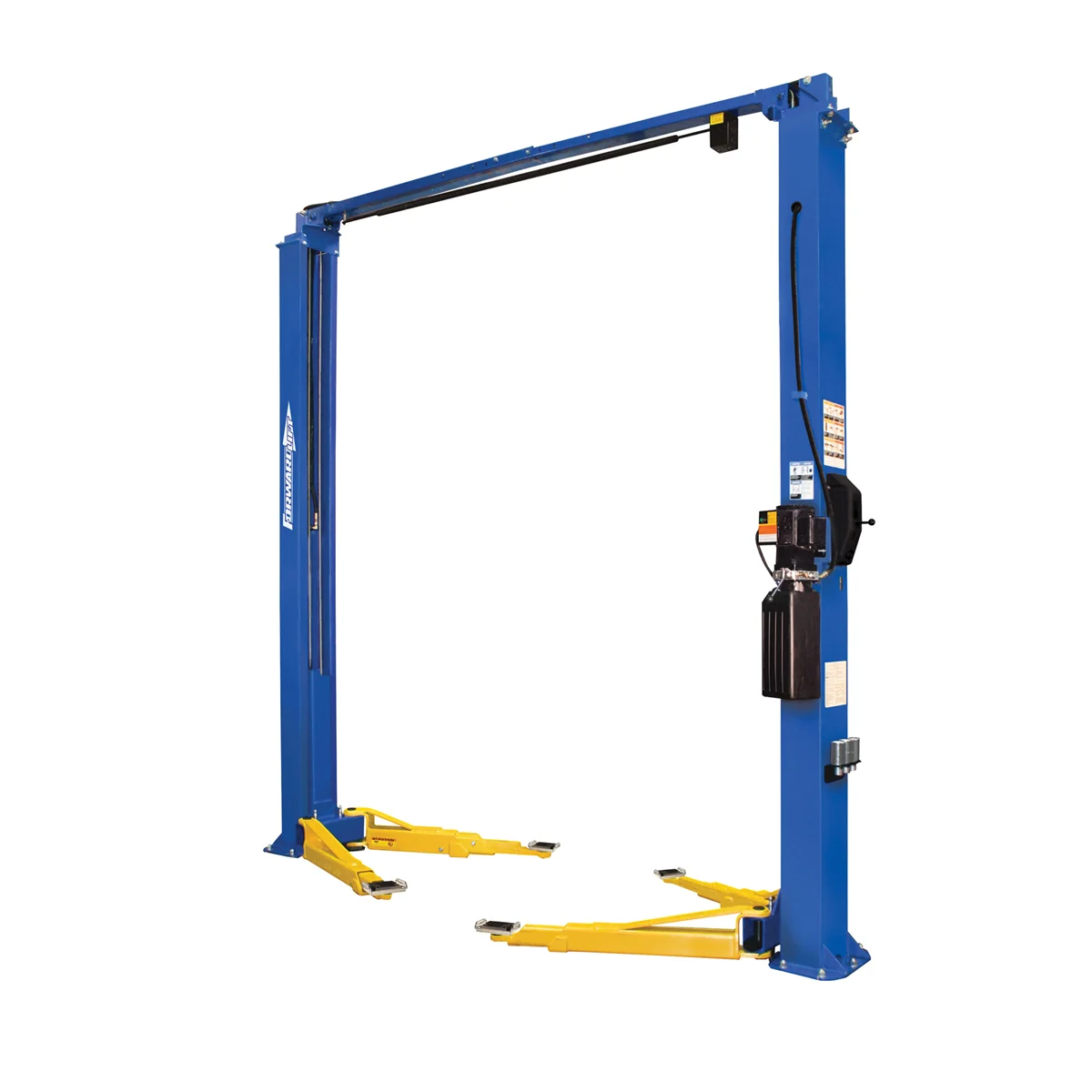
10,000 lb. Capacity Versymmetric Two Post Lift
Mfg: Challenger Lifts
Part #: CL10V3
FAQs
Do I need special lift pads for lowered or resto-mod exotics?
Often yes. Standard rubber pads can crack fiberglass or aftermarket splitters, and lowered ride height may not clear standard arm swing. Low-profile adapters or drive-on ramps are common workarounds — confirm clearance before lifting.
How much should I budget for specialty timing tools on engines like the RB26 or a Porsche flat-six?
Dedicated timing/cam alignment kits for these engine families commonly run into four figures. Price that cost into your labor rate across multiple jobs rather than absorbing it on one invoice.
Is removing the engine really the hardest part of a rebuild?
No — most techs who’ve done several of these jobs report removal is mechanically simpler than reassembly. Reassembly involves precise torque sequences, harness routing, and post-install calibration where mistakes are easiest to make.
What garage floor requirements matter most for a home-shop lift?
Slab thickness and reinforcement (rebar or mesh) rated for your lift’s load capacity. Check the lift manufacturer’s anchoring spec before drilling into any existing concrete.
Should I charge more for resto-mod or rotisserie-built cars?
Yes. These jobs typically require slower, more careful work and more documentation to protect both the car’s condition and your liability — price and schedule accordingly rather than quoting them like a stock-configuration job.
What routine services should independent shops still prioritize on older imports?
Oil changes, A/C diagnosis, and power steering leak checks remain steady revenue between larger jobs — but expect platform-specific quirks like obsolete A/C fittings or hardened seals on older Japanese and European imports.
Recommended Automotive Specialty Tools
The jobs covered above — timing chain removal, cam alignment, precise torque sequencing — demand specialty tools that generic tool sets do not include. Our Automotive Specialty Tools category stocks the equipment techs rely on for exotic and JDM engine work.
- Timing chain and cam alignment tool kits for RB-series, flat-six, and other high-performance engines.
- Low-profile lift pads and adapters for lowered, modified, and restoration-quality vehicles.
- Crank locking pins and specialized fastening tools for exotic engine assembly.

The Toolsource Technical Team blends decades of real-world automotive service experience with up-to-date technical research. Our writers collaborate with professional mechanics, shop owners, and diagnostic specialists to deliver practical, workshop-ready guidance you can trust.


Follow us on social media