Rust calls are some of the toughest judgment calls a technician makes, and photos alone rarely settle them. A frame can look catastrophic and still ring solid under a hammer, or look moderate and hide a soft spot that swallows a screwdriver. This guide breaks down how experienced rust-belt techs actually assess frame and subframe corrosion, what separates “drive it another season” from “quote the whole rear end,” and how to treat surface rust before it becomes a structural problem.
Start With a Physical Inspection, Not a Visual One
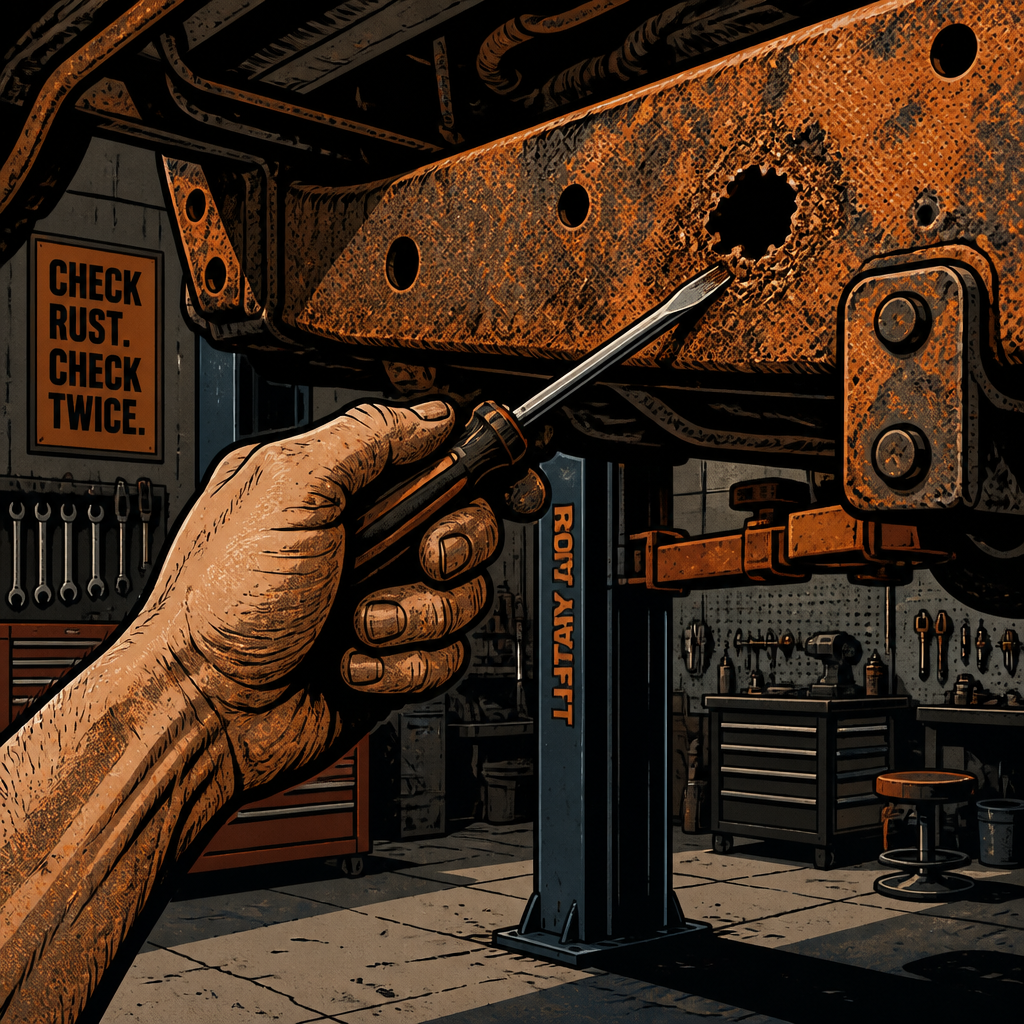
Rust severity can’t be judged by color or surface texture alone — you have to put a tool on it. Two field tests come up again and again among rust-belt techs:
- The screwdriver/awl poke test. Press a flathead screwdriver or awl firmly against suspect metal — frame rails, subframe mounts, control arm brackets. If it punches through with light pressure, that section has lost structural integrity and needs replacement. If it just scratches the surface, you’re likely dealing with surface-to-moderate corrosion.
- The hammer ring test. Tap the metal lightly with a hammer. Solid metal rings; compromised, flaky, or delaminating metal gives a dull thud or crumbles. This is especially useful on mounting points and frame rails where you can’t always get a screwdriver in at the right angle.
When you’re looking at existing holes or perforations in a frame or subframe, look at the edges. Crisp, clean edges around a hole generally mean the surrounding metal is still sound — you’ve likely got a few years before it spreads meaningfully, provided you inspect more often going forward. Jagged, misshapen, or blurry edges mean the corrosion is actively progressing and there’s probably more damage than what’s visible; that’s a much shorter runway.
Separate Surface Rust From Structural Failure
Not every rust job is a replace job. A vehicle with heavy surface rust and pitting, but no holes, no crumbling at mounting points, and a solid ring under the hammer, is often still safe to drive and can be a candidate for treatment rather than replacement. What actually forces a “replace it” verdict is different from what just looks bad:
- Mounting points that are brittle, flaky, or visibly incapable of supporting load — this is a hard stop, not a maybe.
- Seized hardware everywhere. On a heavily rusted vehicle, every bolt and bushing is likely frozen in place. A shop may recommend full-assembly replacement not because the metal is failing, but because there’s no realistic way to service individual components without breaking fasteners loose that will snap, strip, or turn what should be a bushing swap into a full teardown.
- Missing or disintegrated bushings. If rubber bushings have rusted/rotted away entirely, that’s a functional failure independent of frame integrity.
It’s also worth noting that shop recommendations vary by region for a reason, not just caution. Shops in heavy road-salt regions see this severity constantly and calibrate differently than shops in drier climates — get a second inspection from another rust-belt-experienced shop if a quote for full replacement seems aggressive relative to what you’re actually seeing on the lift.

Treating Surface Rust to Buy Years, Not Months
If your inspection confirms surface-level corrosion with no punch-through and no brittle mounts, a treatment protocol can meaningfully slow progression. The general sequence technicians use:
- Mix a vinegar-and-dish-soap solution in a spray bottle, coat the affected area, and let it sit for a couple of hours with repeat spraying.
- Wire-brush every reachable surface (use multiple brush sizes for tight areas) to knock loose scale and flaking rust.
- Neutralize with a baking-soda-and-water spray to stop the acid reaction from the vinegar step.
- Rinse thoroughly with a hose, then dry — compressed air speeds this up, or towel-dry and let it air out.
- Apply a rust-converting primer, wait roughly 10 minutes, and apply a second coat.
- After the primer cures (about 30 minutes), apply 2–3 coats of paint, with roughly 10 minutes between coats. Any enamel or rattle-can paint works for this purpose.
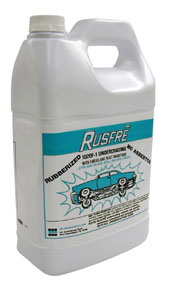
- Finish with a lanolin-based undercoating product (Fluid Film or equivalent) sprayed over everything. Avoid rubberized undercoating on already-corroded metal — it can trap moisture against the surface rather than shedding it.
This isn’t a one-time fix. Recommend annual reapplication of the lanolin-based coating every fall before the salt season starts. It won’t reverse existing corrosion, but it substantially slows new corrosion and can add years to a frame’s service life on a vehicle that’s otherwise sound.
When Full Subframe and Suspension Replacement Is the Right Call
Some platforms are notorious enough for subframe corrosion that replacement is close to a known maintenance milestone rather than an edge case — the Jeep Compass/Patriot/Caliber platform is a frequently cited example, where rear subframe rust-out is common enough that parts pricing reflects it. On these platforms, OEM dealer pricing for the subframe itself can actually undercut aftermarket, and often includes a fresh bolt kit — worth calling the dealer parts counter before quoting aftermarket by default. Budget separately for control arms, cam bolts, and stabilizer links, since a subframe swap on a rusted vehicle almost always drags the surrounding hardware into the job. None of those included prices cover labor, and labor is where seized-bolt jobs blow past estimates.
The decision framework that holds up across most of these jobs:
- Screwdriver/hammer test shows perforation or crumbling at load-bearing points → replace, not repair.
- No perforation, but every fastener in the assembly is seized → replacing the assembly is often more cost-effective and safer than fighting each bolt individually.
- Surface rust only, ringing solid, no missing bushings → treat and monitor, replacement can wait.
Working Seized Fasteners Without Wrecking the Job
Once you commit to disassembly on a rusted vehicle, assume every bolt is a fight. A few things that consistently reduce breakage and comebacks:
- Long-pattern 6-point sockets and wrenches minimize rounding on corroded bolt heads compared to standard 12-point tools — worth the investment if you’re in a heavy rust region.
- Penetrating oil and heat, applied well before you need the part off, not as a last resort mid-job.
- Plan for broken bolts and NLA (no-longer-available) parts before you start, especially on older or lower-volume platforms. Have a junkyard/salvage source lined up in advance rather than discovering a part is unobtainable mid-teardown.
- Set customer expectations and shop policy up front. Many shops that regularly handle rust jobs quote with an explicit rust clause: broken bolts, stripped hardware, and unforeseen additional parts are billed separately and are not the shop’s liability. Communicate this before the job starts, not after a bolt snaps.
Quick Rust Assessment Checklist
- Poke suspect metal with a screwdriver/awl — does it penetrate?
- Hammer-test mounting points and rails — solid ring or dull thud?
- Inspect any existing holes: crisp edges (stable) vs. jagged/blurry edges (active, spreading)
- Check bushing condition — intact rubber or disintegrated/missing?
- Try to move/adjust hardware — everything seized, or does it still turn?
- Get a second opinion from another rust-experienced shop before committing to full replacement


FAQs
Is surface rust on a frame dangerous to drive on?
Generally no, provided the screwdriver and hammer tests don’t reveal perforation or crumbling at load-bearing points. Surface rust and pitting are cosmetic and slow-progressing concerns until they reach structural mounting points or frame rails.
How often should a heavily rusted vehicle be reinspected?
Once corrosion is confirmed active — jagged hole edges, active flaking, or advancing pitting — inspect every few months rather than annually, and be ready to act sooner rather than later if progression is visible between inspections.
Why would a shop refuse to do an alignment or suspension adjustment on a rusted vehicle?
If every bolt and bushing is seized, attempting to loosen and adjust components risks snapping hardware or damaging adjacent rusted parts, turning a routine service into an unplanned teardown. Many shops decline rather than open that liability.
Can rust converter and paint actually stop corrosion, or just hide it?
Done correctly — full mechanical removal of loose rust, neutralization, converter primer, paint, and a lanolin-based topcoat reapplied annually — this meaningfully slows new corrosion. It does not reverse existing metal loss or restore structural strength to already-compromised sections.
Why is aftermarket sometimes more expensive than OEM for subframes?
On platforms with well-documented rust issues, manufacturers may have adjusted OEM parts pricing because of volume and known failure rates. Always check dealer parts pricing on high-failure-rate components before defaulting to aftermarket quotes.
What’s the single most reliable rust severity test in the field?
The screwdriver/awl poke test combined with a hammer ring test on mounting points. Visual inspection alone consistently underestimates or overestimates severity compared to these two physical checks.
Tools for Frame and Subframe Inspection
Proper rust assessment requires the right inspection and repair tools on hand. Our Automotive Specialty Tools selection covers everything needed, from field testing implements to rust treatment products.
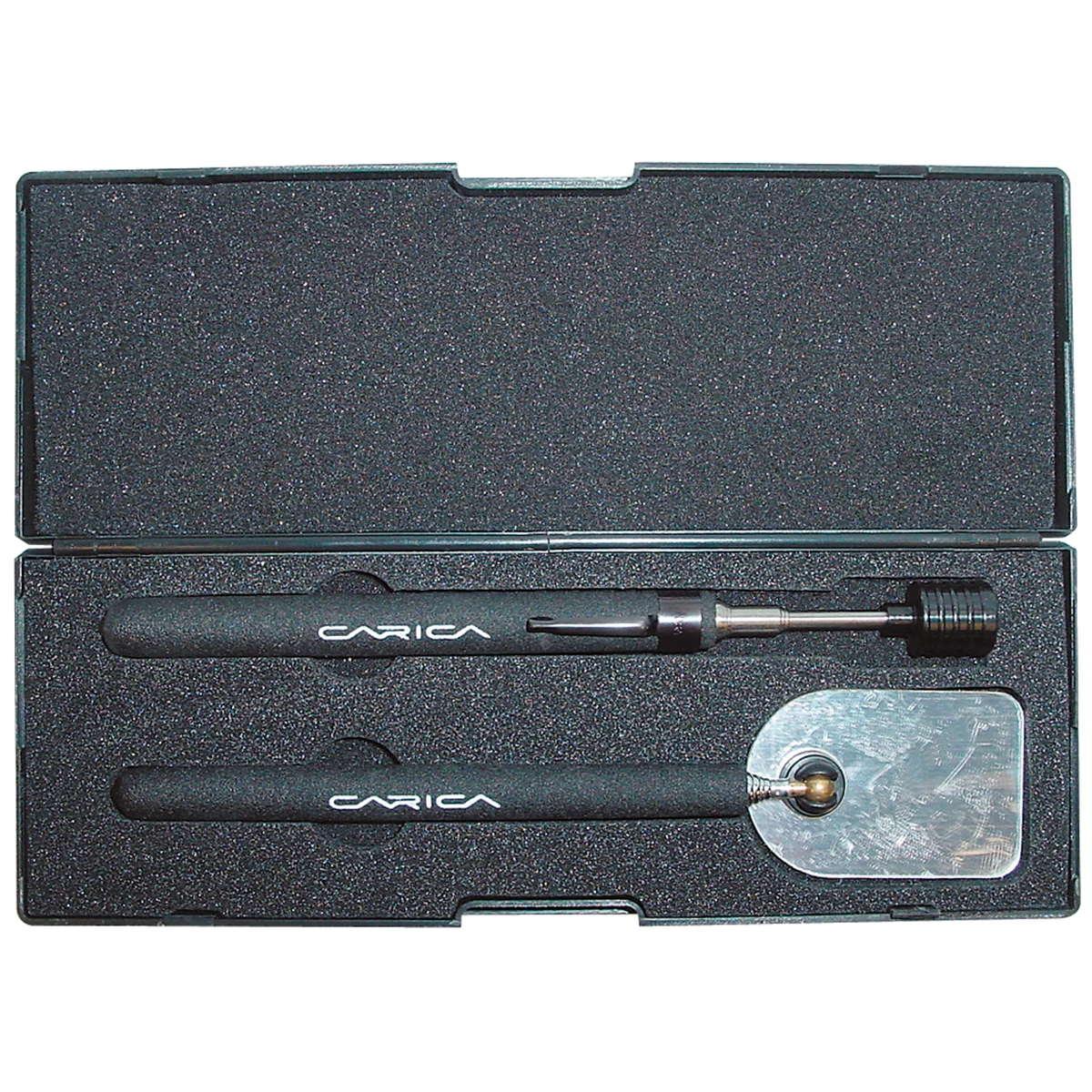
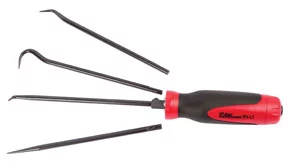
- Screwdrivers, awls, and punches for penetration testing and poke tests
- Ball-peen hammers and testing mallets for structural assessment
- Wire brushes, penetrating oils, and rust treatment products for repair and prevention

The Toolsource Technical Team blends decades of real-world automotive service experience with up-to-date technical research. Our writers collaborate with professional mechanics, shop owners, and diagnostic specialists to deliver practical, workshop-ready guidance you can trust.


Follow us on social media