Classic Japanese wagons—Camry All-Trac, Corolla, Celica, and the occasional Tercel AWD—have gone from forgotten family cars to project builds, and that means more of them are rolling into shops for engine swaps, suspension work, and drivetrain conversions. These platforms are 25-30+ years old, were never designed with modern swap kits in mind, and often arrive with a mix of factory parts, junkyard substitutions, and owner-installed fixes. Technicians taking on this work need the right bay setup, the right expectations about parts availability, and a clear safety process, especially around heat and drivetrain components. Here’s what matters when one of these wagons lands on your lift.
Why These Wagons Are Back in the Shop
Interest in 1990s-2000s Japanese wagons has grown because they combine practical cargo space with chassis platforms that support real performance work—Camry and Celica share enough underpinnings that swapping a 3S-GTE turbo four and manual transmission into a Camry wagon is a known (if involved) project. Enthusiasts are also importing JDM-market wagons like the Caldina GTT, which came factory-equipped with the all-wheel-drive and turbo hardware people are otherwise trying to fabricate. Whether the car in your bay is a factory-stock survivor getting maintenance or a half-finished swap project, expect non-standard wiring, mismatched engine mounts, and aftermarket suspension parts that weren’t necessarily designed for the chassis they’re bolted to.
Setting Up the Bay for Engine and Drivetrain Swaps
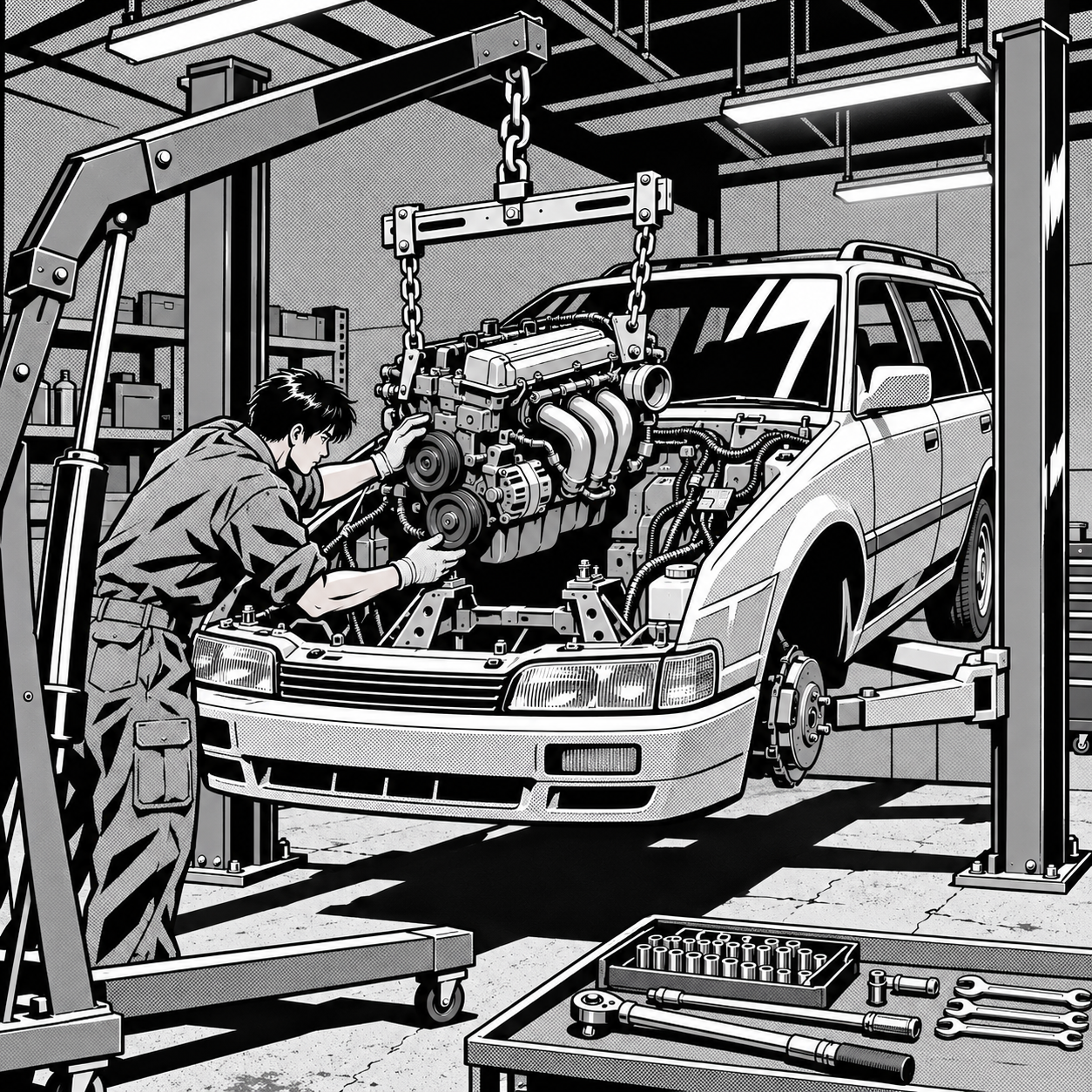
Swap jobs on these wagons involve pulling the engine and transmission as a unit, reworking mounts, and often relocating wiring harnesses and ECU placement. A two-post lift gets the car high enough for driveline and exhaust access, but you’ll also want a engine hoist or cherry picker with enough reach to clear the nose of the car, plus adjustable load leveler arms since swapped engines rarely balance the way the factory unit did. Stock up on extra engine mount hardware, since reused factory mounts often don’t line up with the swapped drivetrain’s mounting points. Budget extra bay time versus a routine job—these are not bolt-in swaps, and fabrication (mount brackets, shifter linkage, driveshaft length) is normal. Keep a torque spec reference handy for both the donor and recipient platforms since factory service data for Celica, Camry, and JDM-only models like the Caldina often differs in ways that aren’t obvious.
[PRODUCT_SEARCH: engine hoist and load leveler for engine swaps]

3/8" Alloy Chain for Overhead Lifts and Hoists, 6,000 Lb
Mfg: OTC Tools and Equipment
Part #: 302249


Stinger Engine Load Sling - tilter - leveler
Mfg: OTC Tools and Equipment
Part #: 4305
Suspension and Chassis Work on Wagon Platforms
A lot of wagon builds borrow suspension components from a sportier sibling—Celica struts and sway bars onto a Camry chassis, for instance—because the parts bolt to similar mounting points but change ride height, spring rate, and handling. When a customer requests this kind of cross-platform suspension swap, check bushing compatibility and strut mount bearing diameter before assuming a direct fit; corrosion-era wagons frequently need new mounting hardware regardless. Use a strut spring compressor rated for the spring free length you’re working with, not just the diameter, since mismatched springs from a donor car can be longer or stiffer than stock. After any suspension swap, a full alignment is mandatory—altered ride height and spring rates change camber and toe outside factory tolerance even if every bolt is torqued correctly.
Exhaust System Service and Heat Safety
Exhaust work on any vehicle that’s been recently driven carries real burn risk, and it’s worth being explicit with junior techs and DIY customers alike: let the exhaust system cool fully before working under the car, particularly around the catalytic converter and manifold, which hold heat far longer than people expect. On a wagon that’s had aftermarket exhaust fabricated for a swap, also inspect hanger brackets and heat shields—custom exhaust runs often skip heat shielding that the factory routing relied on, which can scorch wiring harnesses or interior carpet over time. Use penetrating oil generously on exhaust fasteners before attempting removal on a car this age; stripped or snapped bolts on manifold studs are the most common time-sink on an otherwise simple exhaust job.
AWD, Manual Conversions, and Clutch Cable Diagnostics
Some of these wagons started life with cable-actuated clutches (common on older Tercel and Corolla manual transmissions), and a worn or fraying clutch cable is a frequent, low-cost failure point—inspect the cable at the pedal bracket and transmission end for fraying, and keep a spare on hand for any customer planning long-distance driving, since it’s a roadside-repairable part if they’re shown how. On AWD and All-Trac models, verify the viscous coupling or transfer case isn’t leaking and that CV joints on the added rear driveline are in good shape, since these parts see far less routine attention than the front axle. If a car has been converted from AWD/RWD to FWD (or vice versa) by a previous owner or shop, document what’s actually been changed before doing further work—mismatched driveshaft, differential, or wiring from an incomplete conversion is a common source of mystery vibration and electrical faults.
Sourcing Parts and Handling Imports
Parts availability is the real bottleneck on these jobs. Factory Toyota and Honda parts for Camry, Corolla, and Accord wagons are generally still available through dealer networks, but trim-specific and JDM-only parts (Caldina, Avensis, Celica All-Trac-specific components) often require specialty importers or wrecking yards. Build relationships with a couple of JDM parts suppliers before you need them urgently, and confirm emissions and import compliance documentation for any grey-market vehicle before doing major drivetrain work—that paperwork gap is often the real reason a swap project stalled before it reached your shop.
[PRODUCT_SEARCH: automotive shop tools and equipment]
Quick Pre-Job Checklist
- Confirm engine/transmission mount compatibility before starting a swap, not after the hoist is loaded
- Verify lift and hoist capacity against actual swapped-engine weight, not just stock curb weight
- Let exhaust components cool fully before any work underneath the car
- Inspect clutch cables, CV joints, and transfer case seals on AWD/manual drivetrains during routine service
- Schedule a full alignment after any suspension component swap
- Document any prior drivetrain conversions (AWD-to-FWD, etc.) before diagnosing new issues

Frequently Asked Questions
Can a 3S-GTE engine be swapped into a Camry wagon?
Yes, it’s a known swap among enthusiasts since the Camry and Celica share chassis lineage, but it requires custom mounts, wiring, and often a transmission/driveshaft change. Expect significant fabrication time.
How do I know if a clutch cable is about to fail?
Look for fraying at the pedal bracket and transmission ends, inconsistent pedal engagement point, or a pedal that feels looser than usual. Replace proactively rather than waiting for a roadside failure.
What size lift do I need for drivetrain swap work?
A standard two-post lift works for most sedan/wagon platforms, but confirm weight capacity against the swapped engine and transmission combined weight, and make sure you have a hoist with enough reach to clear the swapped engine’s footprint.
Is it safe to work under the exhaust right after a test drive?
No. Catalytic converters and manifolds retain high heat well after the engine is shut off. Allow full cool-down before removing exhaust components or working underneath the car.
Are JDM import wagons like the Caldina GTT legal to bring into the US?
It depends on the vehicle’s age and import documentation; many JDM models become eligible once they pass the 25-year import threshold, but compliance paperwork should be verified before performing drivetrain work on a customer’s import.
Can a FWD wagon be converted to AWD or RWD?
It’s mechanically possible but involves swapping differential, driveshaft, and often wiring harness components, and incomplete prior conversions are a common source of unexplained vibration or electrical issues in used imports.
Shop Lifting Equipment
Working on classic wagon swaps and suspension conversions demands proper lifting equipment—two-post lifts, engine hoists with reach, and load levelers to safely handle swapped powerplants. Explore our Lifting Equipment selection to ensure your shop is prepared.
- Two-post lifts and four-post lifts for full-bay access and reach
- Engine hoists, cherry pickers, and load levelers for engine installation
- Support stands and jack stands for safe work underneath the vehicle

The Toolsource Technical Team blends decades of real-world automotive service experience with up-to-date technical research. Our writers collaborate with professional mechanics, shop owners, and diagnostic specialists to deliver practical, workshop-ready guidance you can trust.


Follow us on social media