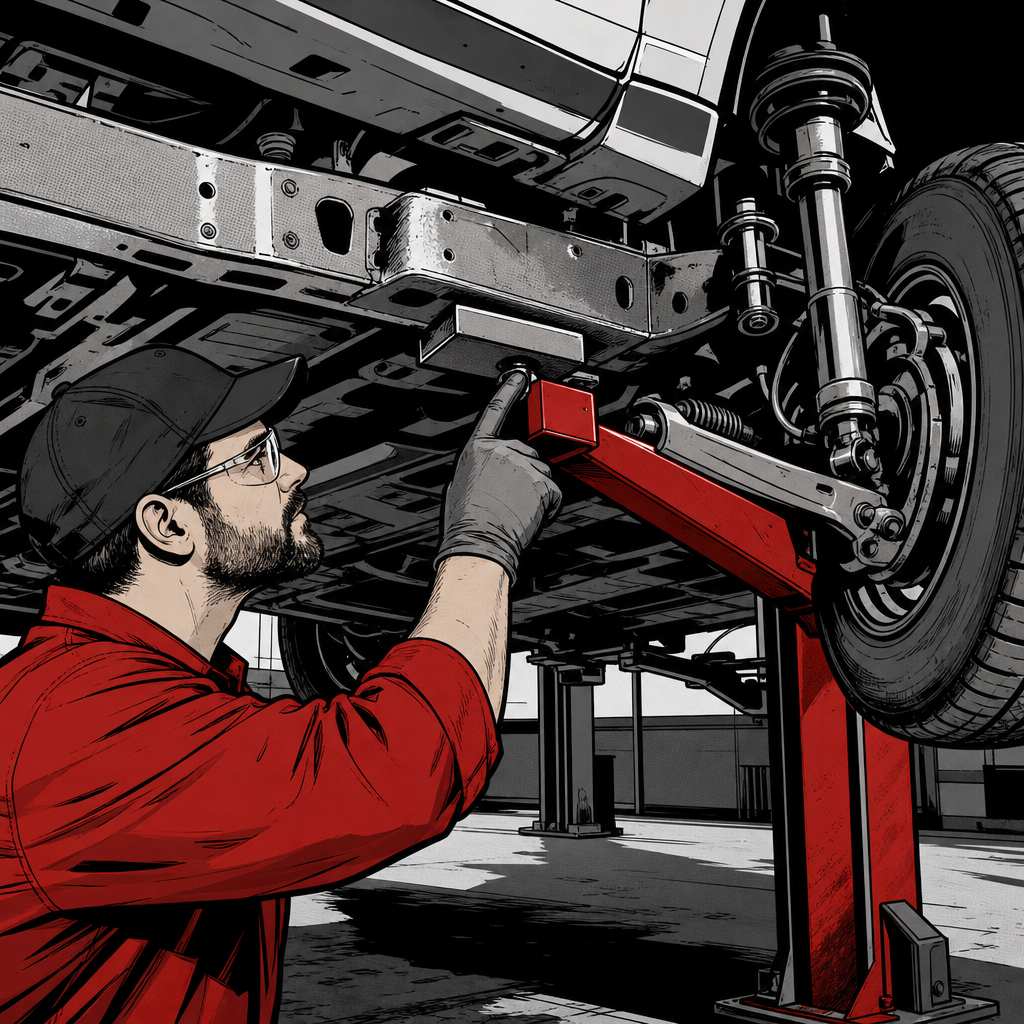
A photo circulating in technician forums recently showed a truck raised on a two-post lift with the arms set on the leaf springs instead of the frame — the pads had slid across the spring pack and nearly dropped the vehicle before the lift locked. It’s not an isolated incident. Techs report seeing this “kick the rack” habit from experienced leads as well as students who were never properly corrected the first time. Lift point mistakes are one of the most preventable causes of serious shop injuries, and they keep happening because the vehicle often “makes it” into the air even when the setup is wrong. This post covers how to find correct lift points, what mistakes to watch for, and what to do when you see an unsafe lift in progress.
Why Lift Point Placement Matters
A vehicle’s frame, pinch welds, or manufacturer-specified subframe points are engineered to carry the full weight of the vehicle in a stable, fixed location. Leaf springs, control arms, sway bar links, differential housings, and other suspension components are not. They move, flex, and pivot by design — which means a lift pad resting on them can shift, roll, or slide off entirely as the suspension settles or as the vehicle is worked on.
In the viral example, techs pointed out two compounding failures: the pad was on the spring instead of the frame rail sitting right next to it, and a U-bolt nut and a frame-to-spring mounting bolt were already loose. Any one of those issues alone is a problem. Together, they turned a routine lift into a vehicle that could have come off its supports with someone underneath it. Suspension components can also shift load unpredictably when a tech starts removing parts — a spring that was barely holding stable weight becomes unstable the moment you pull a shock or sway bar link.

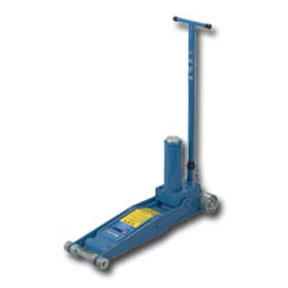
Transmission Jack Adapter for GM 125/440 and Ford E4OD
Mfg: OTC Tools and Equipment
Part #: 61516
How to Identify Correct Lift Points on Any Vehicle
Every vehicle has manufacturer-designated lift points, and they are not optional guidance — they’re the only locations engineered to hold the full curb weight without deforming sheet metal or shifting under load. Before raising any vehicle you’re not already familiar with:
Check the owner’s manual or a service information subscription (Alldata, Mitchell1, or OEM portal) for the lift point diagram. Most trucks and body-on-frame vehicles have frame contact points behind the front wheels and forward of the rear axle. Unibody cars use reinforced pinch weld points along the rocker panels, usually marked with a notch or an icon stamped into the metal. SUVs and crossovers often mix both, so don’t assume a “truck-like” SUV lifts the same as an actual truck.
When in doubt, lift a few inches, stop, and do a shake test — grab the bumper or rocker and push. A properly seated vehicle shouldn’t rock, shift, or make contact noise. If it moves at all, lower it back down and recheck pad placement before continuing.
Shop Lifting Equipment
Proper equipment and correct setup are essential to safe vehicle lifting. Browse our Lifting Equipment for lift systems, stands, and accessories that meet professional shop standards.
- Two-post and four-post vehicle lifts for in-ground and surface installation
- Lift pads, jack stands, and blocks for secure vehicle support
- Lift maintenance parts and repair components

The Toolsource Technical Team blends decades of real-world automotive service experience with up-to-date technical research. Our writers collaborate with professional mechanics, shop owners, and diagnostic specialists to deliver practical, workshop-ready guidance you can trust.


Follow us on social media