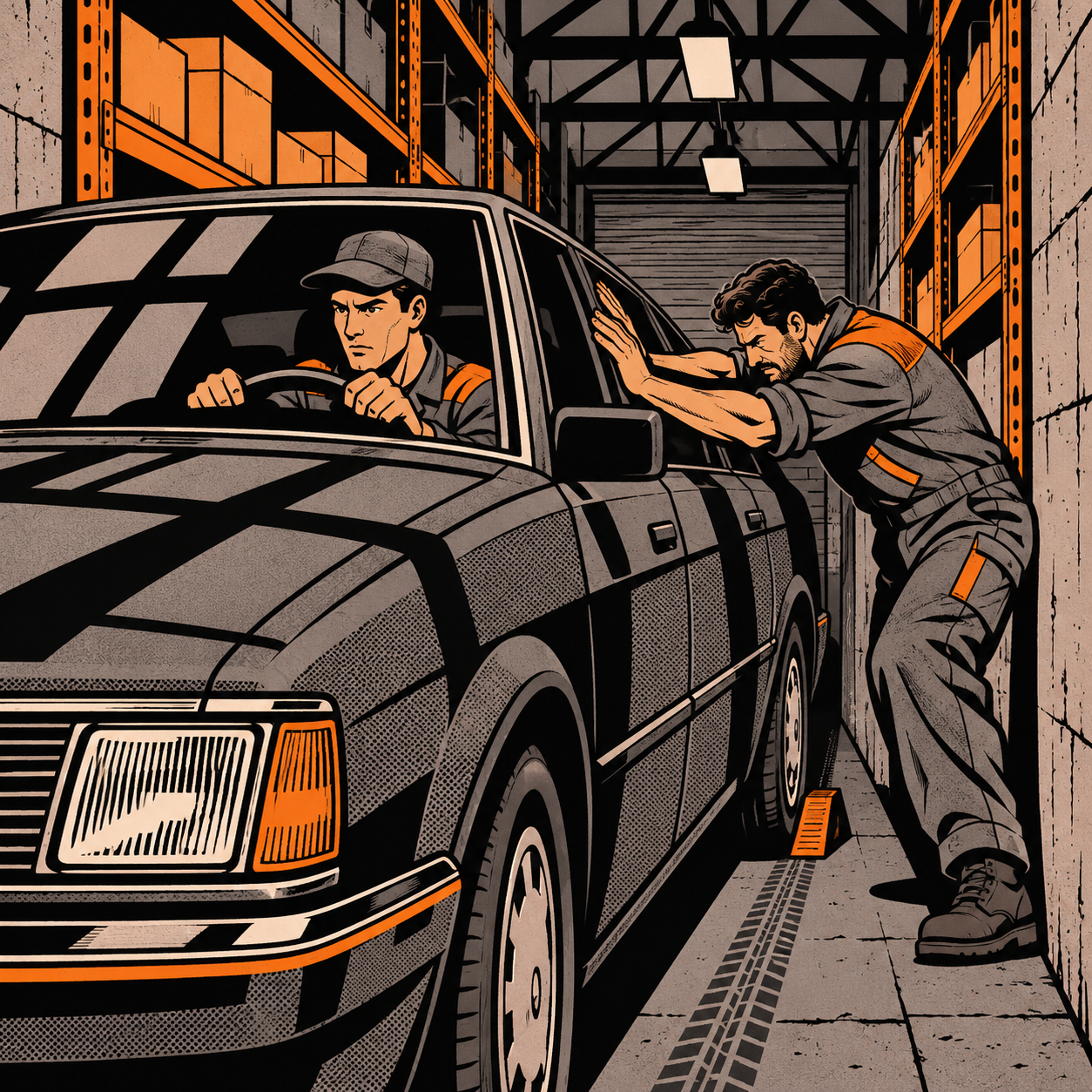
If you’ve ever walked past a garage, shipping container, or storage unit and seen a car parked with literally no room for a door to open, you’ve probably wondered how anyone got it in there — and more importantly, how they got out. The answer isn’t magic and it isn’t a tow truck. It’s a small set of techniques that shops, auction yards, and import handlers use every day: rolling the car in neutral, chocking the wheels, and pulling or pushing it by hand once the engine is off. This guide walks through how it’s actually done, what can go wrong, and when you should use mechanical help instead of muscle.
Why Zero-Clearance Parking Happens in the First Place
Most of the time, this isn’t an accident — it’s a space-maximization problem with a known solution. Shipping containers, narrow single-car garages, and auction storage lots are all built to pack as many vehicles as possible into a fixed footprint. Opening a door costs you 18-24 inches of clearance on each side, which adds up fast when you’re trying to fit three or four cars where there’s only room for two with doors.
At vehicle auctions like Copart or IAAI, lot staff don’t bother opening doors at all for stacked or tightly spaced inventory — many of those vehicles are insurance write-offs, so cosmetic concerns are low on the priority list. In container shipping, the same logic applies: the driver positions the car, cracks a window, and exits before the car is pushed into its final resting spot by hand or with a tow strap.
For a home garage or small shop bay, the motivation is usually just square footage. If you only have 9 feet of width to work with, you learn to live without opening a door once the car is parked.
Prepping the Vehicle: Neutral, Parking Brake, and Modern Car Caveats
Before any car gets pushed, pulled, or rolled into a tight spot, it has to be in neutral with the parking brake released. This is the step that trips people up most, because it has to happen while the vehicle still has enough clearance to open a door and get out.
The standard sequence looks like this:
- Pull the car up to the opening with the nose (or rear, if backing in) positioned where it needs to go.
- Shift into neutral, release the parking brake, and shut off the engine.
- Exit the vehicle through the door while there’s still room to open it.
- Push or pull the car the rest of the way in by hand, using the fenders, the hood near the wiper cowl, or a tow strap/hook if it’s heavier than expected.
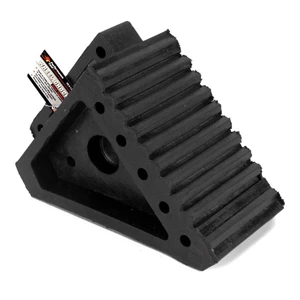
- Set a wheel chock against the front or rear tire to stop it from rolling back out, especially on any kind of slope.
Modern cars complicate this. Many automatics now default to an electronic parking brake that auto-engages when the ignition is shut off, and some won’t let you shift out of Park without the brake pedal depressed and the key in the ignition. Hybrids and EVs often force the transmission into Park automatically on shutdown, which defeats the whole “leave it in neutral” approach. If you’re dealing with one of these, you generally have to push the car while the ignition is still in an accessory or “on” state (engine off, electronics live) so you can toggle the transmission or brake override — check your owner’s manual for the correct neutral-tow procedure before attempting this, since forcing it incorrectly can trigger a transmission fault code.


Rolling Technique: Pushing a Car Into a Tight Spot
Once the car is in neutral with the brake off, moving it is mostly about control, not strength. A car on level, smooth concrete rolls far more easily than people expect — most passenger cars can be pushed by one or two people without much effort, as long as the surface is flat and the tires aren’t under-inflated.
A few practical pointers that matter here:
- Push from a stable point. The B-pillar (where the front and rear doors meet) or the leading edge of the door frame gives you the most control. Pushing on glass, mirrors, or body panels risks denting or cracking them.
- Steer from the open window or door. One person pushes while reaching in to hold the wheel straight, or a second person steers from inside before exiting.
- Use the garage framing as your guide. If the space is truly tight, mark reference points on the floor or wall ahead of time so you’re not eyeballing the last two inches of clearance.
- Chock early, not late. Place a wheel chock before you lose the ability to reach the tire. On any incline, an unchocked car can roll back out of position the moment you let go.
For slightly heavier pushes, a tow hook (threaded into the factory mounting point behind the front bumper cover) gives you a solid pull point without putting strain on the bodywork — this is the same method recovery techs use for short-distance repositioning in a shop bay.
[PRODUCT_SEARCH: rubber wheel chocks for car storage]
Getting Out of the Car Without Opening a Door
This is the part most people actually want to know, since parking the car is the easy half. Once the vehicle is in its final position with zero door clearance, there are really only two options, depending on when you plan it:
- Exit before the final push. The cleanest method: get out while there’s still room to open the door, then push the last foot or two of distance from outside the car.
- Exit through the window. If the car is already fully parked, roll the window down and climb out — common in container loading and in home garages where the car is boxed in on both sides. Some owners leave a window cracked permanently for this reason.
Either way, plan the exit before you commit to the final parking position. Trying to improvise an exit from a car wedged tight against shelving or a wall is how garage walls (and side mirrors) end up damaged.
Pulling the Car Back Out
Getting the car out follows the same logic in reverse. Remove the wheel chock, then pull the car by the fender, the front tow hook, or a strap looped through the wheel well, walking it back toward open space. On a slight incline, many owners rely on gravity: releasing the chock lets the car creep backward on its own, which you control by walking alongside with a hand on the door frame or wheel.
If the car has sat for any length of time with the parking brake off, check that the tires haven’t developed a flat spot or that the brake hasn’t seized from moisture before assuming it’ll roll freely. A quick rock test — pushing forward and backward an inch — tells you whether it’s actually free before you commit to a full pull.
When to Use a Forklift, Dolly, or Lift Instead
Hand-rolling works for routine tight parking, but it isn’t the right call for every situation. Auction and salvage yards frequently use forklifts with extended tines to lift and place vehicles that can’t be driven — but this method carries real risk of underbody and suspension damage, which is why it’s mostly reserved for total-loss vehicles where cosmetic and structural damage is already priced in. It is not a technique to use on a daily driver or anything with value left in it.
For a shop or home garage, the safer mechanical alternatives are:
- Car dollies / wheel skates — low-profile platforms that go under each tire, letting you pivot and shift a car sideways or diagonally in spaces too tight to roll it straight. Useful when a car needs to go into a spot at an angle.
- Tow straps or come-alongs anchored to a fixed point — for controlled, slow movement on an incline or when a car is heavier than two people can manage safely.
- A second set of hands on steering duty — cheap insurance against scraping a wall or mirror on the last few inches of any tight maneuver.
If a vehicle won’t roll freely — seized brake, flat tire, dead wheel bearing — stop and diagnose the issue before forcing it. Pushing a car with a locked wheel can scuff the tire flat-side, damage the brake rotor, or strain a control arm bushing.
[PRODUCT_SEARCH: car dollies and towing straps]
Quick Checklist: Parking a Car with Zero Door Clearance
- Confirm the transmission can be shifted to neutral with the parking brake released (check EV/hybrid procedures first)
- Position the car and exit through the door while clearance still allows it
- Push/pull from the B-pillar, door frame, or tow hook — never from glass or body panels
- Have wheel chocks ready and placed before you lose access to the tire
- Plan your exit method (window vs. pre-exit) before the car is fully wedged in
- Use dollies, straps, or a second person for anything heavier or on a slope


Frequently Asked Questions
Can I really push a car by myself?
On flat, smooth concrete with properly inflated tires, most sedans and compact cars can be pushed by one person in neutral. Trucks, AWD vehicles, and anything on a soft or inclined surface will need a second person or mechanical assistance.
Will leaving the parking brake off damage anything?
No, as long as the car is chocked or on level ground. The parking brake is a convenience, not a structural requirement — but an unchocked car on even a slight grade can roll unexpectedly, so always set a chock before walking away.
My car automatically shifts to Park when I turn it off — how do I move it?
This is common on EVs and some hybrids. Check your owner’s manual for a “neutral tow mode” or shift-override procedure, usually involving the ignition in an accessory position with the brake pedal held. Don’t force the shifter mechanically without following the documented procedure.
Is it safe to climb out through a window?
Yes, mechanically, but check your flexibility and the window size first. It’s the standard method for container-loaded vehicles and tightly packed garages. Keep the window regulator in good working order if you plan to do this regularly.
What’s the best wheel chock for a home garage?
A solid rubber or heavy-duty plastic chock rated for your vehicle’s weight class is sufficient for flat storage. For any incline, use a chock plus a secondary stop (wood block or a second chock) as backup.
Why do auctions use forklifts if it can damage the car?
Speed and space efficiency outweigh cosmetic concerns on salvage and total-loss inventory. It’s not a method to replicate on a vehicle you intend to keep or resell in good condition — use a dolly or hand-roll instead.
Equipment for Precision Vehicle Positioning
While this guide focuses on hand-rolling and manual techniques, heavier vehicles or steeper inclines may require mechanical assistance. Our Lifting Equipment category offers tools to support these more complex situations.
- Hydraulic and mechanical jacks for lifting during positioning and storage
- Car dollies and wheel skates for angled or challenging placement
- Tow hooks and straps for controlled pulling and secure anchoring

The Toolsource Technical Team blends decades of real-world automotive service experience with up-to-date technical research. Our writers collaborate with professional mechanics, shop owners, and diagnostic specialists to deliver practical, workshop-ready guidance you can trust.


Follow us on social media