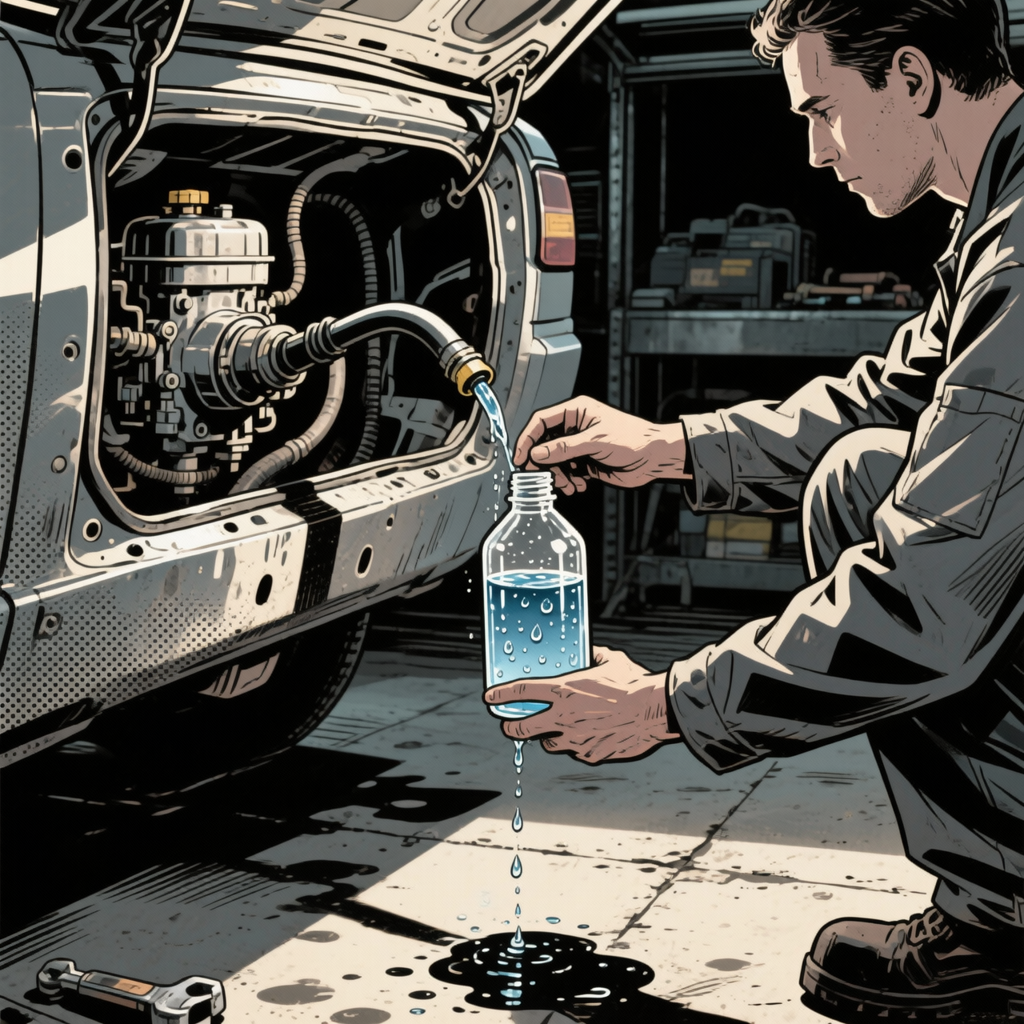
A vehicle that stalls during the first few turns after a cold start, but operates normally once the engine reaches operating temperature, presents a classic diagnostic challenge that points to the interaction between cold-start fuel management and potential mechanical or fuel delivery issues. This problem typically manifests within the first 3-5 minutes of operation and resolves as the engine control module (ECM) transitions from open-loop to closed-loop operation. Understanding this transition and the systems affected is critical for efficient diagnosis and repair.
Understanding Open Loop vs. Closed Loop Operation
Modern fuel injection systems operate in two distinct modes that directly affect cold-start behavior. During open-loop operation, which occurs when the engine is cold, the ECM relies on predetermined fuel maps programmed into its memory. These maps are based on factory calibrations that account for coolant temperature, intake air temperature, throttle position, and engine speed. The system ignores oxygen sensor feedback during this phase because the O2 sensors require approximately 600°F to function properly and provide accurate readings.
Once the engine reaches a specific coolant temperature threshold—typically between 160-180°F depending on the manufacturer—the ECM transitions to closed-loop operation. In this mode, the system actively monitors oxygen sensor data and makes real-time adjustments to the air-fuel mixture to maintain stoichiometric combustion (14.7:1 air-fuel ratio for gasoline engines). This constant compensation capability explains why problems that manifest during cold operation often disappear once the engine warms up. The closed-loop system can mask underlying issues by continuously adjusting fuel delivery, ignition timing, and idle air control to maintain smooth operation despite mechanical problems, vacuum leaks, or marginal fuel delivery.
The stalling-after-turns symptom specifically occurs during open loop because the ECM cannot compensate for sudden changes in fuel delivery or air intake that happen when the vehicle turns. Without O2 sensor feedback, the system runs on its programmed map alone, and any disruption to expected fuel flow or air delivery causes an immediate rich or lean condition that results in stalling.
Fuel System Diagnosis: Contamination and Delivery Issues
Water contamination in the fuel tank is one of the most common causes of cold-start stalling during turns. Water, being denser than gasoline, settles to the bottom of the fuel tank. During a turn, especially a sharp turn, the fuel sloshes and the fuel pump pickup can draw water instead of gasoline. When the vehicle straightens out and accelerates, the water moves toward the rear of the tank away from the pickup, allowing clean fuel to reach the engine again. This condition is temperature-dependent because cold fuel is more viscous, and water separates more distinctly from gasoline at lower temperatures.
To diagnose fuel contamination, start by checking the fuel tank for water. For vehicles with accessible fuel tank drains, collect a sample in a clear container and allow it to settle for several minutes. Water will separate and settle at the bottom. If no drain is available, you may need to drop the tank or use a fuel tank sampling pump. Check fuel filter condition as well—a filter that shows signs of corrosion or unusual discoloration may indicate water contamination. For vehicles experiencing this issue, complete fuel tank drainage and cleaning is necessary, along with replacement of the fuel filter and inspection of the fuel pump for corrosion damage.
Beyond contamination, check for fuel line routing issues. Rubber fuel lines can deteriorate and collapse internally when cold, restricting fuel flow. During a turn, chassis flex or suspension movement may pinch a marginally routed fuel line. Inspect all fuel lines from the tank to the engine, looking for lines that run near suspension components, steering linkages, or areas where body flex occurs. Pay particular attention to lines secured with worn rubber-insulated clamps that may allow movement. Replace any fuel lines showing cracks, soft spots, or routing that brings them in contact with moving components.
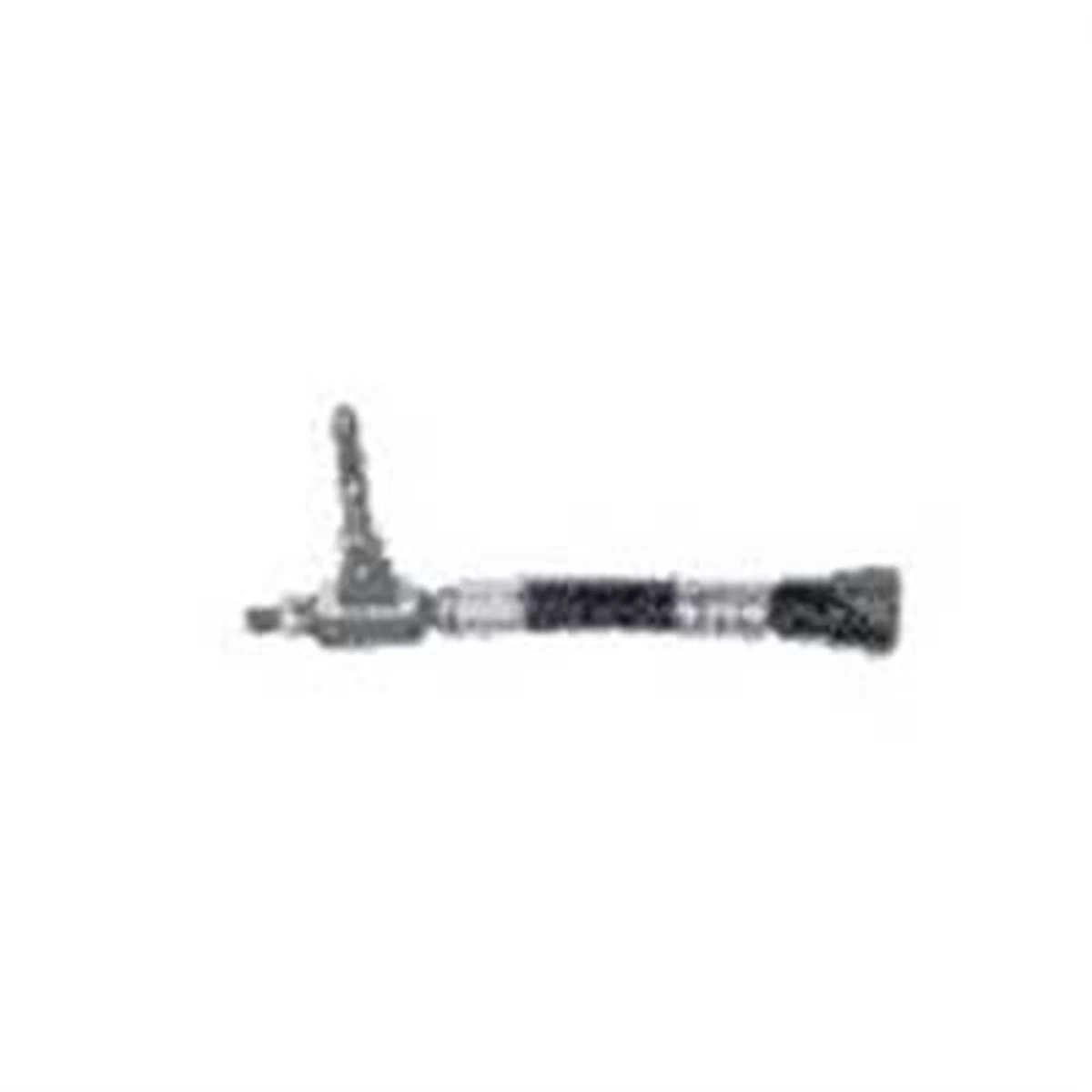
Fuel Injection Pressure Tester Adapter - Low Pressure CFI
Mfg: S & G Tool Aid
Part #: 37260
Vacuum System and Air Intake Inspection
Vacuum leaks behave differently at cold start versus warm operation due to the ECM’s ability to compensate. During open loop, a vacuum leak creates an unmetered air entry that leans out the mixture beyond what the predetermined fuel map can handle. Once in closed loop, the O2 sensors detect the lean condition and the ECM increases fuel delivery to compensate, masking the leak. The turning component of this problem often relates to vacuum hoses that are marginally connected or cracked, which shift position during turns due to engine movement or chassis flex.
Perform a systematic vacuum system inspection starting with the vacuum hose routing diagram for your specific vehicle. Check every vacuum connection at the intake manifold, brake booster, PCV system, EVAP system, and any vacuum-operated accessories. Use a vacuum gauge to check for leaks during engine idle—a steady reading within manufacturer specifications indicates a sealed system, while a fluctuating or low reading suggests leaks. For temperature-dependent issues, perform this test on a cold engine and note whether readings change as the engine warms.
Focus inspection on rubber vacuum components, which harden and crack with age and temperature cycling. Squeeze each vacuum hose to check for brittleness. Common failure points include hoses connected to the brake booster, PCV valve connections, and any hoses routed near the exhaust manifold where heat cycling accelerates deterioration. For hard-to-locate leaks, use propane enrichment testing (carefully introduce small amounts of propane near suspected leak points while monitoring engine RPM) or a smoke machine to pressurize the intake system and visually identify leak sources. Replace all questionable vacuum hoses as a set rather than individually to prevent repeated comebacks.
Mechanical Binding and Drivetrain Load Issues
A cold engine produces less torque than a warm engine due to increased internal friction from cold, thick oil and tighter clearances. If mechanical binding exists in the steering, suspension, or braking systems, a cold engine may lack sufficient power to overcome the added resistance during turns, especially when combined with the load of turning the wheels. Once the engine warms and produces more power, it can overcome this binding without stalling.
Begin with a front-end inspection focusing on components that load the engine during turns. Check wheel bearings by jacking the vehicle and rotating each wheel by hand—any roughness, grinding, or tight spots indicate bearing failure. Inspect brake calipers for binding by checking whether the caliper slides freely on its mounting pins and whether the brake pads retract fully when the brake pedal is released. A caliper that drags creates continuous load that a cold engine struggles to overcome. Check power steering system operation—low fluid, a failing pump, or internal steering gear problems can create excessive steering effort that loads the engine.
Inspect front suspension components for seized bushings or ball joints. A seized lower control arm bushing or ball joint creates enormous resistance during turns and suspension articulation. Check for this by having an assistant turn the steering wheel lock-to-lock while you observe suspension component movement. Any component that appears stuck or moves only with significant force should be replaced. In fleet or high-mileage vehicles, a comprehensive front-end service including wheel bearings, brake caliper service, and suspension component replacement may be necessary to eliminate all potential sources of mechanical binding.
Preventive Maintenance Schedule for Fleet Vehicles
For fleet operators dealing with vehicles that accumulate starts and stops in excess of 500 per day—such as postal delivery vehicles—implementing a preventive maintenance schedule focused on cold-start reliability prevents the majority of these issues. High-cycle operation accelerates wear on starting systems, fuel systems, and engine management components. Starter motors, solenoids, and starter drives (pinions) experience extreme wear in these applications and should be inspected every 30,000 miles or annually, whichever comes first. Replace starters showing any signs of slow cranking, grinding, or intermittent engagement before complete failure occurs.
Fuel system maintenance should include fuel filter replacement every 15,000 miles in fleet applications, more frequently if fuel quality is questionable. Annual fuel tank inspection and cleaning prevents water accumulation. For vehicles stored outdoors or in areas with high humidity, consider fuel additives that disperse water and prevent phase separation. Vacuum system inspection should be part of every major service interval—replace all vacuum hoses every 60,000 miles as preventive maintenance rather than waiting for failures.
Implement a cold-start performance check as part of regular inspections. This involves starting the vehicle cold, allowing it to idle for one minute, then performing a series of sharp turns to verify smooth operation without stalling. Log any vehicles showing marginal performance for immediate diagnosis. Track diagnostic trouble codes (DTCs) and freeze-frame data even when the check engine light is not illuminated—many intermittent cold-start issues log pending codes that provide diagnostic direction before the problem becomes severe enough to illuminate the malfunction indicator lamp.
Systematic Diagnostic Checklist
Use this checklist for efficient diagnosis of cold-start stalling during turns:
- Verify problem occurs only when cold and resolves after 3-5 minutes of operation
- Check for diagnostic trouble codes and review freeze-frame data
- Inspect fuel tank for water contamination using sample collection
- Test fuel pressure during cold start and compare to specifications
- Inspect all fuel lines for routing issues, pinch points, and deterioration
- Perform vacuum leak test on cold engine using vacuum gauge or smoke machine
- Inspect all vacuum hoses for cracks, hardening, and secure connections
- Check brake calipers for binding and verify free movement on slides
- Inspect wheel bearings for roughness or binding
- Test power steering system operation and check fluid level
- Verify front suspension components move freely through full range of motion
- Check engine oil viscosity matches manufacturer cold-weather recommendations
- Verify coolant condition and proper thermostat operation
- Inspect air intake system for restrictions or improper airflow

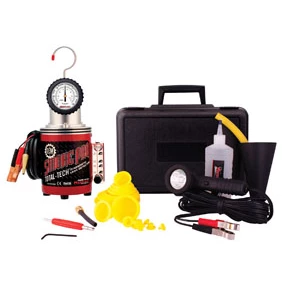
Smoke Pro Total Tech Diagnostic Leak Detector Kit
Mfg: Redline Detection
Part #: 95-0003B

Frequently Asked Questions
Why does the problem disappear once the engine warms up?
The engine control module transitions from open-loop to closed-loop operation when warm, using oxygen sensor feedback to actively compensate for fuel delivery issues, vacuum leaks, or air-fuel ratio problems. This real-time adjustment capability masks underlying problems that become apparent during cold operation when the system relies solely on predetermined fuel maps.
Can I diagnose this issue by letting the vehicle idle in the parking lot until warm?
No. The problem specifically manifests during turns, which cause fuel slosh, chassis flex, engine movement, and mechanical loading that cannot be replicated at idle. Diagnosis must involve cold-start operation followed by immediate driving with turns to reproduce the symptom.
How do I differentiate between a fuel problem and a vacuum leak causing this issue?
Fuel problems typically show a pattern related to fuel tank level and turn direction—right turns may behave differently than left turns depending on fuel level and tank design. Vacuum leaks cause consistent stalling regardless of turn direction and may also produce rough idle. Fuel pressure testing during symptom occurrence provides definitive diagnosis for fuel delivery issues, while smoke testing or propane enrichment identifies vacuum leaks.
Should I replace the oxygen sensors if the vehicle runs fine when warm?
No. If the vehicle operates normally in closed loop, the oxygen sensors are functioning correctly. The problem exists during open-loop operation before the O2 sensors become active. Focus diagnosis on fuel delivery, vacuum leaks, and mechanical issues rather than replacing sensors that are working properly.
What fuel system maintenance prevents water contamination in fleet vehicles?
Use fuel from high-volume stations to minimize water content, add fuel system water dispersants monthly in humid climates, replace fuel filters on schedule, and perform annual fuel tank inspection and cleaning. For vehicles stored outdoors, keep fuel tanks at least half full to minimize condensation formation.
How often should starter components be replaced in high-cycle fleet applications?
Inspect starter motors every 30,000 miles or annually in vehicles that start and stop 500+ times daily. Replace starters showing any symptoms of wear rather than waiting for complete failure. Expect starter life of 50,000-75,000 miles in extreme high-cycle applications compared to 100,000+ miles in typical use. Keep spare starters in fleet inventory to minimize downtime.
Diagnostic Tools for Cold-Start Troubleshooting
Efficient diagnosis of cold-start stalling requires the right tools to test fuel pressure, measure vacuum, and identify electrical issues. Our Automotive Diagnostic Tools selection includes everything needed to systematically work through fuel delivery, vacuum system, and engine management diagnostics.
- Fuel pressure gauges and adapters for testing cold-start delivery
- Vacuum gauges and smoke machines for leak detection
- Digital multimeters and scan tools for electrical and code diagnostics

The Toolsource Technical Team blends decades of real-world automotive service experience with up-to-date technical research. Our writers collaborate with professional mechanics, shop owners, and diagnostic specialists to deliver practical, workshop-ready guidance you can trust.


Follow us on social media