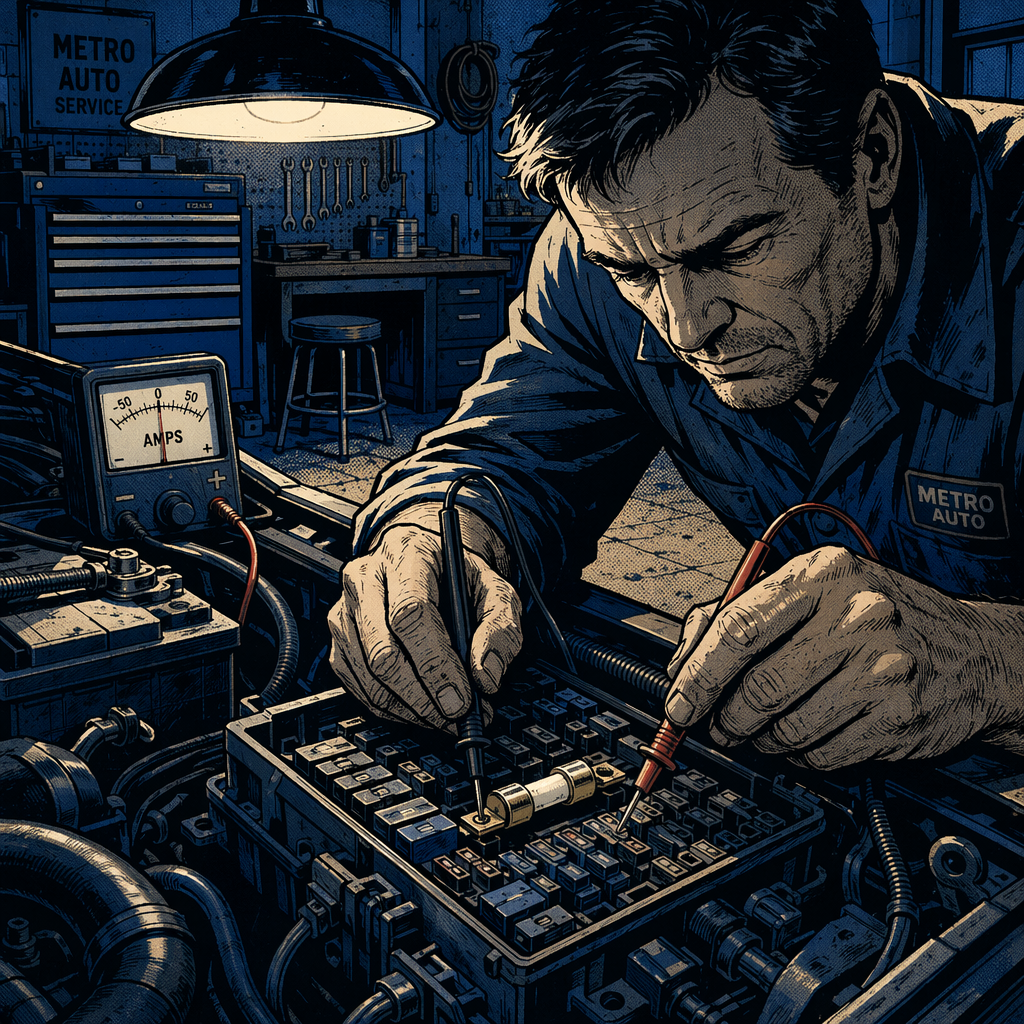
Diagnosing parasitic battery drain has become significantly more complex with the introduction of networked vehicle systems. The traditional method of pulling fuses sequentially no longer works reliably on modern CAN bus-equipped vehicles, where removing a fuse can wake downstream modules and create misleading power spikes. Understanding the correct diagnostic procedure is essential for efficient troubleshooting, whether you’re dealing with a customer vehicle or trying to evaluate a repair quote. This guide covers the proper voltage drop testing method, time-saving techniques using thermal imaging, and realistic expectations for common parasitic drain scenarios.
Understanding Modern Vehicle Sleep Modes and Network Behavior
Before beginning any parasitic drain diagnosis on a vehicle built after approximately 2005, you need to understand how module sleep modes affect your testing. Modern vehicles use networked communication systems where multiple control modules remain partially active even after key-off. These modules gradually enter sleep mode over a period that can range from 15 minutes to over an hour, depending on the vehicle manufacturer and specific systems installed.
The critical issue with the old fuse-pulling method is that removing a fuse from a networked circuit interrupts communication on the CAN bus, LIN bus, or other network protocols. This interruption wakes up modules that may have already gone to sleep, causing them to draw power and communicate as they attempt to re-establish network connections. You’ll see your ammeter jump, but this spike is an artifact of your testing method rather than the actual parasitic drain you’re trying to locate.
A proper sleep mode cycle requires that all doors, hood, and trunk latches be closed while keeping the compartments propped open for access. You cannot simply leave a door cracked open, as the latch switch itself keeps multiple modules awake. Use wooden blocks, modified strikers, or door latch override tools to satisfy the body control module that all openings are secured. After latching everything, expect to wait 45 minutes to a full hour before beginning your actual testing. This waiting period is not optional—it’s the only way to see the vehicle’s true resting current draw.
The Correct Voltage Drop Testing Procedure
The voltage drop method is now the industry-standard approach for parasitic drain diagnosis on networked vehicles. This procedure allows you to test each circuit without breaking the connection and waking modules. Start by connecting an ammeter in series between the negative battery terminal and the negative battery cable. Use an ammeter capable of reading milliamps accurately, as normal key-off draw typically ranges from 25mA to 85mA depending on the vehicle. A draw above 100mA will typically discharge a battery overnight; anything above 1 amp will kill a battery in a matter of hours.
Once you’ve confirmed excessive draw with your ammeter and allowed the vehicle to enter full sleep mode, switch to voltage drop testing across the fuses. Set your digital multimeter to the millivolt scale—you need a meter accurate to at least 0.1mV for this procedure. Place your leads across each fuse without removing it, touching one lead to each exposed metal terminal on top of the fuse. A fuse feeding an active circuit will show a small voltage drop, typically between 1mV and 30mV depending on the current flowing through that circuit.
Work systematically through every fuse panel in the vehicle, recording your readings. When you find a fuse with abnormally high voltage drop (often anything above 10-15mV compared to other circuits), you’ve identified the circuit feeding your parasitic drain. At this point, you can carefully remove that specific fuse to verify the ammeter reading drops. If removing the fuse wakes the vehicle, you’ll need to wait through another sleep cycle to confirm the draw is gone. This entire process, done correctly with proper sleep time, easily justifies 2-4 hours of diagnostic time on an unfamiliar vehicle.
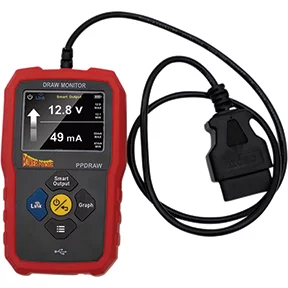
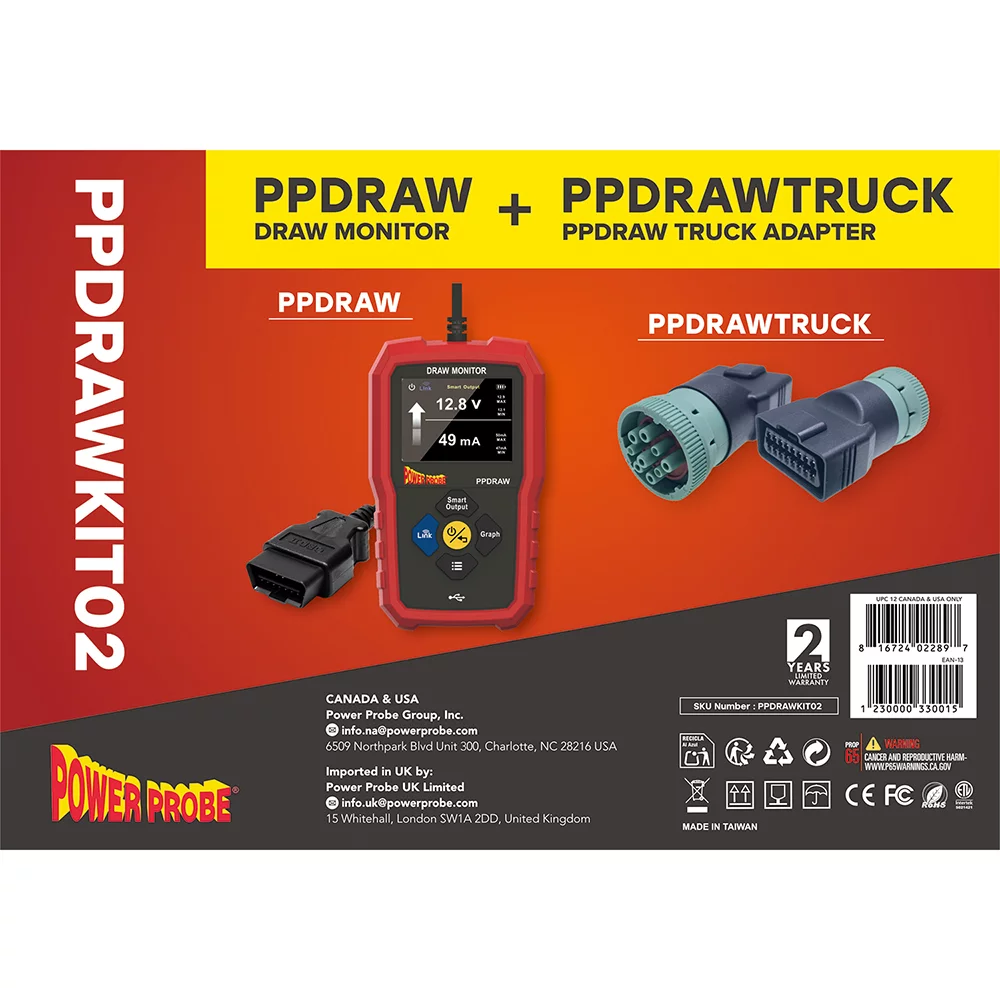
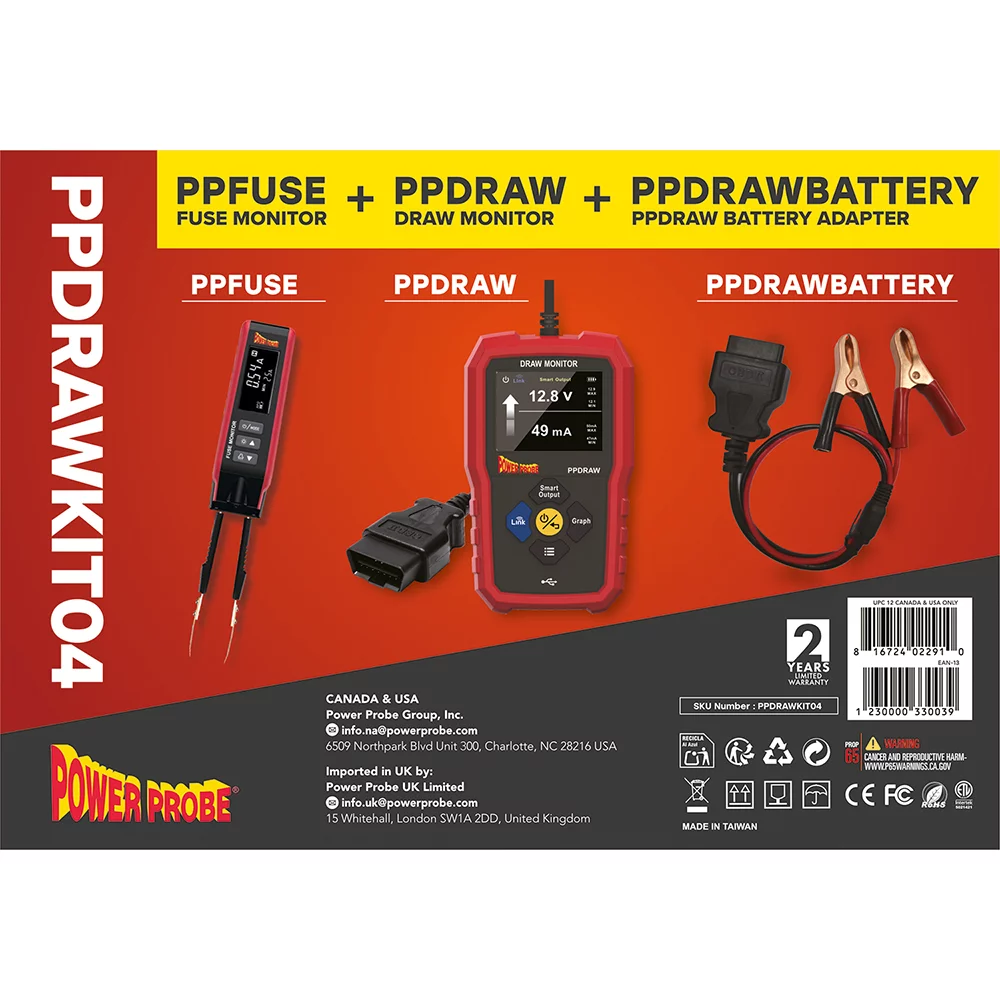
Power Probe PPDRAW Parasitic Draw Monitor and Memory Saver
Mfg: Power Probe
Part #: PPDRAWCBINT
Thermal Imaging: The Fast-Track Diagnostic Tool
Thermal imaging cameras have revolutionized parasitic drain diagnosis for shops that invest in the technology. A fuse carrying abnormal current will generate measurably more heat than surrounding fuses, creating a thermal signature visible through an infrared camera. After allowing the vehicle to enter sleep mode, scan each fuse panel with your thermal camera. The problem fuse will typically show up as a hot spot, sometimes 5-10 degrees warmer than adjacent fuses.
This method can reduce your initial circuit identification from 1-2 hours down to 15-30 minutes, though it does require an investment in quality thermal imaging equipment. Cameras suitable for automotive diagnosis range from $300 for smartphone attachments to $3,000+ for professional-grade units. The technology is particularly effective for draws above 200mA, where heat generation is more pronounced. For smaller draws in the 100-150mA range, thermal imaging may still show results, but the temperature difference will be subtle and require a more sensitive camera.
Even with thermal imaging, you’ll still need to verify your findings with traditional ammeter and voltage drop testing. The thermal camera shows you where to start, but proper confirmation prevents replacing components based on incomplete diagnosis. Use the thermal scan to identify your suspect circuit, then verify with voltage drop testing across that specific fuse before proceeding to component-level diagnosis.
Common Parasitic Drain Culprits by Vehicle Type
Certain vehicles and component systems have well-documented parasitic drain issues that can guide your diagnostic approach. On 2018-2020 Jeep Compass models, the radio/infotainment system is a known failure point for parasitic draw. The system may fail to enter sleep mode properly, continuing to draw several hundred milliamps indefinitely. Before beginning an extensive diagnosis on these vehicles, disconnect or pull the fuse for the radio system and retest after a sleep cycle. This simple check can save hours of diagnostic time.
Touch-sensitive switches and capacitive controls represent another common failure mode across multiple manufacturers. Sunroof switches, door lock controls, and HVAC touch panels can develop internal shorts or moisture intrusion that keeps them partially active. Humidity-related intermittent draws are particularly challenging, as the problem may not be present during your initial testing. If a customer reports that the battery dies more frequently during humid or rainy weather, focus your diagnosis on touch-sensitive controls and any modules located in moisture-prone areas.
Aftermarket accessories represent perhaps the most common parasitic drain source, though many technicians check these last rather than first. Before beginning any extensive factory circuit diagnosis, verify what’s plugged into every 12V outlet in the vehicle. USB chargers, phone mounts, dashcams, and especially hardwired radar detectors or GPS trackers can all create significant parasitic draw. Some of these devices continue drawing power even when they appear to be off. Disconnect all aftermarket items and retest before assuming the problem is in the factory wiring.
Realistic Time Estimates and Diagnostic Costs
Understanding reasonable diagnostic time helps both technicians estimating jobs and vehicle owners evaluating quotes. A straightforward parasitic drain diagnosis on a familiar vehicle platform, where the draw is present and consistent, typically requires 1.5 to 2.5 hours. This includes initial current measurement, sleep time, voltage drop testing across all fuse panels, circuit identification, and verification testing. A technician experienced with the specific vehicle platform and equipped with proper tools should be able to identify the problem circuit within this timeframe.
Complex scenarios require significantly more time. Intermittent draws that aren’t present during testing may require overnight monitoring or multiple test cycles. Draws that persist after isolating individual circuits may indicate problems in permanent power distribution or body control module issues that require additional wiring diagram research and component-level testing. Vehicles with multiple aftermarket installations, previous electrical repairs, or modified wiring can easily exceed 4-6 hours of diagnostic time as you trace non-factory circuits and identify improper installations.
The geographic location significantly affects hourly rates, but $300/hour represents the extreme high end of the market, typically seen only at high-end dealerships in major metropolitan areas. More typical rates range from $100/hour in rural areas to $180-220/hour in urban markets. Commercial vehicle rates run approximately 20-25% higher than passenger vehicle rates. Be skeptical of any shop quoting a flat 4-hour minimum diagnostic charge before beginning testing—proper diagnosis starts with a 1-hour minimum to perform initial testing and develop a diagnostic plan, then adds time as needed based on actual findings.
Quick Reference Diagnostic Checklist
- Verify battery condition and voltage before assuming parasitic drain (bad batteries self-discharge)
- Disconnect all aftermarket devices and accessories from 12V outlets
- Connect ammeter in series with battery to measure actual draw (normal: 25-85mA; problem: >100mA)
- Close and latch all doors, hood, and trunk while keeping them propped open for access
- Wait 45-60 minutes for all modules to enter sleep mode
- Perform voltage drop testing across all fuses without removing them (use millivolt scale)
- Optional: Use thermal imaging camera to identify hot fuses after sleep cycle
- Remove identified problem fuse and verify draw drops on ammeter
- If removing fuse wakes vehicle, wait through another sleep cycle to confirm
- Trace circuit to identify specific component causing draw
Tools and Equipment for Efficient Diagnosis
Proper parasitic drain diagnosis requires specific tools beyond the basic multimeter. Your ammeter must be capable of accurately measuring from 10mA up to at least 10 amps, as you’ll need to see both the final resting draw and any initial higher-current conditions. Many technicians use a dedicated battery drain analyzer or a meter with inductive amp clamp capability, though traditional in-line meters work if you’re careful not to exceed their current rating during vehicle wake cycles.
Your digital multimeter needs millivolt sensitivity for voltage drop testing—meters that only read to 0.01V (10mV) lack the precision for this work. Professional automotive multimeters from Fluke, Snap-on, or similar manufacturers typically offer 0.1mV resolution, which is ideal for this application. The $15 hardware store special won’t cut it for modern parasitic drain work, even if it works fine for basic continuity and voltage checks.
Door latch override tools or improvised blocks to hold latches closed while keeping access are essential. You cannot accurately diagnose parasitic draw with door jamb switches activated. Some technicians fabricate custom tools from old strikers or latch mechanisms; others use wooden blocks shaped to fit specific vehicle latch configurations. Whatever solution you use, it must satisfy the body control module that all openings are secured while still allowing you to access fuse panels and wiring.
Thermal imaging cameras, while not mandatory, represent a significant time-saver for shops handling multiple parasitic drain diagnostics monthly. Entry-level options like FLIR smartphone attachments ($300-400) work for obvious problems, while mid-range dedicated cameras ($800-1,500) provide better sensitivity for smaller draws. High-end professional units ($2,500+) offer features like video recording, multiple measurement points, and higher thermal sensitivity, but most independent shops find good results with mid-range equipment.

Frequently Asked Questions
How long does it take to diagnose a parasitic battery drain?
A straightforward diagnosis typically requires 1.5 to 2.5 hours, including the mandatory 45-60 minute sleep cycle wait time. Complex cases involving intermittent draws or vehicles with extensive aftermarket modifications can take 4-8 hours or more. Any shop quoting diagnostic time should start with a 1-hour minimum assessment rather than committing to 4+ hours upfront.
Can I diagnose parasitic draw by pulling fuses one at a time?
Not reliably on modern CAN bus vehicles built after approximately 2005. Removing fuses wakes up networked modules, creating false power spikes that mask the real problem. The correct method uses voltage drop testing across fuses without removing them, allowing you to identify problem circuits without disrupting the vehicle network.
What is a normal parasitic draw for a modern vehicle?
Most modern vehicles draw between 25mA and 85mA when fully asleep, though some vehicles with extensive electronics may draw up to 100mA and still be within manufacturer specifications. Anything consistently above 100mA will discharge a battery overnight. Draws above 500mA to 1 amp will kill a battery in just a few hours.
Why does my car need to sit for an hour before testing?
Modern vehicle control modules enter sleep mode on different schedules. Some modules sleep within 15 minutes, while others may take 45-60 minutes. Testing before all modules are asleep gives you an inaccurate reading that includes normal shutdown processes rather than true parasitic drain. Skipping the sleep cycle is the most common cause of misdiagnosis.
Will a thermal camera find all parasitic draws?
Thermal cameras work best for draws above 200mA, where heat generation is more pronounced. Smaller draws may not create enough heat signature to show clearly, especially in cold weather or on vehicles with well-ventilated fuse boxes. Thermal imaging is an excellent screening tool but should always be verified with traditional ammeter and voltage drop testing.
What causes intermittent parasitic drain that comes and goes?
Common causes include touch-sensitive switches affected by humidity, control modules with moisture intrusion, aftermarket accessories with failing components, and wiring with intermittent short circuits. Humidity-related problems are particularly common with capacitive touch controls in sunroof switches, door panels, and HVAC systems. These require extended monitoring or testing during specific weather conditions to reproduce the failure.
Recommended Diagnostic Tools
Proper parasitic drain diagnosis requires specific tools designed for accurate measurement and troubleshooting. Our Automotive Diagnostic Tools selection includes everything you need for efficient voltage drop testing, ammeter measurement, and modern vehicle diagnostics.
- Digital multimeters with millivolt sensitivity for precise voltage drop testing across fuses
- Battery drain analyzers and in-line ammeters for accurate current measurement
- Thermal imaging cameras for identifying hot circuits and problem fuses

The Toolsource Technical Team blends decades of real-world automotive service experience with up-to-date technical research. Our writers collaborate with professional mechanics, shop owners, and diagnostic specialists to deliver practical, workshop-ready guidance you can trust.


Follow us on social media