When evaluating a used truck, two critical issues consistently separate good deals from expensive mistakes: hidden rust and chronic oil leaks. Sellers frequently attempt to mask these problems with fresh paint, undercoating spray, or strategic photography, making it essential for technicians and buyers to know exactly what to look for. Understanding regional rust expectations, proper frame inspection techniques, and the reality of common oil leaks like rear main seals can mean the difference between a reliable work truck and a money pit. This guide provides practical assessment methods based on real-world technician experience with used truck evaluations.
Understanding Regional Rust Standards and Expectations
Rust severity varies dramatically by geography, and what’s considered acceptable in one region would be a deal-breaker in another. Coastal areas and northern states that use road salt experience significantly more corrosion than southern or western regions. A truck from New Jersey or the Midwest will typically show more surface rust than an identical model from the Southwest, and this needs to factor into your evaluation and pricing expectations.
Surface rust on frame components, suspension parts, and fasteners is normal for trucks over five years old in salt-exposed environments. Light surface oxidation that hasn’t caused pitting or material loss is manageable and can be treated with rust converters and protective coatings. However, the critical distinction is between surface rust and structural compromise. Many buyers from dry climates are shocked by what passes as “normal” in rust-belt states, while technicians familiar with coastal or northern trucks know that some oxidation is simply inevitable.
The concern isn’t the presence of rust—it’s the extent and location. Rust on non-structural components like exhaust hangers or surface scale on the frame is fundamentally different from rust that has created holes, weakened load-bearing areas, or been deliberately concealed. Your inspection should focus on identifying structural rust that affects safety and longevity, not cosmetic surface oxidation that can be stabilized.
Identifying Painted-Over Rust and Concealment Tactics
One of the most common deceptive practices in used truck sales is applying fresh paint or undercoating over rusted areas to conceal the extent of corrosion. This creates a false sense of security during visual inspection and can hide serious structural problems. Sellers know that a quick spray of black paint or rubberized undercoating dramatically improves the appearance of a rusty frame, and many buyers don’t look beyond the surface.
Several telltale signs indicate painted-over rust. Look for areas where paint texture or color doesn’t match surrounding surfaces. Fresh black paint on frame sections that show old, weathered coating elsewhere is an immediate red flag. Undercoating that appears recently applied in isolated patches rather than as a complete, uniform layer suggests targeted concealment. Pay particular attention to areas where paint appears thick or built up, as multiple coats may be hiding deeper corrosion.
The most reliable assessment method is physical testing. Use a pick, awl, or flat-head screwdriver to probe suspect areas. Apply moderate pressure to painted surfaces—if the tool easily penetrates or pushes through, you’ve found structural rust that paint was hiding. Test behind paint edges, in crevices, and anywhere you see color mismatches or texture changes. A properly maintained frame will resist penetration; compromised metal will allow your tool to punch through with minimal force.
Focus inspection on high-risk areas including frame rail sections behind the cab, crossmembers, body mounts, suspension mounting points, and anywhere mud and salt accumulate. These locations are most prone to rust-through and most likely to receive concealment treatment. If you find one area of painted-over rust, assume there are others and expand your inspection accordingly.

Frame Integrity Testing and Structural Assessment
Beyond visual inspection, physical testing determines whether rust has compromised structural integrity. The screwdriver penetration test is your primary diagnostic tool. Starting with suspect areas identified during visual inspection, systematically probe the frame using a sturdy flat-head screwdriver or pick. Apply firm, deliberate pressure—not enough to damage sound metal, but sufficient to penetrate compromised areas.
If your screwdriver pushes through the metal or creates a hole, that section has lost structural integrity. A single small penetration point might be repairable, but multiple rust-through areas or large affected sections indicate the frame is beyond reasonable repair. Pay special attention to the thickness of remaining metal around rust holes. Thin, flaky metal surrounding a hole means corrosion is actively spreading and will continue to worsen.
Check frame rails along their entire length, not just visible sections. Use a inspection mirror and flashlight to examine the inner surfaces of C-channel frames where moisture collects. Tap suspect areas with a hammer—solid metal produces a clear ring, while rusted sections sound dull and may flex or crack under light impacts. This acoustic testing helps identify hidden weak spots that haven’t yet rusted through.
Critical structural points require extra scrutiny. Examine suspension mounting locations, steering box mounts, leaf spring hangers, bumper mounting areas, and frame sections near body mounts. Rust in these areas directly affects safety and handling. A frame that’s solid in most places but compromised at mounting points may fail under load or during emergency maneuvers, creating dangerous situations.
Evaluating Oil Leaks and Common Problem Areas
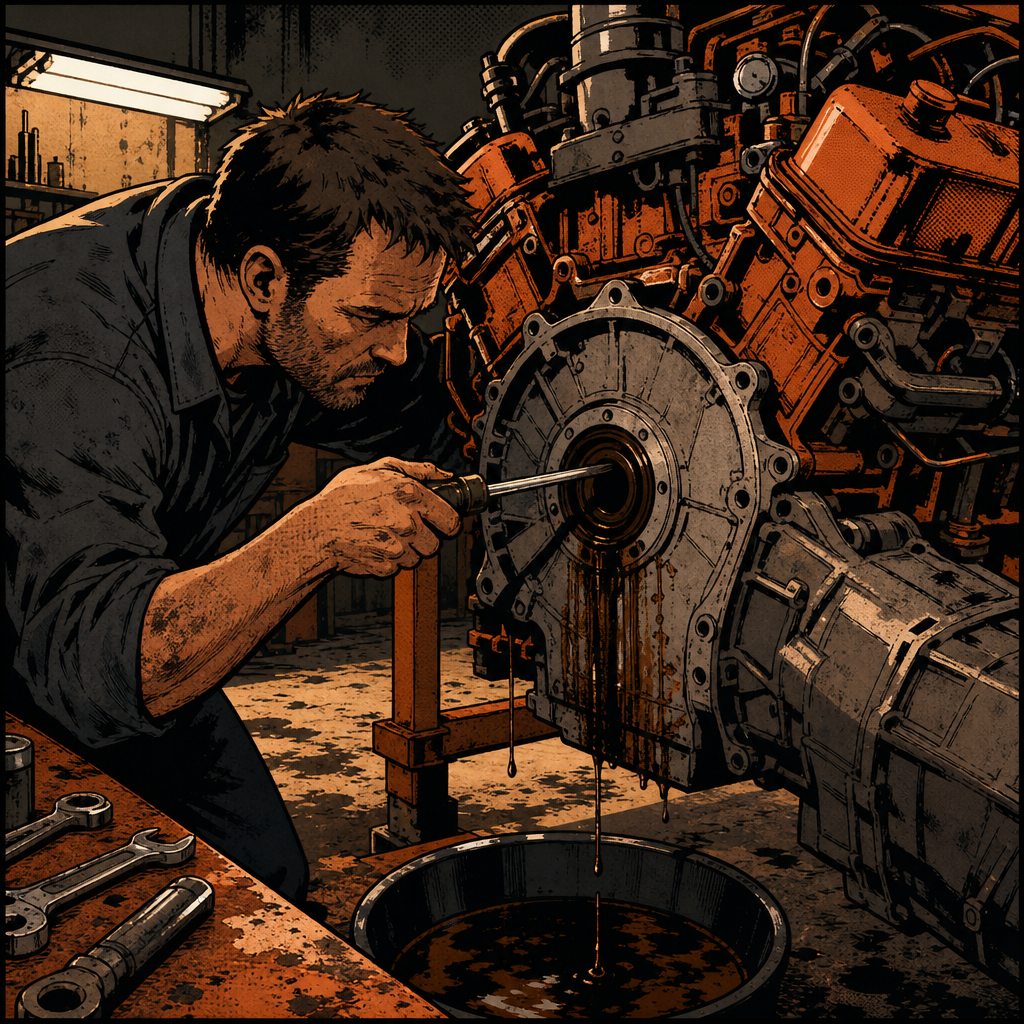
Oil leaks are nearly universal on older trucks, but severity and source matter significantly for pricing and long-term viability. The rear main seal is one of the most common leak points on Ford trucks and many other makes, and it’s also one of the most labor-intensive to repair. This seal sits between the engine and transmission, requiring transmission removal for access—a job that typically runs 8-12 hours of labor plus parts.
A rear main seal leak presents as oil accumulation on the lower rear of the engine block, bell housing, and transmission case. In severe cases, oil drips onto the ground after the vehicle has been parked. Light seepage that leaves the area damp but doesn’t actively drip is common on high-mileage engines and many owners simply live with it, adding a quart of oil between changes. Active dripping that creates puddles or requires weekly oil additions indicates a more serious leak that affects both operating costs and environmental impact.
The frustrating reality with rear main seals is that replacement doesn’t guarantee a permanent fix. Many technicians report rear main seals leaking again after replacement, sometimes within months. This happens because the seal surface on the crankshaft develops a wear groove over time, preventing even a new seal from achieving a perfect fit. Additionally, excessive crankcase pressure from worn piston rings can force oil past even properly installed seals.
When evaluating a truck with an oil leak, determine the leak rate and consider it in your purchase decision and negotiation. A slow seep that requires an extra quart every 2,000 miles is manageable if the truck is otherwise solid and priced accordingly. An active leak that creates a puddle overnight or requires weekly additions significantly impacts the truck’s value and should be reflected in a substantially lower price. Factor in that professional rear main seal replacement typically costs $800-1,500, and there’s no guarantee it won’t leak again.
Making the Buy or Walk Decision
After completing your inspection, you need to synthesize your findings into a clear decision framework. Start with deal-breakers: rust holes in structural areas, severe frame weakness at mounting points, or evidence of extensive painted-over damage that suggests concealment of serious problems. Any of these should lead to walking away regardless of price, as repair costs will exceed any reasonable savings.
For trucks with manageable issues, adjust your offer based on required repairs and realistic expectations. Surface rust that can be treated with converter and coating is a minor concern worth perhaps $200-500 off asking price. A slow rear main seal leak that’s livable might justify $300-800 reduction. However, if the seller is asking premium money for a truck with these issues, recognize that you’re not getting a deal—you’re buying someone else’s problem at retail pricing.
Consider the totality of the vehicle. A truck with light surface rust, a slow oil leak, but otherwise solid mechanicals, good tires, functional drivetrain, and recent maintenance might be a good purchase at the right price. The same rust and leak on a truck with multiple other issues, deferred maintenance, and a high asking price is a hard pass. Context matters, and your inspection findings need to align with the price and your intended use.
Regional pricing realities also factor into decisions. In rust-prone areas, finding a completely rust-free older truck is nearly impossible, so buyers must accept some corrosion or pay premium prices for Southern/Western trucks. In these markets, light to moderate surface rust is priced in, and sellers know it. Conversely, in dry climates, rust should command significant price reductions because it’s abnormal and indicates the truck spent time in harsh conditions.
Pre-Purchase Inspection Checklist
- Inspect entire frame length with flashlight and mirror for rust, paying special attention to rear sections and crossmembers
- Probe any painted-over areas or color mismatches with screwdriver to test for rust-through
- Check all suspension mounting points, body mounts, and steering components for rust damage
- Examine undercoating for recent application in isolated patches indicating concealment
- Assess oil leaks by checking rear main seal area, valve covers, oil pan, and front crank seal
- Verify oil leak severity by looking for fresh drips, staining patterns, and accumulated oil on undercarriage
- Test frame integrity with hammer tap test in suspect areas
- Document all rust locations and leak points with photos for reference and negotiation
- Factor regional rust expectations into your assessment and pricing
- Calculate repair costs for identified issues and adjust offer accordingly
Long-Term Management of Oil Leaks
If you decide to purchase a truck with a known oil leak, understand that you’re committing to ongoing management rather than a quick fix. Many technicians and truck owners choose to live with slow rear main seal leaks rather than invest in repairs that may not last. This approach requires regular oil level monitoring, keeping extra oil in the truck, and addressing environmental concerns about oil drips.
Place cardboard or an oil drip pan under the vehicle when parked to prevent driveway staining and make leak monitoring easier. Check oil levels weekly rather than relying on the standard change interval, as leak rates can increase over time. Keep records of how much oil you’re adding to identify whether the leak is worsening, which might eventually force a repair decision.
Some technicians report success with high-mileage oil formulations that contain seal conditioners, though results vary. These oils may slightly reduce seepage by softening and swelling aged seals, but they won’t fix a seal that’s already failed or a crankshaft with a wear groove. Consider them a potential minor improvement rather than a solution.
The reality is that many older trucks leak oil, and the cost-benefit analysis often favors living with it. A truck that requires a quart every 1,000 miles costs about $30-40 per year in oil—far less than an $1,000+ repair that might fail again. However, if the leak progresses to multiple quarts between changes or creates safety issues from oil on exhaust components, repair becomes necessary regardless of cost.
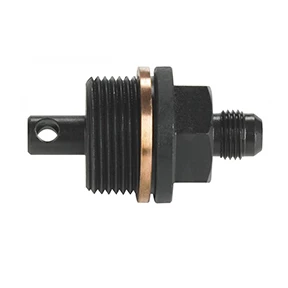
Wheel Hub Oil Seal Installer - 10-1/2 In
Mfg: OTC Tools and Equipment
Part #: 205-422
Frequently Asked Questions
How much rust is too much rust on a used truck frame?
Any rust that penetrates through the frame creating holes or significantly weakens structural areas is too much. Surface rust and light pitting without material loss is manageable, but rust-through at mounting points, crossmembers, or major frame sections indicates the truck is not safe for purchase. Use the screwdriver test—if your tool easily pushes through the metal, walk away.
Can painted-over rust be repaired or should I avoid the truck entirely?
The presence of painted-over rust is a red flag indicating the seller is concealing problems, but the extent of underlying damage determines whether the truck is salvageable. If the paint is hiding minor surface rust, it can be treated. If it’s concealing rust-through or structural compromise, avoid the purchase. Always probe painted areas to determine what’s underneath before making a decision.
Is a rear main seal leak a deal-breaker on an older truck?
Not necessarily. Slow rear main seal leaks are extremely common on high-mileage engines and many owners manage them rather than repair. A light seep that requires an extra quart every 2,000 miles is livable if the truck is otherwise solid and priced accordingly. However, an active leak creating puddles or requiring weekly oil additions should result in a significant price reduction or walking away, especially since repairs often fail to permanently solve the problem.
How do I know if undercoating is hiding rust damage?
Look for recently applied undercoating in isolated patches rather than a uniform, aged coating across all surfaces. Fresh undercoating that’s a different texture or thickness than surrounding areas suggests targeted concealment. Probe these areas with a screwdriver—if you find soft spots or penetration points, the undercoating is hiding active rust. Professional inspections often include scraping sample areas to see what’s beneath.
What’s a fair price reduction for a truck with manageable rust and oil leaks?
Price adjustments depend on severity and regional norms. Light surface rust might warrant $200-500 off, while a slow rear main seal leak justifies $300-800 reduction. Combined issues on a truck with other problems should result in $1,000-2,000+ decreases. However, if the seller won’t negotiate significantly on a truck with multiple issues, recognize you’re not getting a deal and walk away. Factor in that you’ll be managing these problems for the life of your ownership.
Should I buy a truck from a rust-belt state if I live in a dry climate?
Only if it’s been thoroughly inspected and priced well below local market value to account for rust issues. Trucks from salt-exposed areas will have more corrosion than local vehicles, and that rust will continue to progress even in a dry climate. Unless you’re getting a significant discount and the rust is purely cosmetic surface oxidation, you’re better off buying a local truck that hasn’t been exposed to harsh winter conditions and road salt.
Diagnostic Tools for Used Truck Assessment
A thorough pre-purchase inspection requires more than visual evaluation—having the right tools on hand makes the difference between catching hidden problems and missing costly issues. Our Automotive Diagnostic Tools selection includes everything you need for frame assessment, leak detection, and structural testing.
- Inspection mirrors and flashlights for examining frame interiors and suspension mounting points
- Probes, picks, and screwdrivers for rust penetration testing and metal integrity assessment
- Thermal imaging and moisture detection tools for identifying hidden corrosion and seepage patterns

The Toolsource Technical Team blends decades of real-world automotive service experience with up-to-date technical research. Our writers collaborate with professional mechanics, shop owners, and diagnostic specialists to deliver practical, workshop-ready guidance you can trust.


Follow us on social media