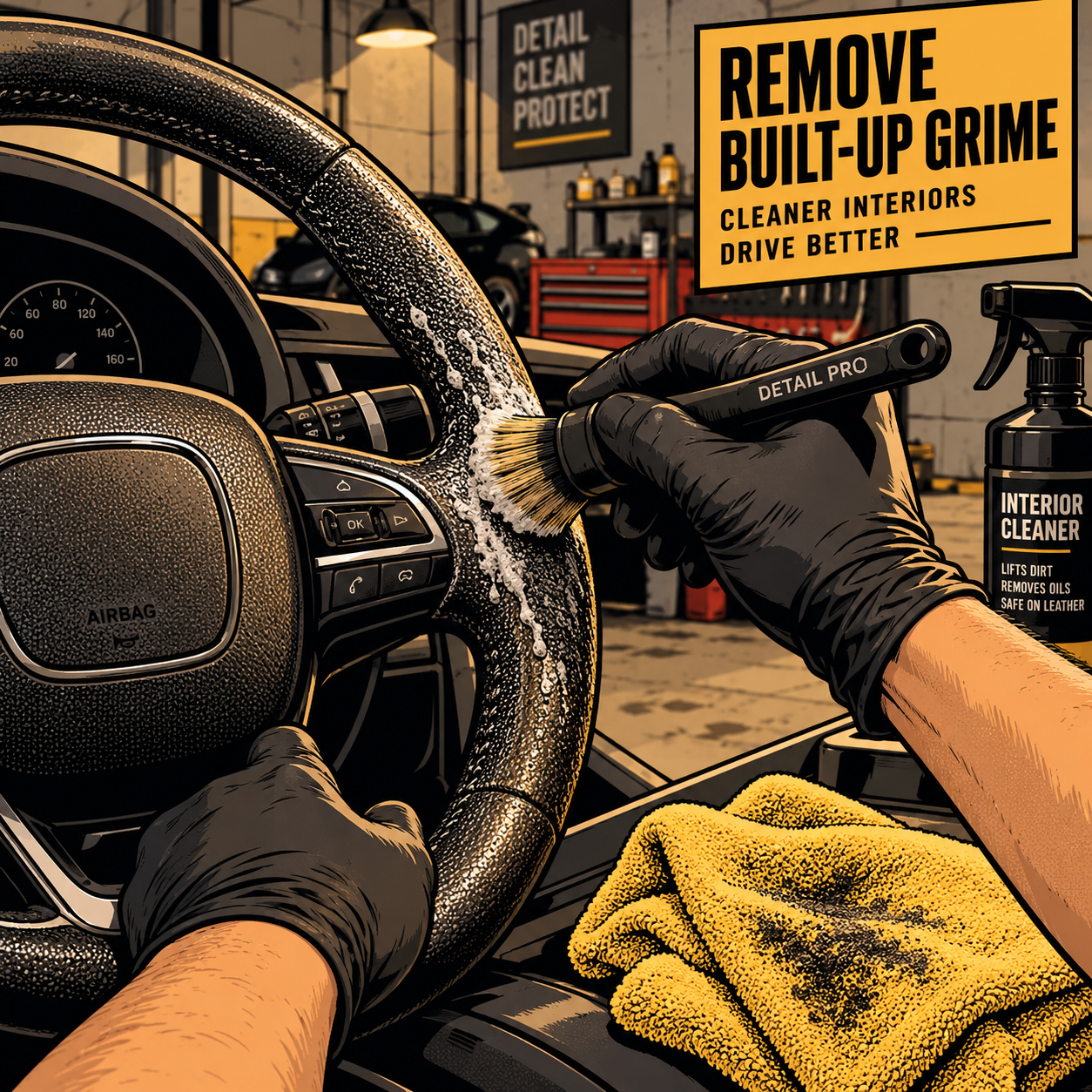
Every detailer has pulled a steering wheel cover off a customer’s car and found a dark, waxy film underneath that looks like years of neglect. More often than not, it isn’t dirt in the traditional sense—it’s a buildup of hand lotion, skin oils, sunscreen, and makeup residue that has baked into the leather or vinyl over months of driving. Understanding what that buildup actually is, and how to remove it without damaging the surface underneath, separates a quick wipe-down from a proper restoration. This guide walks through diagnosis, safe products, and a repeatable process you can use on steering wheels, armrests, and shift knobs.
What’s Actually Causing the Buildup
Skin naturally sheds oils (sebum) throughout the day, and hands pick up additional residue from lotion, sunscreen, hand sanitizer, and cosmetic products. Every time a driver grips the wheel or rests an arm on the console, a thin layer transfers onto the surface. On its own, that layer is nearly invisible. But leather and vinyl are porous or textured enough to trap it, and heat from sunlight through the windshield essentially bakes it into the material day after day. Over weeks and months, those microscopic layers stack into a visible, often sticky or waxy film—sometimes dark enough that owners mistake it for faded or worn material.
Before you start scrubbing, figure out whether you’re dealing with surface buildup or actual wear. Run a fingertip lightly across the area. If it feels tacky, slightly raised, or leaves a faint mark, you’re looking at buildup that will respond to cleaning. If the surface feels cracked, flaking, or the color is uneven at a textural level—not just visually darker—you may be dealing with worn-through coating or finish, which cleaning alone won’t fix. This distinction matters because aggressive scrubbing on genuinely worn leather can accelerate damage, while a cautious approach on simple buildup may leave the job half-finished.
Picking the Right Products (and What to Avoid)
Baby wipes have become a popular shortcut for quick wheel wipe-downs, and they do work in a pinch—they’re inexpensive, mildly abrasive, and usually white so you can see the grime transfer. But most baby wipes contain lotion, aloe, or fragrance additives designed to be gentle on skin, not leather. Used repeatedly, those additives can leave residue or contribute to premature drying and cracking of leather surfaces. If you reach for them, stick to unscented, alcohol-free wipes for quick daily touch-ups only—not as a substitute for proper leather care.
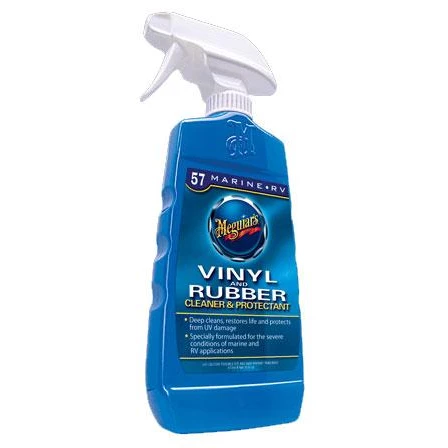
For actual cleaning jobs, a dedicated leather cleaner (or a pH-balanced all-purpose interior cleaner like a waterless/rinseless wash concentrate diluted for interior use) will break down oil-based buildup more effectively and more safely than household wipes. Pair it with a soft-bristle detailing brush for textured grips and stitched seams, and separate microfiber towels for cleaning versus buffing dry—cross-contaminating a dirty towel back onto the surface just redeposits grime. After cleaning, a leather conditioner replaces moisture the cleaning step removes, which is the step most people skip and the reason leather eventually dries, cracks, or fades.
[PRODUCT_SEARCH: leather interior cleaner and conditioner kit]


Step-by-Step: Cleaning a Grimy Steering Wheel
Work in sections rather than trying to clean the whole wheel at once—this keeps the cleaner from drying on the surface before you’ve had a chance to agitate and wipe it off.
- Dust off loose debris first with a dry microfiber or detailing brush so you’re not grinding grit into the surface.
- Apply leather cleaner directly to a microfiber towel or soft brush—not straight onto the wheel, which can cause pooling and drips into switchgear.
- Work in small 6–8 inch sections, using light circular motions. On textured or perforated leather, use the brush to get into the grain; a flat towel alone will miss it.
- Wipe each section with a clean, slightly damp microfiber towel before the cleaner dries.
- Check your towel color after each section—if it’s still picking up grime, repeat the application on that section rather than moving on.
- Once the wheel is clean, let it dry fully, then apply a thin coat of leather conditioner and buff with a dry towel.
For vinyl or synthetic-wrapped wheels, the same process applies, but you can be slightly more aggressive with scrubbing since vinyl is more scratch- and chemical-tolerant than natural leather. Still avoid anything with strong solvents, which can dull factory texture or finish over time.
Armrests, Door Panels, and Other High-Contact Surfaces
Armrests and door panels often get overlooked because the discoloration looks like fading rather than buildup, but the same grime transfer happens anywhere skin makes repeated contact. These areas also tend to sit at an angle that traps dust and oil in seams, so a brush is essential, not optional.
For armrests and seat bolsters with deeper, set-in grime, a wet/dry extraction approach works better than wipe-and-towel. Apply cleaner, agitate with a brush, and instead of wiping with a towel, use a wet vacuum or extractor to pull the loosened grime and cleaner solution out of the material rather than just smearing it around. This step is often the difference between “looks a little better” and genuinely restored color—owners are frequently shocked to discover armrests they thought were simply worn or faded were actually just caked in residue the whole time.
Preventing Buildup Between Full Details
Once a steering wheel or armrest is properly cleaned and conditioned, maintaining it is far easier than the initial restoration. A quick wipe with an unscented wipe or a microfiber lightly dampened with diluted interior cleaner every week or two prevents oils from ever accumulating long enough to bake in. Keeping a microfiber towel paired with a travel-size cleaner in the glovebox makes this a 30-second habit rather than a monthly project.
Encourage customers to also think about what’s on their hands before they drive—heavy hand cream or sunscreen applied right before getting behind the wheel is one of the most common sources of accelerated buildup, and there’s not much a conditioner can do to counteract a fresh coat every single trip.
Quick Checklist
- Test the surface first: tacky buildup vs. true wear (fingertip test)
- Dust/brush off loose debris before applying any cleaner
- Use pH-balanced leather cleaner, not scented baby wipes, for real cleaning jobs
- Work in small sections; wipe before cleaner dries
- Use a wet vacuum/extractor on deeply soiled armrests and bolsters
- Always follow cleaning with a leather conditioner on natural leather
- Set up a quick weekly wipe-down routine to prevent re-buildup
[PRODUCT_SEARCH: interior detailing supplies microfiber brush cleaner]
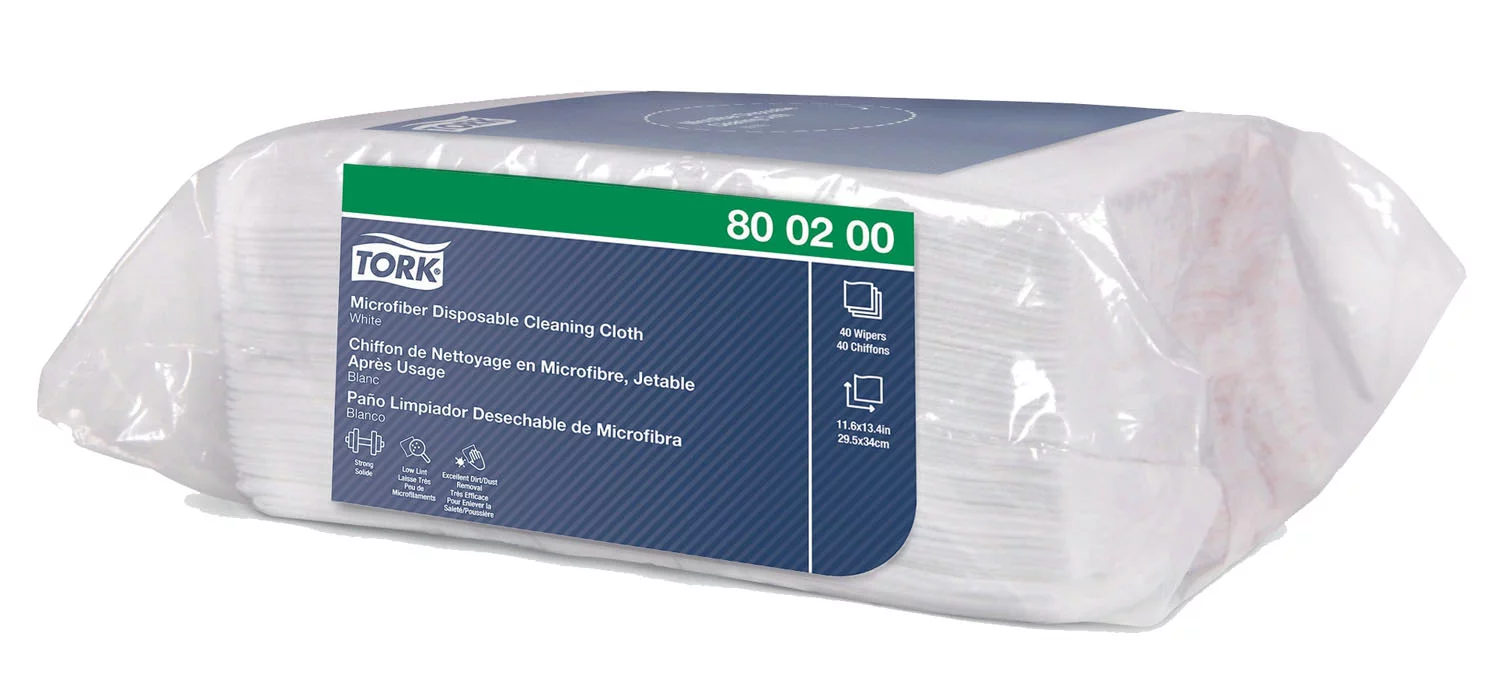
Tork Microfiber Disposable Cleaning Cloth, White
Mfg: Todd Enterprises
Part #: 800200

4 Pk Blue 16"x16" Thick & Plush Microfiber Towel Professional
Mfg: SM Arnold
Part #: 85-872

FAQs
Is steering wheel grime actually dead skin?
Rarely. It’s predominantly a mix of skin oils, hand lotion, sunscreen, and sometimes makeup transfer that accumulates and oxidizes on the surface over time, not shed skin cells.
Can I just use baby wipes every time?
They’re fine for occasional quick touch-ups if unscented and alcohol-free, but repeated use can dry out and prematurely age leather. Use a proper leather cleaner and conditioner for scheduled cleanings.
How do I know if it’s buildup or the leather is actually worn out?
Run a finger across the surface. Tacky or slightly raised areas that leave residue on your finger are buildup. Cracking, flaking, or textural unevenness indicates wear that cleaning won’t fully reverse.
What’s the best tool for grime stuck in stitching or textured grips?
A soft-bristle detailing brush. A flat microfiber towel can’t reach into seams, perforations, or textured grip patterns the way a brush can.
Do I need to condition the wheel after cleaning it?
Yes, on natural leather. Cleaning strips oils along with the grime, and skipping conditioner is one of the main reasons leather eventually cracks or fades faster than expected.
How often should a steering wheel be cleaned to prevent heavy buildup?
A light wipe every 1–2 weeks prevents the kind of months-long buildup that requires aggressive restoration. Full cleaning and conditioning every 1–3 months is a reasonable baseline for most daily drivers.
Shop Cleaning Supplies
Steering wheel restoration requires the right tools and products. Browse our Cleaning Supplies selection for everything you need.
- Microfiber towels and soft-bristle detailing brushes
- Interior leather cleaners and pH-balanced formulations
- Leather conditioners and protective treatments

The Toolsource Technical Team blends decades of real-world automotive service experience with up-to-date technical research. Our writers collaborate with professional mechanics, shop owners, and diagnostic specialists to deliver practical, workshop-ready guidance you can trust.


Follow us on social media