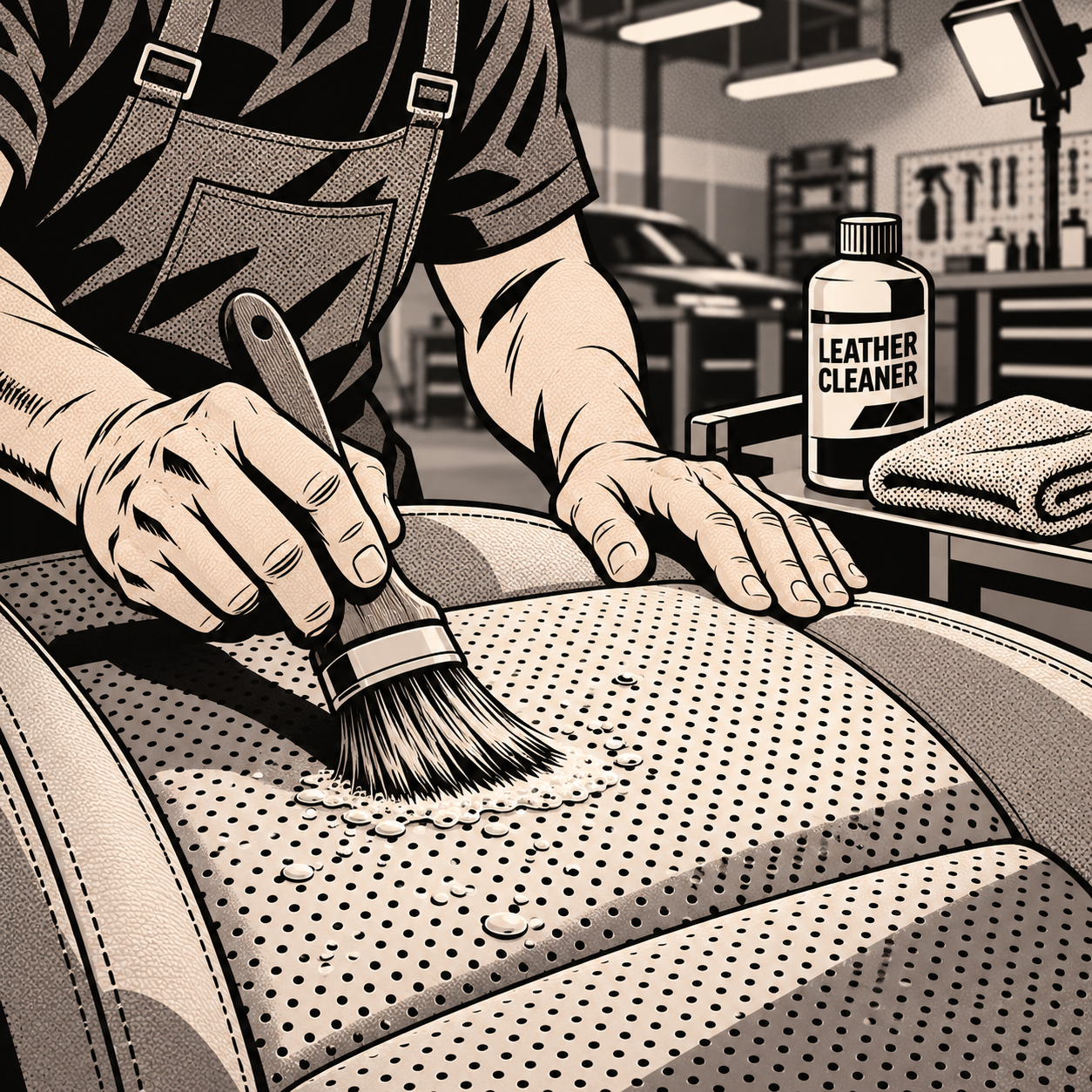
Perforated leather seats look great until something spills into them. Coffee, soda, sunscreen, or worse ends up running straight through the punched holes in the leather and into the open-cell foam underneath, where no amount of wiping the surface will reach it. Technicians who detail interiors regularly know the two most common mistakes customers make: using a glossy all-purpose protectant that breaks down the leather’s coating over time, and assuming a quick wipe-down solved a problem that’s actually sitting in the cushion foam. This guide covers the chemical choices, the extraction technique, and the maintenance habits that actually work on perforated leather.
Why Perforated Leather Traps Stains Differently Than Solid Leather
Solid leather has a top coating that most liquids sit on until you wipe them away. Perforated leather is punched with small holes, usually for seat ventilation or heating, and those holes go straight through the leather hide into the foam padding below. Once a liquid passes through a perforation, it’s no longer just a surface problem — it’s inside the cushion. Thin liquids like coffee, water, or vomit wick into the open-cell foam and can travel sideways before drying. Thicker substances like whipped cream, sunscreen, or food residue tend to dry and harden right at the hole opening, which is what causes the visible white or dark specks people notice weeks later.
This matters for how you approach the job. Surface cleaning will get the leather itself looking fine again, but it will not fully remove a liquid that has already soaked into the foam. Set expectations with the customer (or yourself) before starting: a thorough clean can remove the visible residue and most of the smell, but 100% removal of something that dried deep in the foam generally requires pulling the seat cover off, which is a seat-trim-level job, not a quick detail.
Choosing the Right Cleaner — and What to Avoid
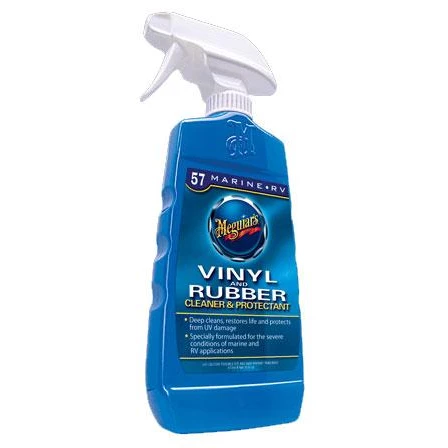
The biggest recurring complaint from experienced detailers is the use of all-purpose “shine” products, specifically Armor All-type dressings, on leather and soft-touch plastics. These products are formulated for gloss, not leather health, and repeated use leaves a greasy film that can degrade leather coatings, soft-touch dash plastics, and interior trim over time. They also make perforation holes harder to clean because the residue builds up inside the holes themselves.
For perforated leather, use a dedicated pH-balanced leather cleaner, not a leather “polish” or an all-in-one interior dressing. Mid-range leather cleaners from reputable detailing brands are widely regarded in the trade as reliable, affordable, and hard to damage leather with when used as directed — a good default if you’re not sure which premium product to reach for. Higher-end leather-specific cleaner and conditioner combos are preferred by detailers for a more finished, OEM-like satin result rather than a glossy, greasy look. Either tier is a significant step up from generic multipurpose sprays. Look for products that are explicitly labeled safe for perforated or ventilated leather, and avoid anything with silicones or heavy oils as a primary ingredient, since those tend to clog the perforation holes further.
===PRODUCT_SEARCH_1===


Step-by-Step: Cleaning Spills Out of Perforated Holes
Once you have a proper leather cleaner, the extraction process matters more than the chemical itself. Follow this sequence:
- Vacuum first. Use a vacuum with a narrow crevice or upholstery attachment, ideally with reduced suction control, to pull out any loose or dried debris before applying any liquid. This keeps you from pushing contamination deeper into the foam.
- Dilute the cleaner. Most leather cleaners work better diluted per the label rather than applied full-strength, especially on perforated panels where excess liquid will just run into the holes and add to the problem.
- Agitate gently. Apply the diluted cleaner with a soft-bristle detailing brush or a dedicated leather cleaning brush, working in slow, light circles directly over the perforation pattern. A soft makeup-style brush works well for reaching into the holes without scratching the leather surface.
- Wipe slowly with a clean microfiber. Don’t scrub the cleaner off — wipe it away slowly so the towel pulls residue up and out of the holes instead of smearing it across the surface.
- Extract with suction if available. A small wet/dry extractor or spot-cleaning vacuum will pull far more liquid and residue out of the holes than wiping alone. This step is what separates a surface clean from an actual deep clean on perforated leather.
- Dry and condition. Let the area air dry fully, then follow with a leather conditioner formulated for perforated or ventilated leather to replace any moisture the cleaning process removed.
Clearing Clogged Perforation Holes
Dried residue sitting right at the hole opening needs mechanical removal — cleaner alone usually won’t dissolve it. The trade-tested approach:
- Use a wooden toothpick, not metal, to gently pick dried debris out of each hole. Wood won’t scratch the leather edge the way a metal pick can.
- A sewing needle also works for finer debris, used carefully and at a shallow angle so you’re lifting material out rather than pushing it further in.
- For a faster pass across a whole seat panel, a compressed-air detailing tool (sometimes called a “tornado” or air-powered interior cleaning gun) combined with a cleaning solution can clear clogged holes in a fraction of the time a toothpick takes, and is a standard tool in professional detail bays for exactly this job.
- Avoid high-pressure air or water on its own — on a seat with already-compromised foam or an unknown contamination source, strong pressure can push liquid further into the cushion instead of out of it.
When Surface Cleaning Isn’t Enough: Odor and Deep Foam Contamination
If a strong odor persists after the leather itself looks and feels clean, the contamination has likely reached the foam underneath, and no amount of surface cleaning or air freshener will fully resolve it. This is common with liquids that have strong organic content — coffee, soda, or bodily fluids — since they dry into the open-cell foam and effectively become part of the cushion’s structure.
Realistic options at this point, in order of effort:
- Enzyme cleaner treatment. An enzyme-based cleaner formulated for organic odors can break down residual material reachable through the perforations, though it will not fully reach contamination deep in the foam.
- Antibacterial leather cleaner. Choosing a cleaner with antibacterial properties for the visible cleaning pass gives you a better chance of neutralizing surface bacteria contributing to the smell.
- Ozone or odor-neutralizing treatment. Can reduce ambient odor in the cabin but does not remove the source material from the foam.
- Seat cover removal and foam replacement. This is the only way to fully and permanently eliminate contamination that has dried into the foam. It’s a legitimate repair for a customer’s long-term daily driver, less so for a quick fix.
Set the right expectation here: you can significantly improve the smell and appearance with cleaning, but if it’s been sitting for a while, full elimination may require foam-level repair.
Maintenance Routine to Prevent Repeat Problems
Perforated leather holds up fine long-term if it’s maintained on a schedule instead of only cleaned after something goes wrong.
- Vacuum seats with a brush attachment every few weeks to keep dust and debris from settling into the holes before it has a chance to combine with moisture.
- Wipe spills immediately, before they have time to wick through the perforation into the foam — the first 60 seconds matter more than any product you use afterward.
- Condition every 1–3 months depending on climate and use, using a leather conditioner rated safe for perforated leather, to keep the hide supple and resistant to cracking around the hole edges.
- Skip all-purpose glossy dressings entirely on leather surfaces — they offer no real protective benefit on leather and contribute to long-term clogging and coating breakdown.
Quick Checklist
- Vacuum with crevice attachment before applying any liquid
- Use a diluted, pH-balanced leather cleaner — never an all-purpose gloss dressing
- Agitate with a soft brush, wipe slowly with microfiber
- Clear clogged holes with a wooden toothpick, needle, or air tool
- Extract with a small wet/dry vacuum when possible
- Condition after cleaning and dry time
- If odor persists after cleaning, consider enzyme treatment or foam-level repair
===PRODUCT_SEARCH_2===

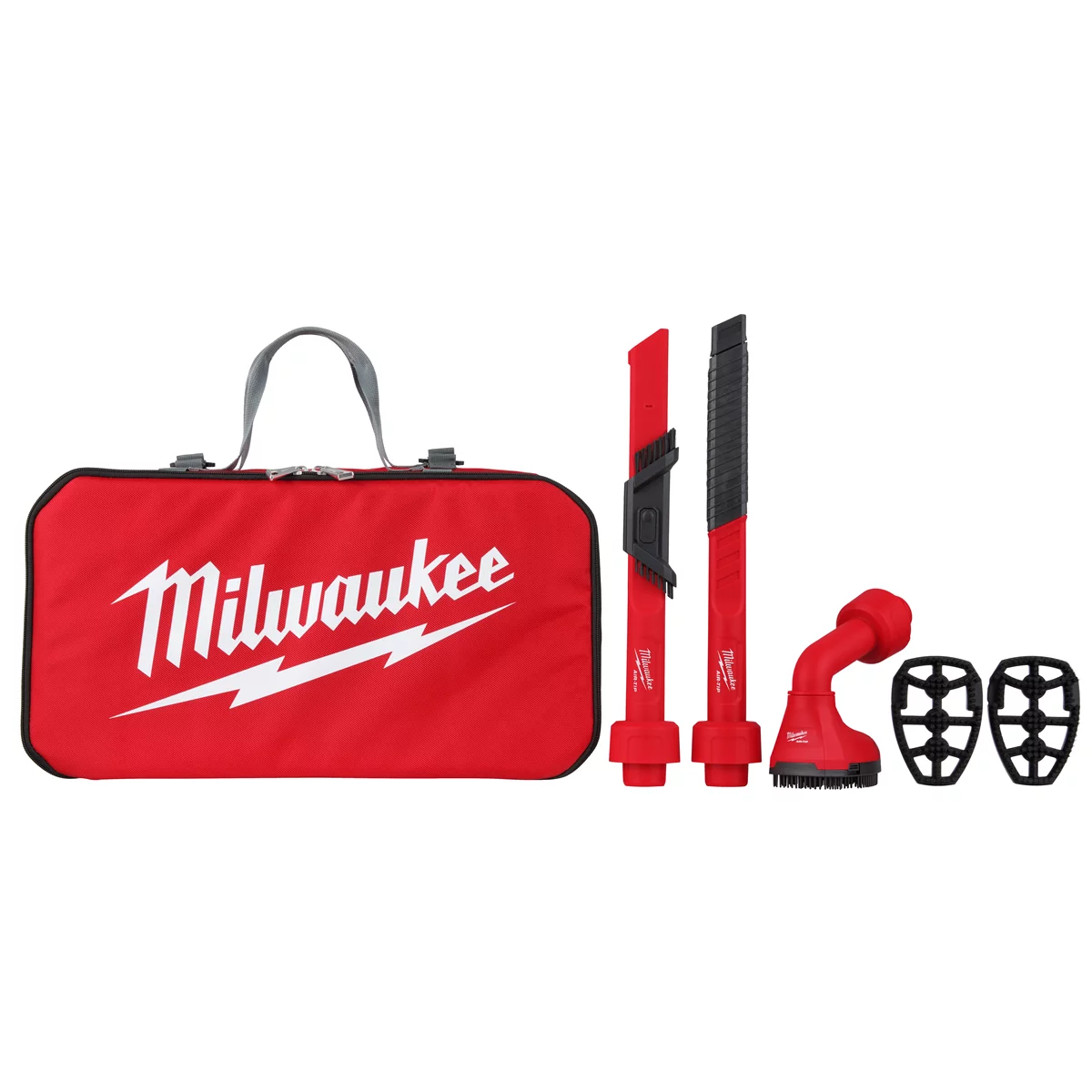
AIR-TIP(TM) 3-Piece Automotive Vacuum Tool Kit
Mfg: Milwaukee Electric Tools
Part #: 49-90-2019A
FAQs
Is Armor All bad for perforated leather seats?
Most Armor All-style dressings are formulated for shine rather than leather health, and repeated use can leave a film that degrades leather coatings and soft-touch surfaces over time. A dedicated pH-balanced leather cleaner and conditioner is the better choice for perforated leather.
Can I fully remove a coffee or vomit stain from perforated leather?
You can remove the visible residue and most of the odor from the leather and reachable areas inside the perforations. If the liquid soaked into the foam underneath, full removal typically requires removing the seat cover and addressing the foam directly.
What’s the best tool for clearing clogged perforation holes?
A wooden toothpick or fine needle works well for spot cleaning individual holes. For a full seat panel, a compressed-air detailing tool used with a cleaning solution clears holes much faster and is standard equipment in professional detail shops.
Will a steam cleaner fix a stain in perforated leather?
Steam used correctly can clean the leather surface effectively, but it generally won’t reach contamination that has already dried into the foam beneath the perforations. It’s a good tool for surface-level cleaning, not a substitute for extraction or foam repair.
How often should I condition perforated leather seats?
Every one to three months depending on climate, sun exposure, and use, using a conditioner labeled safe for perforated or ventilated leather.
Why does my seat still smell after I cleaned it?
Lingering odor after a thorough cleaning usually means contamination reached the open-cell foam under the leather. Enzyme-based cleaners or antibacterial leather cleaners can help reduce the smell, but a persistent strong odor may require seat cover removal and foam replacement for a complete fix.
Recommended Cleaning Tools & Supplies
The process outlined in this guide relies on a few key products and tools—a pH-balanced leather cleaner, soft-bristle brushes, microfiber towels, and ideally a small extraction tool. All of these are stocked in our Cleaning Supplies section.
- pH-balanced leather cleaners and conditioners rated safe for perforated or ventilated seating
- Soft-bristle detailing brushes, microfiber towels, and extraction equipment
- Enzyme-based and antibacterial cleaners for deep odor and organic contamination

The Toolsource Technical Team blends decades of real-world automotive service experience with up-to-date technical research. Our writers collaborate with professional mechanics, shop owners, and diagnostic specialists to deliver practical, workshop-ready guidance you can trust.


Follow us on social media