A customer comes in with a familiar complaint: the temp gauge climbs at red lights, in drive-through lines, or sitting in a parking lot, then drops back to normal the second the car is moving again. It’s one of the most common cooling-system complaints you’ll see, and it’s also one of the easiest to misdiagnose if you jump straight to “head gasket” or “water pump.” In the vast majority of cases, the engine is fine moving air past the radiator at speed but failing to move air across it while stationary — which almost always comes back to the fans, the airflow path, or a sticking thermostat. Here’s a practical diagnostic sequence that isolates the actual cause without unnecessary parts changes.
Start by Confirming the Pattern
Before touching anything, verify the complaint is actually “rises at idle, drops at speed.” Have the customer describe exactly when it happens — stopped at lights, drive-throughs, parking lots — versus highway driving. This pattern is diagnostically significant: if temperature only climbs when the vehicle is stationary and recovers immediately once air starts moving through the grille, the cooling system itself (pump, radiator core, coolant volume) is very likely functioning correctly. What’s failing is the mechanism that’s supposed to substitute for forward airflow when the car isn’t moving — the electric or clutch-driven cooling fan.
Also get a mileage and service history. A high-mileage car with no documented coolant service is a different job than a car with recent intake gasket work and fresh coolant. If the owner has service records, check for prior thermostat, radiator, or intake manifold gasket replacement — repeat failures on the same system are common on certain platforms (more on that below).
Check the Cooling Fans First
This is the number one cause of idle-only overheating and should be your first physical check. With the engine at operating temperature, pop the hood and watch the fan(s) directly — don’t rely on sound alone.
- Confirm the fan actually spins when coolant temp reaches the fan’s turn-on threshold (commonly 215–230°F on many engines) or when the A/C is switched on, since A/C compressor load should also trigger the fan circuit on most vehicles.
- If the fan doesn’t come on, check the fuse, relay, and fan motor wiring before condemning the motor. A loose or disconnected harness connector is a frequent culprit, especially after other underhood work.
- Test the coolant temperature sensor/switch that commands the fan relay — a sensor reading incorrectly low will never trigger the fan even though actual coolant temp is high.
- On dual-fan setups (primary + secondary/AC fan), verify both fans independently. A vehicle can run fine in cool weather with only one fan working, then overheat at idle in hot weather or with the A/C on, because the second fan never engages.
- Bench-test a suspect fan motor directly with battery power if you want to rule the motor in or out before chasing wiring.
If the fan comes on, cycles at the correct temperature, and moves a strong volume of air, move to the airflow path next rather than assuming the fan is “good enough.”
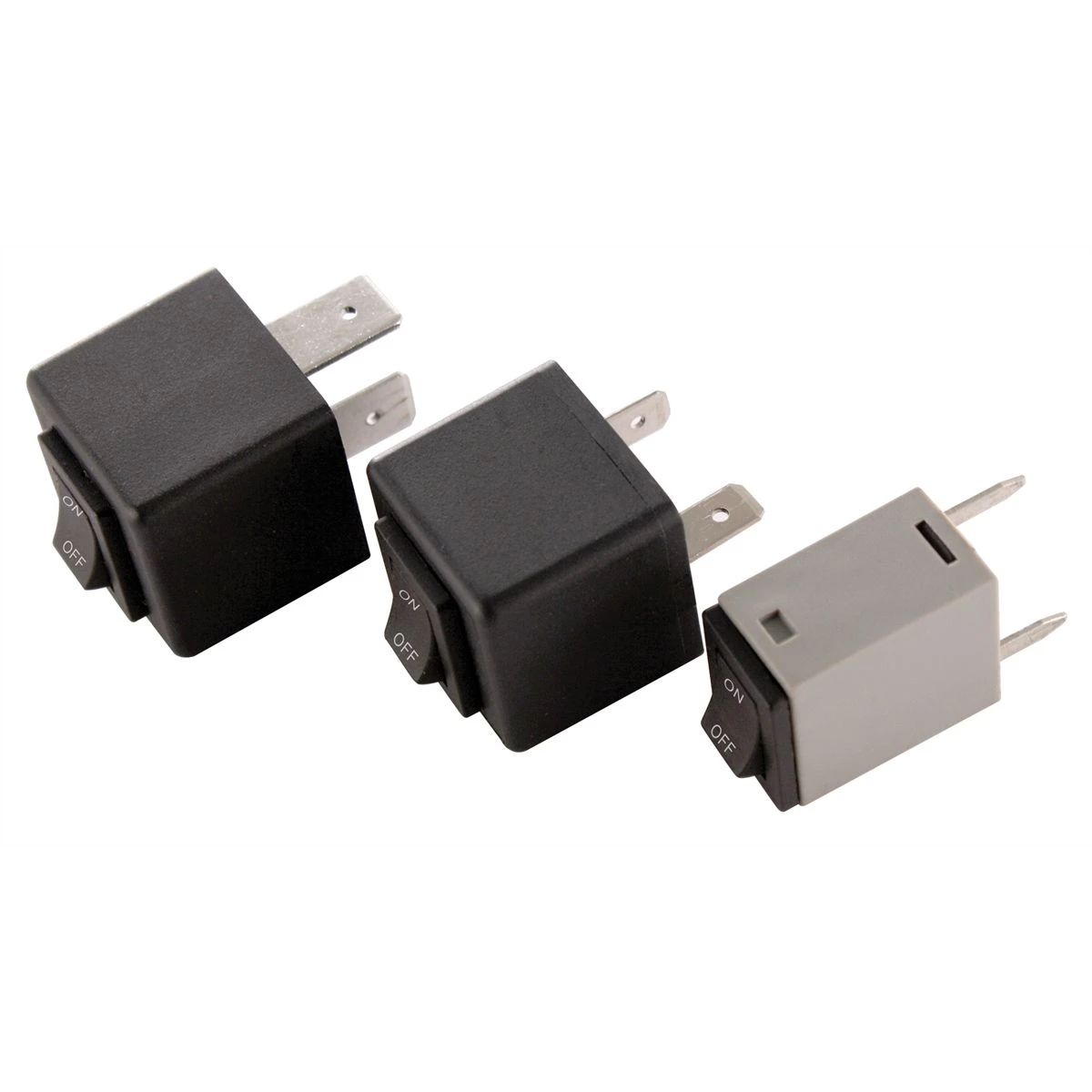
Relay Bypass Kit Large, Medium & Small Spade Relay Switches
Mfg: Innovative Products of America
Part #: 9036
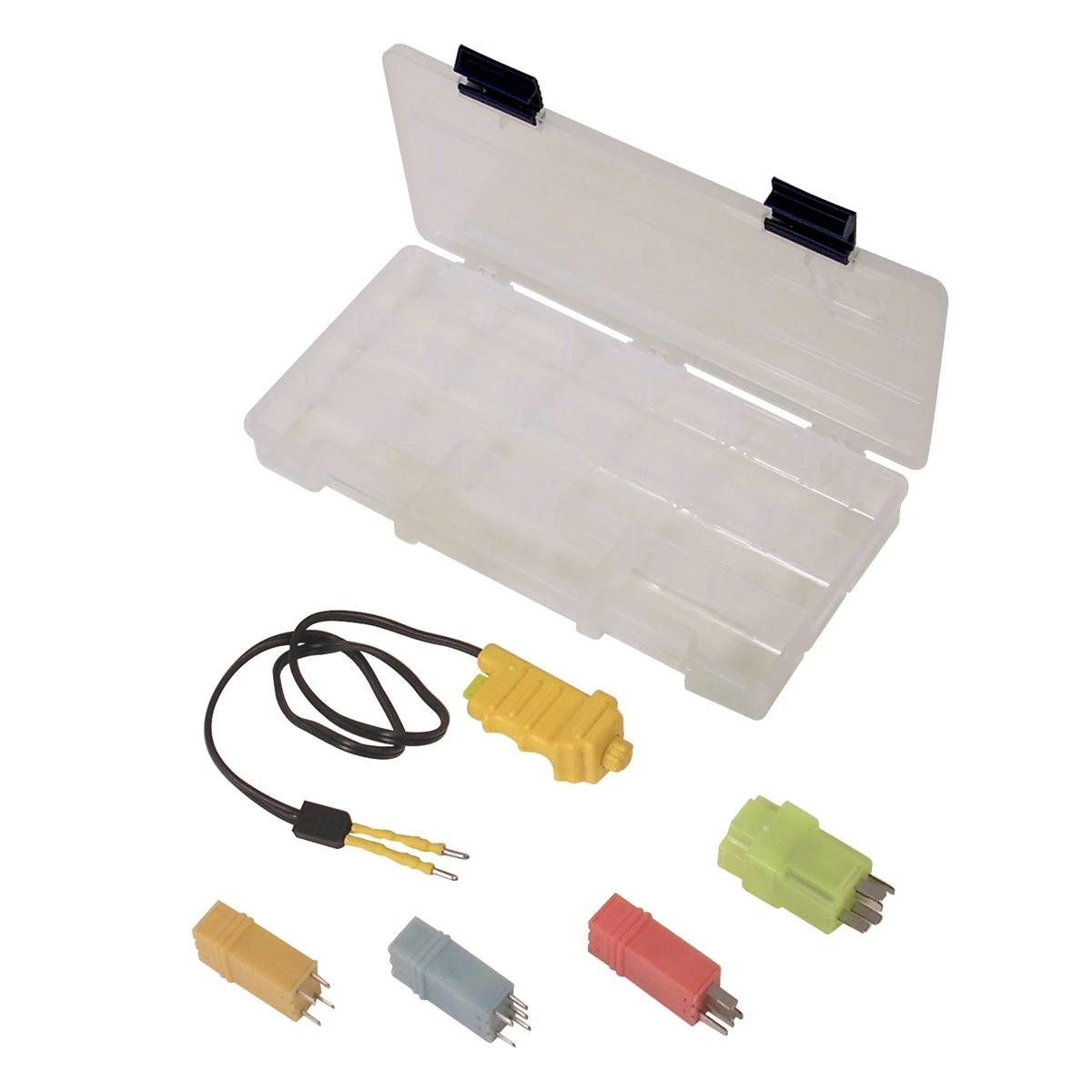

Inspect the Radiator Core and Airflow Path
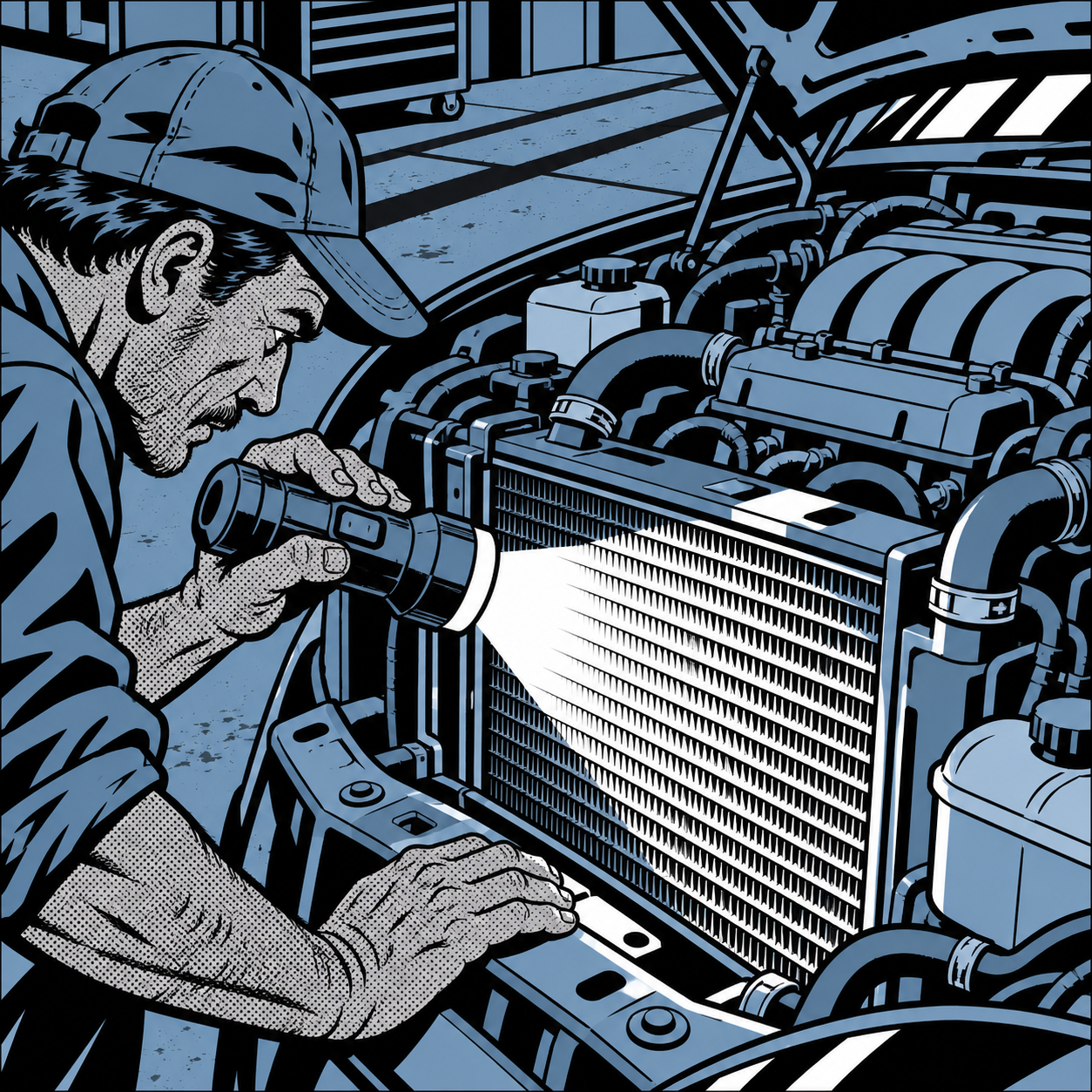
A functioning fan can’t fix a blocked radiator. Pull back any front grille covers or bug screens and look straight through the core with a flashlight — you should see daylight evenly across the fin surface. Common airflow killers:
- Bent or packed fins from road debris, leaves, cottonwood fluff, or insect buildup, especially on the lower half of the core.
- Aftermarket grille guards, debris screens, or poorly mounted accessories blocking airflow to the condenser/radiator stack.
- A/C condenser debris — since air has to pass through the condenser before the radiator on most vehicles, a clogged condenser starves the radiator even with a perfect fan.
- Missing or damaged fan shroud. The shroud directs air through the core instead of around it; a cracked or missing shroud can cut fan effectiveness dramatically even with the motor spinning at full speed.
Clean the core from the engine side out using low-pressure compressed air or a gentle water rinse, working opposite the normal airflow direction to push debris back out the front. Avoid pressure-washing fins straight on, which flattens them and makes the blockage worse over time.
Verify the Thermostat Is Opening Properly
If fans and airflow check out, the thermostat is the next suspect, particularly on vehicles where temperature climbs steadily toward the red zone rather than hovering just above normal. A thermostat that’s sticking or opening late restricts coolant circulation and shows up more at idle because there’s less residual flow from engine vibration and less cooling margin.
A quick, no-disassembly check: with the engine fully warmed up and idling, turn the cabin heat to high. If airflow from the vents stays cool or only lukewarm after several minutes, coolant isn’t reaching the heater core efficiently, which points to a stuck-closed thermostat or a flow restriction. You can also carefully feel (not squeeze a hot, pressurized hose with bare hands) the upper radiator hose near the thermostat housing — it should get hot as the thermostat opens, with a noticeable temperature jump at the opening point, not a slow gradual warm-up.
Because thermostats are inexpensive relative to labor, many shops replace as a matter of course anytime the cooling system is opened for other work — it’s cheap insurance against a comeback.
Rule Out Coolant Condition and Known Gasket Failure Points
Old, degraded coolant loses its ability to transfer heat and can leave gel or sludge deposits that restrict small passages, particularly in heater cores and narrow intake crossover channels. Pull a heater hose or check the overflow bottle for a “goopy” or rusty appearance — that’s a clear signal a flush is overdue, independent of the fan/thermostat findings.
On certain GM 3.8L (3800 series) and similar platforms from the late ’90s through 2000s — Buick Regal, Century, LeSabre, Park Avenue, Pontiac Grand Prix, Oldsmobile Intrigue/Aurora, Chevy Impala/Monte Carlo of that era — there’s a well-documented failure chain worth flagging to the customer even if it’s not today’s root cause: plastic upper intake plenums and lower intake gaskets degrade and leak coolant internally with no visible external puddle, and factory-style heater core material reacts poorly with high-organic-acid coolant chemistries if the wrong coolant type was ever introduced. If you’re already in the cooling system on one of these engines, inspecting the intake gaskets and plenum, the 90-degree coolant elbow under the intake, and the thermostat housing in the same visit saves a return trip.
Know What’s Actually Normal
Not every needle movement at idle is a problem. Many factory gauges — especially pre-2000s GM clusters — show real analog temperature swings, and it’s normal for the needle to climb noticeably at hot idle with the A/C running before the fan brings it back down. Many modern vehicles intentionally use a “lazy” or dampened gauge that doesn’t reflect real-time fluctuation specifically so drivers don’t panic over normal behavior. The threshold that matters is whether the needle approaches the red zone and stays there, or whether it recovers once the fan cycles or the vehicle starts moving. A temp that climbs to just past the midpoint at a long drive-through wait and then drops back down on departure is generally not a repair order — unless it happens repeatedly, keeps trending slightly higher each time, or coincides with loss of cabin heat, white exhaust smoke, or coolant loss.
Quick Diagnostic Checklist
- Confirm the pattern: rises at idle/stop, recovers while driving
- Watch both cooling fans engage at the correct temp and with A/C on
- Inspect radiator fins, condenser, and fan shroud for blockage or damage
- Test thermostat opening via hose temp and cabin heat output
- Check coolant color/condition and overflow bottle level
- Flag known intake gasket/plenum issues on applicable platforms
Looking to stock parts for this exact job on the next vehicle that rolls in?

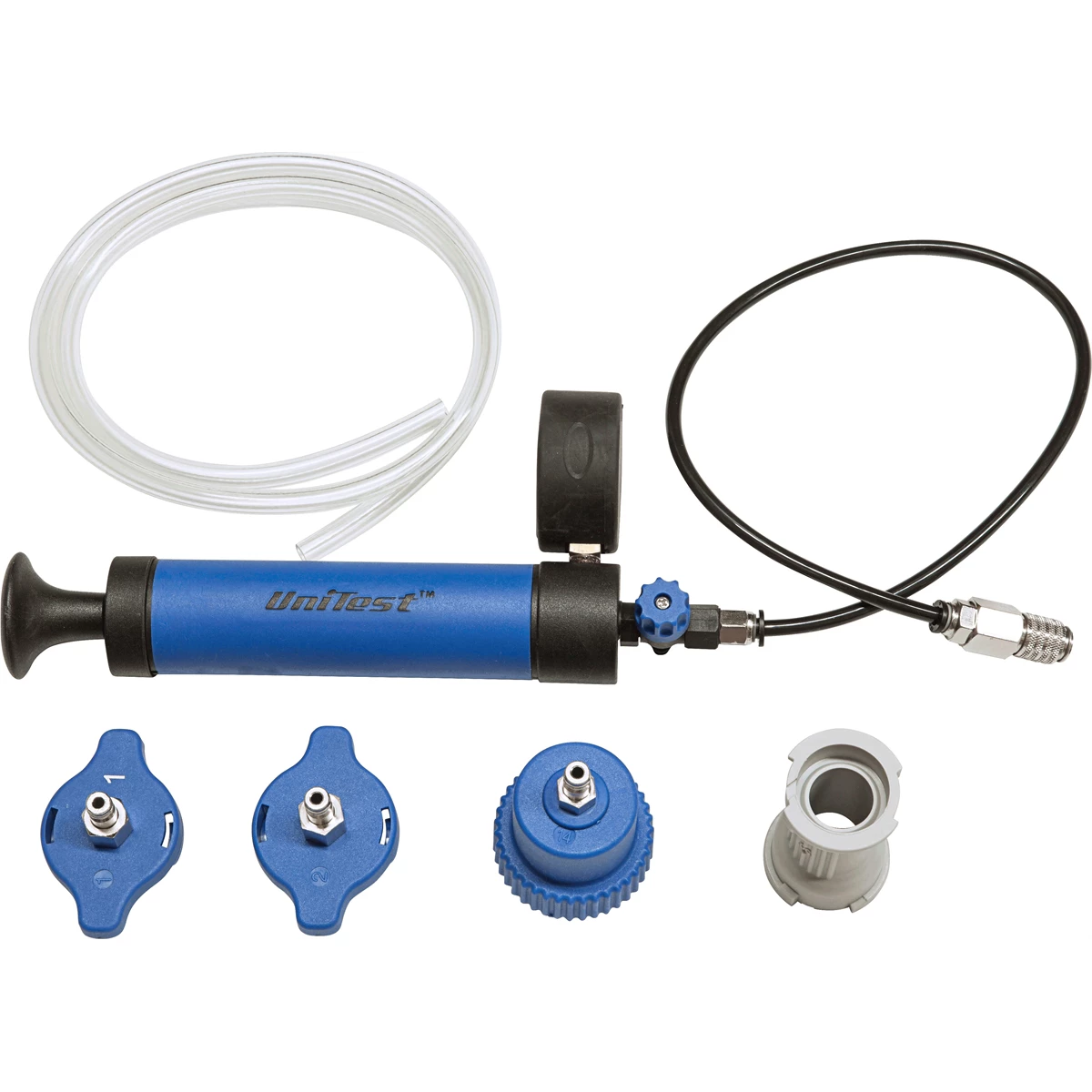
OE Toyota/Lexus Cooling System Pressure Test Kit
Mfg: Private Brand Tools
Part #: 71510
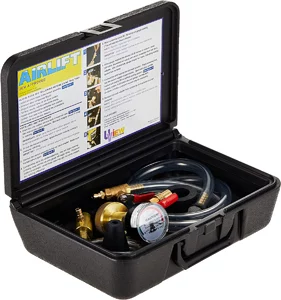
Airlift Cooling System Leak Checker and Airlock Purge Tool Kit
Mfg: Uview
Part #: 550000
Frequently Asked Questions
Why does my car overheat at idle but not while driving?
Because forward motion forces air through the radiator even if the cooling fan isn’t working. At idle, the fan is the only source of airflow, so a weak, failed, or improperly triggered fan — or a blocked radiator/condenser — shows up specifically in stop-and-go or stationary conditions.
Is it normal for the temperature gauge to rise at a drive-through or stoplight?
A modest rise toward the middle-to-upper gauge range during a long idle, especially with the A/C running, is common and not necessarily a fault, particularly on older analog-style gauges. It becomes a concern if it approaches the red zone, doesn’t recover once moving, or trends worse each time.
How do I test if my cooling fan is the problem?
Watch the fan directly with the hood open while the engine is at operating temperature and the A/C is on. It should spin at the correct coolant temperature threshold. If it doesn’t engage, check the fuse, relay, coolant temp sensor/switch, and wiring before replacing the motor.
Can a bad thermostat cause overheating only at idle?
Yes, though it typically also affects driving conditions to some degree. A thermostat stuck partially closed restricts flow and shows up more at idle because there’s less natural circulation. Weak or no heat from the vents while fully warmed up is a useful clue.
Will flushing the coolant fix an idle overheating issue?
Only if degraded or contaminated coolant is the actual cause — such as sludge restricting the heater core or narrow passages. It won’t fix a dead fan, a clogged radiator exterior, or a mechanically stuck thermostat, so diagnose the airflow and thermostat first.
Is idle overheating dangerous to keep driving on?
Occasional, moderate rises that fully recover are generally low risk short-term, but repeated events, sustained near-redline temps, or temps paired with coolant loss or loss of power can cause head gasket failure or worse. Have it diagnosed before it becomes a roadside breakdown.
Related Tools & Parts
For the cooling system diagnostics and repairs covered in this article, our Automotive Cooling System category stocks cooling fans, thermostats, coolant, radiator cleaner, and all related components you’ll need.
- Fans, motors, relays, and temperature sensors
- Thermostats and thermostat housings
- Coolant, radiator cleaner, and maintenance supplies

The Toolsource Technical Team blends decades of real-world automotive service experience with up-to-date technical research. Our writers collaborate with professional mechanics, shop owners, and diagnostic specialists to deliver practical, workshop-ready guidance you can trust.


Follow us on social media