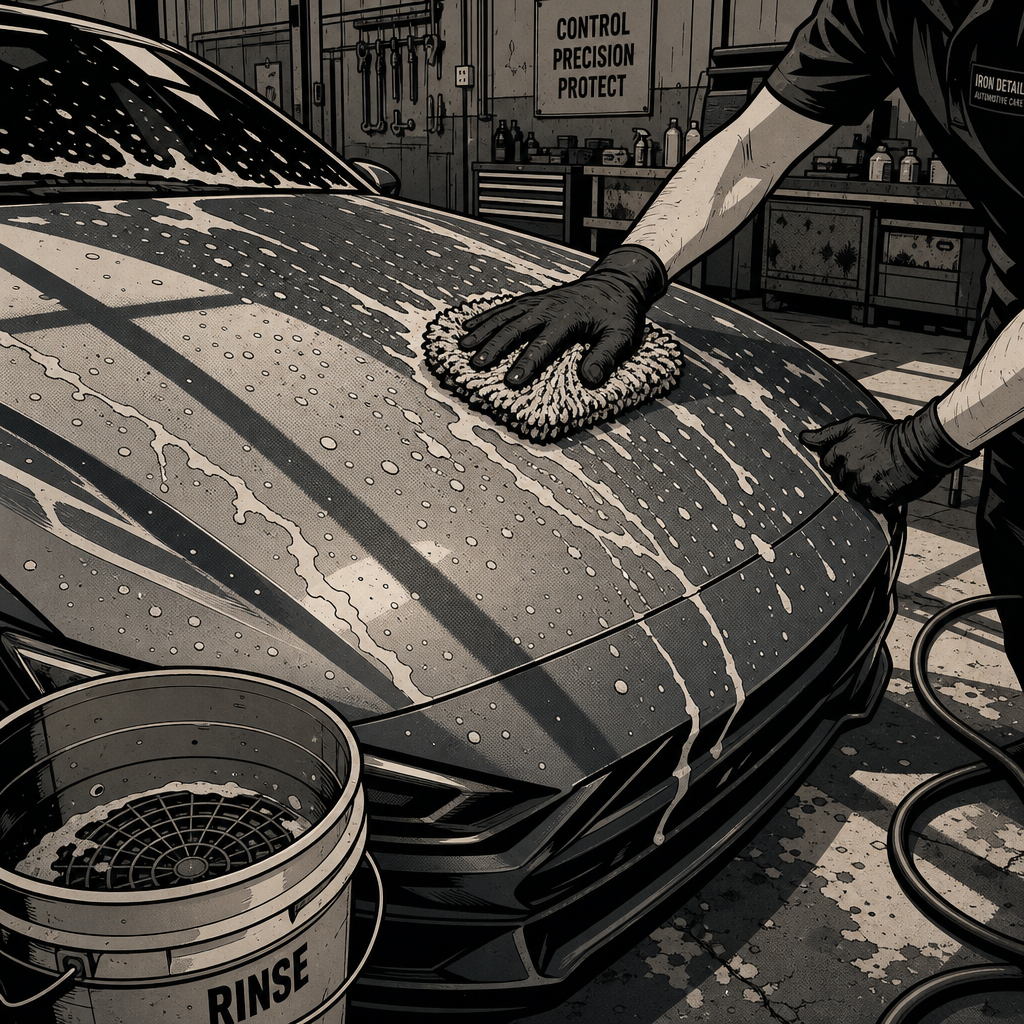
A customer washes their car on a sunny afternoon, and by the time they’re done rinsing, the paint is covered in hazy streaks and a filmy residue that won’t wipe off with a towel. The instinct is to blame the soap. In most cases, the soap isn’t the problem — the process is. Nearly every experienced detailer will point to the same root cause: soap drying on the panel before it gets rinsed off, usually because the car was washed in direct sunlight, in sections too large to rinse quickly, or with too much product left to sit. Below is a practical breakdown of what’s actually happening on the paint and the technique changes that prevent it, along with how to correct residue that’s already baked on.
What’s Actually Causing the Streaks
Car soap is designed to be applied, agitated, and rinsed within a short working window. When water and soap sit on a hot panel, the water evaporates faster than you can rinse it, concentrating the surfactants, waxes, and any dissolved minerals into a film on the clear coat. This is intensified by three conditions that almost always show up together in these situations:
- Panel temperature. Direct sun, especially on dark colors, can push paint surface temperature well above ambient air temperature. That’s enough to flash-dry soapy water in seconds.
- Working the whole car at once. Soaping every panel before rinsing any of them means the first panels you washed have been sitting the longest by the time you get to them with the hose.
- Product concentration. Overdosing soap, or using a wash-and-wax formula, leaves more residue behind if it isn’t fully rinsed — wax-infused soaps are especially prone to this because the wax is meant to bond to the surface.
None of this means the soap is defective. Most mainstream car wash soaps, including big-box store staples, perform similarly when used correctly. The difference between a good result and a streaky one is almost entirely about heat and timing.
Choose a Wash Product That Matches the Conditions
If you can control when you wash, a straightforward pH-neutral shampoo is the safest default — it won’t strip existing wax or sealant and rinses cleanly. If you’re stuck washing in warm conditions or midday sun and can’t reschedule, switch to a thinner, high-suds “strip wash” style product diluted per the label, and resist the urge to add extra soap for a bigger foam. More product does not mean a better clean; it means more residue to rinse before the sun beats you to it. Rinseless or waterless wash formulas are also worth keeping on hand for exactly this scenario, since there’s no standing soapy water to flash-dry in the first place — you work small sections with a saturated microfiber and immediately wipe with a clean, dry towel.
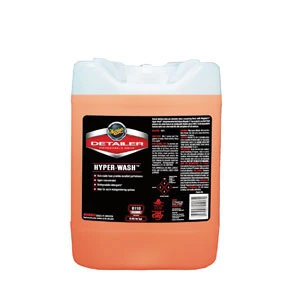
Meguiar's Hyper-Wash Biodegradable Car Wash Soap 5-Gallon
Mfg: Meguiars
Part #: D11005
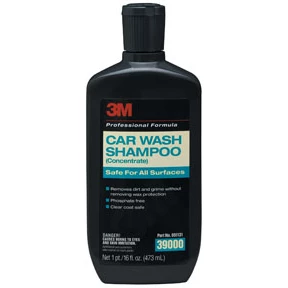
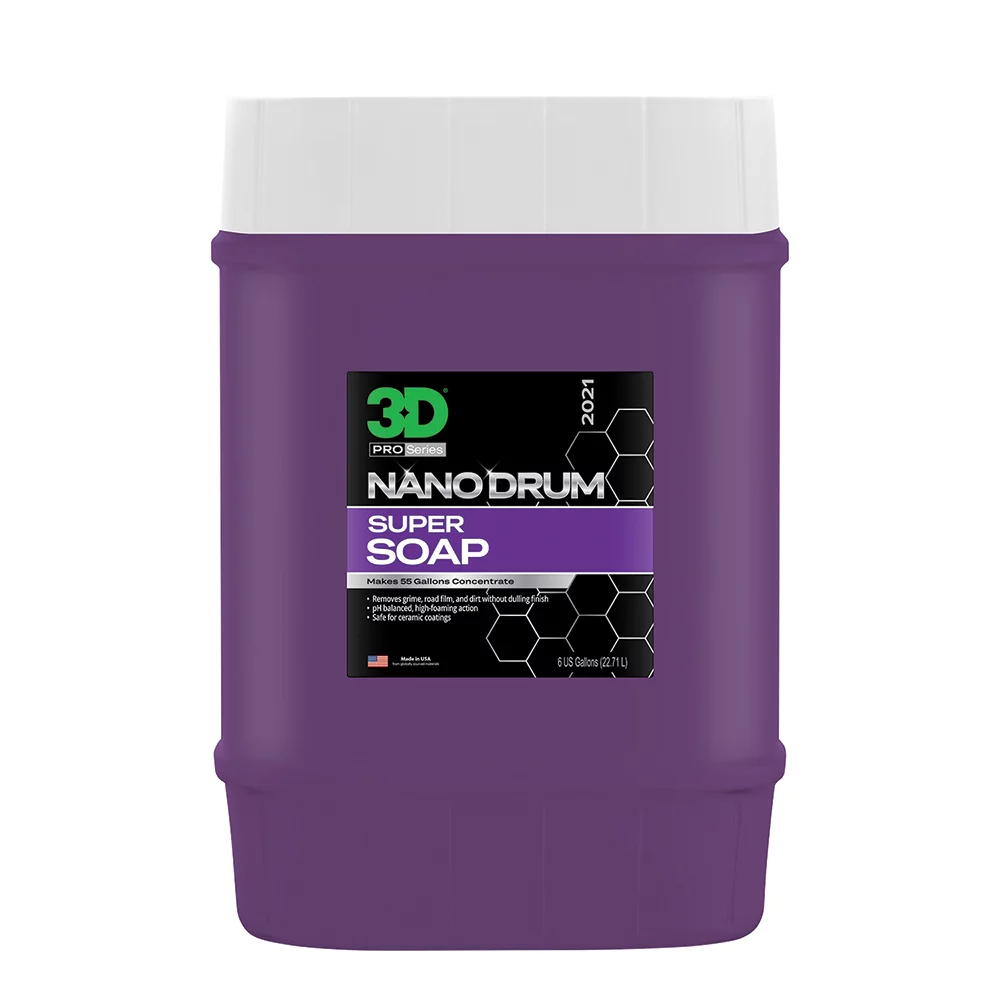
Two-Bucket Method and Contact Materials
Regardless of which soap you use, the two-bucket wash method (one bucket of soap solution, one bucket of clean rinse water, both with grit guards) reduces the chance of dragging dirt back into the mitt, which matters more on heavily soiled vehicles that need multiple bucket refills. If you’re refilling both buckets more than once, that’s a signal the wash is taking too long for the conditions — consider pre-rinsing more thoroughly with a pressure washer or hose nozzle before you ever touch a mitt to the paint, so less agitation and time is needed on each panel.
Wash One Panel at a Time, Not the Whole Car
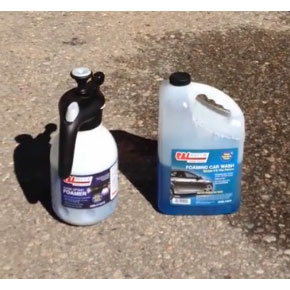
This is the single biggest technique fix. Instead of soaping the hood, roof, and both sides before rinsing anything, work in sections: soap one panel (or a small group, like a fender and adjacent door), agitate, and rinse immediately before moving on. This keeps the exposure window on any given panel to under a minute rather than several minutes. Skip foam cannons and foam guns for sunny-day washes — they look and feel satisfying, but the thick foam sits on the surface longer than a direct soapy-mitt application, extending drying time exactly when you’re trying to minimize it. A bucket-and-mitt approach paired with an immediate rinse gives you more control over how long soap stays wet on the paint.
Time the Wash and Manage the Environment
Early morning or evening, after the sun has lost its intensity, are the two reliable windows for an outdoor wash — “before the heat of the day or after it” is the simplest rule of thumb to give a customer. Touch the hood or roof before starting; if it’s warm to the touch, wait or move to shade. A carport, garage, or the shadow side of a building works better than a pop-up canopy, which is difficult for one person to manage and rarely stays positioned as the sun moves throughout the wash. If shade genuinely isn’t available and the job can’t be rescheduled, that’s when panel-by-panel washing and a rinseless method become necessary rather than optional.
Dry the Car Immediately and Correctly
Even a perfect wash can leave water spots if drying is slow or incomplete. As soon as the final rinse is done, dry with a large waffle-weave or plush microfiber towel, or a dedicated drying towel, working panel by panel in the same order you washed. A quick detailer or dedicated drying aid, diluted per label instructions and misted on before wiping, helps lubricate the surface and prevents the towel from dragging any remaining mineral content into a streak. Glass and chrome trim show water spotting fastest, so prioritize them early in the drying pass rather than last.
Product search: pH-neutral car wash soap and waffle weave drying towel
Correcting Residue That’s Already Dried On
If the damage is already done — a hazy film or streaking from a wash gone wrong — it’s usually fixable without a full correction. Start with a dedicated panel wipe or isopropyl alcohol solution to strip any wax or soap film, then reassess. Light residue often comes off with a clay bar and lubricant, which lifts bonded contaminants sitting on top of the clear coat without touching the paint itself. If haze remains after claying, a light machine polish will remove it along with any fine marring from the original wash. Avoid reaching straight for a compound or aggressive polish; residue from soap and water is a surface-level problem, not something requiring paint correction in most cases. Once corrected, protect the surface with a coat of sealant or wax before parking the vehicle back outside.
Quick Checklist: Washing in Sun-Prone Conditions
- Touch the panel first — if it’s warm, wash in shade or wait for a cooler window
- Wash early morning or evening, never midday sun on a hot vehicle
- Work one panel at a time: soap, agitate, rinse, move on
- Use correct dilution — more soap is not a better clean
- Consider a rinseless wash if shade isn’t available
- Dry immediately with a clean towel and a drying aid, panel by panel
- Prioritize glass and chrome trim during drying to avoid mineral spotting
Product search: car detailing kit soap towels drying aid
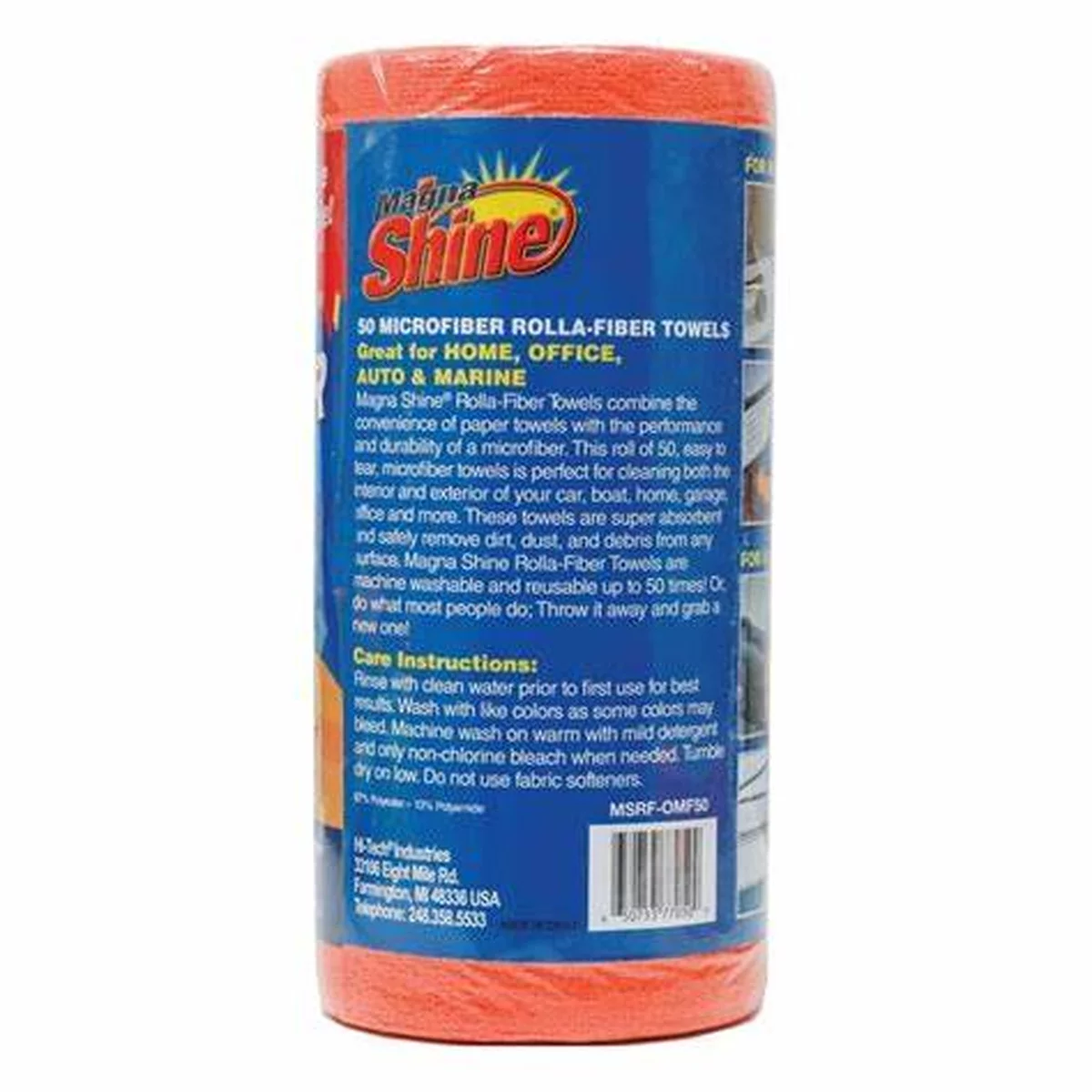
RBL Products (6) MAGNA SHINE MICROFIBER TOWELS
Mfg: RBL Products
Part #: RBL.MSRF-OMF50
FAQs
Is the soap itself usually to blame for streaking?
Rarely. Most mainstream car wash soaps perform similarly; the streaking almost always traces back to the soap drying on the panel before it’s rinsed, not a defect in the product.
Can I use a wash-and-wax soap in sunny conditions?
It’s riskier. Wash-and-wax formulas contain waxes meant to bond to the surface, so if they aren’t rinsed quickly, more residue is left behind than with a plain pH-neutral shampoo.
Is a foam cannon a bad idea for a hot-weather wash?
For sunny, hot conditions, yes — thick foam sits on the surface longer than a direct mitt application, increasing the chance it dries before you rinse it off.
What’s the fastest way to fix residue that’s already dried on the paint?
Try a panel wipe or isopropyl alcohol solution first, then a clay bar with lubricant if haze remains. A light machine polish handles any leftover marring; full paint correction usually isn’t necessary.
Does water quality matter as much as technique?
It contributes. Hard tap water leaves mineral deposits as it evaporates, so using filtered, deionized, or reverse-osmosis water reduces spotting risk on top of correct washing and drying technique.
Is rinseless washing a good option for sun-exposed vehicles?
Yes — since there’s no standing soapy water on the panel, there’s nothing to flash-dry. Work small sections with a saturated microfiber and wipe immediately with a clean, dry towel.
Shop Paint & Body Supplies
The techniques in this guide require basic supplies. Our Paint & Body section carries pH-neutral shampoos, microfiber towels, clay bars, and polishes for washing, drying, and correcting residue.
- pH-neutral car wash soaps
- Waffle-weave and microfiber drying towels
- Clay bars, polishes, and sealants

The Toolsource Technical Team blends decades of real-world automotive service experience with up-to-date technical research. Our writers collaborate with professional mechanics, shop owners, and diagnostic specialists to deliver practical, workshop-ready guidance you can trust.


Follow us on social media