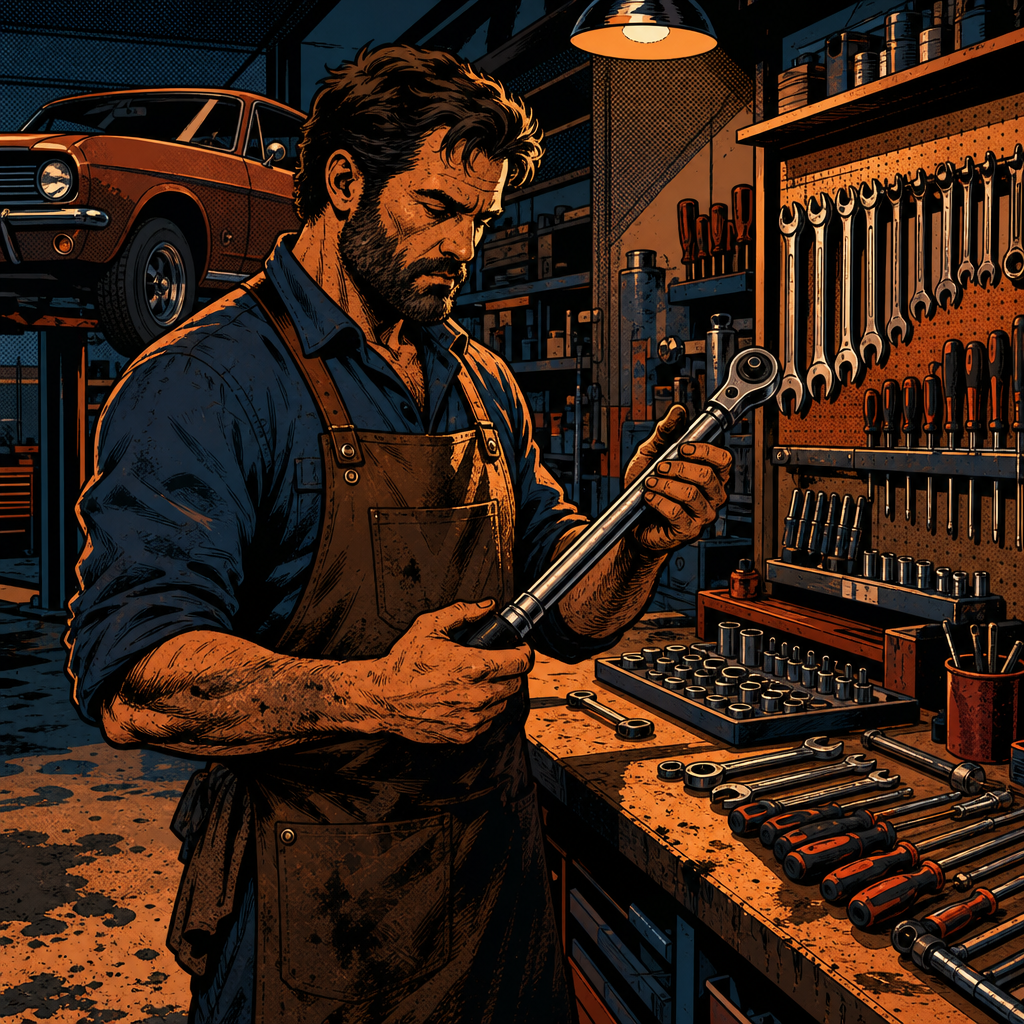
If you’ve ever wondered why automotive technicians are expected to invest thousands—sometimes tens of thousands—of dollars in their own tools while other trades get employer-provided equipment, the answer lies in a pivotal moment from 1975. That year’s major union strike fundamentally restructured how technicians are compensated, creating a ripple effect that still defines the industry today. Before that strike, technicians earned 50% of the posted shop labor rate with no guarantee, a model that allowed skilled professionals to build substantial careers. What followed was a pay restructuring that introduced guarantees but reduced overall earning potential, ultimately leading to the tool ownership expectations we see now.
The 1975 Strike That Changed Everything
Prior to 1975, automotive technicians operated under a straightforward compensation model: they received 50% of whatever the shop charged customers for labor. If the shop rate was $100 per hour, the technician earned $50. There were no guarantees—slow periods meant less pay—but the upside was substantial. This model enabled technicians to afford homes, vehicles, boats, and even support families on a single income while paying for college tuition.
The strike emerged when management claimed they needed to compete with budget operations like Sears Auto Center and Montgomery Ward Auto Center. Their proposal involved cutting the percentage-based pay but offering guaranteed minimums. The strike lasted approximately nine months, and while it did secure some guarantees through union negotiation, it fundamentally altered the economic equation for technicians. Many experienced professionals left the industry entirely once the new structure took effect.
The irony isn’t lost on veteran technicians: the competitors that justified these pay cuts—Sears and Montgomery Ward auto centers—no longer exist, yet the reduced compensation model persists. Meanwhile, technicians in comparable trades like plumbing, electrical work, and HVAC consistently earn more, despite requiring similar skill sets and tool investments.
How Modern Shop Labor Rates Compare
Today’s shop labor rates typically range from $140 to $200 per hour depending on location and shop type. Under the old 50% model, this would translate to $70-$100 per hour for technicians—a figure that would represent a significant raise for many currently working professionals. For context, diesel mechanics in unionized positions often do see compensation structures closer to this range, demonstrating that the model remains viable in certain sectors.
The current reality shows automotive technicians as the lowest-paid professionals among skilled trades. A technician who has mastered HVAC systems, electrical diagnostics, structural repair, and fabrication—all skills regularly used in automotive work—could earn substantially more by specializing in any one of those fields outside the automotive industry. This pay disparity contributes directly to the ongoing technician shortage that shops across the country report.
Some technicians recall working at Sears in the early 1980s when mechanics received 45% of labor charges. By the mid-1990s, that same position had shifted to hourly pay capping at $12.19 per hour—a dramatic reduction that foreshadowed Sears’ eventual exit from automotive services. The pattern suggests that cost-cutting on technician compensation may be counterproductive for long-term business viability.
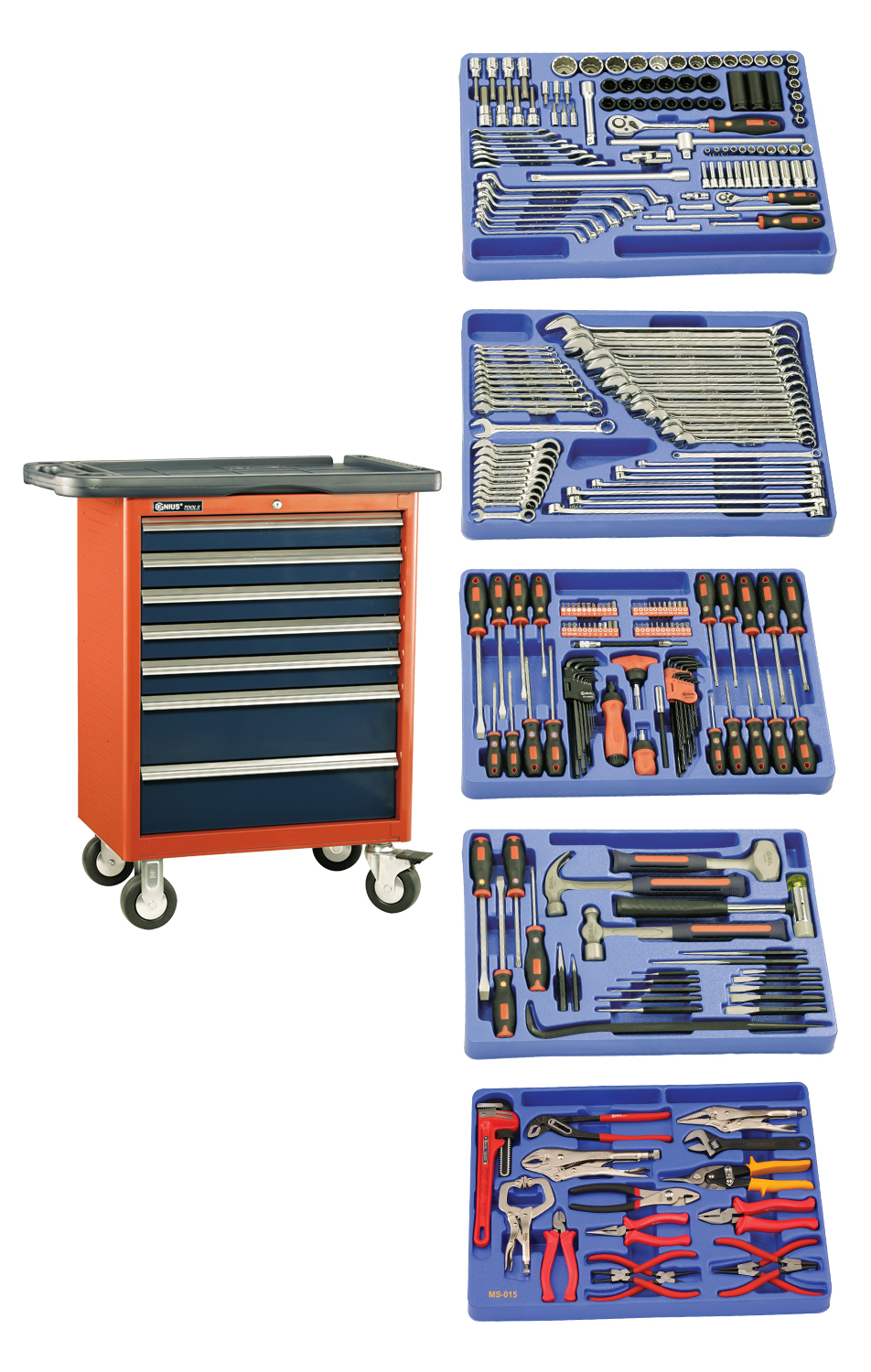
266PC Metric Mechanics Tool Set with Roller cabine
Mfg: Genius Tools
Part #: MS-266TS
ID: 316786
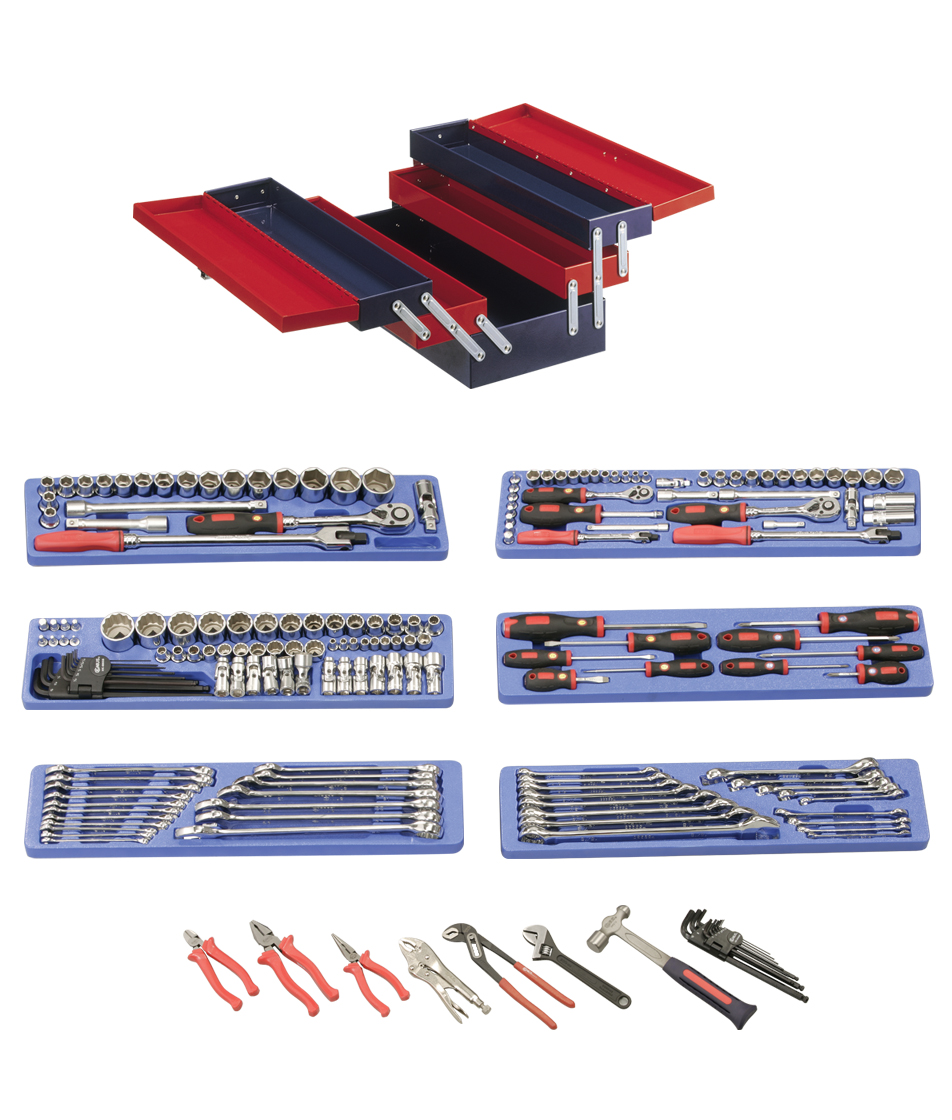
190PC Metric & sae sae standard Mechanics Tool Set with Tool Ch
Mfg: Genius Tools
Part #: MS-190TS
ID: 316371
Understanding Flat Rate Compensation
Flat rate pay is so unusual that technicians report non-industry people literally refusing to believe it’s legal when first explained. Here’s how it works: each job has an assigned time value (from manufacturer guides or aftermarket sources like Alldata). If a job pays 2.0 hours and you complete it in one hour, you’re paid for two hours. If it takes you four hours, you’re still only paid for two hours. You only get paid for hours flagged on completed jobs—time spent waiting for parts, dealing with comebacks, or sitting idle during slow periods generates no income.
The legal minimum varies by state. In some jurisdictions, shops must pay at least minimum wage times clock hours if flagged hours fall short. California requires double minimum wage ($33.80 as a base rate) for skilled technicians who provide their own tools, with actual pay being whichever is greater: base rate times clock hours or flat rate times flagged hours. However, many states offer no such protections, creating scenarios where technicians work full shifts but take home minimal pay during slow periods.
This structure creates several problematic incentives. It rewards speed over thoroughness, potentially encouraging corner-cutting. It can promote upselling unnecessary services to generate more flagged hours. It creates “gravy fights” where technicians compete for higher-paying jobs while avoiding complex, poorly-timed work. Manufacturers often pay lower labor rates for warranty work than customers pay for the identical repair, meaning the technician earns less for the same effort based solely on who’s paying the bill.
The system also enables a troubling practice: as technicians become more efficient and consistently beat book times, manufacturers and labor guide publishers “adjust” times downward. What once paid 3.0 hours might be reduced to 2.5 hours once enough data shows technicians completing it faster. This creates a race to the bottom where efficiency improvements benefit everyone except the technician doing the work.
Why Tool Ownership Became The Standard
266PC Metric Mechanics Tool Set with Roller cabine
Mfg: Genius Tools
Part #: MS-266TS
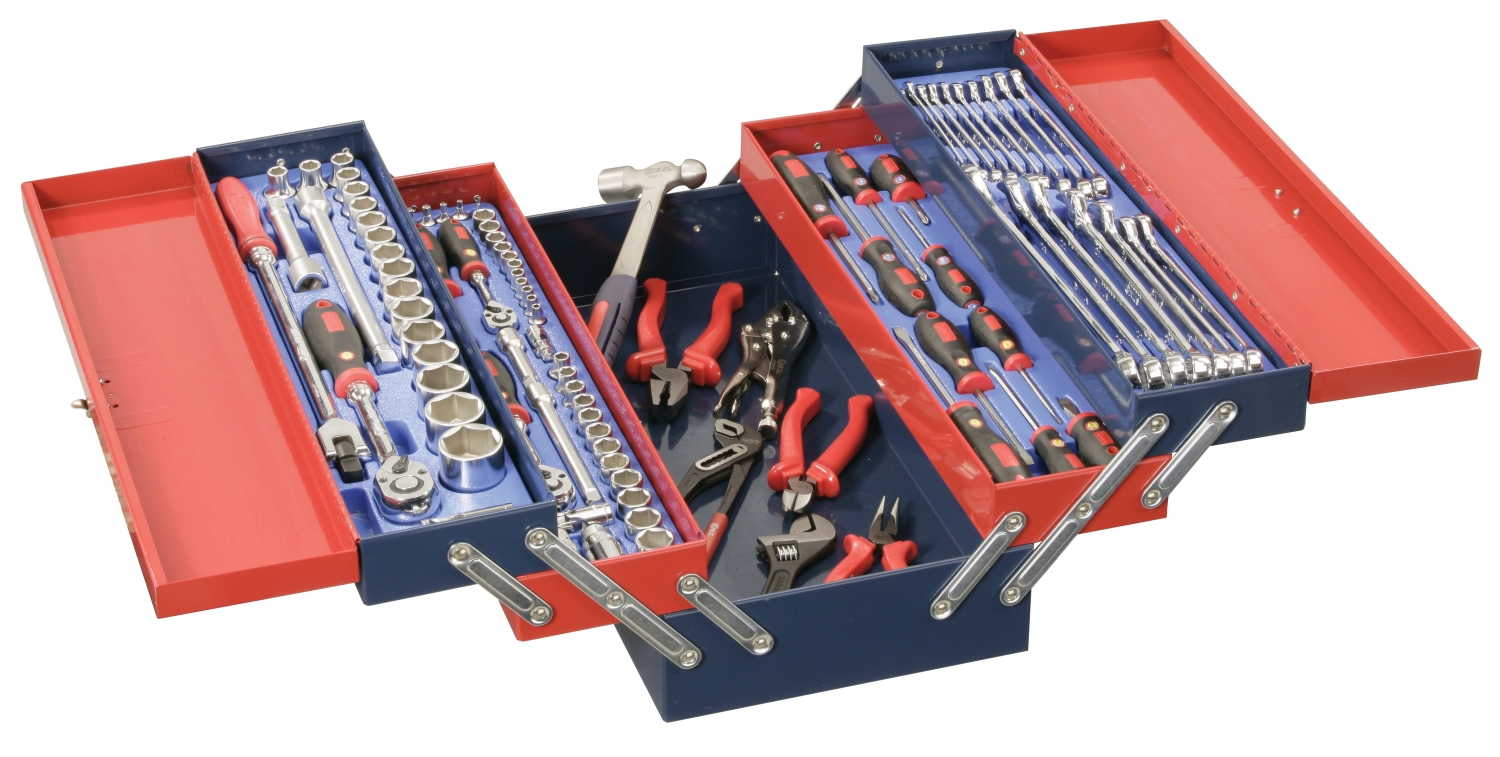
110PC Metric Mechanics Tool Set with 5 Tier Portab
Mfg: Genius Tools
Part #: MS-110TS
Tool ownership by technicians offers some legitimate advantages. Tools move with you when changing employers, maintaining your investment. They can be used for personal vehicle maintenance and side work. Many technicians prefer selecting their own tools based on personal preference and quality standards rather than using whatever the shop provides.
However, the expectation that technicians supply even basic tools while earning less than comparable trades represents an economic burden unique to automotive work. Companies can write off tool purchases as business expenses on taxes; historically, individual technicians couldn’t, though some jurisdictions now allow itemized deductions for unreimbursed employee expenses including tools, boots, and uniform laundry when working with a qualified tax professional.
The reasonable middle ground—which some shops and most heavy-duty truck operations follow—involves shops providing major equipment (lifts, diagnostic scanners, specialty tools, air tools) while technicians supply personal hand tools. Government fleet operations, including fire and EMS shops, typically operate this way with annual tool budgets to maintain and update equipment. This prevents the common shop problem of broken tools being returned to communal toolboxes and ensures equipment meets professional standards.
International comparisons highlight how unusual the American model is. In Germany, technicians show up on day one and receive safety shoes, uniforms, and a fully-stocked toolbox from the employer. Insurance isn’t tied to employment, and hourly rates around €25 ($27+ USD) are standard. Norwegian dealerships provide all tools, pay hourly wages around $27 base (reaching $33 with efficiency bonuses), and include benefits even when technicians attend medical appointments. Aircraft mechanics in the United States similarly receive employer-provided tools as standard practice.
Guaranteed Pay vs. Pure Flat Rate
The debate between guaranteed pay and pure flat rate continues to divide the industry. Pure flat rate means your paycheck reflects only flagged hours—if the shop is slow and you flag 20 hours in a 40-hour week, you’re paid for 20 hours (or minimum wage for 40, whichever applies in your jurisdiction). Shops sometimes won’t allow technicians to leave during slow periods, forcing them to sit unpaid until closing time, particularly problematic for those with long commutes.
Guaranteed pay structures offer a base hourly rate regardless of flagged hours, with production bonuses when you exceed targets. This model provides income stability while still rewarding efficiency. Critics argue guaranteed technicians become lazy, but this typically indicates poor management rather than inherent problems with the pay structure. Other industries successfully use performance improvement plans and production metrics to maintain accountability without pure commission structures.
Some experienced technicians report working 40+ years with guarantees and never considering jobs without them. Union dealerships and truck/coach operations more commonly offer hourly pay, including compensation for slow days when work involves cleaning and shop maintenance. Heavy-duty mechanics particularly benefit from hourly structures, avoiding the “special tool” proliferation that plagues automotive work while earning higher base rates.
The hybrid model—guaranteed minimum plus flat rate for flagged hours exceeding the guarantee—offers the best of both structures. Technicians maintain baseline income security while benefiting from efficiency. High-performing technicians aren’t penalized during industry-wide slow periods, and shops retain motivation for productivity without creating desperation-driven shortcuts.
What Would Need to Change
Returning to a 50% shop labor rate model would require fundamental industry restructuring. At current rates of $140-$200 per hour, this would mean $70-$100 hourly for technicians—transformative for most currently working professionals. Several technicians indicated they’d happily purchase all consumables and tools at those rates without complaint.
Several structural changes would be necessary to make this viable:
- Standardized warranty labor rates: Manufacturers should pay the same labor rate the shop charges retail customers. Several states have successfully legislated this (Illinois requires warranty pay at 1.5x the manufacturer base rate), proving the model works. Class action lawsuits against manufacturers for paying technicians less than customer rates for identical work could accelerate this change.
- Protection against time guide manipulation: Labor time standards should be established independently and adjusted only through transparent processes with technician input, preventing the current practice of reducing times once efficiency data emerges.
- Minimum guarantees as industry standard: Federal or state legislation requiring guaranteed minimum pay (ideally above minimum wage for skilled trades) would eliminate the worst flat rate abuses while maintaining performance incentives.
- Employer-provided major equipment: Establishing industry standards for shop-provided tools (diagnostic equipment, specialty tools, air tools, major equipment) while allowing personal hand tool ownership would align automotive with other trades.
- Renewed unionization efforts: While the 1975 union strike led to pay cuts, modern unionization focused on percentage-based pay restoration rather than just guarantees could rebuild technician bargaining power. Diesel mechanics demonstrate that union representation can work in automotive sectors.
Quick Checklist: Evaluating a Shop’s Pay Structure
Before accepting a technician position, verify these compensation elements:
- □ Guaranteed minimum pay (hourly rate regardless of flagged hours)
- □ Clear flat rate schedule available for review before hiring
- □ Warranty labor paid at same or higher rate than customer pay
- □ Shop-provided major diagnostic equipment and specialty tools
- □ Written comeback/redo policy (who absorbs the cost)
- □ Paid time for mandatory training and certifications
- □ Health insurance and benefits not dependent on hours flagged
- □ Clear efficiency metrics and production bonus structure if applicable
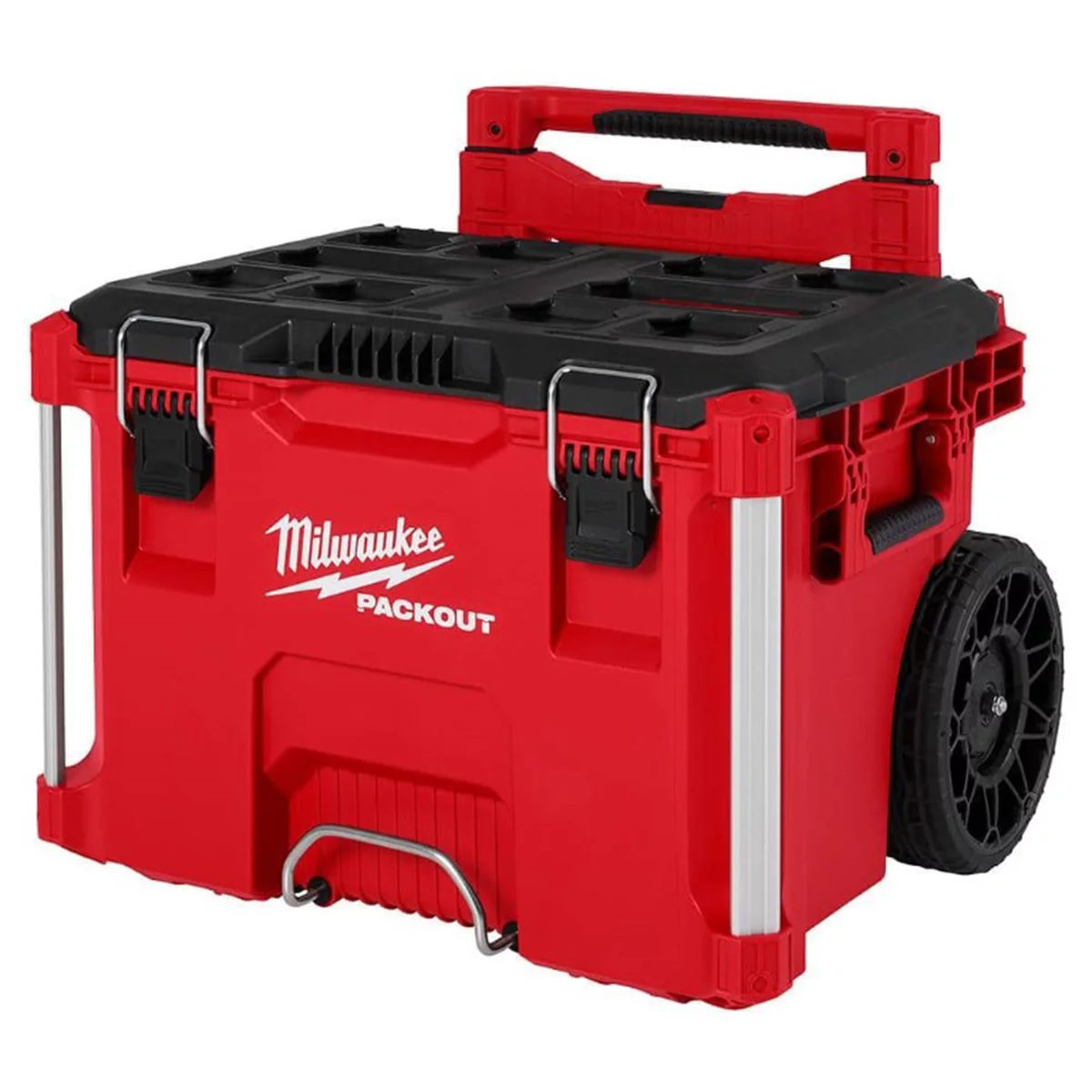
Milwaukee Tool PACKOUT 10" Compact Portable Tool Box with Adjustable Dividers and Interior Storage Tray
Mfg: Milwaukee Electric Tools
Part #: 48-22-8427
ID: 406696
Frequently Asked Questions
Why don’t automotive technicians just unionize like other trades?
Some automotive sectors are unionized, particularly diesel and heavy-duty mechanics. However, the 1975 strike that introduced guarantees also reduced percentage-based pay, making some technicians wary of unionization. Additionally, the fragmented nature of automotive shops (many small independent operations versus large union-friendly factories) makes organizing more difficult than in other trades. Modern unionization efforts focused on restoring percentage-based pay rather than just guarantees might gain more traction.
Is flat rate pay legal?
Yes, though it’s regulated differently by state. Federal law and most states require that clock hours times minimum wage serves as the floor—you can’t be paid literally zero for showing up. California and some other states require higher minimums for skilled trades. The practice shocks people outside the industry because few other professions use similar models, but it remains legal provided minimum wage requirements are met.
What happens if a flat rate job takes much longer than the book time?
You’re still paid only the book time. If a job pays 2.0 hours but takes you 6 hours due to seized bolts, unforeseen complications, or inaccurate labor guides, you receive 2.0 hours of pay. This is one of flat rate’s most controversial aspects. Some shops have policies for extreme outliers, but most expect technicians to absorb the loss. This encourages declining difficult jobs and creates the “gravy” versus “junk work” dynamic in shops.
Do shops in other countries use flat rate?
It’s far less common internationally. Many European shops pay hourly wages with efficiency bonuses. German and Norwegian shops typically provide all tools and pay guaranteed hourly rates. The flat rate model is predominantly an American phenomenon, though some Canadian shops use similar structures. International technicians often express disbelief at American compensation practices when they learn about them.
Why do manufacturer warranty times pay less than customer labor rates?
Manufacturers argue they’ve already sold the vehicle and warranty work represents a cost rather than revenue, so they negotiate lower labor reimbursement rates with dealerships. The dealership accepts this to maintain manufacturer relationships and warranty authorization. Unfortunately, the technician absorbs the difference—doing identical work for less pay based solely on who’s paying the bill. Some states have legislated against this practice, requiring warranty labor at or above customer rates.
Can you make good money on flat rate?
Some technicians do, particularly specialists in high-paying areas like transmission work or diesel, working in consistently busy shops with fair labor times. However, it requires consistently high efficiency (105-110% or better), stable workflow, and favorable labor time guides. Many experienced technicians report it’s getting harder as times get cut and unpaid requirements (paperwork, diagnostic processes, multi-point inspections) increase. Guaranteed pay plus production bonuses offers more income stability while still rewarding efficiency.
Invest in Quality Hand Tools
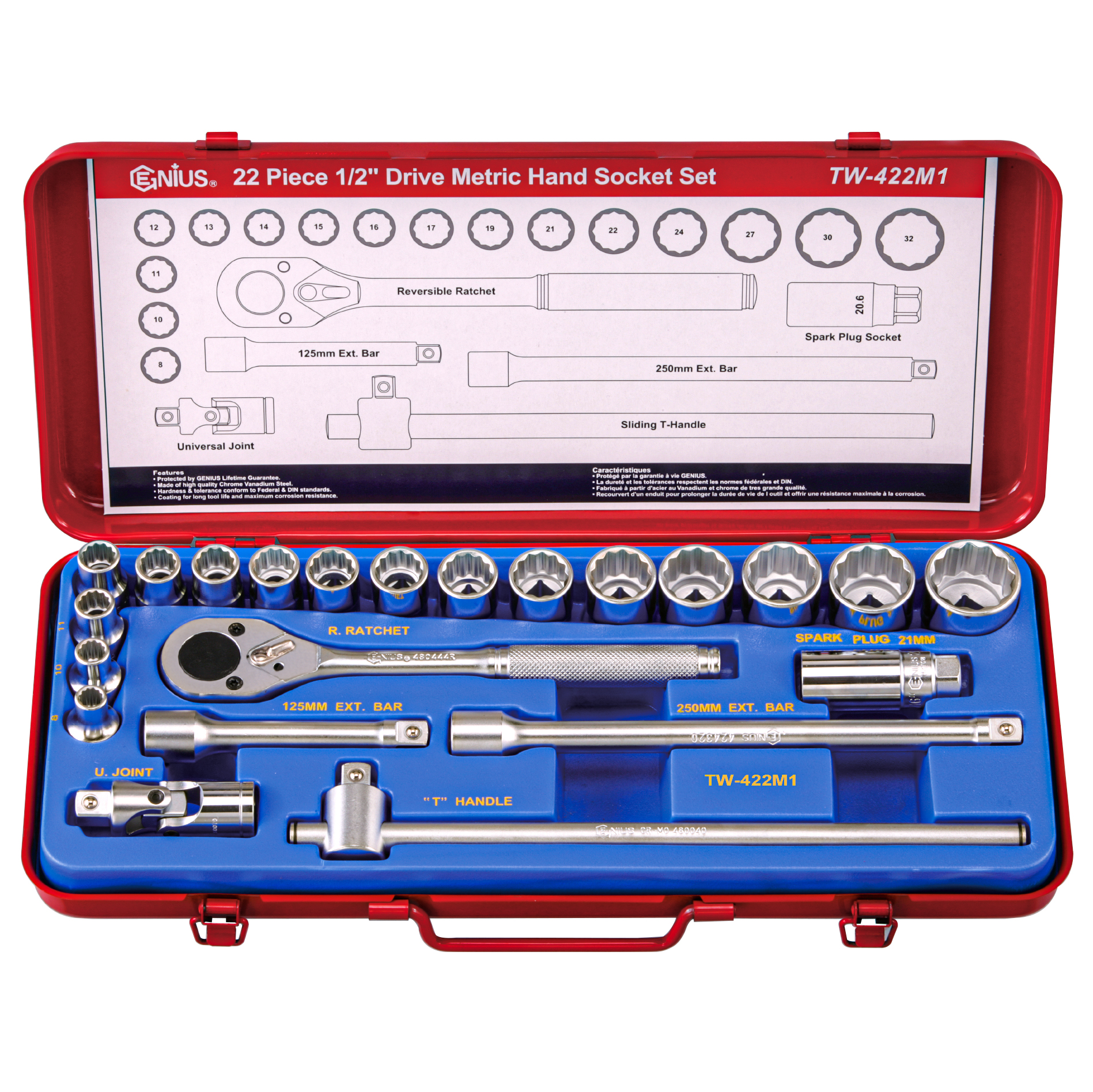
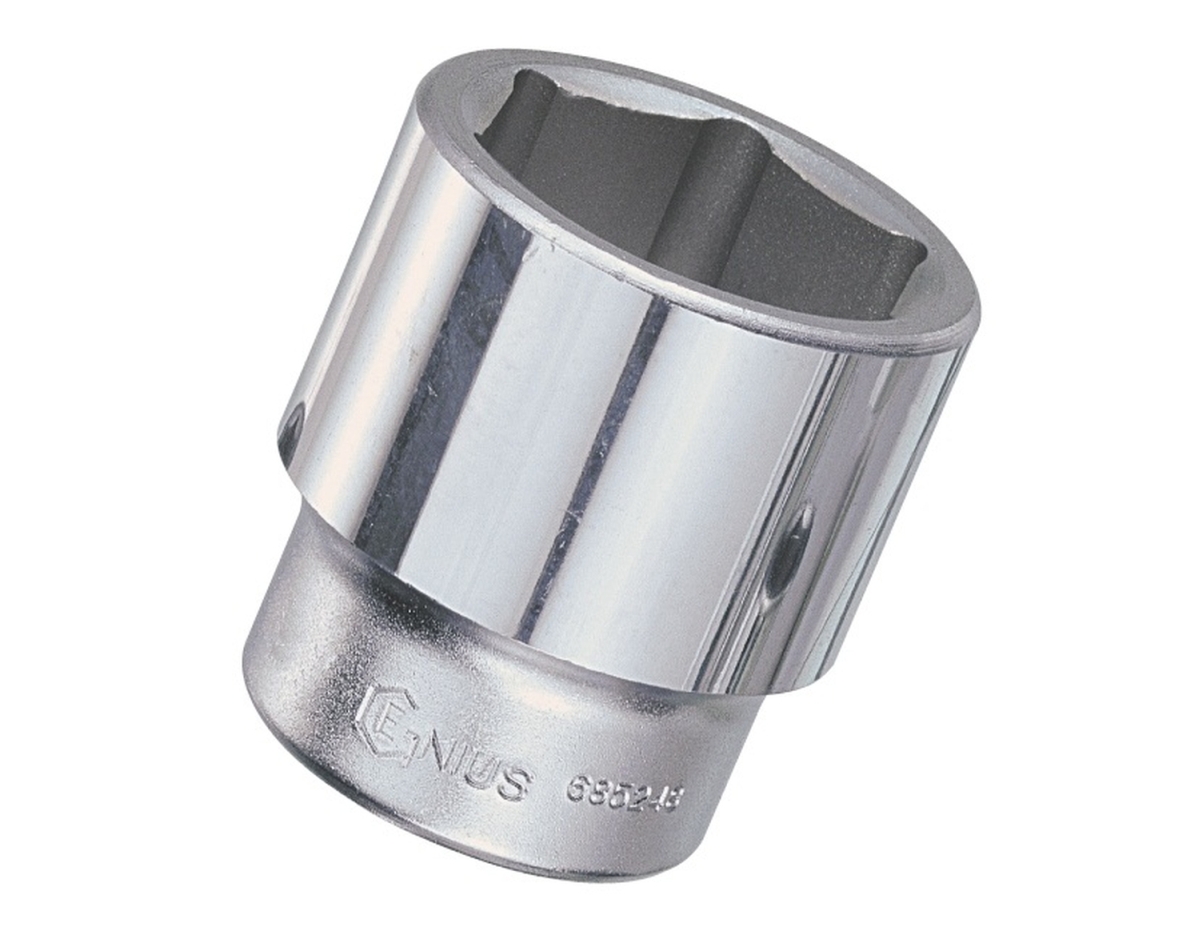
Building a reliable personal tool collection is essential for any technician working flat rate or commission-based pay. Whether you’re starting out or upgrading worn equipment, having the right hand tools improves efficiency and job quality. Explore our Hand Tools selection to find the essentials that will travel with you throughout your career.
- Wrenches, sockets, and ratchets for everyday repairs
- Screwdrivers, pliers, and specialized diagnostic tools
- Durable options designed for professional use
Essential Hand Tools for Professional Technicians
After learning why technicians invest in their own tools, you’ll want to ensure you have the right equipment for the job. Our Hand Tools category features professionally-rated options that stand up to daily shop use and help you build a reliable personal toolkit.
Explore these essential hand tool categories to find the perfect additions to your collection:
- Wrenches & Sockets: Precision-engineered sets from trusted brands that deliver reliability when precision matters most
- Screwdrivers & Bit Sets: Professional-grade drivers designed for durability and comfort during extended use
- Pliers & Cutting Tools: Heavy-duty options built to handle the demands of daily automotive work

The Toolsource Technical Team blends decades of real-world automotive service experience with up-to-date technical research. Our writers collaborate with professional mechanics, shop owners, and diagnostic specialists to deliver practical, workshop-ready guidance you can trust.


Follow us on social media