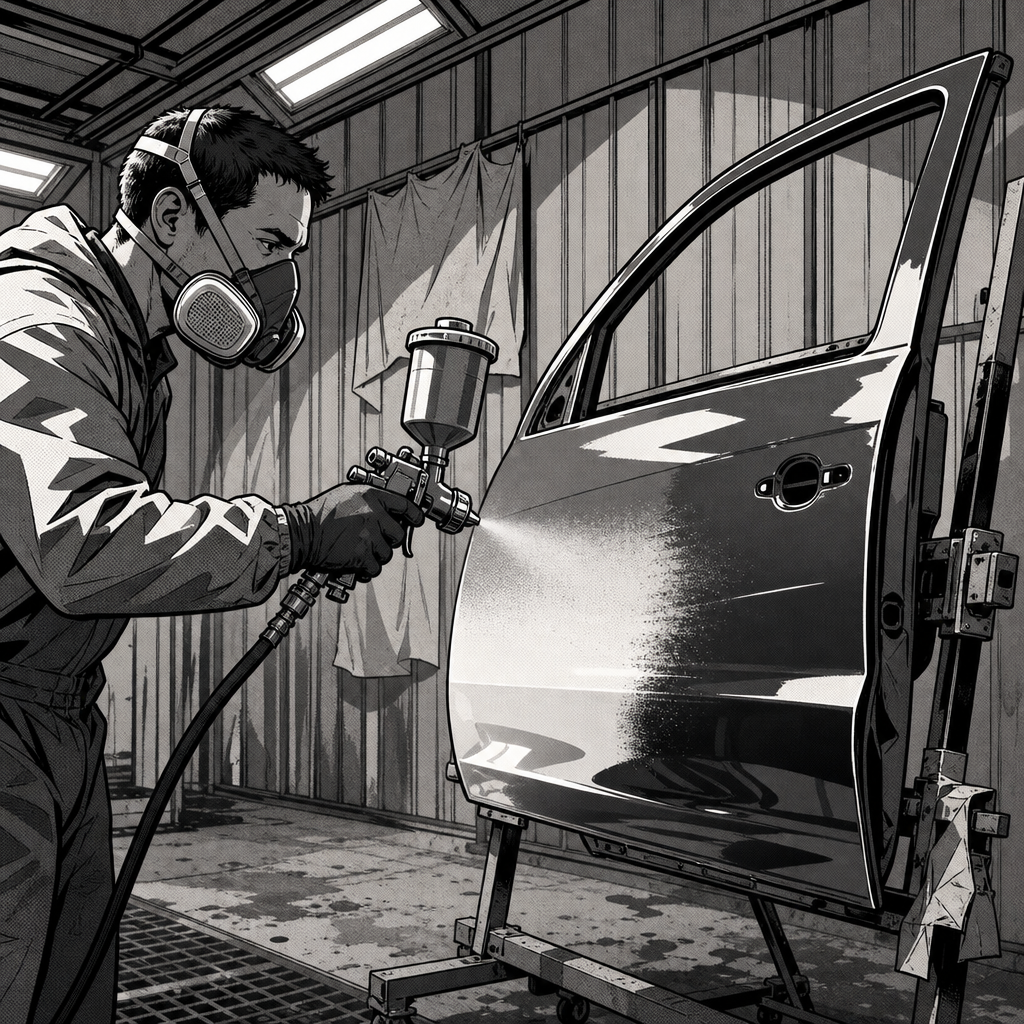
Every body shop has heard a version of the same customer story: a mobile “painter” quotes a third of the going rate, does the work in a parking lot, and when the color doesn’t match, promises it’ll “blend in after a week or two.” It won’t. Paint is a chemical film that cures to a fixed state — it does not shift hue, migrate, or self-level after it dries. If a panel looks mismatched the day it’s finished, it will look mismatched a decade later, just with more UV fade and orange peel added on top. This guide breaks down why that claim is false, how to tell a legitimate blend from a scam job, and how to actually execute a proper blend panel if you’re the one holding the gun.
Why Paint Can’t “Blend In” After the Fact
Automotive paint is a layered system: e-coat/primer, basecoat (color), and clearcoat, each curing through solvent evaporation and in many cases a catalyzed chemical reaction. Once basecoat flashes off and clear kicks, the pigment layout is locked. There is no post-cure mechanism by which a mismatched color migrates toward the surrounding panel’s hue. What customers are actually seeing when they’re told to “wait and see”:
- Solvent pop or trapped overspray haze that dulls the finish temporarily, making the mismatch look slightly less obvious under certain light — but this clears in days, not weeks, and doesn’t fix color.
- Dirty or unflashed clearcoat that will actually get worse, not better, as dust and UV exposure settle into the surface.
- A stall tactic, plain and simple, to get the customer to pay and the painter off the property before the mismatch is scrutinized in daylight.
If a shop or mobile painter uses the phrase “it’ll blend in,” that’s a diagnostic red flag on its own, not a technical explanation.
Red Flags of a Parking-Lot Paint Job
Legitimate mobile paint and dent repair exists and can be good value, but there’s a cluster of warning signs that separate a real technician from a scam operation working out of a van with no fixed address:
- No shop address, no written estimate, cash-only, and pressure to pay immediately after “completion.”
- Work performed outdoors in direct sun or wind rather than in any kind of enclosed or dust-controlled space — contamination (dust, pollen, bugs) gets trapped in the clear almost every time.
- No test spray-out card or digital spectrophotometer reading before committing paint to the car — they’re mixing by eye against a 20-year-old formula code.
- Visible texture differences (orange peel, overspray dusting, tape lines) immediately after “drying,” with no wet-sand and buff step.
- A price that’s roughly a third of every competing quote. Paint, reducer, clear, and sandpaper alone cost real money — an unrealistically low price usually means corners are cut on prep, blending distance, or materials.
If a customer describes any combination of the above, assume the repair needs to be redone, not touched up.
[PRODUCT_SEARCH: spectrophotometer paint color matching tool]
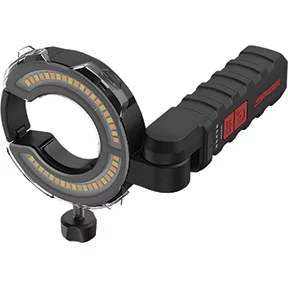

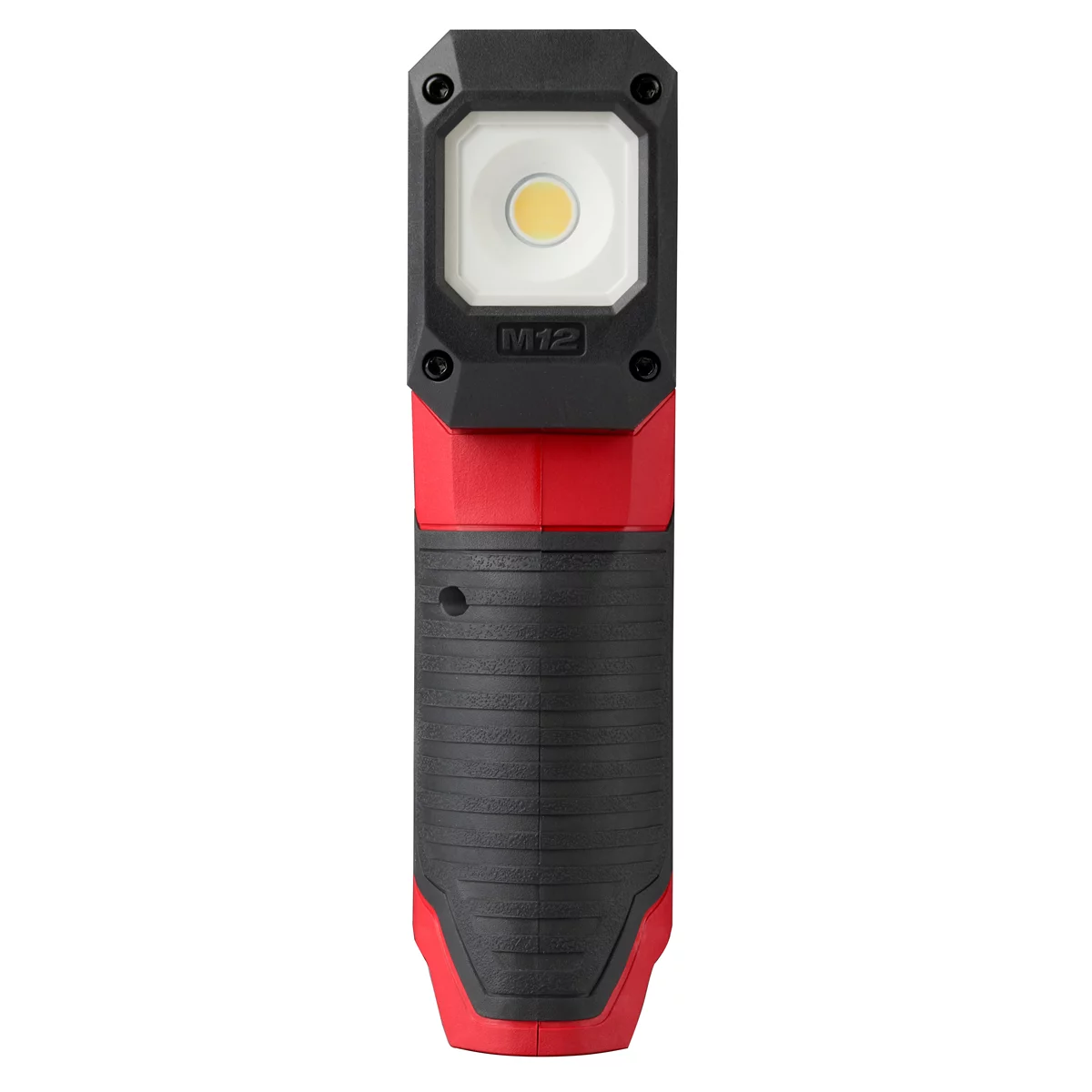
M12?,,? Paint and Detailing Color Match Light
Mfg: Milwaukee Electric Tools
Part #: 2127-20
How to Diagnose a Bad Respray Before Quoting a Fix
Whether you’re inspecting someone else’s work or your own shop’s comeback, work through this sequence before recommending a full repaint:
- Check under multiple light sources. Metallic and pearl mismatches that are invisible under shop fluorescents often show up clearly in direct sunlight or shade. Walk the car outside.
- Look at the edge of the repair. A proper blend fades the new color into the old panel over a wide, feathered transition — often spanning an adjacent panel. A scam job usually shows a hard demarcation line, sometimes with visible tape edge or a step in texture.
- Inspect for contamination in the clear. Dust nibs, fisheyes, and bug strikes trapped in the clearcoat are a dead giveaway of outdoor spraying without a controlled booth or even a pop-up tent.
- Check gloss and texture consistency. Run a hand over the repaired area and the factory panel next to it. Orange peel texture, dry spray, or a chalky look on only the new section means it wasn’t leveled or buffed correctly, or clear was applied too thin/thick.
- Pull the paint code and compare against a test spray-out. Even the correct OEM code can look off if the shop didn’t adjust for the vehicle’s specific build-date variance — this is normal and is exactly why professional shops spray a test card before committing to the panel.
Doing the Blend Correctly: Technique That Actually Works
For techs who want to avoid being the subject of the next “is this normal” post, a proper blend panel comes down to process, not luck:
- Scuff and extend the repair zone. Never try to blend right at the damage boundary. Extend sanding and blending onto at least part of the adjacent panel so the color transition has room to fade out gradually.
- Use a blending solvent/reducer on the final pass. A dedicated blending agent melts the outer edge of the sprayed color into the existing clear, eliminating a hard line. Skipping this step is one of the most common causes of a visible mismatch.
- Spray in a controlled environment. Even a basic pop-up spray booth or garage with filtered airflow dramatically cuts down on dust nibs and uneven cure versus spraying in open air or a parking lot.
- Match metallic orientation with gun distance and pattern. Metallic flake lays differently depending on how far back the gun is held and how wet the pass is. Inconsistent distance is a top cause of patchy, mismatched metallics even when the formula is correct.
- Clear the full panel, not just the repair. Spot-clearing only the damaged section almost always leaves a visible gloss or texture boundary once it cures.
- Wet-sand and machine buff after full cure. Don’t judge final color and gloss until after cut-and-buff — uncut clear looks duller and can mask (or exaggerate) a mismatch.
What to Do If You’ve Already Been Scammed
If a customer (or you) is stuck with a bad respray from a fly-by-night painter, here’s the practical path forward:
- Document everything immediately — photos in daylight, the quote/receipt if one exists, and any text or verbal promises made (like “it’ll blend in a week”).
- Request a fix in writing with a deadline. If the original painter has no fixed shop location, this step is mostly for your paper trail, not because you expect compliance.
- Dispute the charge if payment was made by card; cash payments to an unlicensed operator have essentially no recourse.
- Get a second, written estimate from a licensed body shop before paying anyone else — this becomes your basis for a small claims filing or credit card dispute.
- File a complaint with your state’s consumer protection office or attorney general if the operator is unlicensed; many states require a business license and insurance for paid auto body work.
[PRODUCT_SEARCH: automotive touch-up paint and clear coat repair kit]
Quick Checklist: Is This Paint Job Legit?
- Shop has a fixed address and written estimate
- Work done in an enclosed/dust-controlled space
- Color verified with a spray-out card or spectrophotometer before spraying the car
- Blend edge is feathered, not a hard line
- No dust nibs, fisheyes, or orange peel visible after buffing
- Price is in line with at least two other quotes
- No one tells you the color will “blend in” after the fact


FAQs
Does paint actually blend in or even out over time?
No. Once basecoat and clearcoat cure, the color and texture are fixed. Minor haze from solvent pop can clear up in a few days, but that’s not the same as a mismatch correcting itself, and it never will.
Why does a repainted panel sometimes look better a few days after the job?
Fresh clearcoat can look slightly hazy or dull right after spraying due to trapped solvent; as it fully cures over 24–72 hours it gains gloss. That’s a normal cure process, not color correction, and it won’t fix an actual formula mismatch.
How can I tell if a mobile painter is legitimate?
Ask for a fixed business address, license/insurance info, a written estimate, and whether they verify paint code with a spray-out test before applying it to your car. Legitimate mobile techs can answer all of these without hesitation.
Can a botched blend job be fixed, or does the whole panel need repainting?
It depends on depth of the problem. If it’s just a hard blend line or minor contamination, wet-sanding and re-blending a wider area can sometimes save it. If the base color itself is wrong or the clear is compromised (fisheyes, peeling), the panel needs to be stripped back and resprayed.
What’s the single biggest giveaway of a bad paint match?
A visible edge or demarcation line where new paint meets old, especially under direct sunlight. A correctly blended panel has no detectable boundary from a few feet away.
Is it worth paying more for OEM-certified or dealer body shops?
Not strictly necessary, but any shop you use should have a fixed location, proper spray booth, and color-matching equipment. Certification isn’t mandatory for quality, but a traceable business with real equipment is.
Shop Paint & Body
A botched paint job won’t fix itself—proper color matching and blending requires the right tools and technique. Our Paint & Body selection includes equipment and materials for diagnosing mismatches and executing proper repairs.
- Paint color matching tools and spray-out cards for accurate OEM code verification
- Clearcoat, blending solvents, and primers
- Sandpaper, buffing compounds, and finishing supplies

The Toolsource Technical Team blends decades of real-world automotive service experience with up-to-date technical research. Our writers collaborate with professional mechanics, shop owners, and diagnostic specialists to deliver practical, workshop-ready guidance you can trust.


Follow us on social media