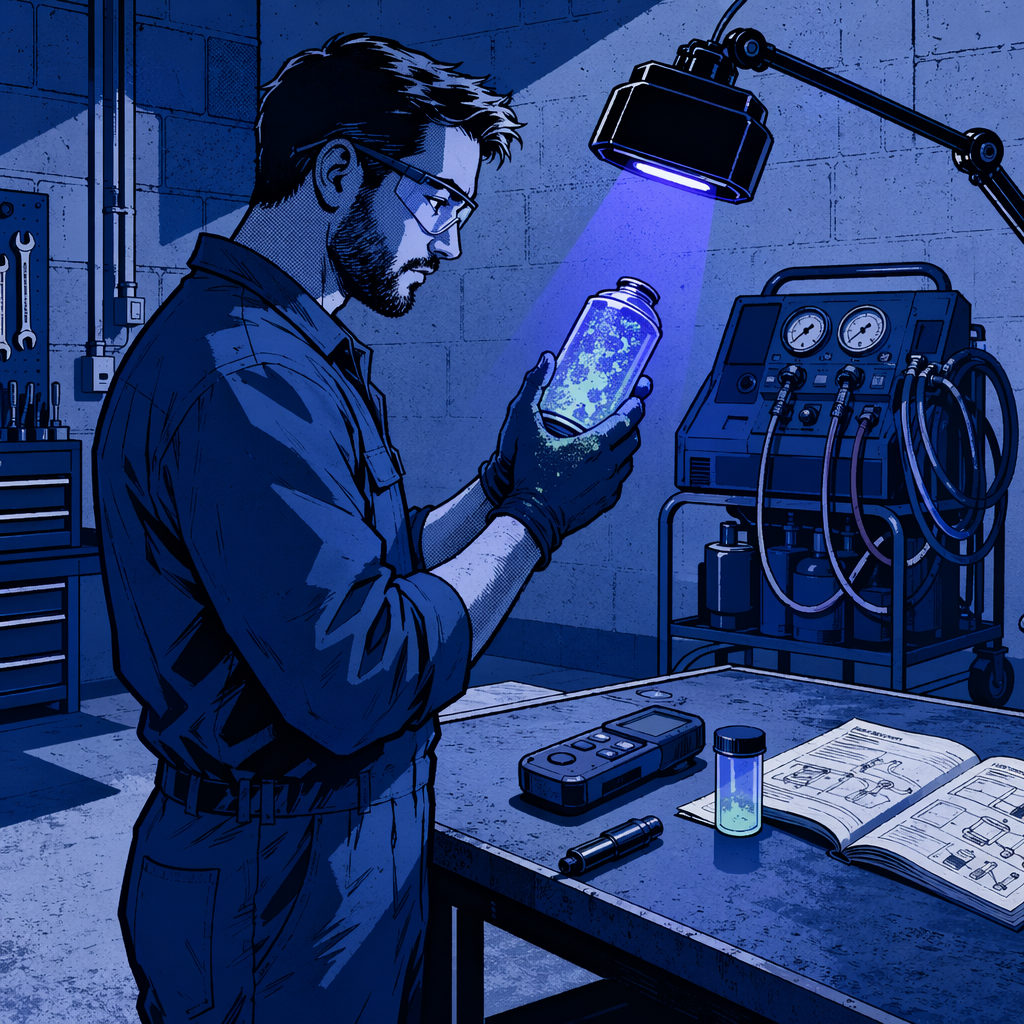
If you’ve ever grabbed an A/C recharge can from the shelf at an auto parts store, you’ve probably noticed that nearly every option includes stop leak additives. For professional technicians, these products represent a familiar headache: customers arrive with contaminated systems after attempting DIY repairs, creating complications that could have been avoided with proper service. Understanding why manufacturers bundle stop leak with refrigerant—and the real-world consequences for both vehicles and shop equipment—helps you guide customers toward better decisions and protect your recovery machines from expensive damage.
The Patent Loophole Behind Stop Leak Additives
The prevalence of stop leak in retail A/C products isn’t primarily about effectiveness—it’s about intellectual property law. When Chemours and Honeywell developed R-1234yf refrigerant, they secured patents on the pure chemical formulation. Any company selling pure R-1234yf must pay substantial royalties to the patent holders. However, by adding stop leak or other additives to the refrigerant, third-party manufacturers legally create a “different formulation” that sidesteps these royalty requirements.
This wasn’t an issue with R-134a refrigerant. DuPont’s patents on R-134a and its associated lubricants expired between 2007 and 2009, allowing manufacturers to sell pure R-134a without royalty payments. You can still find basic R-134a cans without additives at many retailers, though they’re increasingly outnumbered by “enhanced” formulations. The R-1234yf market operates differently—the patent protection drives manufacturers toward additive-laden products as their most profitable option.
This business model creates a predictable cycle. As patents expire on current refrigerants, new formulations emerge with fresh patent protection and higher costs. The environmental justifications—reducing ozone depletion or global warming potential—provide regulatory support for these transitions, but the patent economics remain the underlying driver. For technicians, this means the stop leak problem will likely resurface with each new refrigerant generation.
How Stop Leak Damages A/C Systems and Recovery Equipment
Stop leak additives fall into two main categories, and both create problems. Older formulations harden when exposed to moisture, creating deposits that clog expansion valves, block orifice tubes, and gum up compressor internals. These products work like radiator stop leak or tire sealant—they might temporarily plug a small leak, but they compromise system performance and create additional failure points.
Newer stop leak formulations claim to be “safer” by conditioning seals rather than creating hardened plugs. Manufacturers market these products as compatible with recovery machines, similar to how flushable wipes claim to be septic-safe. In practice, many technicians have learned not to trust these claims. When contaminated refrigerant enters a recovery and recycling machine, the additives can foul the equipment’s internal components, requiring expensive cleaning or replacement.
The fundamental issue is that A/C systems require leak repairs, not leak masking. If a system needs refrigerant, it has a leak. Stop leak might buy a few weeks or months, but it doesn’t address failing compressor seals, corroded line fittings, or damaged condensers. Meanwhile, the additive circulates through the system, potentially accelerating wear on the compressor and other components. For customers, this creates a false economy—saving money on proper repair today means higher costs when the system fails completely.
No products found for "A/C refrigerant recovery machine filters"
Testing for Contamination Before Connecting Recovery Equipment
Protecting your recovery machine requires testing for stop leak before servicing any vehicle, especially if the customer mentions previous DIY recharging. Several methods can identify contaminated refrigerant:
Visual inspection: Some stop leak products contain UV dye that shows up under black light. While checking for leaks with a UV lamp, examine the refrigerant itself as it’s released. Unusual coloration or particulate matter suggests contamination.
Identifier testing: Refrigerant identifiers can detect some adulterants, though they’re not specifically designed for stop leak detection. If the identifier shows unexpected readings or refuses to provide a clear refrigerant type, contamination may be present.
Sample testing: The most reliable method involves recovering a small refrigerant sample into a separate container and examining it for residue. Allow the sample to sit—contaminated refrigerant may show separation, sediment, or oil that appears thicker than normal PAG lubricant.
Customer interview: Simply asking whether the customer or a previous owner used store-bought recharge cans can save diagnostic time. Many customers volunteer this information when asked directly about the vehicle’s service history.
When you detect contamination, you face a decision: decline the service or charge appropriately for the additional risk and potential equipment cleaning. Many shops have adopted policies refusing service on contaminated systems, particularly when recovery machine manufacturers void warranties for damage from aftermarket additives. If you choose to proceed, document the contamination, inform the customer of potential additional charges, and consider using disposable filters designed for stop leak recovery—though technician experiences with these filters vary widely.
When DIY Recharge Makes Sense (And When It Doesn’t)
Despite the professional consensus against DIY recharge cans, certain situations fall into a gray area. A high-mileage vehicle with minimal value presents a different cost-benefit calculation than a late-model car under warranty. On a 15-year-old beater with 250,000 miles, spending $1,500 on proper A/C repair—including leak detection, component replacement, evacuation, and recharge—may exceed the vehicle’s remaining utility to the owner.
In these limited cases, a basic R-134a can without stop leak additives represents a reasonable stopgap. The key word is “basic”—look for pure refrigerant with minimal additives. Super Tech brand R-134a, available at Walmart in 12-ounce cans, offers one of the few remaining options for unadulterated refrigerant at retail prices. Used conservatively on vehicles nearing end-of-life, these products can provide another season or two of cooling without the commitment of professional repair.
However, this approach requires honest assessment. If the vehicle will remain in service for years, proper repair pays off. If the customer plans to trade it in or wants reliable A/C, professional service is the only sustainable answer. And if the leak is substantial—requiring more than a single 12-ounce can per year—even stopgap recharging becomes wasteful and environmentally questionable.
The worst scenario is the customer who repeatedly recharges a severely leaking system, potentially using products with stop leak. These vehicles eventually arrive at shops with contaminated refrigerant, damaged compressors, and repair costs that have escalated far beyond what early professional intervention would have required.
Proper A/C Service Protocol for Leak Repair
When customers understand what proper A/C service involves, they’re better equipped to evaluate whether DIY products make sense for their situation. Professional service follows a systematic approach that DIY cans cannot replicate:
System evacuation: Before adding refrigerant, the system must be evacuated to remove air and moisture. Air in the system reduces cooling efficiency and can cause compressor damage. Moisture creates corrosion and can freeze at the expansion valve. Home recharge kits simply add refrigerant to whatever is already in the system—air, moisture, and all.
Leak detection: Adding UV dye to the system during service allows leak identification under black light. Some techs prefer nitrogen pressure testing, pressurizing the system to 350 PSI with inert gas to identify leaks before introducing refrigerant. Electronic leak detectors and soap solutions provide additional detection methods. The goal is finding and fixing leaks, not repeatedly adding refrigerant to a leaking system.
Component replacement: Common failure points include compressor shaft seals, o-rings at line connections, condenser corrosion, and evaporator leaks. Depending on the component and vehicle, parts costs vary from $50 for o-rings to $400+ for compressor replacement. Labor adds to these costs, but addressing the root cause prevents repeated refrigerant loss.
Proper refrigerant and oil quantities: Systems are designed for specific refrigerant charges measured in ounces, not “cans.” Overcharging reduces efficiency and can damage the compressor. Similarly, systems require specific amounts and types of lubricating oil. Professional service ensures correct quantities based on manufacturer specifications and accounts for oil lost during component replacement.
System testing: After recharge, proper service includes pressure testing on both high and low sides, checking for appropriate cycling behavior, and verifying vent temperatures. These tests identify problems that simple recharging cannot address, such as failing compressor clutches, blocked orifice tubes, or blend door malfunctions.
Quick Reference Checklist for A/C Service Decisions
Before recommending DIY recharge to a customer:
- Confirm the vehicle is high-mileage with limited remaining service life
- Verify the leak is slow (system holds refrigerant for at least several months)
- Recommend pure R-134a without stop leak additives if available
- Explain this is a temporary solution, not a repair
- Warn against products containing stop leak or “enhanced” formulations
- Set expectations that professional service will eventually be necessary
Before connecting recovery equipment:
- Ask customer about previous DIY recharging or stop leak use
- Inspect system for UV dye or unusual residue at service ports
- Consider refrigerant identifier testing on unfamiliar vehicles
- Have policy in place for refusing contaminated systems or charging appropriately
- Document any contamination found before proceeding
Understanding Refrigerant Types and Compatibility
The transition from R-12 to R-134a to R-1234yf has created confusion for DIYers and opportunities for expensive mistakes. Each refrigerant requires different service equipment and operates at different pressures. The service ports are deliberately designed with different fittings to prevent cross-contamination—R-134a hoses won’t connect to R-1234yf systems, and vice versa.
Some older vehicles still running original R-12 systems present special cases. R-12 production ended in 1996, making it expensive and difficult to source. Many technicians recommend alternative refrigerants like R-413a (often marketed as “GHG-X5”) or retrofitting to R-134a. The retrofit process requires changing compressor oil, replacing o-rings, and updating service fittings—it’s not a simple swap. However, for vehicles with intact R-12 systems, the original refrigerant remains superior in cooling performance if available.
R-1234yf systems, found in most vehicles from 2017 onward, require specialized equipment due to the refrigerant’s cost (often $70+ per pound wholesale). The higher pressures and different oil requirements mean R-134a should never be added to these systems, despite adapter fittings sometimes being available. The resulting mixture creates service headaches and reduces cooling performance.
For technicians, maintaining separate recovery machines for different refrigerants prevents cross-contamination and ensures compliance with EPA regulations. Shops servicing both older and newer vehicles need equipment investments for R-134a and R-1234yf, plus potentially R-12 recovery capability for classic car work.
No products found for "automotive A/C service tools"
Frequently Asked Questions
Why do A/C recharge cans include stop leak when professionals say it’s harmful?
For R-1234yf refrigerant, adding stop leak allows manufacturers to avoid paying patent royalties to Chemours and Honeywell by creating a “different formulation.” It’s primarily a business decision rather than a technical improvement. Stop leak also creates perceived value for DIY customers who want a complete solution, even though it can damage A/C systems and contaminate recovery equipment.
Can I safely use stop leak on an old vehicle I’m planning to sell soon?
While pure refrigerant without stop leak is preferable even for short-term use, the practical impact on a high-mileage vehicle near end-of-life is minimal. However, be aware you’re potentially passing a contaminated system to the next owner and creating problems for any technician who services it. If the vehicle only needs cooling for another season or two, basic R-134a without additives is a better choice and usually costs less.
What happens if I accidentally put R-134a into an R-1234yf system?
The service port fittings are specifically designed to prevent this mistake—R-134a hoses use different threading than R-1234yf ports. If someone uses an adapter or forces the connection, the mixed refrigerants will reduce cooling performance and require complete system evacuation and recharge at significant expense. The different lubricants used with each refrigerant can also damage compressor internals.
How can I tell if my recovery machine has been contaminated by stop leak?
Signs include reduced recovery speed, unusual noises, oil that appears thicker or darker than normal, and filter clogs. Some machines have sight glasses that show refrigerant quality—contamination appears as cloudiness or particulate matter. Prevention through testing before recovery is more effective than trying to clean contaminated equipment after the fact.
Is it true that R-134a is being phased out like R-12 was?
R-134a remains legal and widely available for servicing existing vehicles, but most manufacturers have transitioned new production to R-1234yf due to its lower global warming potential. Unlike the R-12 phaseout, which banned production and import, R-134a will remain available for servicing the existing vehicle fleet for many years. However, expect prices to gradually increase as production volumes decline.
Can I convert my R-134a system to accept R-1234yf refrigerant?
While technically possible, it’s not economically practical for most vehicles. The conversion would require replacing the compressor, changing to different lubricant oil, updating service port fittings, and potentially replacing other components due to pressure differences. R-1234yf systems also require certified equipment for service. Continue servicing your R-134a system with R-134a—there’s no need or benefit to converting.
Shop Auto Air Conditioning Tools
Proper A/C service requires the right equipment to detect contamination, recover refrigerant safely, and perform accurate diagnostics. Our Auto Air Conditioning Tools selection includes refrigerant identifiers, recovery machines, leak detection equipment, and pressure gauges designed to help you protect your shop and guide customers toward reliable repairs.
- Refrigerant recovery and recycling equipment for R-134a and R-1234yf systems
- Leak detection tools including UV lamps, electronic detectors, and pressure testing kits
- Diagnostic gauges and service port adapters for accurate system evaluation

The Toolsource Technical Team blends decades of real-world automotive service experience with up-to-date technical research. Our writers collaborate with professional mechanics, shop owners, and diagnostic specialists to deliver practical, workshop-ready guidance you can trust.


Follow us on social media