Old receipts and nostalgia threads about $99.95 “any car, any color” paint deals get passed around a lot, and they’re a fun artifact — but they’re also a useful reference point for how much the paint business has changed. A single gallon of clearcoat alone now retails for well over $100, and a quart of quality 2K epoxy primer can run $40-60 before you’ve bought hardener, reducer, or a single sheet of sandpaper. For technicians fielding customer questions about why a “simple” paint job costs what it does, or for shop owners training new hires, it helps to understand exactly what changed in the materials and what a bargain job actually skips. This guide breaks down current paint economics, the corners low-cost shops cut, and how to prep a vehicle correctly whether you’re doing it in a bay or a driveway.
Why a Gallon of Clearcoat Costs More Than a Full Paint Job Used to
The biggest driver is chemistry and regulation. Older single-stage enamels and lacquers were high-VOC, air-dry or low-bake products with cheap solvent packages. Modern automotive coatings are almost universally 2K (two-component) urethane systems — a paint or clear activated with an isocyanate hardener — engineered to meet EPA and state VOC limits while still curing hard enough to buff and hold up to UV exposure. That chemistry costs more to formulate and more to package (hardeners, reducers, and additives are sold separately and all factor into the real cost of a job).
On top of raw material cost, most basecoat/clearcoat systems require a specific reducer for the shop’s temperature and humidity, plus a matched hardener ratio for the clear. None of that is optional if you want a durable result, and all of it adds up before labor is even in the conversation. A full basecoat/clearcoat job on a mid-size car realistically runs $300-$800+ in materials alone at retail pricing, which is why any “full paint job” ad under a few hundred dollars today is either using minimal product, skipping steps, or both.
What Bargain Paint Shops Actually Cut Corners On
The old flat-rate “any car” paint shops built their margin by upselling and skipping prep, and the modern low-cost operators do the same thing with different terminology. Common shortcuts to watch for or avoid replicating:
- Minimal or no bodywork. Dents, dings, and rust are painted over rather than repaired, so the flaw telegraphs through the new finish immediately.
- No masking, or paid masking upsells. Trim, glass, tires, and door jambs get overspray unless the customer pays extra — historically the classic “$100 more if you don’t want your windows and tires painted” model.
- Skipped or wrong primer. Spraying color directly over old finish or bare metal without an appropriate primer-sealer or epoxy primer leads to poor adhesion and early failure.
- Single coat, minimal clear. Thin film builds look fine on delivery day but chalk, fade, and fail within a couple of years.
- No color sanding or buffing. The finish goes out with orange peel and dust nibs baked in.
None of these are inherently dishonest — a $300 respray with disclosed limitations is a legitimate budget option. The problem is when corners are cut silently and the customer expects a durable, OEM-quality result for beater-car money.
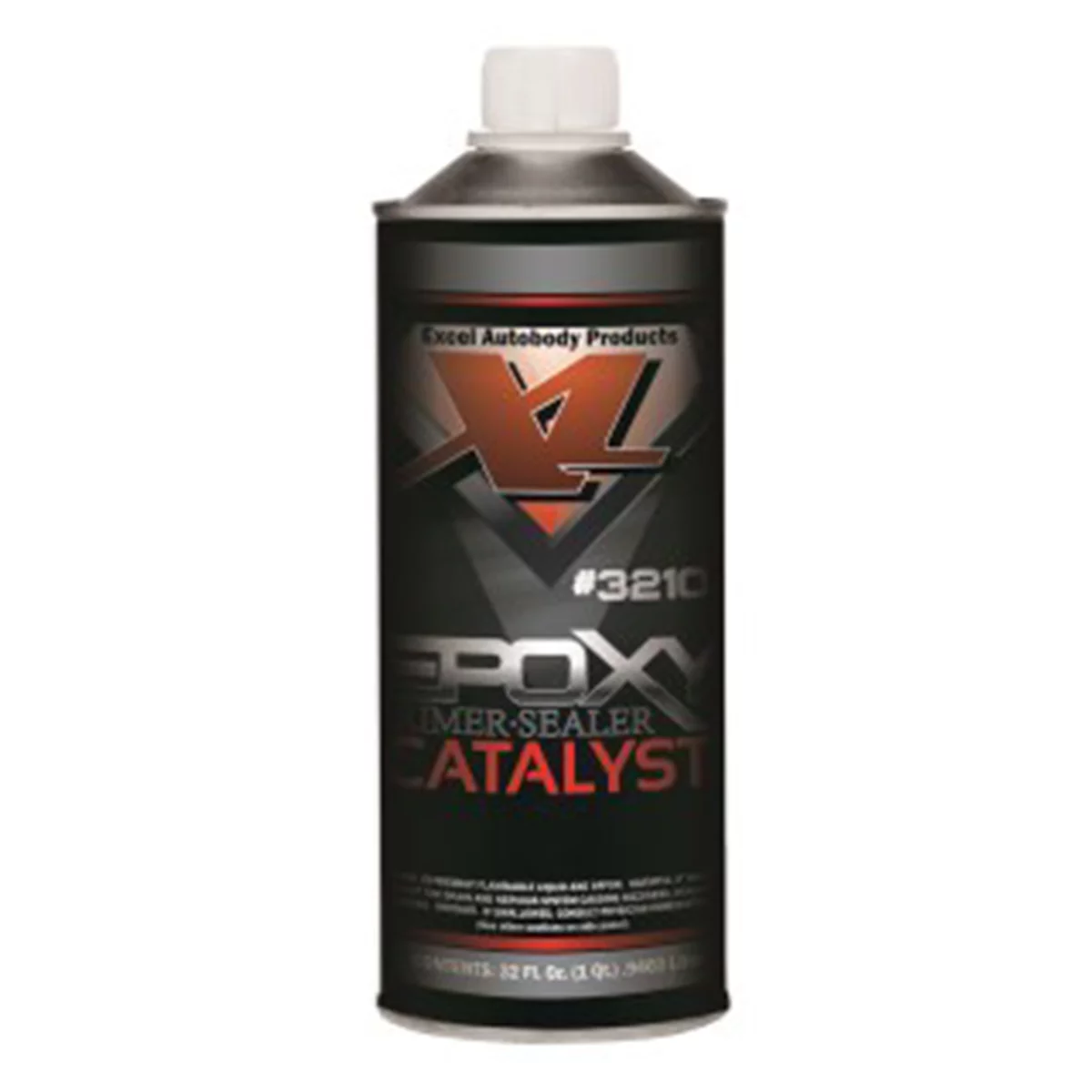
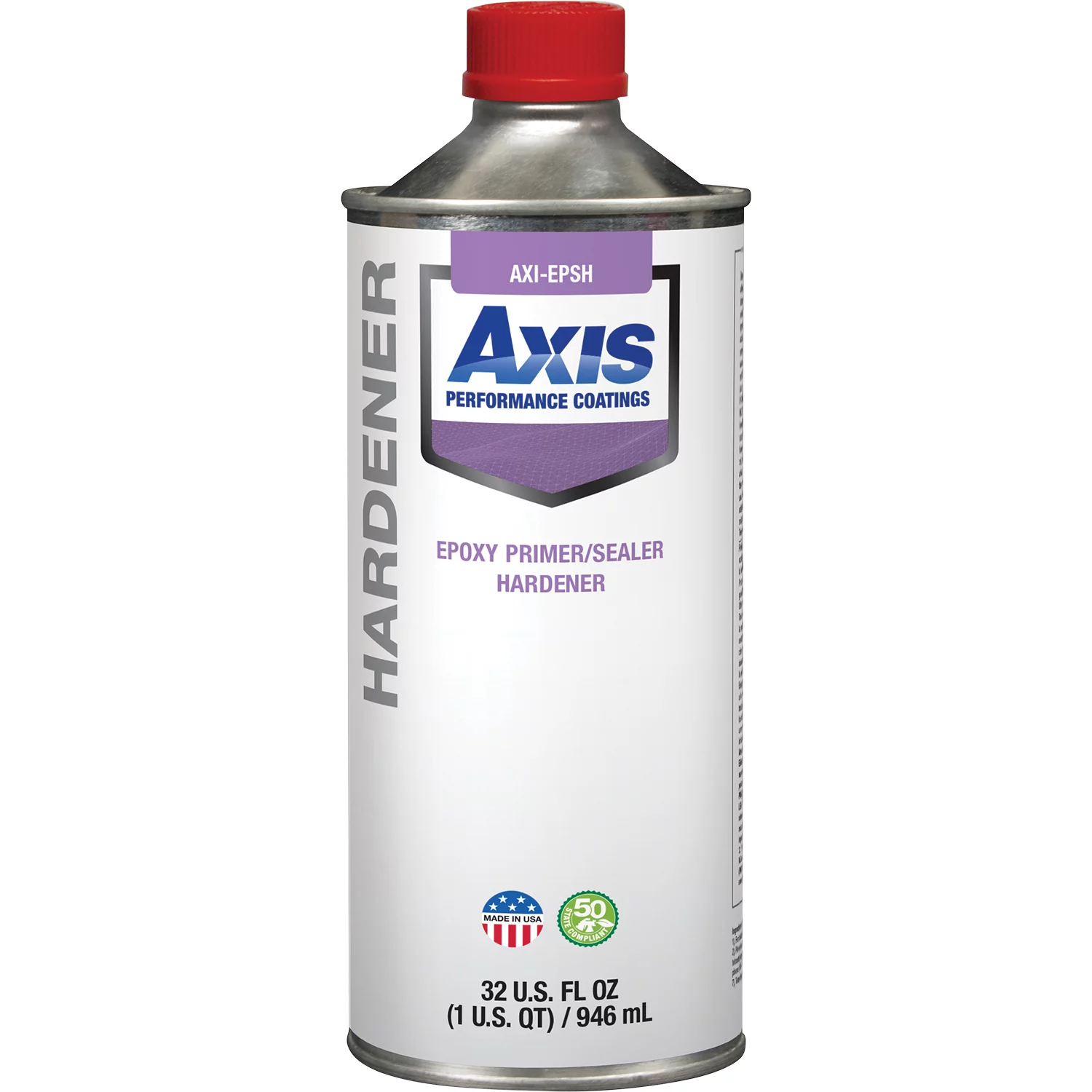
Epoxy Primer/Sealer Hardener Qt - Low VOC
Mfg: AXIS Performance Coatings
Part #: EPSHQ
Doing Your Own Prep to Cut Labor Cost the Right Way
Labor is the largest line item in any paint estimate, and prep work is where a DIYer or a shop apprentice can legitimately reduce cost without hurting the outcome — as long as it’s done to the same standard a painter would expect. The sequence matters:
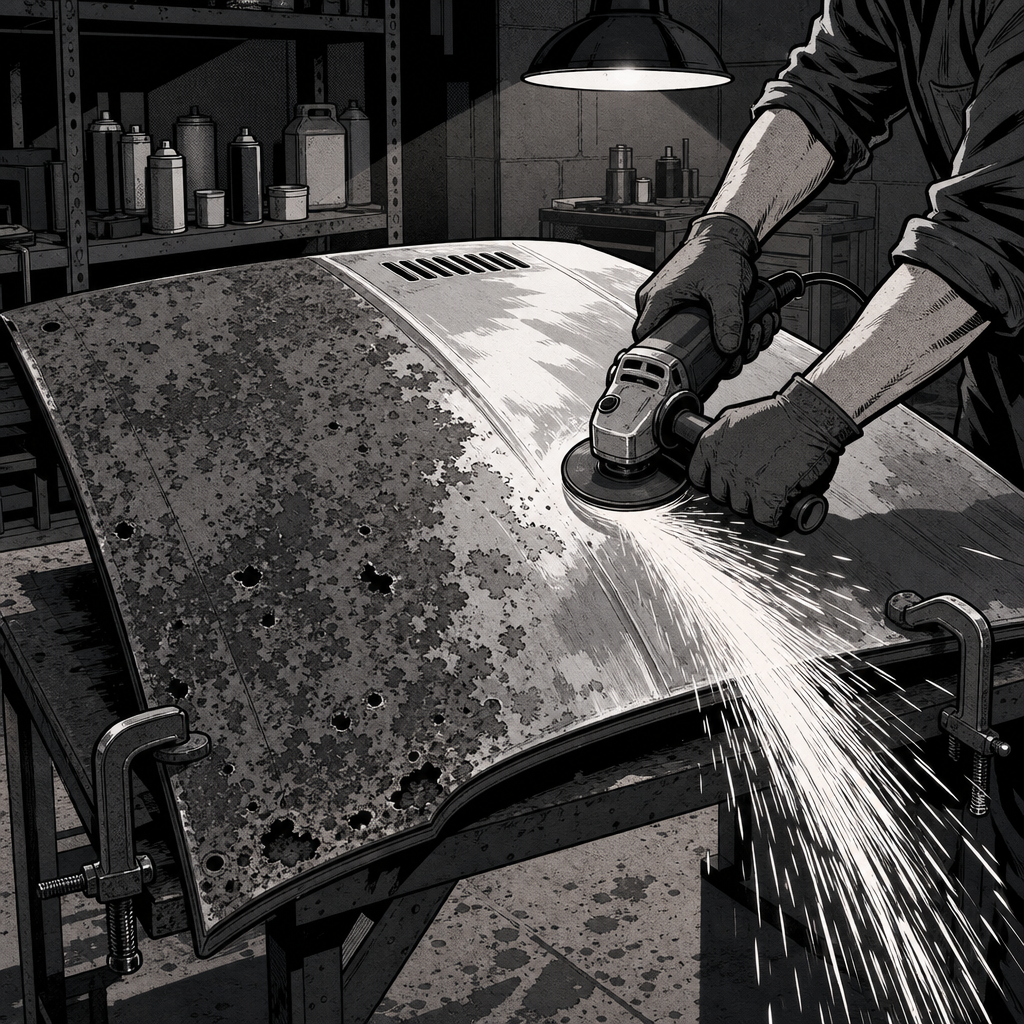
- Strip to sound material. Grind or sand rust down to clean, bright metal. Any pitting that remains under primer will bleed through eventually.
- Treat bare metal fast. Flash rust forms within hours in humid conditions, so bare steel should get epoxy primer the same day it’s exposed.
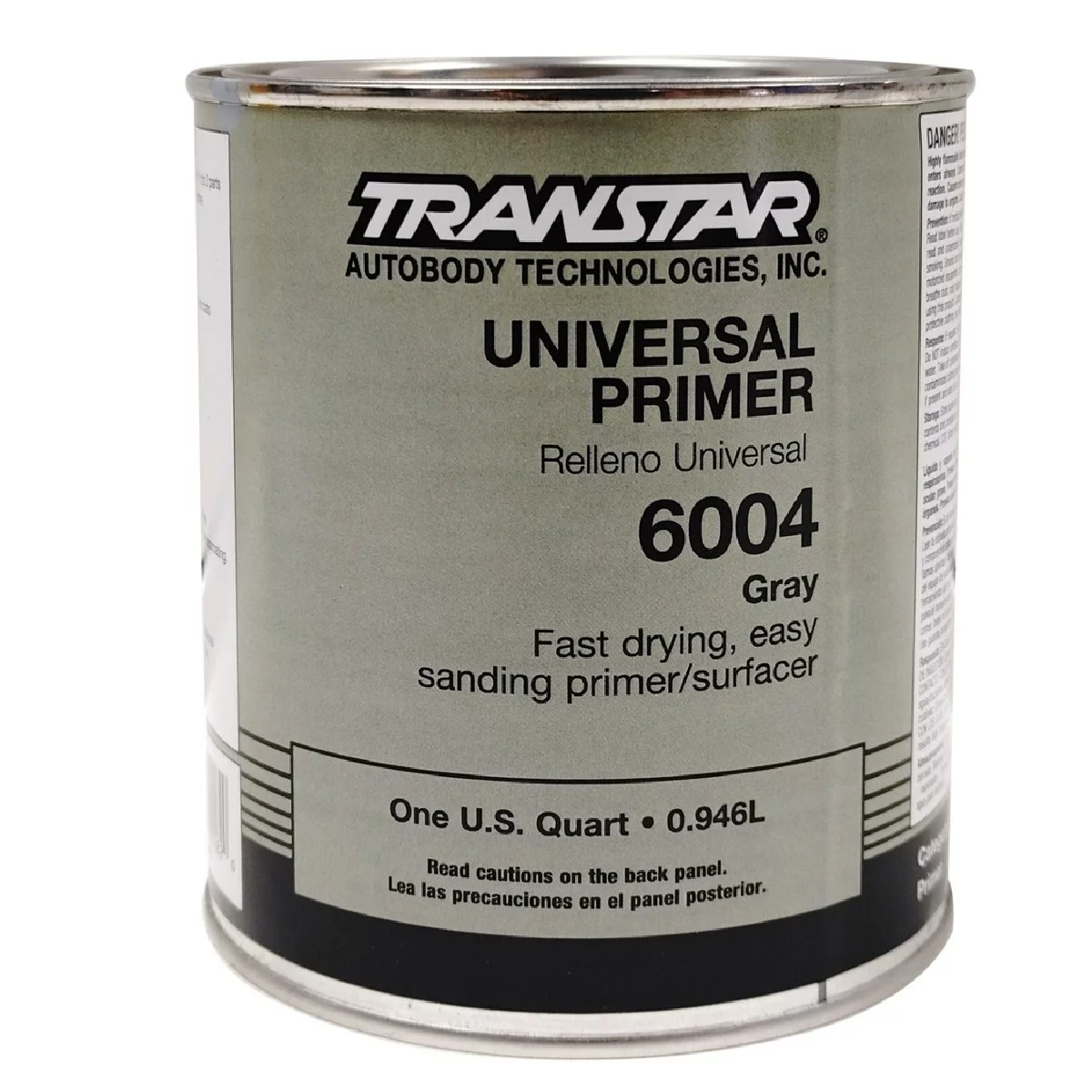
- Use epoxy primer as the foundation, not filler-primer alone. Epoxy seals metal and provides the best adhesion base for filler and subsequent coats; it’s worth the higher per-quart cost on repair areas even if the rest of the panel uses a cheaper filler-primer.
- Block sand, don’t just scuff. A long board with 180-220 grit levels the repair; a random-orbital scuff alone will not catch low spots.
- Feather edges properly. Every transition from bare metal to filler to old paint needs a wide, gradual taper — tight feather edges show as a ridge under the new color.
- Degrease before every coat. Wax and grease remover before primer, before sealer, and before basecoat — skipping this is a leading cause of fisheye and adhesion failure.
Buying epoxy primer in a quart kit instead of a gallon makes sense for spot repairs — most single rust spots or small panel repairs need well under a quart of mixed product, and 2K primer has a limited pot life once activated, so buying only what the job needs also cuts waste.
Single-Stage vs. Basecoat/Clearcoat: Matching Materials to the Budget
Single-stage urethane (color and gloss in one coat, no separate clear) is still a legitimate, lower-cost option for fleet vehicles, equipment, trailers, and beaters where color match to factory metallics isn’t critical. It’s faster to apply, needs less material, and is more forgiving to spray for less experienced painters.
Basecoat/clearcoat is required for anything with a metallic or pearl finish, for panel work that needs to blend into existing factory paint, and for any job where UV resistance and gloss retention over years matter. It costs more in materials and adds a step, but it’s the only realistic way to match modern OEM colors and get a finish that holds up.
Estimating Costs Realistically
A rough planning baseline for a full-size sedan repaint at retail material pricing: 1-1.5 gallons of mixed basecoat, 1.5-2 gallons of mixed clear, plus primer, reducers, hardeners, sandpaper, masking supplies, and tape. That’s commonly $400-$900 in consumables before a single labor hour is billed. Labor for proper prep, masking, and multi-coat application on a full respray typically runs 15-30+ hours depending on the vehicle’s condition going in. Any advertised price well under material cost alone should be read as a stripped-down, minimal-prep offer — not a full-quality paint job at a discount.
What Actually Determines How Long a Paint Job Lasts
Longevity comes down to a short list of factors, in roughly this order of importance: quality of surface prep (rust removal, correct primer, adhesion), correct catalyzed 2K products applied at the right film build, adequate clearcoat thickness for UV protection, and post-paint care (garage storage, regular washing, avoiding abrasive automatic car washes). A well-prepped single-stage job on a daily driver can outlast a rushed basecoat/clear job with skipped prep — the primer and prep work matter more than which color system is used on top.
Pre-Paint Prep Checklist
- Strip rust to bare, sound metal — no pitting left behind
- Apply epoxy primer to bare metal same-day to prevent flash rust
- Block sand repairs level; feather all edges wide and gradual
- Degrease with wax and grease remover before every coat
- Mask glass, trim, and rubber fully — don’t rely on the painter to “cut in” clean
- Confirm reducer and hardener match shop temperature/humidity before mixing
FAQs
Can you still get a genuinely cheap full paint job today?
Yes, but expect it to reflect minimal prep and thin material application — single coat, little to no bodywork, and basic masking. It can be a reasonable option for a beater but shouldn’t be compared to a full-quality respray.
Is single-stage enamel still worth using?
For fleet vehicles, equipment, and non-metallic colors on budget projects, yes. For factory metallic or pearl finishes, basecoat/clearcoat is the correct system.
How much epoxy primer do I need for a small rust spot repair?
Most single-panel spot repairs use well under a quart of mixed product. Buy a quart kit rather than a gallon unless you’re covering multiple panels.
Why does a shop charge so much more than the cost of materials?
Labor — masking, sanding, multiple coats, color sanding, and buffing — is typically the majority of the bill, not the paint itself.
Do I need a spray booth to get a decent finish?
No, but you need clean, dust-free, temperature-controlled conditions and correct air filtration at the gun. A garage with dust control and the right reducer for ambient conditions can produce solid results.
How long should a quality paint job actually last?
With proper prep, correct epoxy primer, adequate clear film build, and reasonable care, 10+ years of good gloss retention is a realistic expectation before noticeable fading.
Shop Paint & Body Supplies
From epoxy primers to clearcoat and prep supplies, find what you need to complete your paint work. Browse our full Paint & Body selection.
- Epoxy and filler-primers for corrosion control and strong adhesion
- Urethane basecoats and clearcoats
- Prep supplies: sandpaper, masking, and degreasers

The Toolsource Technical Team blends decades of real-world automotive service experience with up-to-date technical research. Our writers collaborate with professional mechanics, shop owners, and diagnostic specialists to deliver practical, workshop-ready guidance you can trust.


Follow us on social media