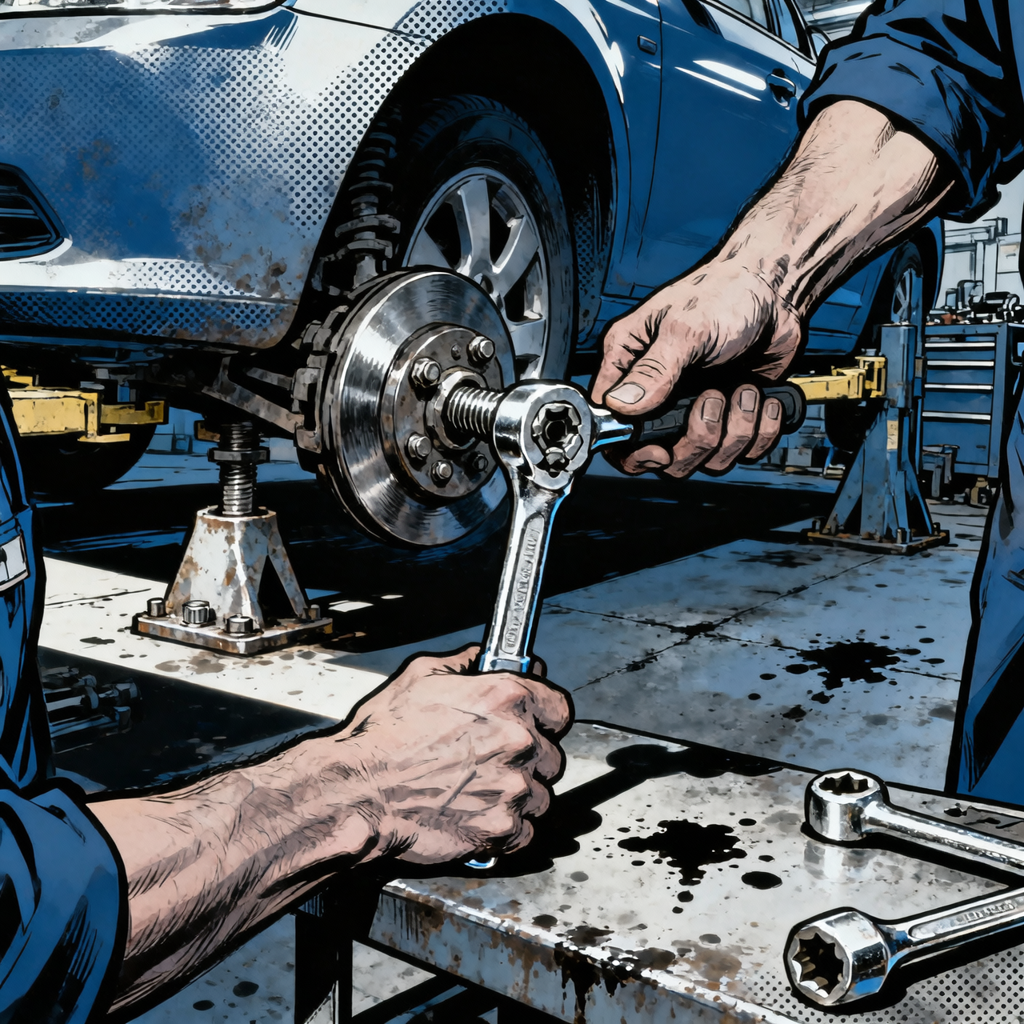
A broken wheel stud costs $50 in DIY parts to $500+ at a dealership. The difference lies in understanding hub removal requirements, having proper tools, and knowing installation technique. This guide covers why studs fail, cost comparisons, and step-by-step DIY replacement.
Why Wheel Studs Break and How to Prevent It
Wheel studs break from human error, not design defects. The three main causes are overtightening with impact wrenches (creating stress cracks that grow over time), cross-threading lug nuts (especially on long-stud vehicles like Subarus), and corrosion from road salt locking lugs to studs and snapping them during removal.
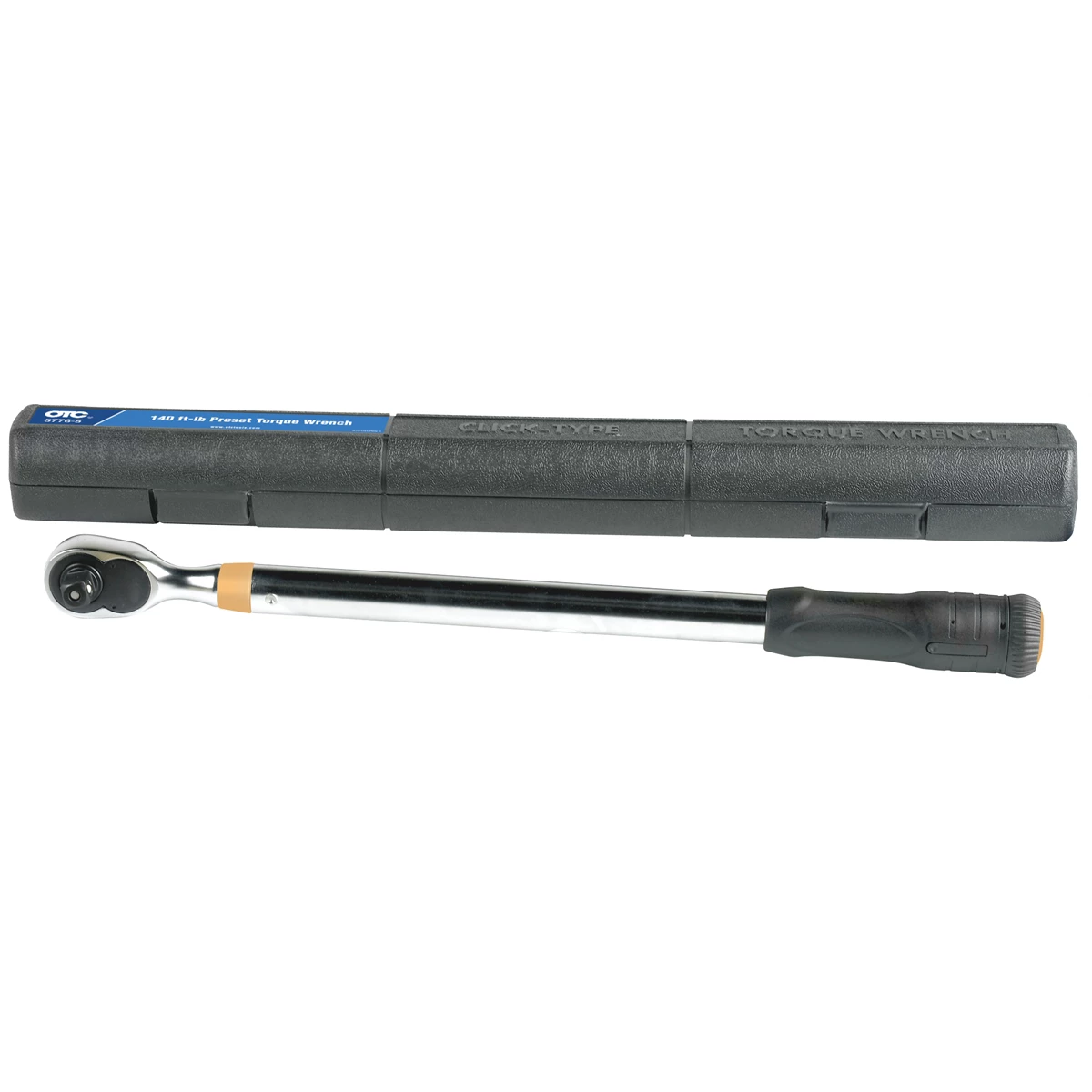
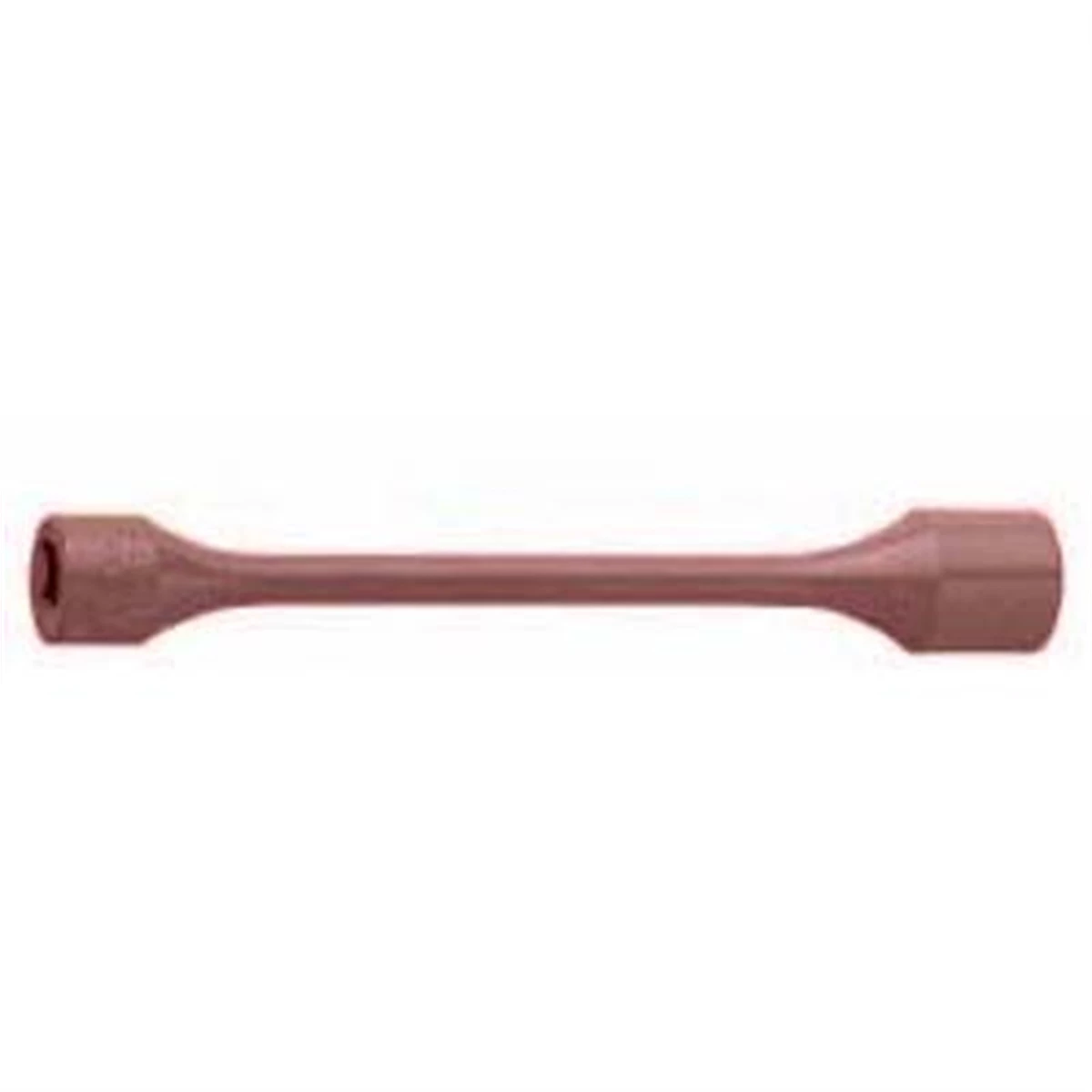
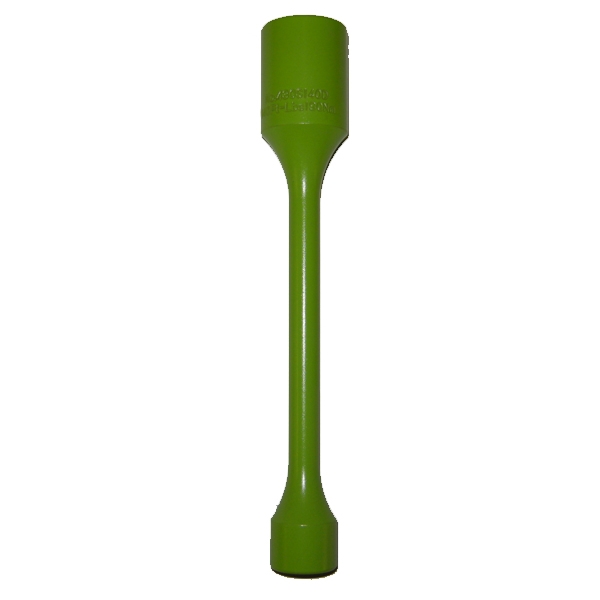
Prevention: Use a calibrated torque wrench for final tightening at manufacturer specs (80-100 ft-lbs for cars, 120-140 ft-lbs for trucks). Apply anti-seize compound to threads. Replace lug nuts every 2-3 stud replacements—they’re wear items. For isolated impact damage, replace just the broken stud. For age-related corrosion on high-mileage vehicles, replace all studs on that hub to avoid repeat repairs.
Wheel Stud Replacement Cost: Dealership vs. DIY
Parts: OEM studs cost $5-$12 each; ARP extended studs (better for cross-threading prevention) run $15-$20 each. Lug nuts cost $3-$8 each—always replace the one that was on the broken stud.
Labor: Professional labor takes 1.0-1.4 hours without hub removal, or 2.5-3.5 hours with hub removal. At dealership rates ($150-$200/hour), expect $150-$700 total. Independent shops ($90-$130/hour) charge $90-$455. DIY saves $200-$550 on labor while requiring only basic tools.

Tools and Materials You’ll Need
Essential: Calibrated torque wrench (50-150 ft-lbs, $30-$60), stud installer tool ($15-$40), brass punch, 3-5 lb hammer, floor jack with jack stands, breaker bar, basic sockets, wire brush.
Optional but helpful: Freeze new studs for 2-4 hours before installation (eases insertion, reduces galling risk). ARP extended studs with 1/4-inch bullnose pilot nearly eliminate cross-threading.
Safety: Work on level, paved surfaces. Use wheel chocks on the opposite axle. Wear safety glasses and gloves. Budget 1-2 hours for single stud replacement without hub removal; 3-4 hours with hub removal.
Step-by-Step DIY Wheel Stud Replacement
Without Hub Removal (Most Common)
Loosen lug nuts with the wheel on the ground. Raise and support on jack stands. Remove wheel and rotate hub until the broken stud aligns with the largest dust shield opening (usually at 6 o’clock). Drive out the stud with a brass punch from the back. Thread the new stud through the dust shield opening and use the stud installer tool to pull it in, tightening gradually until the serrated flange is fully seated. Install wheel with lug nuts hand-tight, lower the vehicle, then torque in a star pattern to specification (80 ft-lbs for compact cars, 100 for midsize, 120 for trucks). Re-torque after 50-100 miles of driving.
With Hub Removal
Required for Hyundai/Kia models with pressed-in studs. Remove caliper, bracket, and rotor. Remove hub following your service manual (varies by vehicle). Drive out old studs with brass punch from the back. Clean hub bore. Install new studs with installer tool until flange seats fully. Reassemble in reverse order.
Common Mistakes
Don’t reuse the old lug nut—threads are compromised. Don’t over-tighten the installer tool—it can stretch the stud. Always clean the hub bore before installation to ensure full seating. Don’t use impact guns on the installer tool.
Hub Removal Requirements by Vehicle Type
Requires hub removal: Hyundai/Kia (2010+), some Honda/Acura models with pressed-in studs.
Allows on-vehicle replacement: Most domestic vehicles (Ford, GM, Chrysler), Toyota, Nissan, Mazda, Subaru, trucks, and BOF SUVs.
How to verify: Check your service manual (ALLDATA/Mitchell1) or look at the dust shield opening. If you can see the stud backs through the opening, on-vehicle replacement is feasible.
Comparison: Wheel Stud Replacement Methods
| Method | Cost | Time | Skill Level | Best For |
|---|---|---|---|---|
| Dealership | $300-$700 | 3-5 hrs | None | Warranty work, complex hub-removal vehicles |
| Independent Shop | $150-$450 | 2-4 hrs | None | Mid-cost option for hub-removal vehicles |
| DIY (No Hub Removal) | $30-$60 | 1-2 hrs | Intermediate | Most domestic/Japanese vehicles, single studs |
| DIY (Hub Removal) | $50-$100 | 3-4 hrs | Advanced | Hyundai/Kia, multiple studs, bearing work comfort |
Pre-Replacement Inspection Checklist
- ☐ Verified torque specification (owner’s manual or door jamb)
- ☐ New studs compatible with your vehicle year/make/model
- ☐ New lug nuts for each stud replaced
- ☐ Calibrated torque wrench (50-150 ft-lbs)
- ☐ Stud installer tool
- ☐ Brass punch and 3-5 lb hammer
- ☐ Floor jack and jack stands rated for your vehicle
- ☐ Wheel chocks
- ☐ Safety glasses and gloves
- ☐ Confirmed hub removal necessity
- ☐ Service manual if hub removal required
- ☐ Wire brush for hub bore cleaning
- ☐ Level, paved work surface with good lighting
- ☐ 2-4 hours uninterrupted time allocated
Frequently Asked Questions About Wheel Stud Replacement
Can I drive with a broken or missing wheel stud?
Driving with one broken stud out of 4-5 is acceptable only for low-speed, short-distance travel to a repair location. Remaining studs carry increased load, risking additional failures. Never drive highway speeds. If two or more studs are broken, have the vehicle towed—wheel detachment risk is significant.
Do I need to replace the lug nut when replacing a stud?
Yes. The old lug nut has damaged threads and a deformed seating surface. Reusing it causes cross-threading or uneven clamping force leading to loosening. The $3-$8 cost is negligible compared to redoing the entire job.
What’s the standard labor time for this repair?
Professional labor: 1.0-1.4 hours without hub removal, or 2.5-3.5 hours with hub removal. First-time DIY: plan 2-3 hours without hub removal, 4-5 hours with hub removal (longer if consulting service manuals).
Are aftermarket studs (ARP, titanium) worth the upgrade?
OEM studs are adequate for most street vehicles. ARP extended studs ($15-$20 per stud) are worth it if you’ve experienced repeated cross-threading failures—the bullnose pilot makes cross-threading nearly impossible. Titanium studs ($30-$50 each) are overkill for street use; they’re only beneficial in racing with extreme loads. For aftermarket wheels with different offset/width, verify OEM stud length provides adequate thread engagement (minimum 1.5 times fastener diameter; for M12 studs, that’s 6-7 threads).
How can I tell if a stud is about to fail?
Watch for rust streaking at the stud/hub interface, visible cracks at the stud shoulder, elongated lug nut seating surfaces on the wheel, or unusual noise during wheel removal. If lug nuts require significantly different torque than normal, suspect thread damage. Studs backing out (visible gap between flange and hub) are failing and need immediate replacement.
Should I replace all studs if one fails?
For isolated impact damage on newer vehicles, replace just the broken stud. If failure resulted from corrosion, extreme age (10+ years in salt-belt climates), or repeated over-torquing, replace all studs on that hub—remaining studs are probably similarly degraded. Labor cost is nearly identical, and you’ll avoid repeat repairs when the next stud fails. For hub-removal vehicles, replacing all studs at once is especially economical.


For the tools in this guide, browse Damaged Nut splitters / Removers at Tool Source.

The Toolsource Technical Team blends decades of real-world automotive service experience with up-to-date technical research. Our writers collaborate with professional mechanics, shop owners, and diagnostic specialists to deliver practical, workshop-ready guidance you can trust.


Follow us on social media