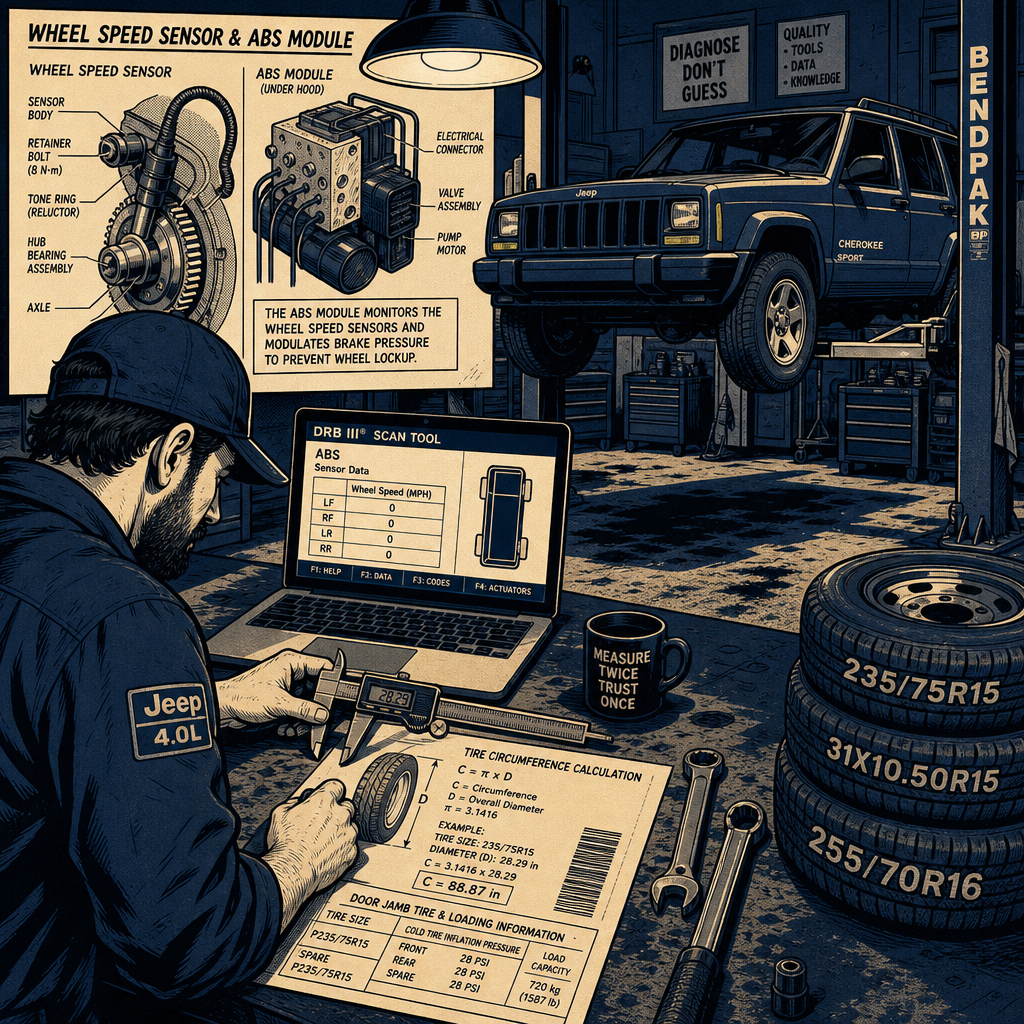
When a customer drives off the lot with tires that don’t match the factory door jamb sticker, you’re looking at more than just a cosmetic difference. A jump from 225/65R17 to 255/65R17—a swap we’re seeing more frequently on Jeep Cherokees and similar platforms—introduces a roughly 5% increase in overall tire diameter. That translates directly to speedometer error, odometer discrepancies, and potential clearance issues that can surface during full suspension compression or lock-to-lock steering. While many of these installations are intentional upgrades (Rubicon Wranglers come factory with metric 33-inch tires while Sahara trims run 32s), an accidental mismatch at the parts counter can leave the vehicle owner—and you—troubleshooting unexpected behavior. This guide walks through the diagnostic checklist, the math behind speed variance, and the recalibration paths available in modern vehicle control modules.
Understanding Tire Size Impact on Speedometer and Odometer
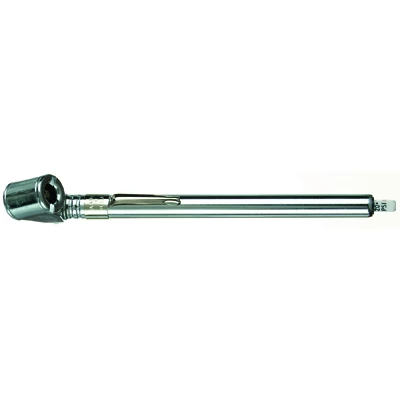
Pocket Truck & Bus Tire Pressure Gauge w/ Dual Head 20-120 PSI
Mfg: Schrader-bridgeport Internationa
Part #: 908D
The speedometer and odometer rely on wheel speed sensor data calibrated to the factory tire’s rolling circumference. When you increase the outer diameter, each wheel rotation covers more ground than the system expects. For a 225/65R17 to 255/65R17 swap, the effective difference is approximately 5%. In practice, when the speedometer reads 50 mph, the vehicle is actually traveling closer to 52.8 mph. At an indicated 60 mph, true speed is around 63.4 mph. This isn’t a linear dashboard error—it’s a fixed percentage based on circumference change.
Use a tire size calculator like tiresize.com to input both the original and installed sizes. You’ll get precise speed variance charts and a visual representation of the diameter difference. For field verification, have a second vehicle follow at a constant GPS-confirmed speed on a flat, straight road, or use a dashcam with GPS overlay to cross-reference displayed speed against satellite data. The odometer will similarly under-report mileage by the same percentage, which means a vehicle showing 10,000 miles may have actually traveled 10,500 miles. This has implications for service intervals, warranty claims, and resale documentation.
Most factory speedometers already read slightly low—typically around 2-3%—to provide a safety buffer and account for manufacturing tolerances. Installing oversized tires can push you past true speed into a range where you’re inadvertently speeding even when your dash reads the posted limit. Make customers aware of this during the handoff, especially if the vehicle will see highway use or operate in jurisdictions with strict speed enforcement.
Physical Fitment: Checking for Rub and Clearance Issues
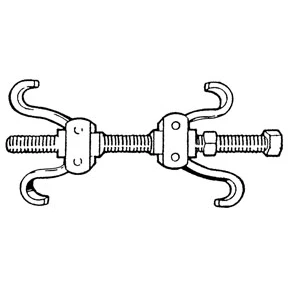
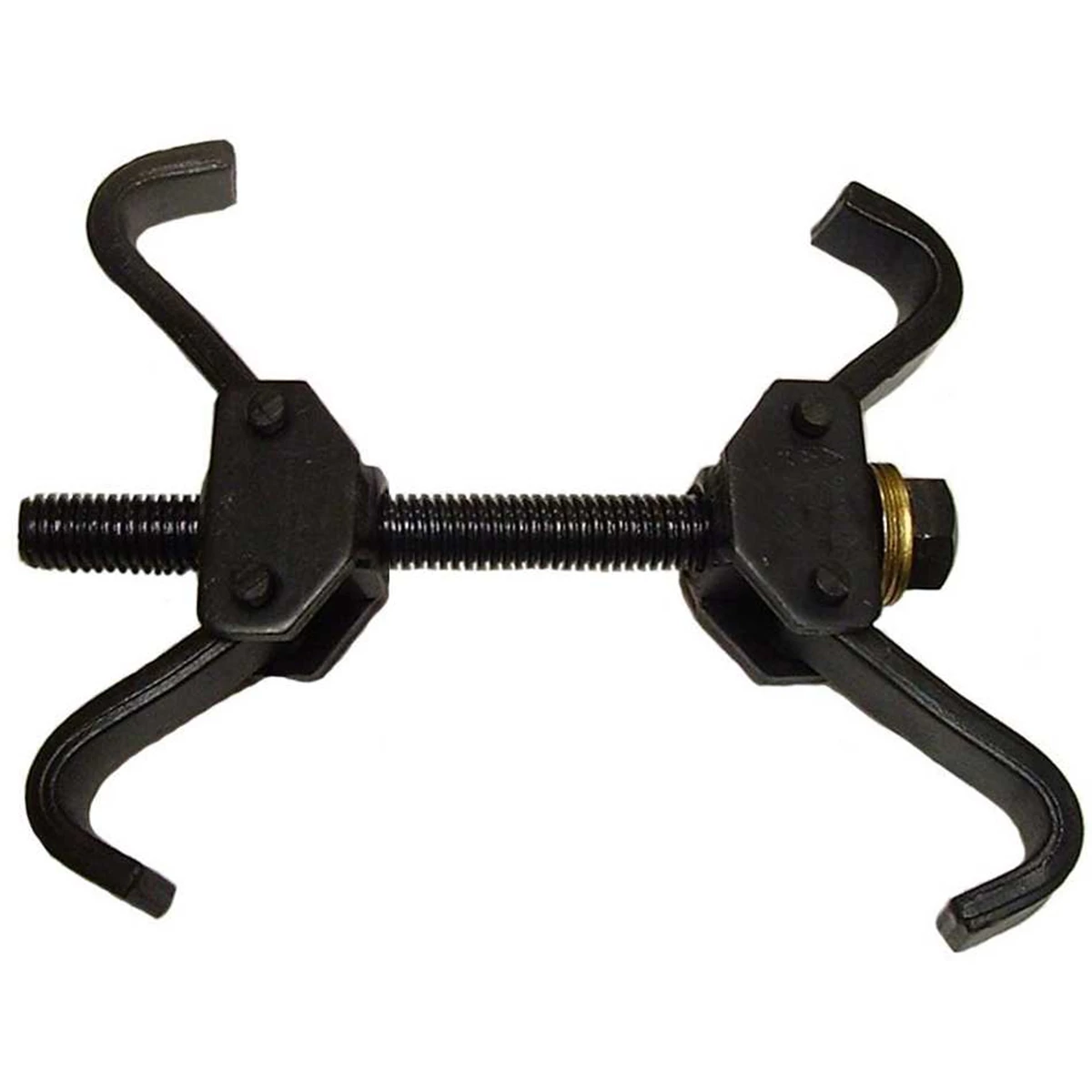
Compact Coil Spring Compressor - Safe & Easy Compression Tool
Mfg: S & G Tool Aid
Part #: 62400
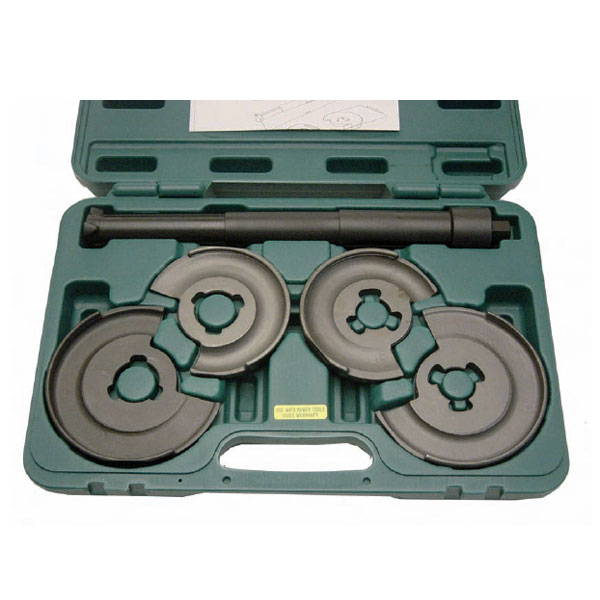
Import Automotive Suspension Spring Compressor Tool Mercedes, BM
Mfg: Baum Tools
Part #: 924-0231
Even if the tires clear at static ride height, you need to verify clearance under dynamic conditions. Perform a full lock-to-lock steering test on both sides, both stationary and while rolling slowly. Listen and feel for any contact between the tire sidewall and the inner fender liner or suspension components. Mark the fender liner with chalk if you suspect marginal clearance—roll the vehicle and inspect for scuff marks.
Next, check suspension compression clearance. Load the vehicle with typical cargo or passenger weight, then push down firmly on each corner to compress the suspension through its travel. On unibody SUVs like the Cherokee, the Trailhawk trim uses 245/65R17 tires—only one size down from the 255/65R17 in question—so the platform is engineered with some margin. But if your customer’s vehicle is a base or Latitude trim originally spec’d for 225s, that margin shrinks. Full compression events—hitting a pothole at speed, off-road articulation, or even a heavy load combined with a dip—can bring the tire into contact with the wheel well.
Inspect wheel offset as well. A 225-width tire typically mounts on a 7-inch wheel, while a 255 often requires at least a 7.5-inch wheel. If the existing wheels are 17×7, the 255 tire will appear pinched or bulged at the bead. This isn’t just a cosmetic concern—it affects handling predictability, increases the risk of bead unseating under lateral load, and accelerates shoulder wear. Cross-reference the wheel width stamped on the barrel against the tire manufacturer’s fitment range. If you’re at or beyond the maximum recommended width, document it and present options: source correct-width wheels, or downsize to the factory tire spec.

Tech200Pro Tire Pressure with Tread Depth and TPMS
Mfg: Bartec USA
Part #: WRT200PRO
ID: 288619
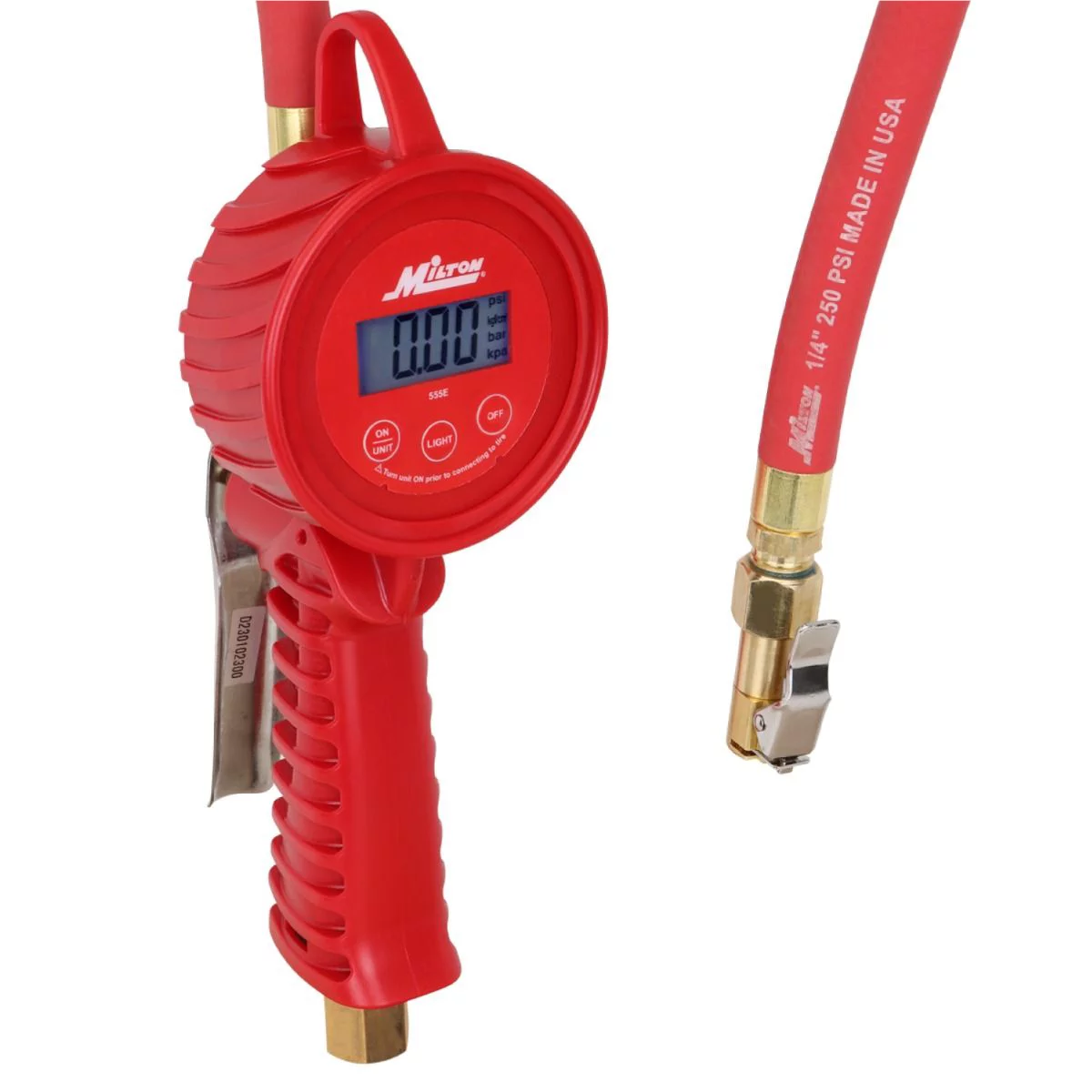
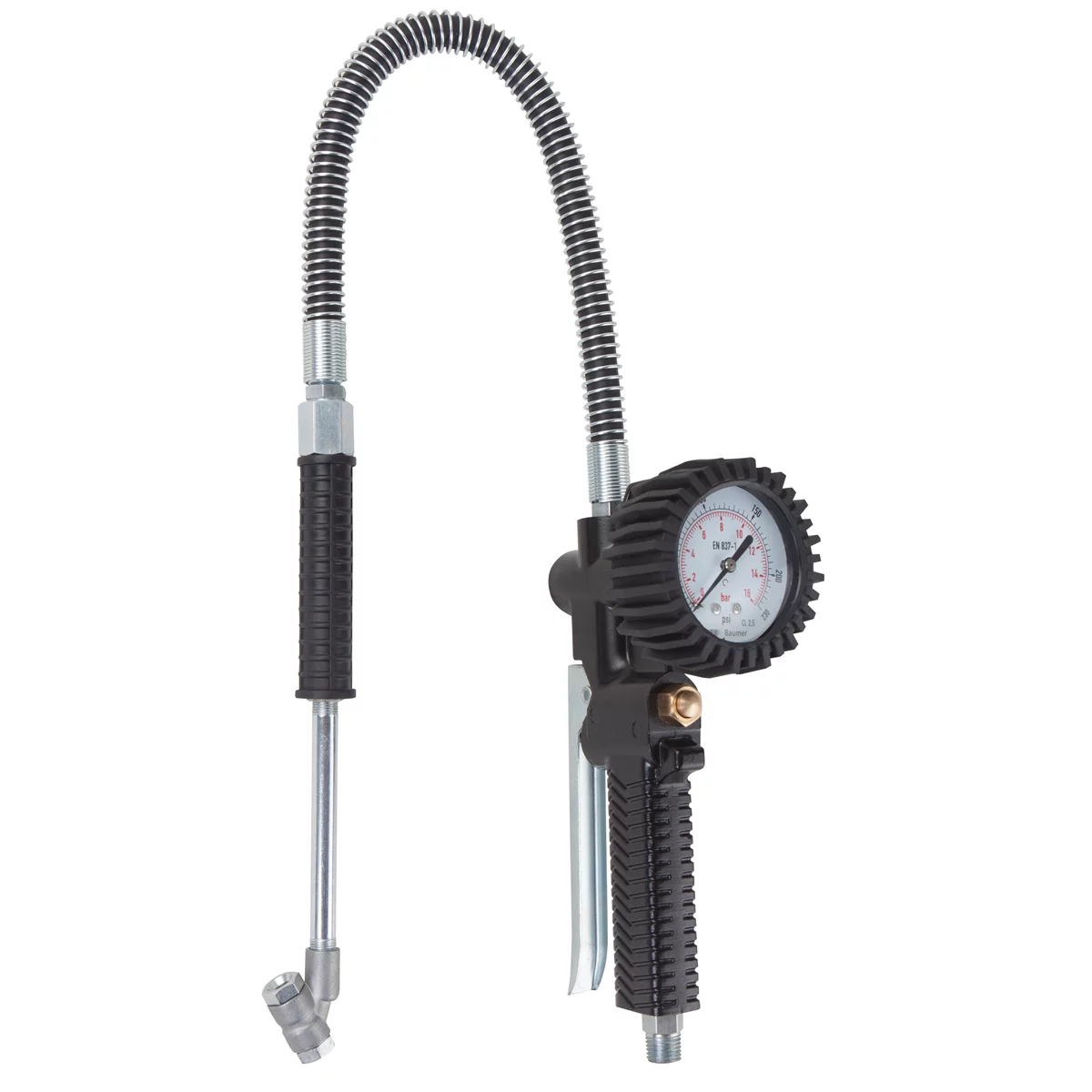
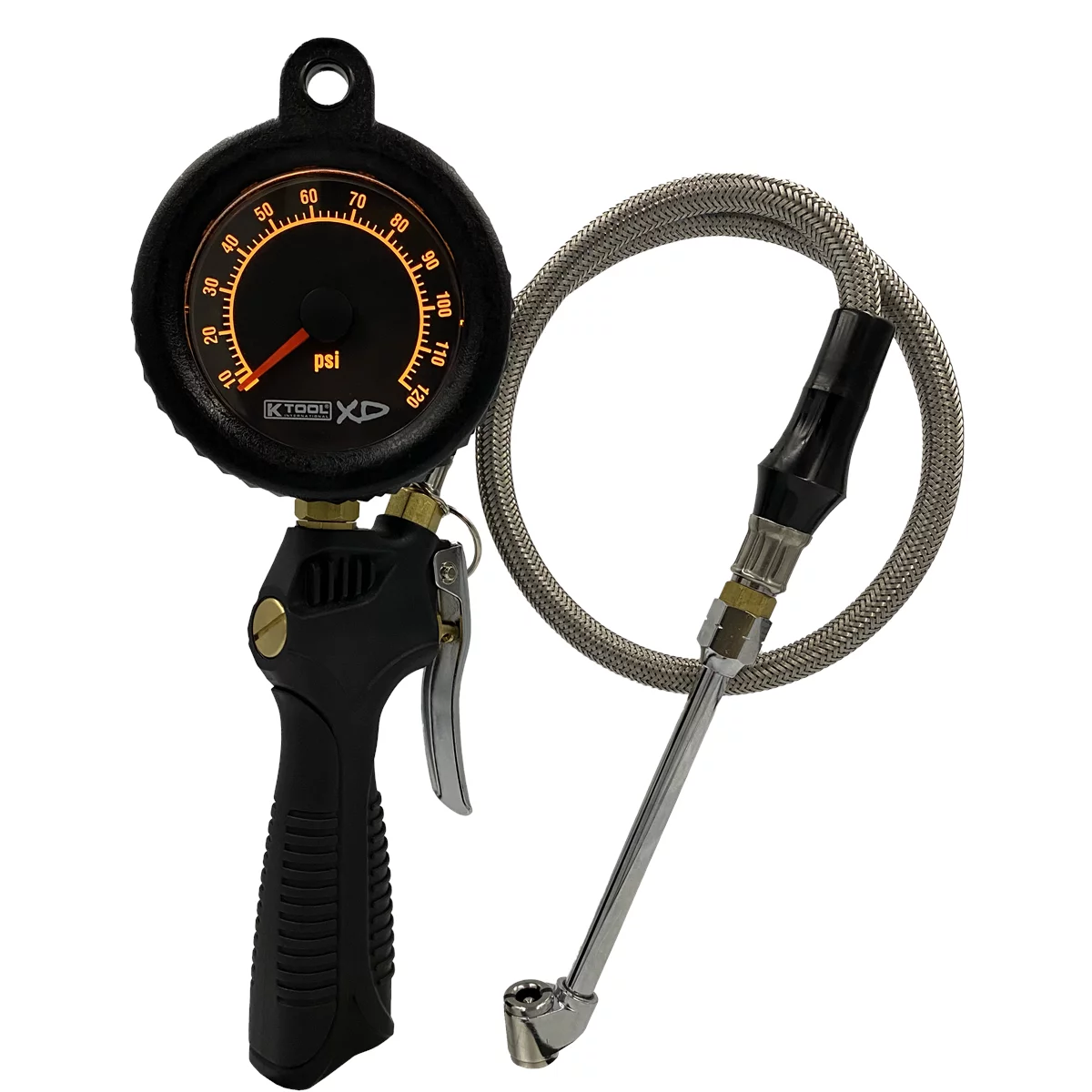
555e Digital Tire Inflator Gauge, 5 to 220 PSI, ? 1 PSI Accuracy
Mfg: Milton Industries
Part #: 555E
ID: 373121
Software Recalibration and Module Programming
Modern vehicles store tire circumference parameters in the ABS module, PCM, or a dedicated body control module. Many scan tools—professional-grade units and enthusiast-level tools like JScan for Jeep platforms—offer a tire size recalibration function. This updates the lookup table the ECU uses to convert wheel speed sensor pulses into speedometer and odometer readings. The process typically involves entering the new tire diameter or selecting from a preset menu of common sizes.
Before you begin, confirm which module holds the tire size data on the specific platform. For FCA products (Jeep, Dodge, Ram), it’s often accessible via the ABS module or a “quick setup” section in the scan tool’s programming menu. You may need an active subscription or security gateway unlock depending on the tool and model year. Always capture a baseline snapshot of current parameters before making changes—save a copy of the original configuration so you can revert if needed.
After recalibration, verify the correction with a GPS cross-check or a measured-mile road test. Some municipalities mark calibrated mile markers on highways for exactly this purpose. Drive the measured mile at steady speed and compare the odometer increment to the known distance. If the calibration was successful, the discrepancy should fall within 1-2%, well within the tolerance of the original factory setup. Note that recalibration does not retroactively correct odometer mileage already recorded—the under-reporting during the period between installation and recalibration is permanent in the vehicle’s history.
If your scan tool doesn’t support tire size recalibration, call the dealership service department. Many OEMs offer this as a standalone reprogramming service, sometimes at no charge if the dealership was responsible for the installation error. Document the service in the vehicle’s file and provide the customer with a printed confirmation showing the new tire size parameters and corrected speedometer calibration.
Fuel Economy and Performance Considerations
Larger, wider tires increase rolling resistance and rotational mass, both of which affect fuel economy. However, the 5% diameter increase from a 225/65R17 to 255/65R17 swap produces a relatively minor impact—typically 1-3% reduction in observed MPG, depending on driving cycle and vehicle weight. The wider contact patch (225mm to 255mm) has a more pronounced effect during city driving with frequent stops, where the engine must overcome greater inertia at each acceleration event.
Highway fuel economy may actually improve slightly on a per-mile basis because the engine turns fewer RPM to cover the same distance, but this is offset by increased aerodynamic drag from the wider tire profile and any increase in ride height. In practice, most drivers won’t notice a measurable difference at the pump unless they’re tracking fuel logs religiously. Driving habits—acceleration rates, speed consistency, tire pressure maintenance—exert a far larger influence on fuel consumption than a one-size tire change.
Acceleration and braking distances will change marginally. The increased rotational inertia means the engine works slightly harder to spin the wheels up to speed, and the brakes must dissipate more kinetic energy to stop them. For a daily-driven SUV, this difference is negligible and falls within the normal variation caused by tire tread depth, inflation pressure, and brake pad condition. For performance applications or commercial use where payloads approach GVWR, however, document the change and ensure the customer understands that braking distances may increase by a few feet at highway speeds.
Warranty Implications and Documentation
Factory warranties—especially powertrain coverage—can be denied if the OEM determines that non-OEM modifications contributed to a failure. Oversized tires fall into a gray area. If a customer experiences a transmission issue and the dealership discovers 255-section tires on a vehicle spec’d for 225s, they may argue that the increased rolling diameter placed additional load on the transmission, accelerating wear. Whether that argument holds up depends on the specific failure mode, the OEM’s warranty administration policies, and how well you’ve documented the installation.
Ford has historically been aggressive about denying claims on trucks sold with dealer-installed lifts and oversized tires, even when the dealer who performed the modification is the same dealer handling the warranty claim. FCA and GM have been somewhat more lenient, particularly when the tire size is within the range offered on higher trims of the same platform. Since the Cherokee Trailhawk uses 245/65R17 tires from the factory, a 255/65R17 on a Latitude is only one step beyond an OEM-approved configuration. Document this in your service records and provide the customer with a letter stating that the tire size is within the platform’s engineered tolerance based on the Trailhawk specification.
If the installation was a dealer error—someone transposed digits during order entry, or matched the previous owner’s non-stock tires without verifying the door jamb—get it corrected immediately. Offer to swap the tires for the correct size and refund any price difference if the correct size is less expensive, or provide the recalibration service at no charge if the customer opts to keep the oversized set. The cost of a free recalibration or a tire swap is trivial compared to the risk of a warranty denial on a major component down the line, and it protects your shop’s reputation.
When Oversized Tires Are Intentional: Setting Customer Expectations
Many owners actively seek a one-size-up tire for aesthetic reasons, improved off-road capability, or a minor lift effect without installing a suspension kit. When this is a deliberate choice, your role is to ensure they understand the trade-offs and that the installation is done correctly. Walk them through the speedometer variance, provide a printed chart showing actual speed versus indicated speed, and explain the odometer under-reporting so they can adjust service intervals accordingly.
Confirm that the wheel width is appropriate for the tire section width. A 255 tire on a 7-inch wheel will perform poorly and wear unevenly. If the customer’s current wheels are too narrow, source the correct width or recommend a combined wheel-and-tire package. Check the load rating as well—the original 225/65R17 may have been a 102T (1874 lbs per tire, T-speed rated), and the replacement 255/65R17 should meet or exceed that load index if the vehicle sees towing or cargo hauling.
Recommend a follow-up alignment check after 500 miles. Larger tires can highlight existing suspension wear or geometry issues that were masked by the smaller contact patch. Toe settings in particular become more sensitive, and a slight toe-out that was acceptable with a 225 tire may cause noticeable wandering or edge wear with a 255. Finally, remind the customer to check tire pressure more frequently—larger tires have more air volume and can mask slow leaks longer, but they’re also more susceptible to pressure loss from temperature swings due to the increased sidewall surface area.
Quick Pre-Delivery Checklist for Non-Standard Tire Installations
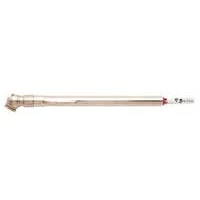
Pencil Type Tire Pressure Gauge for Higher Pressre Automobile Ti
Mfg: Milton Industries
Part #: S 920
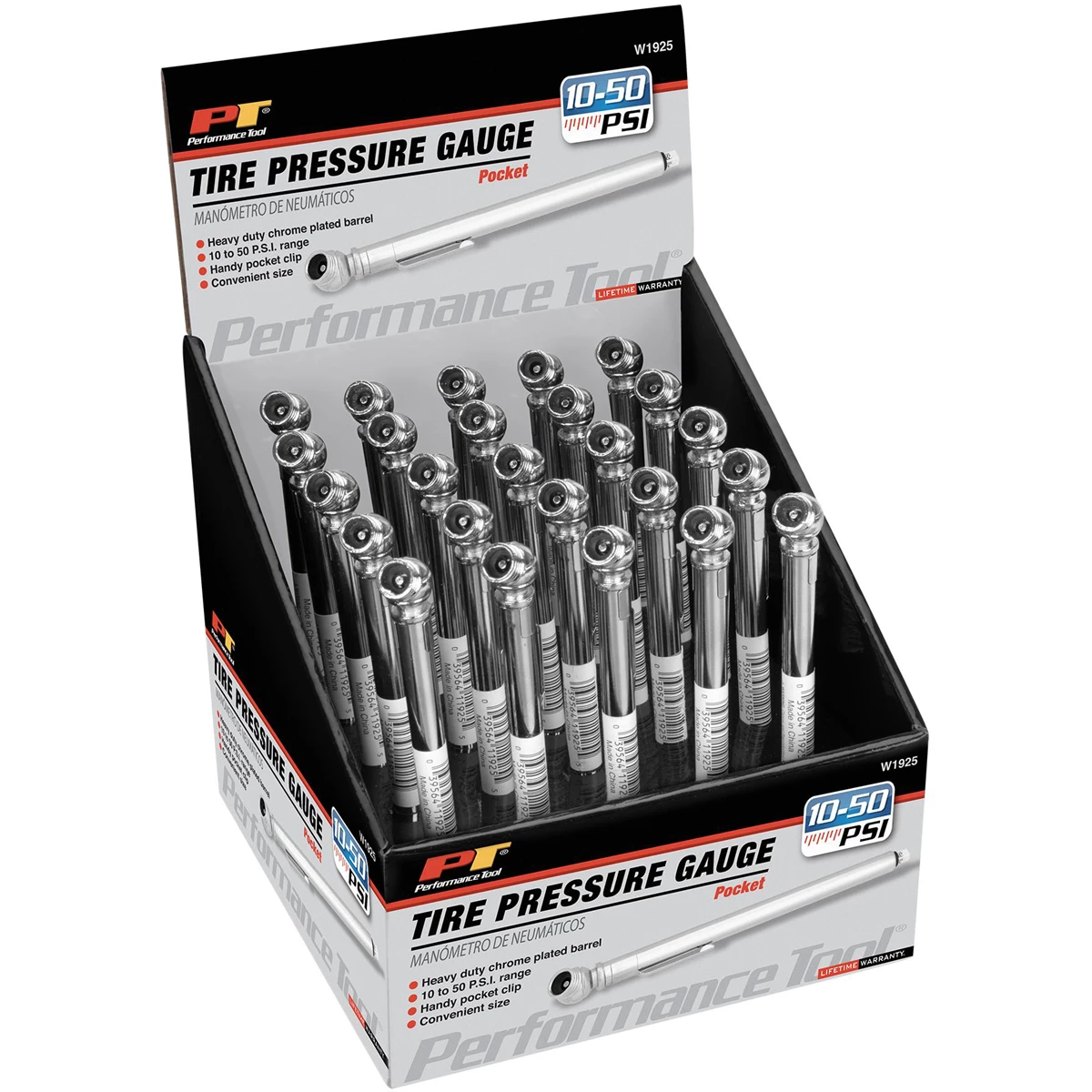
Pencil Tire Pressure Gauge 10-50 PSI with Pocket Clip
Mfg: Wilmar - Performance Tool
Part #: W1925
- Verify installed tire size against door jamb sticker; document any variance
- Perform lock-to-lock steering test at full turn, both directions
- Load suspension and check for contact at full compression
- Confirm wheel width is within tire manufacturer’s recommended range
- Calculate speed variance using tire size calculator; provide customer with chart
- Recalibrate speedometer via scan tool or dealer programming if available
- Verify load rating meets or exceeds OEM specification
- Check tire pressure and set to recommended PSI for new tire size (may differ from door jamb sticker)
- Document installation and recalibration in vehicle service file
- Schedule 500-mile follow-up alignment check
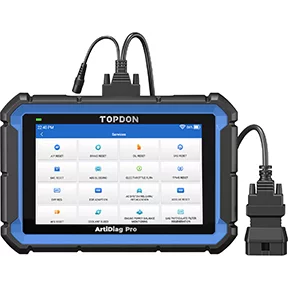
ArtiDiag Pro – seven inch Scan Tool w/Service Functions & Bi-Directional Controls
Mfg: TOPDON
Part #: ADPRO
ID: 382821
Frequently Asked Questions
Can I just use a GPS speedometer app instead of recalibrating?
Yes, a GPS-based speed display—either a standalone app or a dashcam with GPS overlay—will show true speed regardless of tire size. However, this doesn’t correct the odometer, which will continue to under-report mileage. For vehicles under warranty or with scheduled maintenance tied to odometer readings, software recalibration is the more complete solution.
Will larger tires throw a check engine light or ABS warning?
Typically no. The wheel speed sensors detect rotational speed, and while the calibration is off, the variance is proportional across all four wheels. The ABS module won’t see a mismatch unless you mix tire sizes on different axles. However, some traction control and stability systems may behave slightly differently because they’re receiving speed data that doesn’t align with accelerometer or GPS inputs (if equipped). This is rare but worth monitoring.
How do I know if my wheels are too narrow for the tire?
Check the tire manufacturer’s fitment guide, usually available on their website or in the dealer catalog. A 255-section tire generally requires a wheel width between 7.5 and 9 inches. If the tire sidewall bulges outward significantly from the wheel lip, or if the bead area looks pinched, the wheel is too narrow. You’ll also see accelerated shoulder wear and reduced handling precision.
Does a tire size change affect my insurance or registration?
In most jurisdictions, tire size changes within reasonable limits do not require notification to insurance or DMV. However, if the tire size change is part of a broader modification (lift kit, wheel spacers, etc.) that alters the vehicle’s overall height or width beyond legal limits, you may need to update registration documents. Check local regulations, especially for commercial vehicles or in states with annual safety inspections.
Can I mix tire sizes front to rear?
Not on an all-wheel-drive vehicle. AWD systems rely on all four tires having the same rolling circumference to avoid binding the center differential. Even a half-inch diameter difference can cause driveline stress and premature wear on the transfer case or rear differential. On two-wheel-drive vehicles, it’s technically possible to run different sizes front to rear, but it complicates rotation schedules and makes speedometer calibration impossible to get right for both axles.
What if the dealer refuses to recalibrate or swap the tires?
If the dealer installed the wrong size due to their error and refuses to correct it, document everything—your purchase order, the door jamb sticker, photos of the installed tires, and any written communication. File a complaint with your state’s motor vehicle division or consumer protection office, and consider consulting a consumer rights attorney if the dealer is unwilling to make it right. In most cases, the dealer will correct the issue once they understand the liability exposure, but having documentation strengthens your position if escalation is necessary.
Tire Tools and Suspension Equipment
Proper tire installation and verification require the right diagnostic tools and equipment. Whether you’re checking clearance, performing lock-to-lock tests, or verifying load ratings, our selection of tire tools and suspension equipment supports accurate diagnostics and safe installations. Browse our Tire Tools, Wheels & Suspension category for tire size calculators, pressure gauges, alignment aids, and suspension components.
- Tire pressure and load-rating verification tools
- Suspension compression and clearance testing equipment
- Wheel offset and fitment reference materials
Essential Tools for Tire Installation & Maintenance
Proper tire installation requires the right equipment and expertise. Whether you’re a technician or DIY enthusiast, having quality tools on hand prevents costly mistakes like incorrect sizing. Explore our recommended products below to ensure you’re prepared for any tire service job.
- Tire Pressure Gauges & Inflators: Accurate PSI readings prevent over- or under-inflation issues that compound sizing errors
- Tire Balancing Equipment: Professional-grade balancers catch vibration problems that often stem from improper tire fitment
- Wheel Alignment Tools: Verify proper wheel geometry after tire installation to avoid premature wear

The Toolsource Technical Team blends decades of real-world automotive service experience with up-to-date technical research. Our writers collaborate with professional mechanics, shop owners, and diagnostic specialists to deliver practical, workshop-ready guidance you can trust.


Follow us on social media