A popular online debate about how little cars have visually changed in the last 100 years misses the point technicians already understand: the basic layout of a car — engine or motor up front, passenger cell behind it, wheels at the corners — isn’t a lack of imagination, it’s convergent engineering. Physics and safety requirements narrowed the design space early, and everything since has been refinement rather than reinvention. That history isn’t just trivia. It explains why certain systems in the bay behave the way they do, why EVs still have a front structure even without a combustion engine, and why some fundamentals of diagnosis haven’t changed even as the electronics around them have gotten far more complex. This post breaks down what stuck, why it stuck, and what it means for how you approach starter, structural, and EV service work today.
Why Vehicle Architecture Has Stayed Remarkably Consistent
The engine-forward, cabin-behind layout wasn’t an aesthetic choice — it solved multiple problems at once: weight distribution, driveline packaging, and (as an accidental but critical benefit) crash protection. Putting mass ahead of the occupants gives a vehicle a built-in buffer zone. Once that layout proved itself, there was little incentive to move away from it, because doing so reintroduces problems that were already solved.
For technicians, the practical takeaway is that a lot of “new” vehicle problems are old problems with new components attached. A modern EV’s front trunk (frunk) exists for cargo space, sure, but it also preserves crush distance ahead of the passenger compartment — the same reason a 1920s car put the engine where it did. When you’re evaluating a vehicle after a front-end impact, or diagnosing why a repair doesn’t restore factory ride height or alignment, it helps to remember that the structure you’re working on is doing double duty: packaging and protection. Skipping structural repair procedures to save time compromises both.
From Hand Cranks to Electric Starters: A Short History With Modern Diagnostic Relevance
Early gas-powered cars required manual hand-crank starting, which was dangerous — backfires could break wrists or worse, and there are documented fatalities from crank-related accidents in the early 1900s. That risk directly drove the development of the electric starter motor, introduced commercially around 1912. It’s easy to forget that the starter — one of the most commonly replaced components in any shop — exists because a specific failure mode (manual cranking) was unacceptable. The last mass-produced vehicles with a hand-crank provision weren’t phased out until the late 20th century in some markets, which is a reminder that “obsolete” technology often lingers in service far longer than people expect.
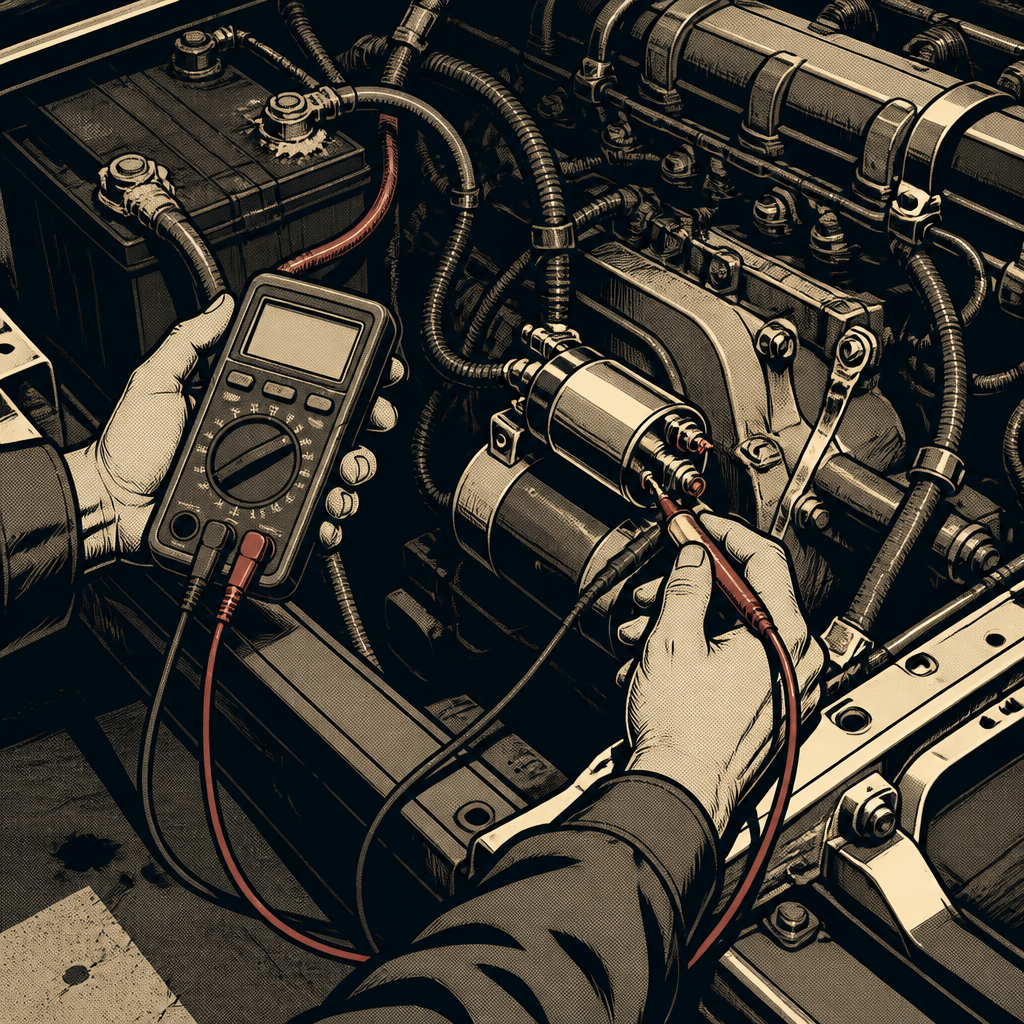
The diagnostic relevance today: starter and charging system faults are still some of the most common no-start complaints, and the fundamentals of testing haven’t changed even though the components have. A few things worth re-confirming on every no-start call:
- Battery state of charge and load test before condemning the starter
- Voltage drop testing across the starter circuit, not just a pass/fail current draw
- Ground connections — corrosion at the block or chassis ground is still one of the most under-diagnosed causes of intermittent no-crank
- Starter relay and solenoid function isolated from the starter motor itself
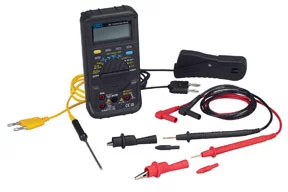
100 Series Autoranging Automotive Multimeter
Mfg: OTC Tools and Equipment
Part #: 3505A


EV Battery and Motor Tech: Why “Electric” Doesn’t Mean “Same as 1900”
Electric vehicles aren’t new — they predate the Model T, and roughly a third of cars on the road around 1905 were electric. GM also ran a limited-production EV program in the 1990s that was shut down for economic reasons. The temptation is to treat this as evidence that EVs are a solved-and-abandoned idea being recycled. That’s a misread. What’s changed isn’t the concept, it’s the energy storage and motor control technology underneath it — lithium chemistry, battery management systems, and power electronics are not remotely comparable to early-1900s lead-acid setups or even 1990s NiMH packs.
For a shop, that means EV service isn’t “the same job with a different fuel source.” High-voltage safety procedures, insulation testing, and manufacturer-specific de-energization steps are non-negotiable before any HV system work. Technicians moving into EV service should treat the battery pack and motor controller the way they’d treat any unfamiliar high-energy system: verify lockout/tagout procedures, use rated PPE and insulated tools, and confirm HV isolation with a proper meter before touching anything inside the orange-cabled sections. Don’t assume conventional 12V-system habits transfer directly — they don’t, and the stakes for getting it wrong are much higher.
Crumple Zones Then and Now: Structural Repair Considerations for ICE and EV Platforms
The front-engine layout’s accidental safety benefit — a crumple zone ahead of the cabin — became a deliberate design target once crash testing matured. That’s why, even in EVs where there’s no engine block to package, manufacturers still leave a front structural cavity rather than pushing the cabin forward to maximize interior space. The energy-absorbing purpose of that space is worth more than the cargo room it would otherwise gain.
This matters directly for collision repair and post-repair diagnostics:
- Structural repairs must restore designed crumple behavior, not just cosmetic alignment — improvised patches or non-OEM structural parts can change how the front end absorbs energy in a subsequent impact
- On EVs, front structural work often sits close to high-voltage cabling and pack mounting points; sequencing matters, and HV disconnect procedures come before structural work, not after
- ADAS sensors (forward radar, cameras) mounted in or near the front structure need calibration verification after any front-end repair, regardless of powertrain type
Servicing Restored and Legacy Vehicles: What to Expect in the Bay
Older vehicles that have been kept running for decades — whether a lovingly restored classic or a high-mileage daily driver from another era — present a different diagnostic mindset than modern electronics-heavy platforms. Mechanically simple systems (points ignition, carburetors, non-boosted brakes) are more forgiving of basic hand tools and more tolerant of field repairs, which is part of why cars like the Model T earned a reputation for being serviceable “with pliers and a roll of wire.” That doesn’t mean they’re easier to diagnose correctly — it means the failure modes are mechanical and visual rather than data-driven.
When a legacy vehicle comes in, expect to rely more on baseline mechanical checks (compression, ignition timing, fuel delivery basics) and less on scan tool data, since many pre-OBD vehicles simply don’t have it. Document baseline specs before you start, since factory service data for older platforms can be inconsistent across sources.
Practical Checklist: Working Across Vehicle Eras
- Confirm HV isolation and follow manufacturer lockout procedures before any EV high-voltage work
- Use voltage drop testing, not just current draw, when diagnosing starter and charging faults
- Treat front structural repairs as safety systems, not just cosmetic panel work — verify OEM procedures
- Recalibrate ADAS sensors after any front-end structural repair, on ICE or EV platforms
- For pre-OBD vehicles, rely on baseline mechanical testing rather than assuming scan tool coverage
- Check grounds and battery condition first on any no-start, regardless of vehicle age
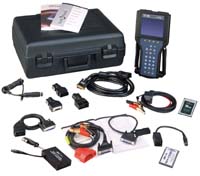


2002 Monitor Elite Deluxe OBD2 Scan Tool Kit
Mfg: OTC Tools and Equipment
Part #: 3354
FAQs
Why do EVs still have a front trunk instead of maximizing cabin space?
The front cavity preserves crush space for crash energy absorption, the same structural role the engine bay played in combustion vehicles. Manufacturers keep it even though there’s no engine to package.
Are modern EV batteries really that different from early 20th-century electric cars?
Yes. The core concept (electric motor plus stored energy) is old, but lithium-ion chemistry, battery management electronics, and motor controllers are fundamentally different technology from lead-acid and early motor designs. Comparing them on capability is comparing different eras of engineering, not just battery brands.
What’s the most commonly missed step in EV high-voltage service?
Skipping or rushing the de-energization and HV isolation verification step before working near orange-cabled components. Always confirm isolation with a rated meter rather than assuming a service disconnect alone is sufficient.
Do I need to recalibrate sensors after every front-end repair?
If the repair involved structural front-end work near camera or radar mounting points, yes — verify calibration per OEM procedure regardless of whether the vehicle is ICE or electric.
Why do voltage drop tests matter more than current draw tests for starter diagnosis?
Current draw alone can look normal while excessive resistance in the circuit (corroded grounds, worn cable ends) causes slow or intermittent cranking. Voltage drop testing isolates exactly where that resistance is occurring.
Is it worth learning legacy mechanical diagnostic skills if most vehicles now use OBD?
Yes, particularly for shops that service classic, restored, or older commercial vehicles. Baseline mechanical diagnostic skills (compression, timing, fuel delivery) remain necessary for pre-OBD platforms and are a useful cross-check even on modern vehicles when sensor data is unreliable.
Recommended Diagnostic Tools
Troubleshooting a no-start condition, testing high-voltage isolation, or running baseline mechanical diagnostics all require the right tools. Check our automotive diagnostic tools for equipment that covers ICE vehicles, EVs, and legacy platforms.
- Voltage drop testers for electrical circuit diagnosis
- Compression gauges and timing tools for mechanical testing
- High-voltage safety meters for EV system work

The Toolsource Technical Team blends decades of real-world automotive service experience with up-to-date technical research. Our writers collaborate with professional mechanics, shop owners, and diagnostic specialists to deliver practical, workshop-ready guidance you can trust.


Follow us on social media