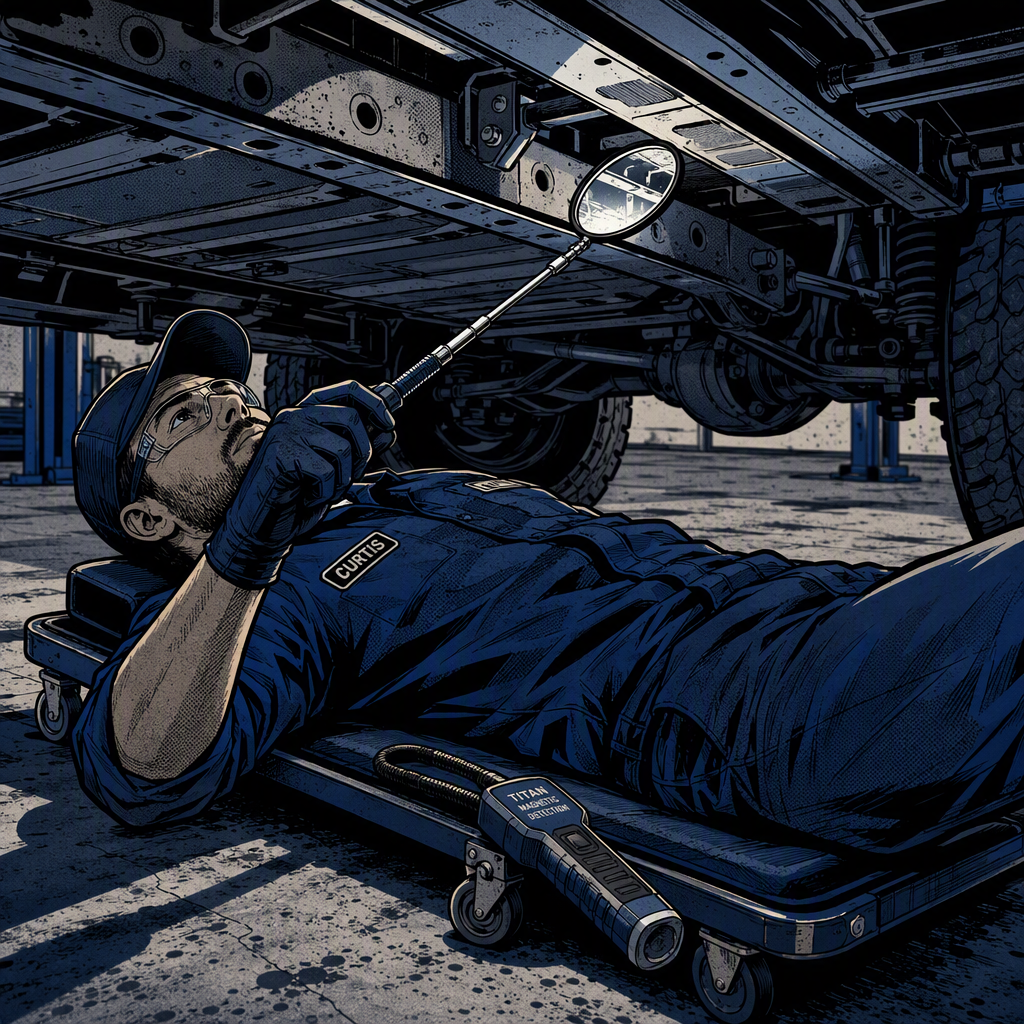
It’s becoming a routine request at the counter: a customer pulls up, sometimes visibly rattled, and asks if you can check their car for a tracking device. Sometimes it’s triggered by a dashcam clip of someone crouching near a bumper. Sometimes it’s a partner or ex whose knowledge of their whereabouts doesn’t add up. Whatever the trigger, techs are increasingly the first stop before the police station — and how you handle the inspection, and what you tell the customer to do next, matters. This guide walks through where trackers hide, what tools actually find them, and the correct order of operations once you’ve confirmed one is there.
Recognizing When a Tracker Check Is Warranted
Not every “I think I’m being tracked” request needs a full teardown, but a few patterns come up often enough that they’re worth taking seriously immediately: someone consistently shows up at locations the customer didn’t share, a dashcam or Sentry Mode clip shows a person lingering at the vehicle without touching the door handles, or the customer found a small unfamiliar object with a magnetic backing. Treat these as legitimate until proven otherwise. A five-minute visual walk-around costs you nothing; dismissing a real case costs the customer their safety.
Ask the customer if they have footage first. Modern EVs and aftermarket dashcams with parking-mode recording (Tesla Sentry, many Viofo/BlackVue units, etc.) are often the best lead you’ll get — a timestamped clip showing exactly where someone crouched or reached is worth more than an hour of blind searching. Have the customer pull that footage before you start pulling panels.
Where Trackers Actually Get Hidden
Commercial GPS trackers fall into two broad categories, and where you look depends on which type you’re dealing with:
- Battery-powered magnetic units: These are self-contained, don’t need a power tap, and are placed for a quick attach-and-leave. Check the wheel wells (inside the fender liner near the top), the undercarriage near the frame rails, behind the front and rear bumper covers, inside the tow hitch receiver, and on top of the fuel tank or spare tire well. Anywhere flat and steel with an unobstructed sky view for GPS/cellular signal is a candidate.
- Hardwired units: These tap into the OBD-II port or the vehicle’s constant 12V/ground, giving unlimited runtime. Check under the dash near the OBD-II connector (a small dongle plugged directly into the port is common and often mistaken for a fleet-tracking device), behind the kick panels, under the driver’s seat, and inside the glovebox liner. If you find a wired unit, note whether it’s a legitimate fleet/insurance dongle (often has a visible brand/model) versus something generic with no markings.
Battery units are usually swapped or recharged periodically, so if the customer suspects a specific person, ask about the timeline — a tracker discovered weeks after suspicion started may have already been replaced or moved.
===PRODUCT_SEARCH_1===
Tools That Actually Work for Detection
A flashlight and a mirror get you most of the way on a visual inspection, but a few dedicated tools speed things up and catch what eyes miss:
- Telescoping inspection mirror with LED: Standard shop tool, essential for wheel wells, frame rails, and behind bumper covers without pulling panels.
- Creeper or lift access: Battery trackers are almost always placed from underneath in under a minute, so a proper underbody view (lift or creeper, not just leaning over a fender) is non-negotiable for a thorough check.
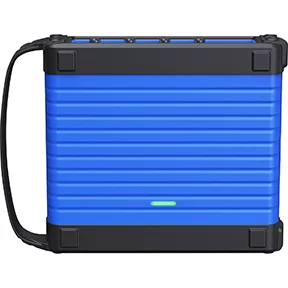
- RF/bug detector: A handheld RF signal detector will pick up active cellular or Bluetooth transmissions from a live tracker. These are cheap and fast but only catch units that are actively transmitting — a tracker in sleep mode between GPS pings won’t trigger it, so don’t rely on this alone.
- Handheld magnet or magnetic tip flashlight: Useful for sweeping frame rails and the underside of plastic undercarriage shields, since most magnetic trackers use strong neodymium mounts that “click” onto steel.
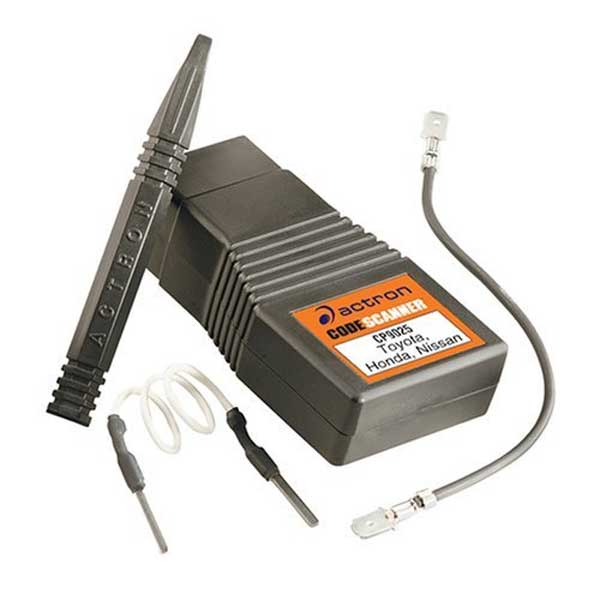
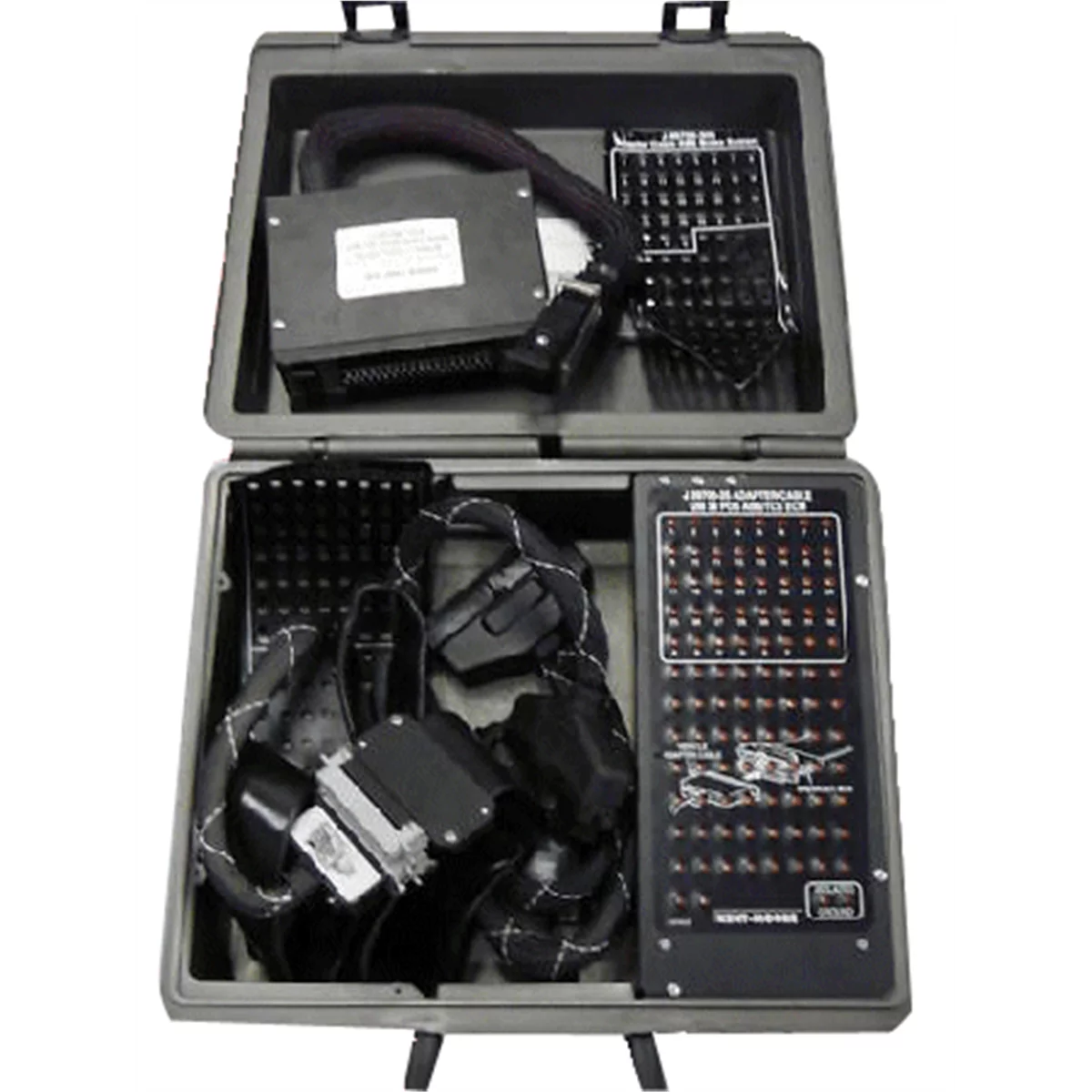
- OBD-II scan tool: Plug in and check for unfamiliar devices reporting on the CAN bus, and physically inspect the port itself — a hardwired dongle is often just sitting in the connector or spliced in immediately behind it.
Work the vehicle in a consistent order every time (front bumper → wheel wells → undercarriage front-to-back → hitch/rear bumper → interior/OBD) so you don’t have to guess later whether an area was actually checked.
What to Do the Moment You Find One
This is the step shops get wrong most often: the instinct is to rip it off immediately. Don’t. Walk the customer through this before touching anything further:
- Photograph it in place — wide shot showing location on the vehicle, then close-ups of any serial numbers, model markings, or SIM card slots.
- Don’t power it off or remove the battery yet. If the customer plans to involve police, an active, intact device with usable data is stronger evidence than a dead one.
- Bag it separately once photographed, and note the date/time/location it was found. Treat it like evidence, because it may become evidence.
- Do not confront the suspected installer in the parking lot or over text. That’s a decision for the customer and law enforcement, not something to resolve at the counter.
Some customers ask about relocating the tracker to a bus, delivery truck, or long-haul rig to send the installer on a wild goose chase. It’s a popular idea and it does work as a delay tactic, but flag the tradeoff clearly: doing so gets rid of physical evidence and can complicate a police report, since the device is no longer where it was found and its chain of custody breaks. If safety is the priority, evidence preservation should come first — that decision is the customer’s to make, but they should make it informed.
===PRODUCT_SEARCH_2===
Guiding the Customer’s Next Steps
Techs aren’t legal advisors, but customers will ask what to do next, and getting the order right matters. The consistent, correct sequence is:
- File a police report first, before any confrontation or breakup conversation, with the tracker and any supporting footage as evidence.
- Request a protective/no-contact order if the situation involves a partner or ex — many jurisdictions can issue an emergency order quickly when there’s physical evidence like a tracker.
- Only then address the relationship or personal situation directly, ideally in a public place or with someone else present, and only after the paper trail exists.
Encourage customers not to wait until something escalates before documenting it. Even if they’re unsure they want to press charges immediately, a filed report creates a timestamp and record that matters later.
Quick Checklist
- Pull dashcam/Sentry footage before starting the physical search
- Inspect front and rear bumpers, wheel wells, undercarriage, and hitch receiver with a mirror or from a lift
- Sweep frame rails with a magnetic tool; run an RF detector for active transmissions
- Check the OBD-II port and area behind kick panels for hardwired units
- Photograph any device in place before removing or powering it down
- Advise the customer: police report and evidence preservation before confrontation
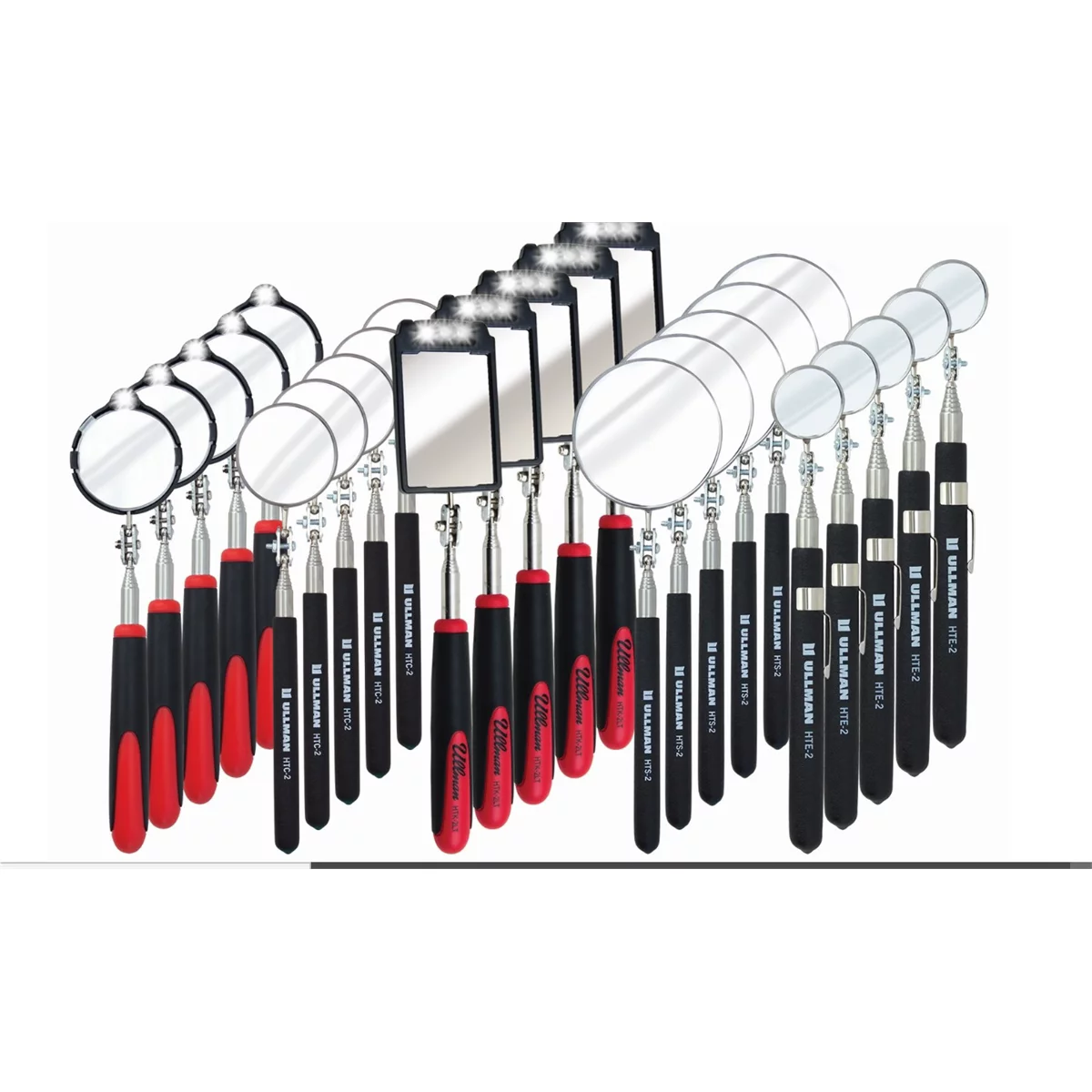
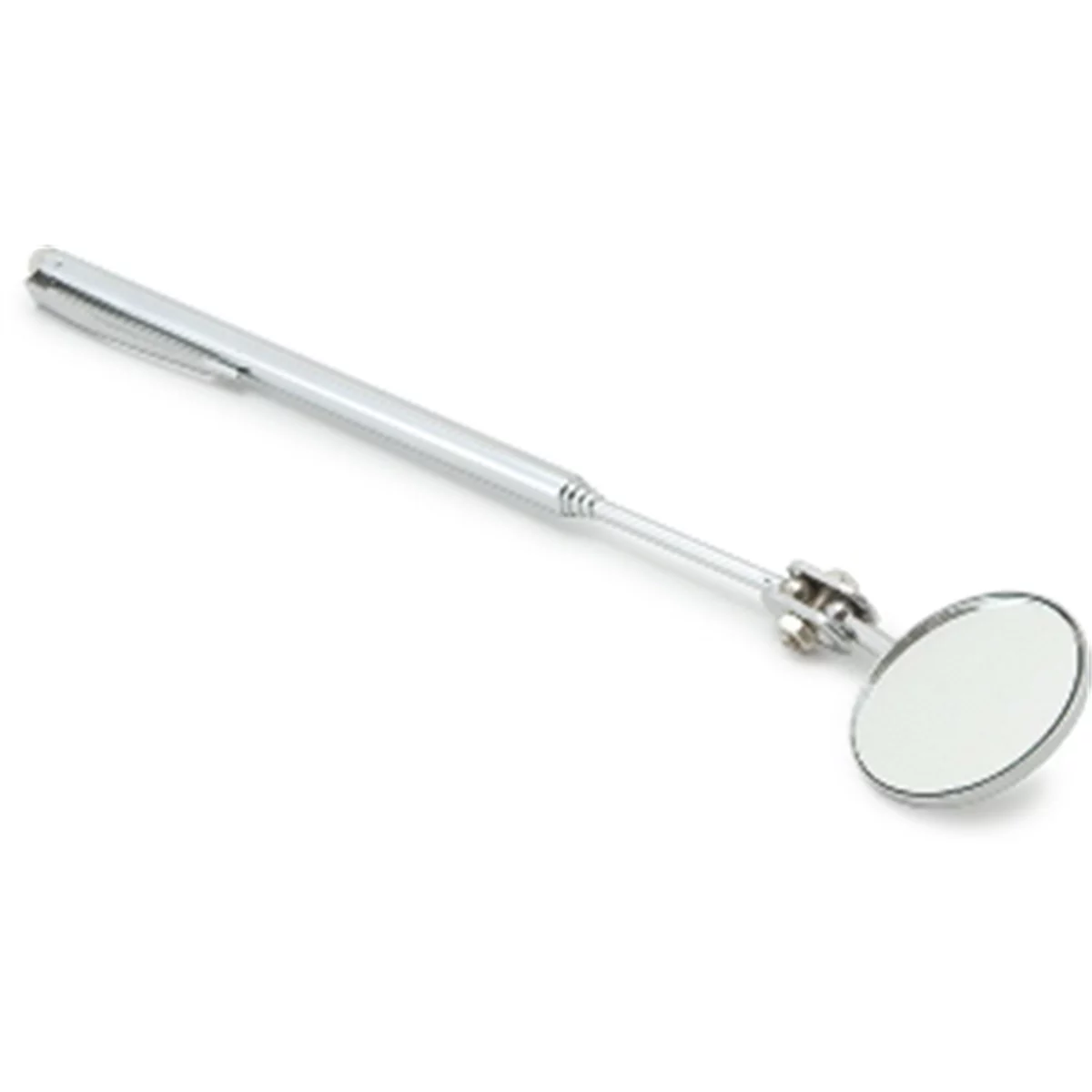

Replacement Head for Inspection Mirror - 3-1/4 In Diameter
Mfg: Ullman Devices Corp.
Part #: S-2HD
FAQs
Can a tracker really run off the vehicle’s own power indefinitely?
Yes — hardwired units tapped into a constant 12V source or the OBD-II port will run as long as the vehicle’s battery holds, unlike magnetic battery units that need periodic swaps or recharging.
Will an RF detector always find an active tracker?
No. It only picks up devices that are actively transmitting at the moment you scan. Many trackers sleep between location pings to save battery, so combine RF scanning with a full physical inspection rather than relying on it alone.
Is it illegal for someone to put a tracker on a vehicle they don’t own or aren’t on the title for?
In most U.S. states, yes — placing a tracking device on a vehicle without the owner’s consent is a crime, separate from any stalking or harassment charges that may also apply. Laws vary by state, so this isn’t a substitute for talking to police or an attorney.
Should I remove the tracker for the customer on the spot?
Physically, yes, once it’s photographed and documented — leaving it in place risks continued tracking. But make clear to the customer that removal should happen only after evidence is preserved, and that police involvement should generally come before any confrontation.
What if the vehicle is leased or fleet-owned and the tracker turns out to be legitimate?
Some fleet, insurance telematics, or dealer anti-theft trackers look identical to covert units. Check for visible branding, and if unsure, have the customer contact the leasing company or insurer before assuming malicious intent — but still document it either way.
Do wheel-well or bumper trackers affect vehicle performance or safety?
Generally no, since they’re passive add-ons with no wiring into vehicle systems, but a poorly mounted magnetic unit near a rotating component or heat source is a road-safety issue worth flagging and removing regardless of the tracking concern.
Recommended Diagnostic Tools
The inspection techniques covered here depend on having the right tools on hand. Check out our selection of Automotive Diagnostic Tools — you’ll find everything from inspection mirrors to RF detectors and OBD-II scan tools designed to handle tracker detection and other diagnostic work.
- Telescoping inspection mirrors and handheld magnets for visual and magnetic sweeping
- RF/bug detectors for identifying active transmissions
- OBD-II scan tools for checking CAN bus devices and physical port inspection

The Toolsource Technical Team blends decades of real-world automotive service experience with up-to-date technical research. Our writers collaborate with professional mechanics, shop owners, and diagnostic specialists to deliver practical, workshop-ready guidance you can trust.


Follow us on social media