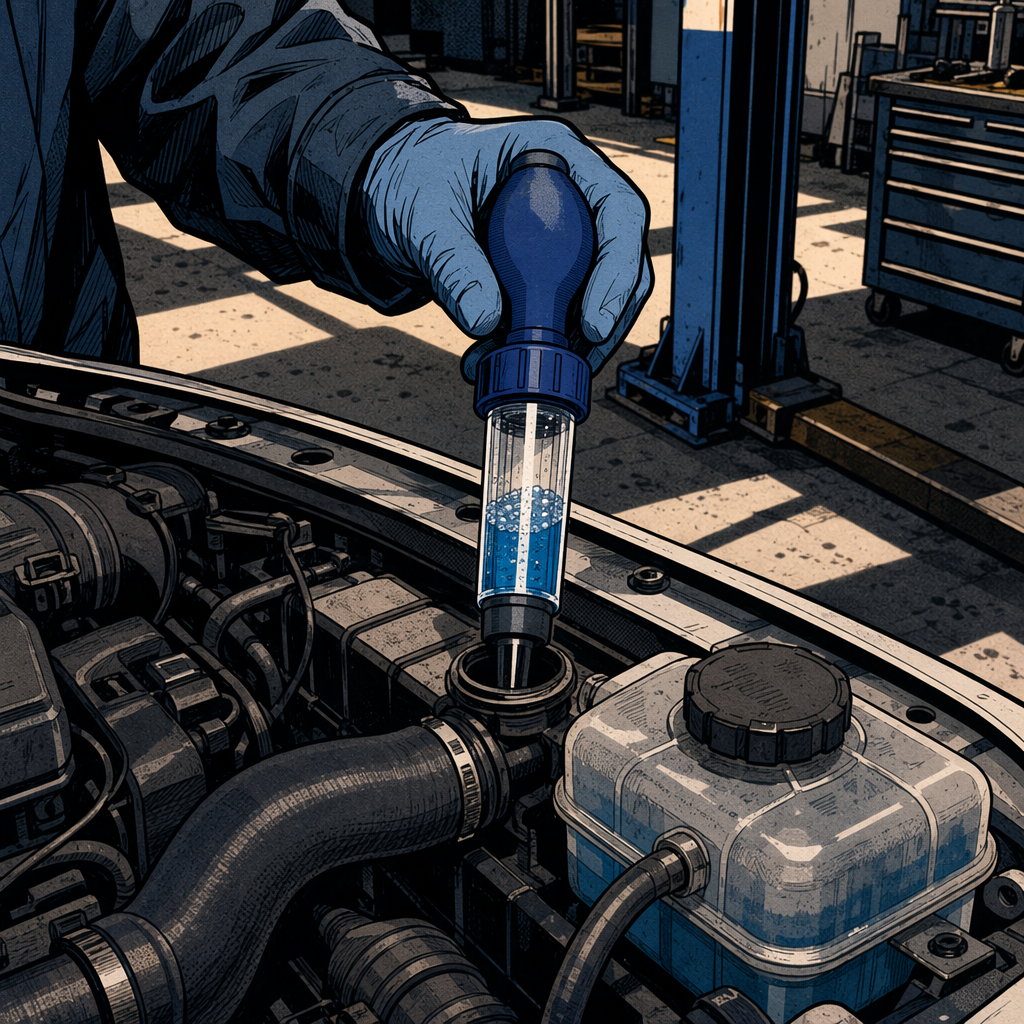
Few phrases spread more panic in a shop bay than “coolant is coming out of the funnel.” Online, that symptom gets an instant diagnosis: blown head gasket, condemn the engine, start pricing a rebuild. In reality, coolant that appears to boil or surge when you rev the engine with the cap off is very often just physics — coolant needs pressure to raise its boiling point, and an open system has none. Before any customer agrees to head work, a technician’s job is to run the cheap, fast tests that rule out the simple stuff first. This guide covers the actual diagnostic sequence — not guesswork — for confirming or ruling out a combustion leak into the cooling system.
Why Coolant “Boils” With the Cap Off
A sealed cooling system runs under roughly 14-16 psi, which raises the boiling point of the coolant well above what it would be at atmospheric pressure. Pull the cap or use a fill funnel with no seal, and you remove that pressure entirely. Once the coolant reaches normal operating temperature — especially near the thermostat housing or a bleeder valve — it can flash to a rolling boil that looks dramatic, even violent, in a funnel or open reservoir. Revving the engine increases water pump speed, which increases flow and can push trapped air or vapor up through the fill neck, making the surge worse. None of this, by itself, indicates a cracked head, warped deck, or blown gasket. It indicates you’re observing coolant at operating temperature without pressure. This is the single most common misdiagnosis reported by owners and even some shops: normal thermal behavior gets read as catastrophic failure.
Rule Out the Cheap Stuff First
Before touching a head, work through the low-cost possibilities in order:
- Radiator cap: A cap that won’t hold rated pressure lets the system act like it’s uncapped even when it’s on. Test it on a cap tester or just replace it — they’re inexpensive and fail more often than people expect.
- Thermostat and its housing gasket: A stuck-open thermostat, or a housing/bleeder rubber seal installed wrong, can hold a bleed valve open and create a permanent air pocket. That air pocket circulates, causes overflow tank surging, and mimics combustion gas intrusion. This has fooled full shops into replacing a head gasket when the actual fault was a $15 thermostat gasket installed incorrectly.
- Air in the system: New coolant fills, hose replacements, or heater core work can trap air that takes several heat cycles to fully purge, especially on reverse-flow or high-point-bleed designs. Follow the manufacturer’s specific bleed procedure rather than just running the engine and hoping.
- Hose and clamp integrity: A soft, collapsing lower hose or a loose clamp can cause flow disruption that presents like overheating even with a good head gasket.
Only after these are eliminated — or confirmed not to be the cause — does it make sense to test for an actual internal combustion leak.

The Block (Chemical) Test
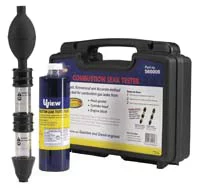
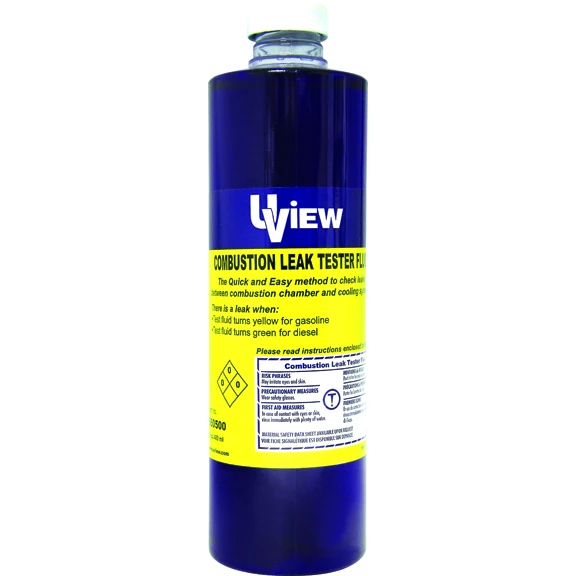
A block tester, sometimes called a combustion leak tester or CO2/HC test kit, is the fastest way to check for exhaust gas in the coolant. It uses a blue chemical fluid that changes color (typically to yellow) in the presence of combustion gases pulled through the coolant via a bulb aspirator held just above the radiator neck or coolant surface.
Key points for an accurate result:
- Test with the engine at operating temperature, but be aware: near-boiling coolant produces steam and vapor bubbles that can be mistaken for the fluid reacting. Whenever possible, also check for bubbling at a cooler engine state to distinguish exhaust bubbles from simple thermal expansion or steam.
- Compression gas from a leaking gasket registers as combustion byproduct just like exhaust gas would — the tester isn’t distinguishing the source, it’s detecting combustion chamber gases in general, which is exactly what you want to know.
- These kits typically run $30-50 retail. Some parts stores loan them out. There’s rarely a good reason to skip this step — it costs a fraction of an hour’s labor and gives a real answer instead of a guess based on video footage or an online photo.
A positive result on a block test is a strong indicator of a head gasket, cracked head, or cracked block issue. A negative result doesn’t 100% clear the engine, but it substantially shifts the diagnosis away from a catastrophic failure.
Pressure Testing the Cooling System
A cooling system pressure tester (radiator/cap tester) pumps the system up to its rated pressure with the engine off and cold, then holds it to check for a drop. This checks for both external leaks (hoses, water pump, heater core, radiator) and, with patience, can reveal a slow internal leak if pressure bleeds down with no visible external drip. It won’t tell you where an internal leak is, only that one likely exists. Pair this with the block test rather than relying on either alone — a system that holds pressure cold but shows combustion gas hot points toward a leak that only opens under thermal expansion or cylinder pressure, which is common with a marginal gasket failure.
Cylinder Leak-Down Test for Confirmation
A cylinder leak-down test is the most definitive shop-floor check without pulling the head. With the cylinder at TDC on the compression stroke, shop air is fed in through the spark plug hole at a set pressure, and you read what percentage leaks out and where it’s escaping:
- Bubbles in the coolant overflow or radiator neck while pressurizing a cylinder is a near-certain sign of a head gasket breach between that cylinder and the water jacket.
- Air out the intake points to an intake valve issue, not the gasket.
- Air out the exhaust points to an exhaust valve issue.
- Air out the dipstick/PCV points to piston ring or cylinder wall wear.
Notably, you do not need to remove the head to run this test — it’s done through the spark plug hole with the head still installed, which is why it belongs early in the diagnostic sequence rather than after teardown. This test, combined with a positive block test, is about as close to certain as you get before actually pulling the head.
Quick Diagnostic Checklist
- Check radiator cap pressure rating and seal condition
- Verify thermostat operation and housing/bleeder gasket seating
- Bleed air per manufacturer procedure after any coolant service
- Run a chemical block test at operating temperature
- Pressure test the system cold for hold/drop
- Run a cylinder leak-down test, watching for coolant bubbling
- Only condemn the head gasket after at least two of these confirm a combustion-to-coolant leak
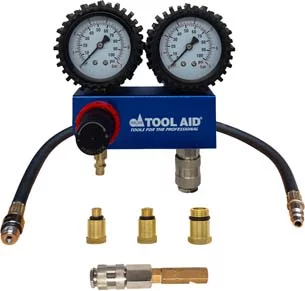
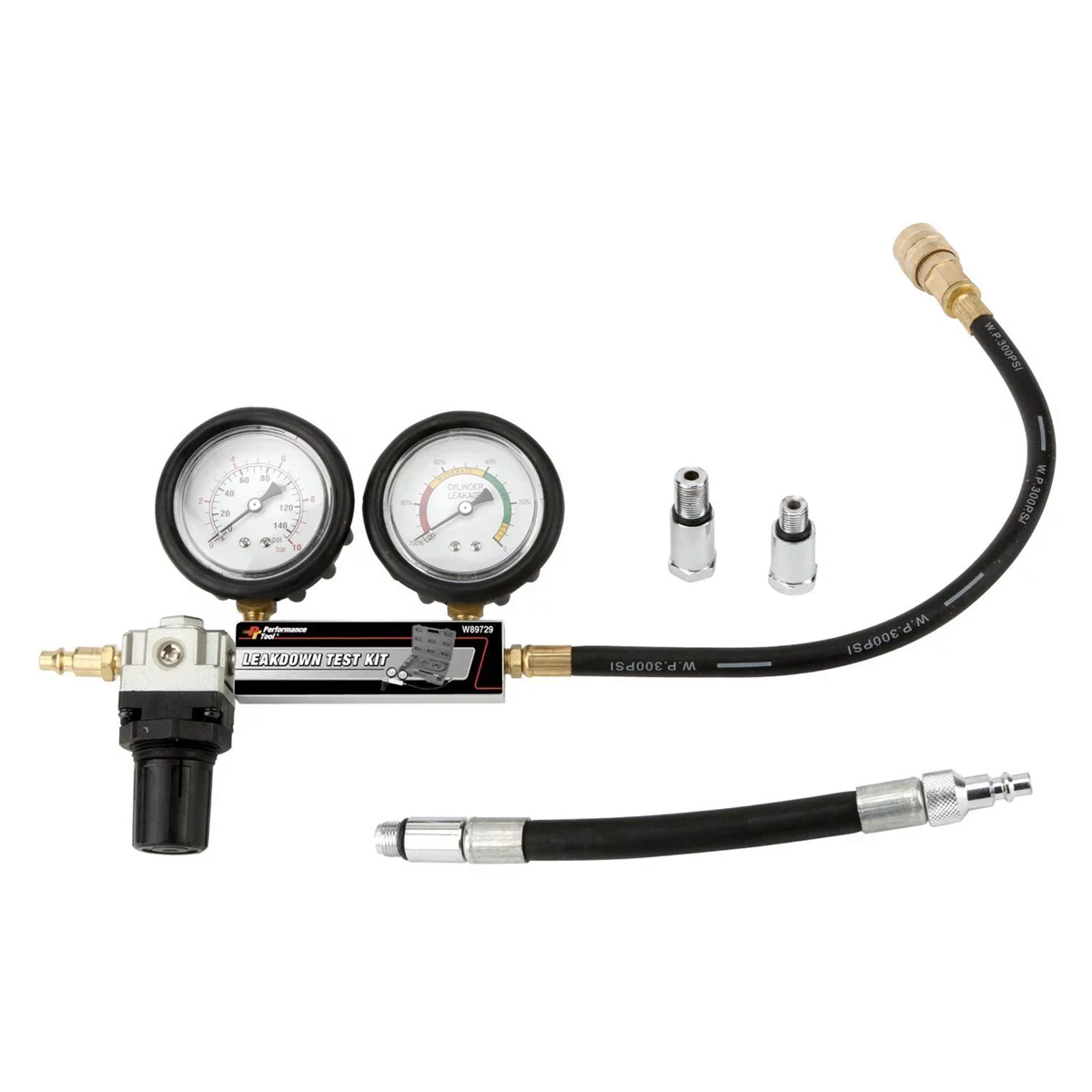
Performance Tool W89729 Leak Down Tester Kit
Mfg: Wilmar - Performance Tool
Part #: W89729
Frequently Asked Questions
Q: My coolant surged out of the funnel when I revved the engine with the cap off. Is that a blown head gasket?
A: Not necessarily. With the cap off, the system has no pressure, so coolant boils at a lower temperature and revving increases pump flow, pushing that near-boiling coolant out. Run a block test and pressure test before assuming the worst.
Q: Do I need to pull the head to test for a blown gasket?
A: No. A cylinder leak-down test is performed through the spark plug hole with the head installed and will show air escaping into the cooling system if there’s a breach.
Q: How much does a block tester cost?
A: Chemical block/combustion leak test kits typically run $30-50 at retail. Some auto parts stores rent them out, and many independent shops have one on hand.
Q: Can a bad thermostat really mimic a head gasket failure?
A: Yes. A thermostat or housing gasket that holds a bleed valve open creates a persistent air pocket that circulates and surges out of the overflow tank, closely resembling symptoms people associate with combustion gas intrusion.
Q: What if the block test is negative but I still suspect a leak?
A: Follow up with a cold pressure test to check for slow internal pressure loss, then a cylinder leak-down test. A single negative chemical test doesn’t fully clear the engine on its own.
Q: Is a positive block test proof the head gasket specifically is bad?
A: It confirms combustion gas is present in the coolant, which points to a head gasket, cracked head, or cracked block — leak-down testing by cylinder helps narrow down which condition is actually present.
Recommended Diagnostic Tools
Running the tests covered in this guide—block testing, pressure testing, and cylinder leak-down testing—requires reliable diagnostic equipment. Browse our Automotive Diagnostic Tools selection for the testers and test kits needed.
- Block and combustion leak test kits for detecting combustion gases in coolant
- Cooling system pressure testers for checking head gasket and radiator integrity
- Cylinder leak-down testing equipment for pinpointing internal leaks by cylinder

The Toolsource Technical Team blends decades of real-world automotive service experience with up-to-date technical research. Our writers collaborate with professional mechanics, shop owners, and diagnostic specialists to deliver practical, workshop-ready guidance you can trust.


Follow us on social media