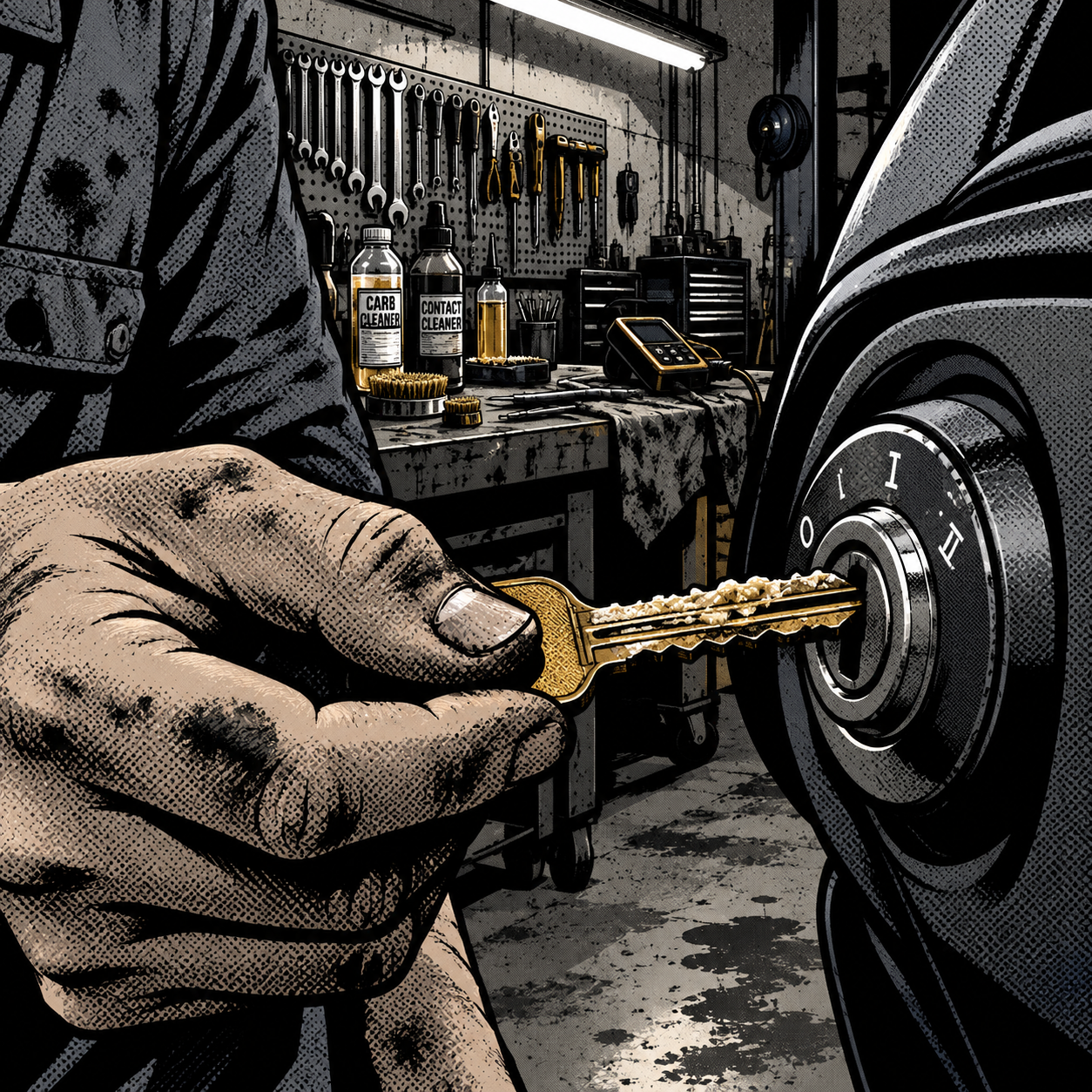
Every shop eventually gets the call: a customer (or their sibling) got creative with a tube of corrosion-preventative wax or a leftover candle, and now the car key feels greasy, sticky, or won’t seat cleanly in the ignition. The panic is understandable — nobody wants to explain a tow bill caused by home chemistry — but wax contamination is one of the more benign things that can happen to a lock cylinder. This guide walks through how to evaluate the situation like a technician would: what actually matters for safety, how to clear the residue without damaging the tumbler or transponder electronics, and when the issue is really something else wearing out underneath the mess.
Start With the Only Test That Matters: Does It Turn and Start?
Before touching a heat gun, solvent, or anything else, run the basic functional check. Insert the key, turn it through each detent (accessory, on, start), and confirm the engine cranks and runs normally. If the key inserts, turns, and the car starts and drives without hesitation, warning lights, or stalling, there is no immediate safety issue. Wax is not a fuel, it’s not conductive, and it’s not going to short out a circuit or cause a fire in normal operating temperatures under the dash.
If the key is difficult to insert, won’t turn fully, or the car cranks but doesn’t fire, that’s a mechanical or electronic obstruction — not a “wait and see” situation. In that case, don’t force the key repeatedly; forcing a stuck pin stack can snap a key blade or shear a tumbler pin, turning a five-minute cleanup into a cylinder replacement. Stop, and move to the removal steps below before attempting to drive anywhere.
Why Wax Usually Isn’t the Enemy People Think It Is
Paraffin and microcrystalline waxes have a long history as mechanical lubricants — they’re used on bicycle chains, skateboard rails, and drawer slides precisely because they reduce friction without staying tacky the way oil or aerosol lubricants do. The downside of liquid lubricants like WD-40 or light oil is that they attract dust and grit over time, which eventually turns into grinding paste inside a lock. Wax, by contrast, stays mostly solid at cabin temperatures and doesn’t wick dirt into the pin stack the same way. A thin coat of wax on a key blade will often make the key insert and turn more smoothly, not less, at least until enough builds up to physically block the pins from seating.
The practical takeaway for a tech advising a customer: a light wax film is not something to panic over, and in some cases it’s genuinely acting as a lubricant. The concern is strictly a volume problem — too much wax packed into the cylinder can prevent the pins from reading the key cuts correctly, which presents as a key that won’t turn or turns only partway.
Find it in store: non-residue electronics contact cleaner for key fobs and ignition switches


Battery Cleaner and Acid Detector, 12.25 Fl Oz Aerosol
Mfg: NOCO Genius USA
Part #: E404
Clearing Wax From the Key Blade and Cylinder
If there’s enough buildup to cause resistance, remove it with gentle, controlled methods — never an open flame near the fuel system or interior trim. The goal is to soften the wax just enough to wipe or draw it out, not to melt it into a thinner film that re-coats the pin stack.
- Wipe the key blade clean with a lint-free cloth and a small amount of isopropyl alcohol, which dissolves wax without leaving residue.
- For the cylinder itself, use a low-heat setting on a hair dryer or heat gun from a few inches away — just enough to soften wax, not melt plastic bezels or discolor paint near the ignition switch.
- Follow heat with a few seconds of shop-vac suction at the cylinder face to pull softened wax out rather than pushing it deeper.
- Insert and withdraw the cleaned key several times to let the pins scrape remaining residue off the tumbler walls.
- Finish with a short burst of electronics-safe contact cleaner or a dry PTFE lock lubricant — skip graphite powder, which can clump with any leftover wax instead of cleaning it out.
Avoid soaking the cylinder in solvent sprays that aren’t rated for electronics if the vehicle uses a chip-in-key ignition — see the next section for why that matters.
Transponder and Proximity Keys Change the Calculus
Most keys made in the last two decades carry a transponder chip that the ignition’s antenna ring reads to authorize starting. Two designs exist, and they respond differently to a waxy coating:
Contact-based systems (older immobilizers, some basic transponder setups) rely on the key physically seating in the cylinder to complete a read. A wax film thick enough to prevent full insertion can interfere with these, though it’s a mechanical blockage, not an electronic failure.
Proximity/RFID systems read the chip wirelessly through a low-power field and don’t require metal-to-metal contact at all, so a wax coating on the key or fob has essentially zero effect on whether the vehicle recognizes it. If a customer’s proximity key isn’t being recognized, wax is very unlikely to be the cause — look at the fob battery, the antenna ring wiring, or a key that’s been reprogrammed/out of range instead.
Either way, never apply degreaser, brake cleaner, or petroleum-based solvents directly onto a chip-embedded key head. Those solvents are fine on bare metal blades but can migrate into the fob’s plastic housing and attack the circuit board or chip potting.
When the Cylinder Itself Needs Service, Not Just Cleaning
Occasionally a wax complaint uncovers a cylinder that was already marginal — worn pins, a weak spring, or accumulated dirt from years of use that the wax simply made more noticeable. Signs it’s gone past a cleaning job:
- The key turns but the ignition sometimes fails to register “start” even with a confirmed good battery and starter.
- The key wiggles excessively in the cylinder before engaging, suggesting worn tumbler pins rather than residue.
- Cleaning restores function for a day or two, then the same stiffness returns — a sign of grit embedded deeper than wax alone would cause.
In those cases, quote the cylinder replacement or rekey rather than chasing the wax indefinitely. It’s a quick job on most platforms and avoids a comeback visit.
Quick Reference Checklist
- Confirm key inserts, turns through all detents, and engine starts/runs normally.
- If it starts fine — it’s safe to drive; monitor for stiffness over the next few uses.
- If resistant: soften wax with low heat, never open flame, then vacuum residue out.
- Clean the key blade with isopropyl alcohol; avoid solvents on chip-embedded fob heads.
- Finish with dry PTFE lock lube or electronics-safe contact cleaner, not oil or graphite.
- If stiffness returns after cleaning, inspect for worn tumbler pins rather than re-treating.
Browse related tools: automotive lock and ignition cylinder service kits

Frequently Asked Questions
Is it dangerous to drive with a wax-contaminated key or ignition?
No, provided the key inserts, turns, and the car starts and runs normally. Wax is non-conductive and non-corrosive, so it doesn’t pose an electrical or fire risk on its own.
Will wax damage the ignition cylinder over time?
Unlikely. A thin film can act as a lubricant. Problems only arise if enough wax accumulates to physically block the pin stack from reading the key correctly.
Can I use a lighter or torch to melt wax out of the cylinder?
No. Open flame near the dash, wiring, and fuel system is an unnecessary risk. Use a hair dryer or heat gun on low, from a safe distance, and let a shop vac pull the softened residue out.
Will contact cleaner or degreaser hurt my key fob?
It can, if the key has an embedded transponder chip or proximity electronics. Keep solvents on the bare metal blade only; use electronics-safe cleaner near the fob head.
My proximity key won’t start the car — could wax be the cause?
Almost never. Proximity systems read the chip wirelessly and don’t need contact. Check the fob battery and antenna ring wiring instead.
How do I know if it’s wax or a worn cylinder causing the stiffness?
If cleaning restores smooth operation and it stays smooth, it was residue. If stiffness or wiggle returns within a day or two of cleaning, suspect worn tumbler pins and plan for cylinder service.
Recommended Tools
Proper tools make ignition service faster and prevent accidental damage to delicate pin stacks and electronics. Our Automotive Ignition Tools include everything you need for safe key and cylinder restoration.
- Electronics-safe contact cleaners for chip-embedded keys and proximity fobs.
- PTFE lock lubricants and dry compounds that won’t attract residue buildup.
- Ignition cylinder service kits and replacement parts for worn or damaged assemblies.

The Toolsource Technical Team blends decades of real-world automotive service experience with up-to-date technical research. Our writers collaborate with professional mechanics, shop owners, and diagnostic specialists to deliver practical, workshop-ready guidance you can trust.


Follow us on social media