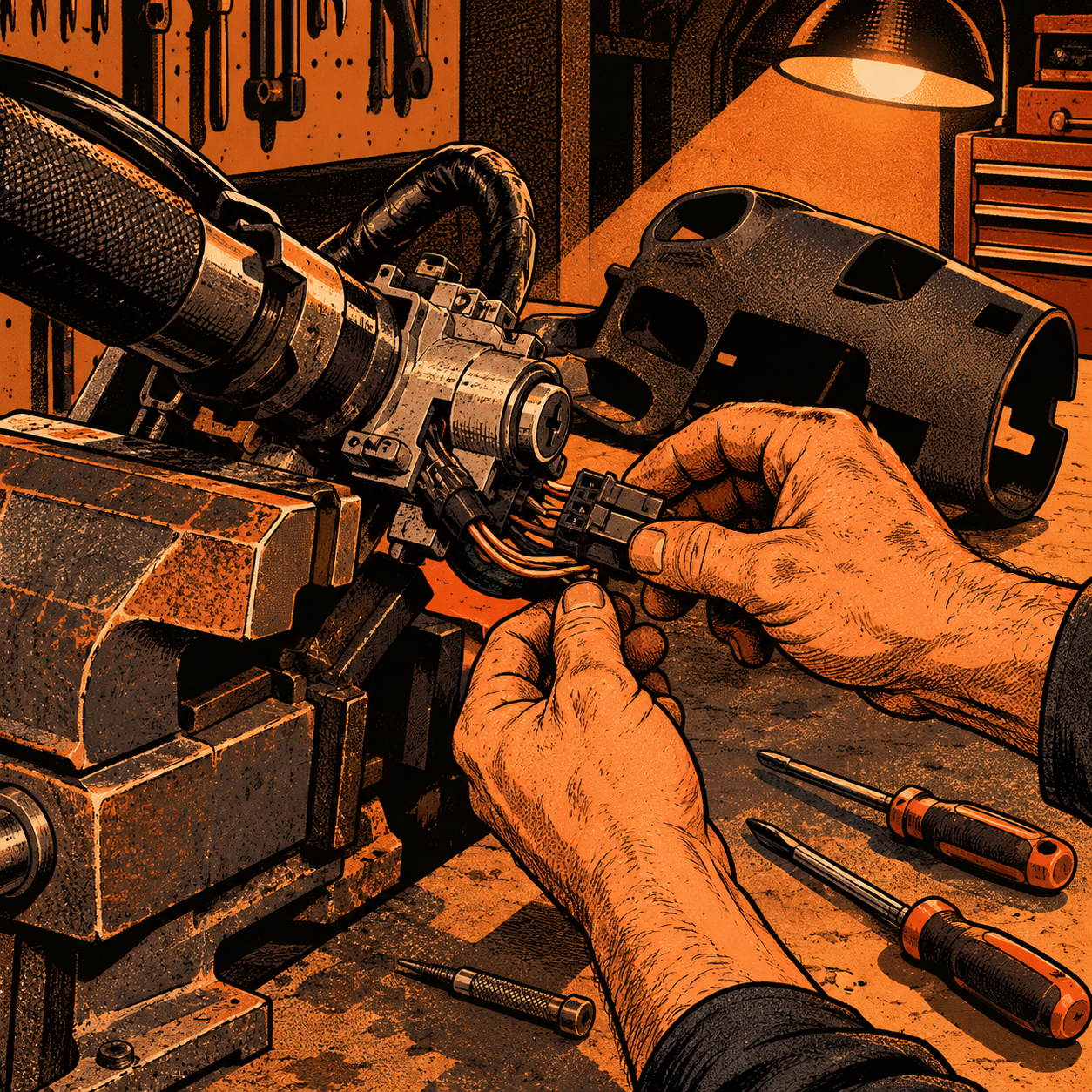
When a key won’t turn, an engine won’t crank, or accessories cut out randomly, the ignition system is almost always the culprit — and the two most common failure points, the ignition switch and the ignition lock cylinder, get confused constantly even by people who’ve been driving the same car for a decade. That confusion is exactly how a $25 part turns into a $600 dealer invoice. This guide walks through how to tell the two problems apart, what a fair repair actually costs, and how to handle the fix yourself if you’re reasonably comfortable with a screwdriver and a wiring diagram.
Ignition Switch vs. Ignition Lock Cylinder: Diagnosing the Real Problem
Before pricing anything, nail down which component actually failed. These are two separate parts that just happen to live in the same column assembly, and the repair cost difference between them is significant.
- Key won’t turn the cylinder at all, or binds/sticks: that’s a lock cylinder or tumbler problem — often dirt, worn wafers, or a worn key.
- Key turns fine but nothing happens (no crank, no accessory power, intermittent stalling): that’s the electrical ignition switch, which sits behind the cylinder and sends power to the starter, ignition, and accessory circuits.
- Dash lights flicker or accessories drop out when you nudge the key or hit a bump: classic worn ignition switch contacts — very common on vehicles over 10 years old with high mileage on the column.
A simple test: with the key in and turned to “on,” check whether dash lights and radio power up normally. If they do but the starter doesn’t engage, suspect the switch or a separate starter relay/safety switch issue. If the key physically won’t rotate, you’re dealing with the cylinder, not the switch.
Dealer Quotes vs. Fair Repair Costs for Ignition Problems
Dealer quotes for ignition switch work are notorious for running high — labor rates alone can push a straightforward switch swap into the $500–$600 range, even though the part itself is often inexpensive. For context, a replacement ignition switch for most mainstream vehicles typically runs $20–$60 for the part. The labor to access it (removing the steering column shroud, disconnecting the battery, sometimes dropping the column slightly) usually adds 1–2 hours of shop time.
A fair independent-shop quote for a straight switch replacement, part and labor, generally lands somewhere between $120 and $250 depending on the vehicle and region. If a quote is multiples of that, ask specifically what’s being replaced — switch only, cylinder only, or the entire column lock assembly (which costs more and is usually unnecessary unless the cylinder itself is damaged or a key was broken off inside it).
[PRODUCT_SEARCH: ignition switch replacement kit]


Replacing an Ignition Switch Yourself: Tools and Steps
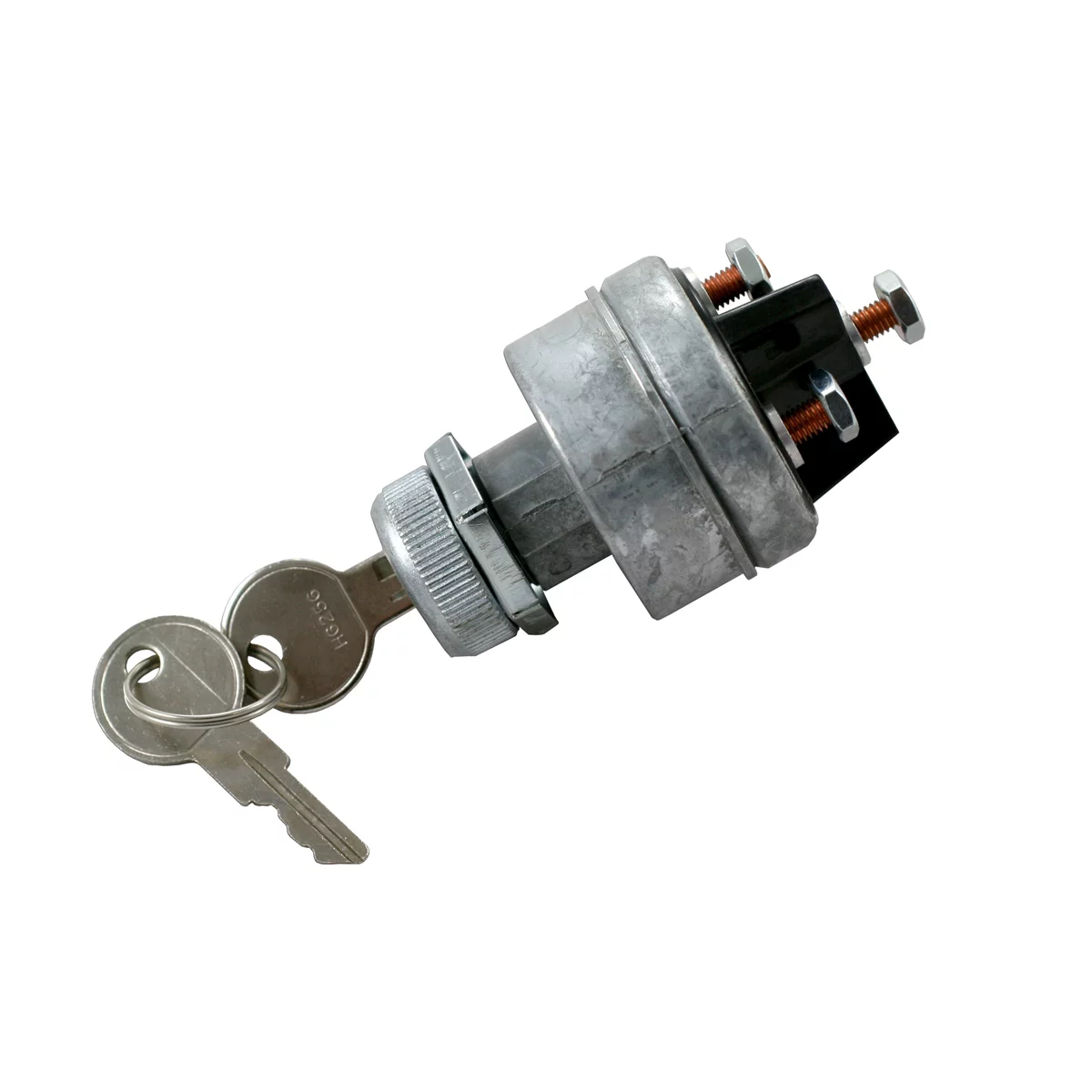
If the switch (not the cylinder) is confirmed bad, this is a manageable DIY job for most front-wheel-drive cars and trucks with a standard steering column. Expect 1–2 hours.
- Disconnect the battery first. The ignition switch carries live circuits for the starter and accessories — working on it hot risks a short or an airbag system fault code.
- Remove the steering column covers. Usually a few screws underneath and behind the wheel; some vehicles require dropping the tilt lever or removing a trim panel.
- Locate the switch. It’s mounted on the column housing behind the lock cylinder, connected by a mechanical actuator rod or a direct linkage and a wiring harness connector.
- Disconnect the harness and actuator rod, then remove the mounting screws (often shear-head screws designed to resist tampering — a screw extractor or a sharp punch and hammer can back these out).
- Install the new switch in the reverse order, making sure the actuator aligns with the lock cylinder position (key should be in “off” or “lock” position during install so the new switch indexes correctly).
- Reconnect the battery and test through every key position — accessory, on, start, and off — before reassembling the covers.
If the switch also has an integrated anti-theft chip reader (common on many 2000s-and-later vehicles), the replacement may need to be matched to the vehicle’s immobilizer or relearned with a scan tool. Check the parts listing or a factory service manual before ordering — this is the detail that trips up most first-time DIYers.
The Two-Key Workaround: Skipping an Expensive Re-Key
If you replace the ignition switch but the lock cylinder and door locks are fine, you don’t have to re-key the whole vehicle to match a single new key. Many shops will simply issue a second key cut for the new ignition switch and hand it back along with your original key for the doors and trunk. It’s not elegant — carrying two keys on the ring — but it avoids the added labor and part cost of re-keying every lock to match one new combination. This is a reasonable trade-off if the switch failed in isolation and the rest of the lock set is working normally.
Independent Shops vs. Dealerships for Older Vehicles
Once a vehicle is out of warranty — generally anything past 8–10 years or 100k miles — there’s little financial argument for using a dealer for mechanical repairs like this. Dealer technicians aren’t doing anything an independent shop with the right diagnostic equipment can’t do, but dealer labor rates run higher and parts are frequently marked up over aftermarket equivalents of equal quality.
That said, independent shops vary in skill and reliability. For an ignition repair specifically:
- Ask if they’ve done ignition switch or cylinder jobs on your specific make before — column designs vary enough that unfamiliarity adds labor time.
- Get a written estimate that specifies switch-only vs. cylinder-only vs. full lock assembly before work starts.
- Confirm whether a key or chip reprogram is included in the quote, since that can be billed separately.
Preventing Ignition Failures Before They Strand You
Ignition switches and cylinders rarely fail without warning. Catching the early signs saves money and avoids a no-start at the worst possible time.
- Heavy keychains accelerate wear on both the cylinder and the switch by adding constant rotational stress — trim the keyring down to essentials.
- Intermittent stalling or dash flicker when hitting bumps is an early switch symptom — don’t wait for a complete failure to address it.
- Worn or recut keys wear the cylinder tumblers faster — if a key is old or has been duplicated from a duplicate, replace it from the original cut code if possible.
- Graphite, not oil-based lubricant, is the right choice for a stiff lock cylinder — oil attracts grit and makes sticking worse over time.
[PRODUCT_SEARCH: automotive key and ignition repair tools]
Quick Diagnostic Checklist
- Key won’t turn at all → suspect lock cylinder, not switch
- Key turns, nothing powers on → suspect ignition switch or wiring
- Dash flickers/accessories drop with key jiggled → worn switch contacts
- Get a written quote specifying switch vs. cylinder vs. full assembly
- Confirm if immobilizer/chip reprogramming is needed and included
- Disconnect the battery before any column teardown
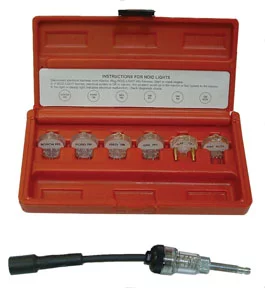
Electronic Fuel Injection and Ignition Spark Tester Kit
Mfg: S & G Tool Aid
Part #: 36310


Frequently Asked Questions
How much should an ignition switch replacement cost?
Expect roughly $20–$60 for the part and $120–$250 total with independent-shop labor for most vehicles. Quotes significantly above that range often include unnecessary cylinder or full-assembly replacement — ask for a breakdown.
Can I drive with a failing ignition switch?
Short term, maybe, but a failing switch can cut power to the engine while driving, which is a safety risk. Treat intermittent stalling or accessory dropouts as a near-term repair, not something to put off indefinitely.
Do I need to re-key my car after an ignition switch replacement?
No. A new ignition switch typically comes with its own key, which can be carried alongside your existing key for the doors and trunk. Full re-keying is only necessary if you want every lock on the vehicle to match a single key again.
Is this a DIY-friendly repair?
Replacing the switch itself is moderate-difficulty DIY work — mostly trim removal and a connector swap. Replacing the lock cylinder or dealing with an integrated immobilizer chip is more involved and may require a scan tool to relearn the key.
Why do dealers charge so much more for this repair?
Dealer labor rates are generally higher than independent shops, and dealers often use OEM-only parts priced above aftermarket equivalents. For an out-of-warranty vehicle, there’s usually no added benefit to paying the dealer premium for a job like this.
What’s the real cost of ignoring early ignition symptoms?
Beyond the eventual repair bill, a full ignition failure typically happens without warning — meaning a tow, a missed commitment, or being stranded. Addressing dash flicker or occasional stalling early almost always costs less in money and time than waiting for a complete failure.
Tools for Ignition Repair and Diagnosis
If you’re tackling an ignition switch replacement or troubleshooting a no-start problem, you’ll need the right specialty tools. Our Automotive Ignition Tools selection includes extractors, testers, and column-removal kits designed for this work.
- Ignition switch removal extractors and specialty sockets
- Diagnostic testers for switch continuity and circuit testing
- Column disassembly and trim removal tools

The Toolsource Technical Team blends decades of real-world automotive service experience with up-to-date technical research. Our writers collaborate with professional mechanics, shop owners, and diagnostic specialists to deliver practical, workshop-ready guidance you can trust.


Follow us on social media