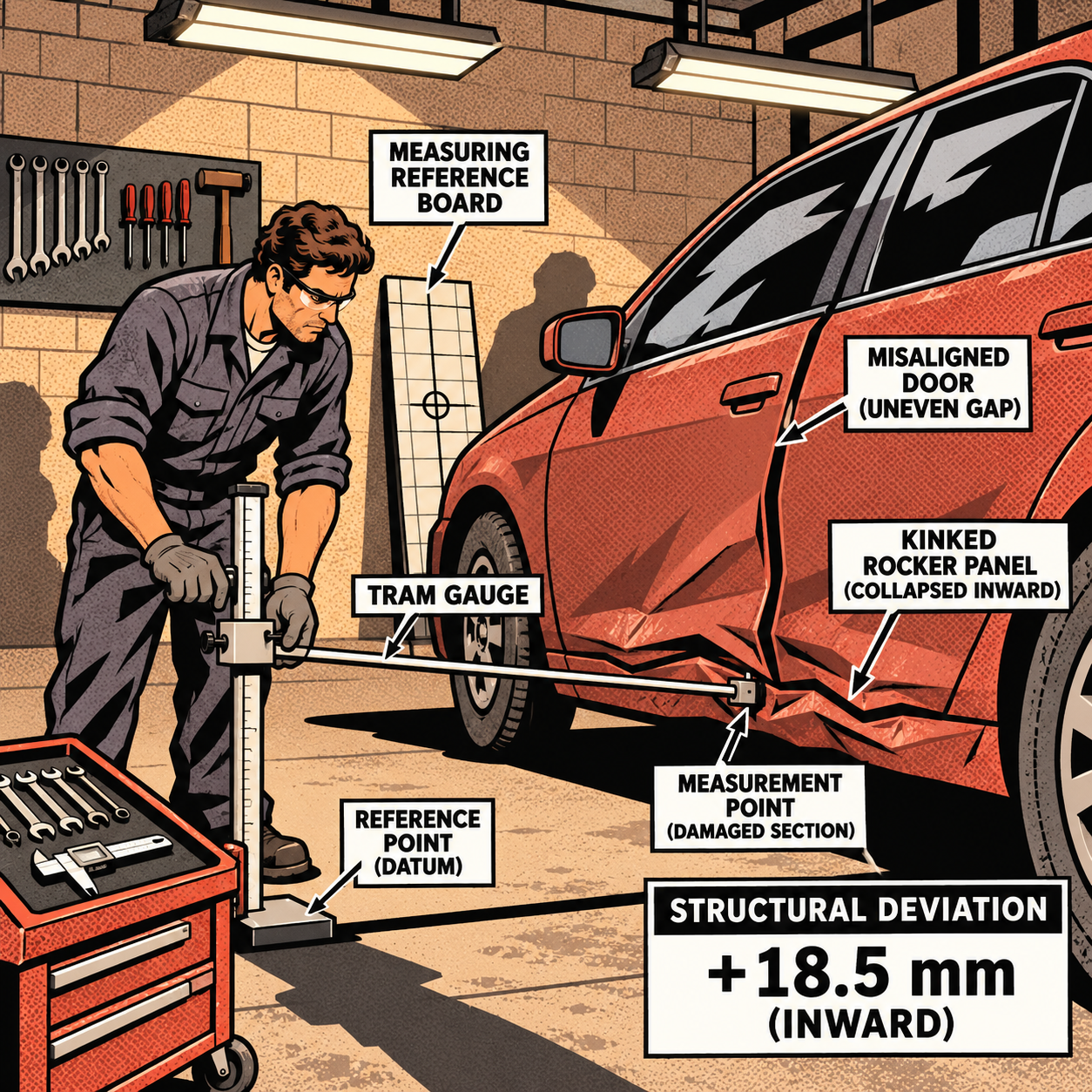
Every shop eventually sees a car roll in on a flatbed that looks worse than the tow bill suggests — a rocker kinked inward, a floor pan rippled like a washboard, or in the worst cases, a chassis bent enough that the car looks “taco’d” from the side. Customers often want a straight answer: fixable or not? The honest answer is almost always “technically yes, practically no,” and knowing where that line sits is one of the more valuable judgment calls a technician makes. This guide breaks down how to assess structural unibody damage, when repair numbers stop making sense, and what to know before anyone suggests moving a damaged car’s components into a donor shell.
Reading the Visual Red Flags First
Before any measuring equipment comes out, a trained eye can usually rule out a large percentage of “maybe fixable” cars. Look for these patterns during initial walk-around:
- Bowed or kinked rocker panels — if a rocker is caved in, assume the inner reinforcement and floor pan behind it are compromised too. Rockers are a primary load path in a unibody; damage here almost never stays isolated to sheet metal.
- Visible twist or “banana” shape along the beltline or rear quarters when sighting down the car’s length.
- Door gaps that don’t match side to side, or a decklid/hood that won’t align no matter how hinges are adjusted.
- Suspension mounting points pulled or cracked — a car that “drives” after a hard impact can still have a subframe or mounting point that’s one more pothole from failing.
- Mid-body buckling — a unibody folded or creased anywhere near the B-pillar or center tunnel is a structural failure, not a cosmetic one. This is the damage pattern most often mistaken for “just needs a new floor” when it actually means the whole shell has lost its designed load path.
None of these are automatically fatal on their own, but when two or more show up together — especially rocker damage combined with any twist — the odds of a cost-effective repair drop sharply.
Measuring the Damage Properly
Eyeballing gets you a hypothesis; measuring confirms it. A proper structural assessment uses:
- Tram gauges or a tram tracking system to check cross-measurements between known factory reference points (strut towers, control arm mounts, frame rail holes).
- A frame/unibody measuring system (laser or mechanical) mounted on a bench or anchored rack, comparing live readings against OEM spec sheets.
- A bench or anchoring system that actually holds the car rigid — pulling without proper anchoring just moves the damage around instead of correcting it.
Document every measurement before touching anything. If the car ends up going to insurance as a total loss, those numbers are what justify the determination and protect the shop from later disputes about whether “it could have been fixed.”


Doing the Repair-vs-Replace Math
Once measurements confirm structural damage, the next step is a straightforward labor-and-parts estimate — not a repair plan yet, just a number to compare against vehicle value. A real structural repair on a kinked rocker typically requires:
- Full interior strip-out (seats, carpet, trim, wiring harness routing)
- Drivetrain and exhaust removal to access the affected rail/floor section
- Fuel tank removal if the damage is anywhere near the rear floor or tunnel
- Cutting out the rocker, inner reinforcement, and floor section as a unit
- Fabricating or sourcing OEM replacement panels and welding them back in with correct overlap and spot-weld patterns
- Re-checking all suspension geometry and alignment once the structure is restored
Add that labor total to parts, paint, and realignment, then compare it to the vehicle’s actual market value in similar, undamaged condition. In the vast majority of moderate-to-severe unibody cases, the repair estimate exceeds the car’s worth — sometimes by a wide margin. At that point it’s not a safety call anymore, it’s simple economics, and most insurers will total the vehicle rather than authorize the repair.
Why “It Still Drives” Doesn’t Mean It’s Safe
A car with a bent chassis can often be driven short distances, which creates a dangerous false confidence. Two problems compound over time:
- Repeat deformation under load. A unibody that’s been bent and roughly straightened doesn’t return to its original metallurgical state. Flex under normal driving loads will often re-introduce the bend gradually, even after a cosmetic-looking repair.
- Compromised crash performance. Modern unibodies are engineered with specific crumple zones and load paths. Once those are deformed, the car’s behavior in a second collision — even a minor one — becomes unpredictable. A structure that’s already absorbed one hard impact has less capacity to protect occupants in the next one.
This is the core reason experienced techs push back hard on customers who want a “good enough to pass inspection” fix on anything beyond cosmetic sheet metal damage.
If a Donor Shell Is on the Table
When a customer is emotionally attached to a specific car (sentimental value, rare trim, matching numbers) rather than the specific VIN, moving components into an unwrecked donor shell is sometimes floated as an option. A few points matter here:
- Check the donor shell for rust first. A rust-free shell is a prerequisite — welding new structural repairs onto corroded metal defeats the purpose.
- The title follows the shell, not the parts. Legally, the VIN and title of record belong to whichever chassis they were issued for. Moving an engine, interior, and body panels onto a different shell does not transfer the original car’s identity — it produces a car titled to the donor shell with swapped components.
- Stamping or altering VIN plates to make a donor shell “become” the original car is illegal in virtually every jurisdiction, regardless of technical skill involved. It can trigger fraud charges, voided insurance, and confiscation of the vehicle at inspection or sale.
- A bonded title is the legitimate path when paperwork is incomplete (e.g., a shell acquired via bill of sale only). It’s slower and has restrictions, but it keeps the build legal and insurable.
Shops asked to perform shell-swap labor should get this in writing with the customer and confirm which VIN/title the finished vehicle will carry before any welding starts.
Quick Unibody Damage Assessment Checklist
- ☐ Walk-around for kinked rockers, mismatched door gaps, visible twist
- ☐ Tram-gauge or laser-measure against OEM spec at multiple reference points
- ☐ Inspect suspension/subframe mounting points for cracks or elongation
- ☐ Price out full strip-interior, structural cut-and-weld, and realignment labor
- ☐ Compare repair estimate to actual cash value of the vehicle
- ☐ If pursuing a donor shell, confirm rust-free condition and legitimate title path before any parts transfer

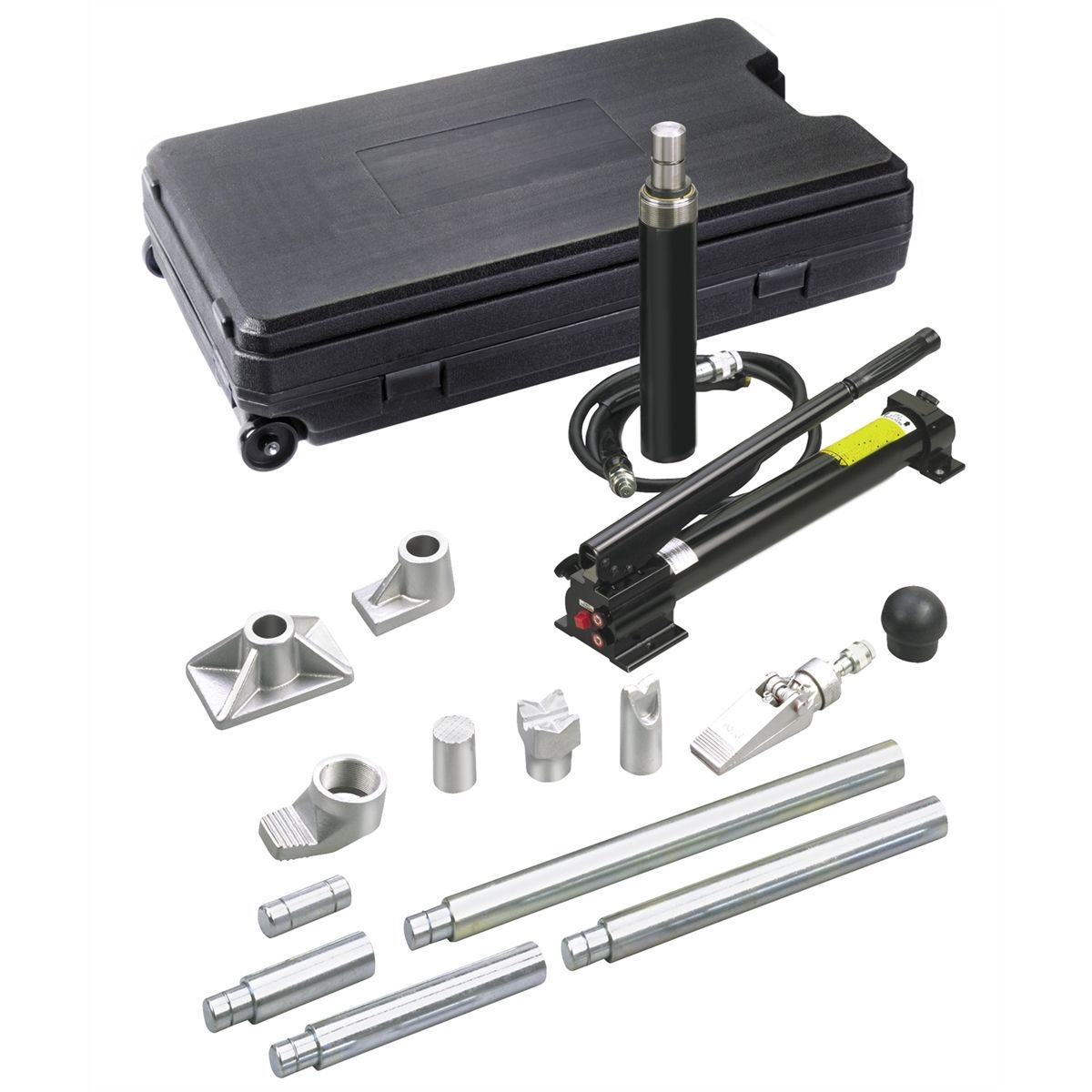
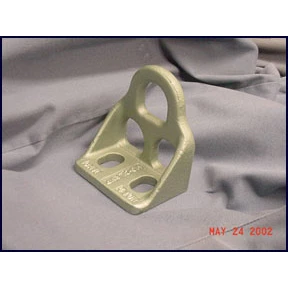
Cobra Series 10-Ton Collision Repair Set w/ 6 1/8 In Stroke Ram
Mfg: OTC Tools and Equipment
Part #: 1519A

FAQs
Can a bent unibody chassis ever be straightened back to factory spec?
Minor, localized bends sometimes can with the right bench/rack system and skilled technicians. A chassis bent through the center section, mid-rail, or across the passenger compartment generally cannot be restored to original structural integrity, even if the measurements look close afterward.
How do I know if a car is a total loss before the insurance adjuster shows up?
Run your own labor-and-parts estimate against the vehicle’s market value. If structural repair (rocker/floor/rail replacement, full strip-down) pushes the estimate near or past the car’s worth, expect a total-loss determination — document your measurements so your numbers match theirs.
Is it legal to swap my car’s VIN plate onto a different shell?
No. Stamping or transferring a VIN onto a different chassis is illegal almost everywhere and can result in fraud charges and the vehicle being seized at inspection. The legitimate path is titling the donor shell properly (including a bonded title if paperwork is incomplete) and moving parts onto it as a build, not an identity swap.
What’s a bonded title and when do I need one?
A bonded title is used when a vehicle’s ownership paperwork is incomplete — for example, acquiring a shell with only a bill of sale. It lets the DMV issue a title backed by a surety bond instead of a full chain of ownership documents, and it’s the legal route for getting a donor shell properly titled before building on it.
Why does a car that still drives need to be totaled?
Drivability isn’t the same as structural safety. A unibody with mounting points pulled or a rail kinked can still move under its own power, but its crash performance and long-term structural stability are compromised — it won’t hold alignment, and it won’t protect occupants the way it was designed to in a second impact.
What should a shop document before declining a structural repair?
Photos of all visible damage, tram/laser measurements against OEM spec at multiple points, a written labor-and-parts estimate, and the vehicle’s comparable market value. This protects the shop if the customer disputes the total-loss recommendation or seeks a second opinion elsewhere.
Essential Measurement Tools for Accurate Structural Assessment
Accurate measurements are critical when evaluating unibody damage. Having the right measurement tools and inspection equipment on hand lets you document damage objectively and support your structural repair decisions with precise data.
- Tram gauges and tracking systems for checking dimensions against factory reference points
- Frame and unibody measuring systems (laser and mechanical) that work with your existing rack or bench
- Anchoring and benchmarking solutions to hold vehicles stable and rigid during assessment

The Toolsource Technical Team blends decades of real-world automotive service experience with up-to-date technical research. Our writers collaborate with professional mechanics, shop owners, and diagnostic specialists to deliver practical, workshop-ready guidance you can trust.


Follow us on social media