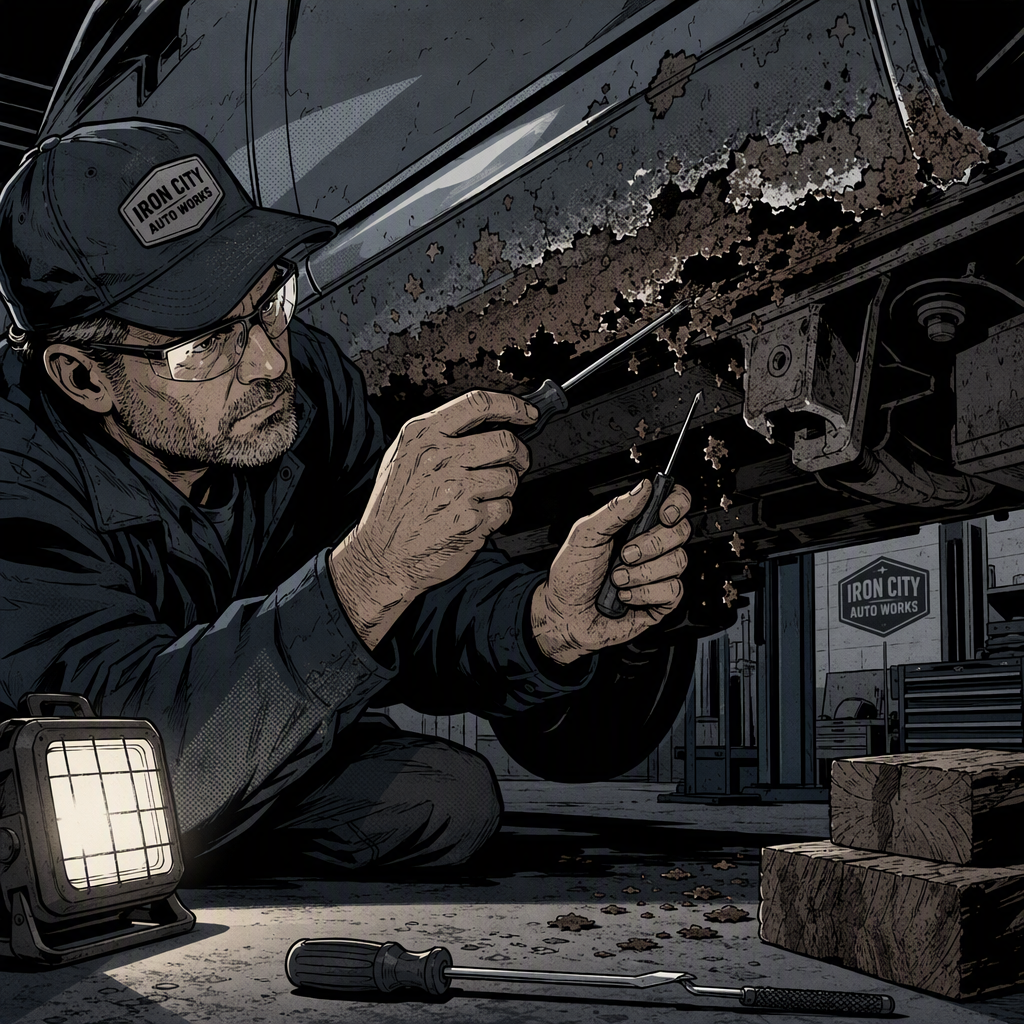
Every service writer in a salt-belt shop has had the same conversation: a customer brings in a five- or six-year-old vehicle for an oil change, and the tech comes back up front holding a chunk of rocker panel that flaked off in their hand. Road salt, humidity, and neglected undercarriages turn a normal 15-year vehicle lifespan into a 8-10 year fight against perforation. The good news is that the damage curve is not fixed — vehicles that get regular underbody attention routinely outlast their untreated counterparts by a decade or more. This guide covers how to inspect for underbody corrosion, how to treat what you find, and how to set customers up on a maintenance interval that actually works.
Why Salt-Belt Rust Accelerates So Fast
Road salt (sodium chloride and increasingly magnesium chloride brines) lowers the freezing point of water and also lowers the electrical resistance of the moisture sitting on bare metal, which speeds up the electrochemical reaction that turns iron into iron oxide. Unlike a vehicle sitting in dry storage, a daily driver in the rust belt gets repeated freeze-thaw cycles where brine gets flung up into wheel wells, rocker panels, and frame rails and then sits there — it doesn’t evaporate the way plain water does, and it wicks into seams and spot-weld flanges by capillary action. Once the factory e-coat and paint are breached (usually first at stone-chipped rocker edges, exhaust hanger brackets, and frame drain holes), bare steel corrodes continuously as long as moisture is present, and scale buildup actually traps more moisture against the metal, which is why untreated rust accelerates rather than staying constant. This is also why the “parked over wet grass” theory that circulates in forums doesn’t hold up on its own — humidity and standing water contribute, but it’s the chloride salts that turn a slow oxidation process into a fast one. A vehicle driven all winter without underbody washing or protective coating can go from a few paint bubbles to full perforation of quarter panels, rocker panels, and floor pans within a single season.
Inspecting a Customer’s Vehicle for Underbody Corrosion
Underbody rust inspection should be a standard add-on to any winter or spring service visit in a salt-belt region, not just something techs notice by accident during an oil change. Work through these points on the lift:
- Frame rails and crossmembers — probe with a pick or flathead screwdriver at low points and drain holes where salt brine pools; sound metal resists the pick, rusted-through metal flakes or punches through.
- Rocker panels and pinch welds — these are usually the first visible failure point; check both the outer skin and the inner structural rocker, since outer paint can look fine while the inner rocker is already gone (as in the “inner rockers are dust” case techs run into constantly).
- Subframe mounting points and control arm brackets — rust here affects alignment and safety, not just cosmetics.
- Brake and fuel lines — steel lines corrode from the outside in and can fail without warning; flag any line with surface pitting for replacement, not just cleaning.
- Exhaust hangers and heat shields — early corrosion indicators since they’re constantly exposed to road spray and thermal cycling.
- Quarter panels and wheel arches from underneath — bubbling paint on the outside usually means the backside is already scaled.
Document findings with photos for the customer — rust progression is hard to sell as urgent without visual proof, and side-by-side photos from a prior visit are the best way to demonstrate how fast a specific vehicle is progressing.
Product search: underbody inspection mirror and pick set for rust diagnosis
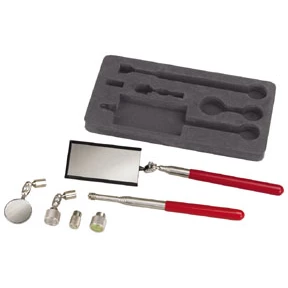
Pick Up Tool & Inspection Mirror Counter Top Display
Mfg: Ullman Devices Corp.
Part #: HTDISP
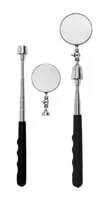
MegaMag GMC-2 Magnetic Pick-Up Tool & Inspection Mirror
Mfg: Ullman Devices Corp.
Part #: GMC-2
Removing Surface Rust and Prepping Metal Before Coating
Coating over loose scale is close to useless — it traps moisture rather than blocking it. Before applying any rust converter or undercoating product, remove loose and flaking material first:
- Wire wheel or wire cup brush on a die grinder for accessible flat areas.
- Media blasting (small handheld blast cabinet or blast gun) for pitted frame rails and rocker panel interiors where a wire wheel can’t reach.
- A rust removal wire brush attachment or needle scaler for tight seams and spot-weld flanges.
- Compressed air blow-off followed by a wax-and-grease remover or solvent wipe to pull residual dust and oils before any converter or primer goes on.
For areas that are pitted but not perforated, a phosphoric-acid-based rust converter stabilizes what’s left and gives a paintable/coatable surface. For anything already perforated — rocker panels, floor pans, frame rails with holes — surface treatment alone won’t fix it; that’s a structural repair conversation (patch panel, frame section, or in bad cases, a total loss determination), not a maintenance one.
Undercoating Options and How They Compare
Once bare metal is clean and any converter has cured, the shop has three broad product categories to choose from, and most experienced techs in salt-belt states run one of these annually rather than relying on factory undercoating alone:
- Lanolin-based sprays (fluid-film-type products) — never fully harden, stay slightly oily, self-heal minor scratches, and penetrate seams by capillary action. Easiest to apply with a basic spray gun and low-pressure air, but needs reapplication annually since it can wash off over the season.
- Wax-based coatings (wool wax / oil-wax blends) — similar penetrating behavior to lanolin sprays with slightly better longevity in some conditions; also stays semi-soft rather than hardening into a shell.
- Rubberized/asphalt-based undercoating — hardens into a tougher shell, good for high-wear areas like wheel wells and rock-strike zones, but it doesn’t flow into seams the way oil-based products do and can trap moisture if applied over rust or rushed on wet metal. Best used in combination with an oil-based product in seams and cavities rather than as the only line of defense.
Cavity wax injected through factory access holes into rocker panels, frame box sections, and door bottoms addresses the areas that spray-gun coating from underneath can’t reach, and it’s often the difference between a rocker panel that lasts 20 years and one that’s dust in five.
Setting Customers Up on a Maintenance Schedule
A single coating is not a permanent fix — it’s a maintenance item, the same as an oil change. The interval that actually slows rust down looks like this:
- Wash the undercarriage with a pressure washer after every significant salt exposure, and at minimum a few times over the winter — not just at a car wash’s underbody rinse, which often doesn’t reach frame rails and rocker interiors well.
- Reapply oil-based undercoating annually, ideally in spring after the salt season ends and the undercarriage has been washed and dried, so the coating isn’t sealing salt residue against the metal.
- Re-inspect and re-treat sooner for high-mileage winter drivers, trucks used for plowing, or any vehicle that’s already showing early surface rust.
- New or newly purchased used vehicles should get their first coating before their first winter, not after damage is already visible — this is the single biggest lever a shop has for extending a customer’s vehicle life in a salt-belt market.
Quick Reference Checklist
- Inspect frame rails, rockers, subframe, brake/fuel lines, and exhaust hangers on every winter/spring lift visit
- Photograph findings for customer documentation and progression tracking
- Remove loose scale (wire wheel, blast, needle scaler) before any coating
- Apply rust converter to pitted-but-solid metal; flag perforated metal for structural repair
- Coat with oil-based undercoating annually, plus cavity wax in rocker/frame box sections
- Pressure-wash the undercarriage after salt exposure throughout winter, not just once in spring
Product search: automotive undercoating and rust prevention spray kits


FAQs
How fast can underbody rust actually get worse?
In salt-belt conditions with no undercarriage washing or coating, a few paint bubbles on a fender arch can turn into full perforation within a single winter season. The rate depends on how much salt exposure the vehicle gets and whether moisture is allowed to sit against bare metal.
Does parking over grass or wet ground cause this kind of rust on its own?
Not to the degree road salt does. Humidity and standing moisture are contributing factors, but the dramatic rocker-panel and frame damage seen in salt-belt states is driven by chloride salt exposure, not ground moisture alone.
Is factory undercoating enough protection?
Factory e-coat and undercoating slow initial corrosion but are not a substitute for ongoing maintenance in high-salt regions. Stone chips, weld seams, and drain holes are common failure points where factory protection breaks down within a few years.
What’s the difference between rust converter and undercoating?
Rust converter chemically stabilizes existing surface rust and creates a paintable base; it does not provide ongoing protection on its own. Undercoating (oil-based or rubberized) is the barrier layer applied after cleanup to prevent new corrosion.
Can rust-through rocker panels or frame rails be repaired, or does the vehicle need to be replaced?
Pitted-but-intact metal can often be treated and coated. Perforated rockers, floor pans, or frame rails require patch panels or structural sections and should be evaluated against the vehicle’s value — in some cases a shop will recommend against further investment.
How often should undercoating be reapplied?
Annually is the standard recommendation for daily-driven vehicles in salt-belt states, ideally applied in spring after a full undercarriage wash once road salt season has ended.
Stock Your Undercoating and Rust Prevention Products
After diagnosing underbody rust, the next step is sourcing the right protective treatments. Our protective coatings and rust prevention supplies cover everything from annual undercoatings to rust converters and application equipment.
- Oil-based and lanolin undercoatings for seams and cavities
- Phosphoric acid rust converters for pitted metal surfaces
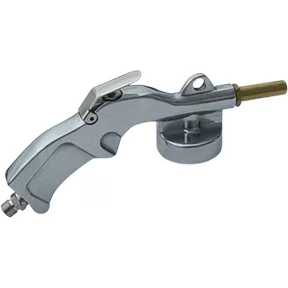
- Cavity wax injectors and spray application tools

The Toolsource Technical Team blends decades of real-world automotive service experience with up-to-date technical research. Our writers collaborate with professional mechanics, shop owners, and diagnostic specialists to deliver practical, workshop-ready guidance you can trust.


Follow us on social media